Powering VR Hardware: 2025 Battery Management Guide
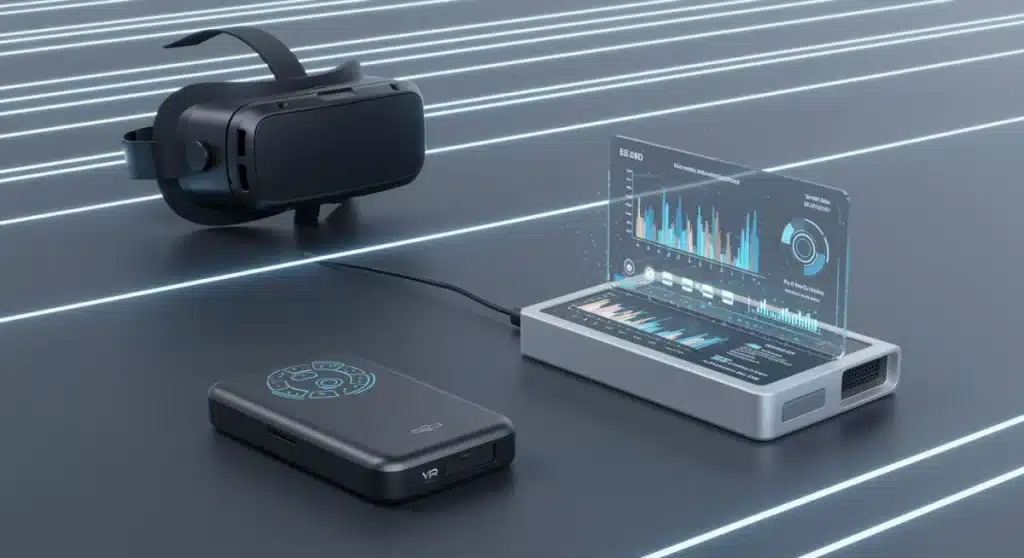
Effective VR battery management in 2025 is crucial for extending immersive sessions and mitigating significant financial implications for both consumer and enterprise VR hardware.
As virtual reality technology continues its rapid evolution, the demand for extended and uninterrupted immersive experiences grows exponentially. For both casual users and enterprise professionals, VR battery management has become a critical factor influencing overall satisfaction and productivity. This guide explores the essential strategies and innovations defining efficient power solutions for VR hardware in 2025, offering practical insights and examining the significant financial impacts of effective battery stewardship.
The evolving landscape of VR power demands
The immersive capabilities of modern VR headsets, with their high-resolution displays, advanced haptic feedback, and sophisticated tracking systems, are undeniably captivating. However, these features come at a cost: substantial power consumption. The continuous drive towards more realistic graphics and complex interactions places unprecedented strain on battery life, making efficient power management an urgent challenge for manufacturers and users alike. Understanding this evolving landscape is the first step towards optimizing your VR experience.
In 2025, VR hardware is no longer just about entertainment; it’s a vital tool for training, design, and collaboration in various industries. This shift intensifies the need for reliable, long-lasting power solutions, as interrupted sessions can lead to significant workflow disruptions and reduced productivity. The balance between performance and endurance is delicate, requiring a nuanced approach to battery technology and usage patterns.
Next-generation battery technologies
The core of enhanced VR battery life lies in the advancements of battery chemistry and design. Traditional lithium-ion batteries are being pushed to their limits, paving the way for innovative alternatives.
- Solid-state batteries: These promise higher energy density and improved safety compared to current liquid electrolyte batteries, potentially offering significantly longer usage times without increasing battery size.
- Silicon-anode batteries: By replacing graphite anodes with silicon, these batteries can store more lithium ions, leading to a notable increase in capacity and faster charging capabilities.
- Graphene-based solutions: Graphene offers superior conductivity and strength, enabling batteries that charge faster, last longer, and are more durable, ideal for demanding VR applications.
Manufacturers are actively integrating these cutting-edge technologies into their latest VR hardware, aiming to provide a seamless and extended user experience. The adoption rate of these new chemistries will largely dictate the future of untethered VR.
Optimizing charging practices for longevity and performance
Beyond the hardware itself, user practices play a pivotal role in maximizing battery life and ensuring the longevity of VR devices. Improper charging habits can degrade battery health over time, leading to reduced capacity and shorter operational periods. Adopting smart charging strategies is essential for both individual users and organizations managing large fleets of VR headsets.
Fast charging, while convenient, needs to be managed carefully. While it can quickly get you back into the action, consistently charging to 100% and draining to 0% can stress the battery. Understanding the optimal charge cycles and temperature management can significantly extend the lifespan of your VR hardware’s power source. This proactive approach not only saves money on replacements but also maintains peak performance.
Smart charging workflows
Implementing intelligent charging routines is more than just plugging in your device. It involves understanding the nuances of battery chemistry and system integration.
- Partial charging: Keeping batteries between 20% and 80% charge can significantly prolong their overall lifespan, reducing the stress on the cells.
- Temperature control: Charging in moderate temperatures, avoiding extreme heat or cold, prevents premature degradation and maintains charging efficiency.
- Scheduled charging: For enterprise environments, automated charging stations can ensure devices are optimally charged and ready for use without manual oversight, streamlining operations.
These practices, when consistently applied, can dramatically improve the return on investment for VR hardware, minimizing downtime and maximizing utility. The initial effort in establishing these routines pays dividends in the long run.
External power solutions and accessories for extended sessions
Even with advanced internal batteries and optimized charging, some VR applications demand power beyond the headset’s built-in capacity. This is where external power solutions and accessories become indispensable. From portable battery packs to specialized charging docks, these additions bridge the gap between inherent limitations and user expectations, facilitating truly extended sessions.
The market for VR accessories is booming, driven by the need for longer playtimes and continuous professional use. Choosing the right external power solution involves considering factors like weight, form factor, capacity, and compatibility. A well-integrated external battery can feel like a natural extension of the VR experience, rather than an cumbersome add-on.
Popular external power options
Several types of external power solutions cater to different user needs and VR hardware configurations, each with its own set of advantages.
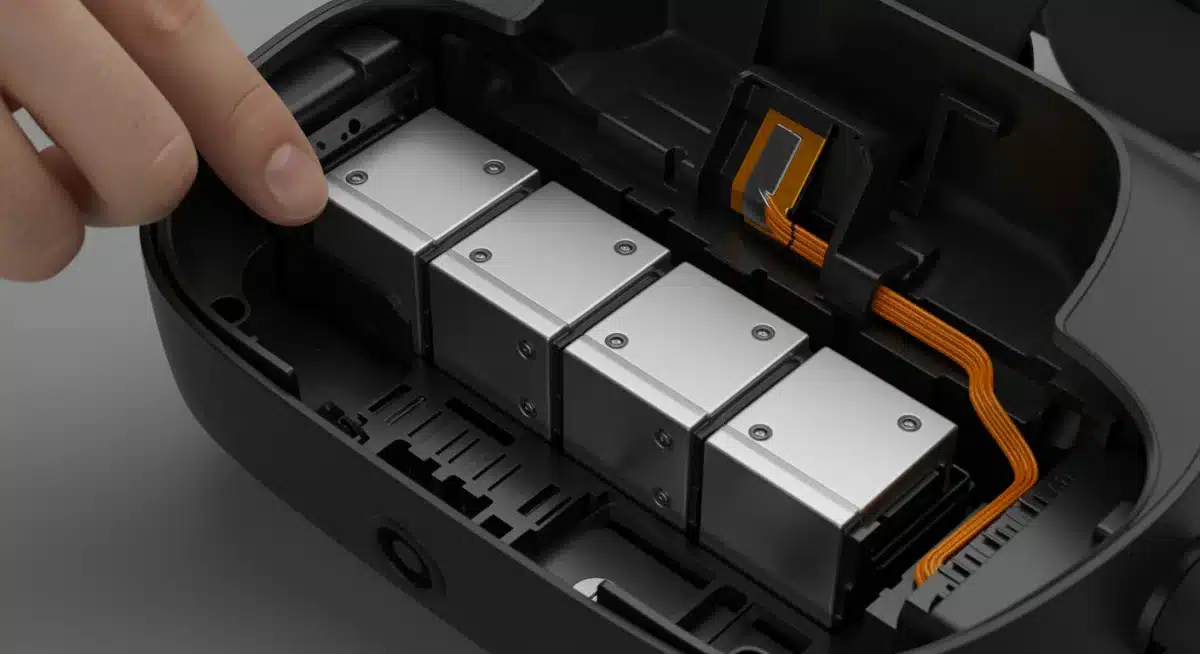
- Wearable battery packs: Designed to be comfortably worn on the body, these packs distribute weight evenly and connect via a cable, providing hours of additional power without impacting headset ergonomics.
- Hot-swappable battery systems: Some enterprise-grade VR systems allow for quick battery exchanges during operation, ensuring uninterrupted use for critical applications.
- Integrated power straps: These headstraps incorporate additional battery capacity directly into the design, offering a balanced and more streamlined power enhancement.
These solutions are particularly beneficial for applications requiring prolonged use, such as architectural walkthroughs, surgical training, or multi-hour gaming marathons, ensuring that the user’s immersion is never broken by a low battery warning.
Software-driven power management and optimization
Hardware advancements are only one part of the equation; software plays an equally crucial role in efficient VR battery management. Operating systems and applications within VR environments are becoming increasingly sophisticated in how they manage power consumption, dynamically adjusting performance settings to extend battery life without severely compromising the user experience.
Developers are now incorporating power-saving modes and intelligent resource allocation into their VR titles and enterprise applications. This means that instead of a static power drain, the system can adapt to the demands of the current task, throttling processing power or dimming displays during less intensive moments. This proactive software management is key to unlocking the full potential of battery hardware.
Key software optimization techniques
Modern VR platforms and applications leverage various software strategies to conserve power effectively.
- Dynamic resolution scaling: Adjusting rendering resolution based on available processing power and battery levels can significantly reduce GPU workload and power consumption.
- Adaptive refresh rates: Lowering the display refresh rate when fast motion isn’t critical can save considerable power, especially in social VR or static viewing experiences.
- Idle state management: Aggressive power-saving modes when the headset detects inactivity or when the user removes the device can prevent unnecessary battery drain.
These software optimizations, often running in the background, ensure that every watt of battery power is utilized as efficiently as possible, translating directly into longer, more enjoyable VR sessions. The synergy between hardware and software is paramount.
Financial impact: ROI and total cost of ownership
The implications of efficient VR battery management extend far beyond just longer usage times; they have a direct and significant financial impact. For businesses investing in VR hardware, understanding the return on investment (ROI) and the total cost of ownership (TCO) is crucial. Poor battery management can inflate operational costs through frequent replacements, increased downtime, and reduced productivity.
Conversely, robust battery management strategies can lead to substantial savings. Extending the lifespan of expensive VR headsets, minimizing the need for replacement batteries, and ensuring maximum uptime for training or operational tasks directly contributes to a healthier bottom line. The initial investment in quality power solutions and best practices quickly pays for itself.
Calculating the financial benefits
Quantifying the financial advantages of superior battery management involves several key metrics and considerations.
- Reduced replacement costs: Longer battery life means fewer purchases of new batteries or headsets, directly impacting capital expenditure.
- Increased productivity: Less downtime due to charging or battery failure translates into more productive hours for employees using VR in enterprise settings.
- Operational efficiency: Streamlined charging workflows and reliable power sources reduce the labor costs associated with managing VR device fleets.
By focusing on these areas, organizations can transform battery management from a mere operational necessity into a strategic advantage, improving efficiency and maximizing the value derived from their VR investments.
Future trends in VR power and sustainability
Looking towards the future, the landscape of VR power management is set to evolve even further, driven by environmental concerns and the pursuit of ultimate user freedom. Sustainability is becoming a key design principle, influencing everything from battery materials to energy sources. The goal is not just to extend battery life but to do so in an environmentally responsible and resource-efficient manner.
Innovations in energy harvesting and wireless charging are also on the horizon, promising to fundamentally change how VR hardware is powered. Imagine a VR headset that charges passively as you move, or one that can be recharged simply by placing it on a designated surface without needing to plug it in. These advancements hold the potential to make battery life an almost non-issue for many users.
Emerging power technologies
Several groundbreaking technologies are poised to redefine VR power solutions in the coming years.
- Kinetic energy harvesting: Developing systems that convert user movement into electrical energy to trickle-charge batteries, offering a continuous, albeit small, power input during active use.
- Advanced wireless charging: Beyond current inductive pads, future wireless charging solutions could offer longer ranges and more efficient power transfer, allowing for charging within a room.
- Eco-friendly battery materials: Research into more sustainable and recyclable battery components aims to reduce the environmental footprint of VR hardware, aligning with global sustainability goals.
These future trends highlight a commitment to not only enhancing the VR experience but also ensuring that technological progress is mindful of its broader environmental and operational context. The continuous innovation in power solutions will be a cornerstone of VR’s widespread adoption.
| Key Aspect | Brief Description |
|---|---|
| Battery Innovations | Next-gen technologies like solid-state and silicon-anode batteries for extended VR sessions. |
| Smart Charging | Optimizing charge cycles (20-80% rule) and temperature control for battery longevity. |
| External Power | Utilizing wearable battery packs and hot-swappable systems for uninterrupted VR use. |
| Financial Impact | Efficient management reduces replacement costs and increases productivity, improving ROI. |
Frequently asked questions about VR battery management
Efficient VR battery management is crucial in 2025 because advanced VR hardware demands more power, leading to shorter session times. Optimal management extends usage, prevents interruptions in professional and gaming contexts, and directly impacts the operational cost and longevity of expensive VR devices.
New battery technologies like solid-state and silicon-anode batteries are emerging. These innovations offer higher energy density, faster charging capabilities, and improved safety compared to traditional lithium-ion cells, directly contributing to longer and more reliable VR sessions for users.
To extend battery lifespan, adopt smart charging practices: keep the charge level between 20% and 80%, avoid extreme temperatures during charging and storage, and use recommended chargers. These habits minimize battery stress and degradation over time, preserving capacity.
Software plays a significant role through dynamic power management. VR operating systems and applications can implement features like dynamic resolution scaling, adaptive refresh rates, and intelligent idle state management to reduce power consumption without severely impacting the user’s immersive experience, thus extending battery life.
For businesses, good VR battery management leads to significant financial benefits, including reduced replacement costs for headsets and batteries, increased employee productivity due to less downtime, and improved operational efficiency. This ultimately enhances the return on investment for VR hardware.
Conclusion
The journey towards seamless and extended virtual reality experiences is inextricably linked to advancements in battery technology and sophisticated power management strategies. As VR hardware becomes more integral to both entertainment and professional sectors, optimizing how these devices are powered is not just a convenience but a critical operational and financial imperative. By embracing innovative battery chemistries, adopting smart charging practices, leveraging external power solutions, and utilizing intelligent software optimizations, users and businesses alike can unlock the full potential of their VR investments. The future promises even more efficient and sustainable power solutions, further solidifying VR’s place as a transformative technology.