Business innovations driven by virtual reality platforms
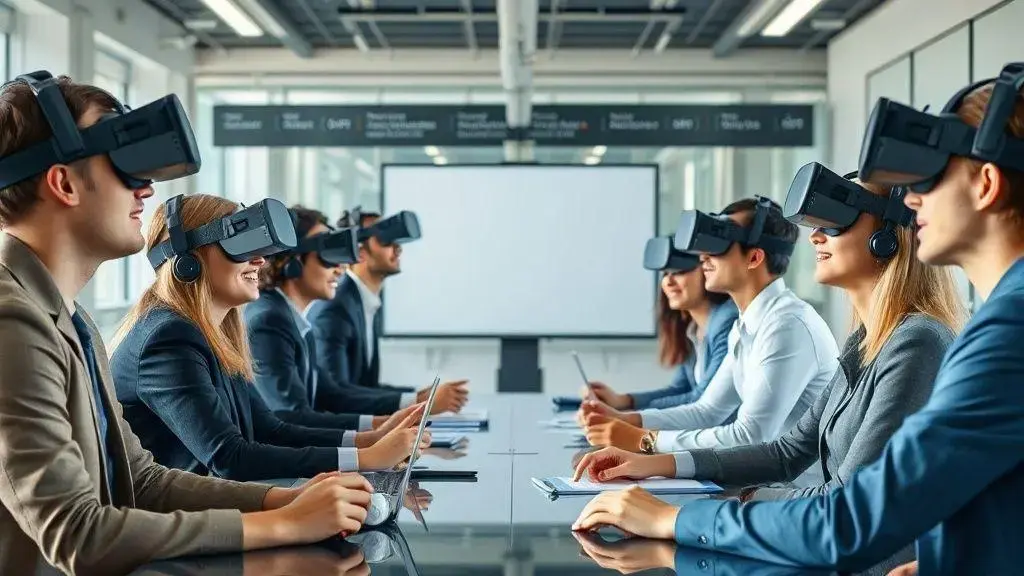
Business innovations driven by virtual reality platforms enhance customer engagement, improve training efficiency, and foster collaboration, while facing challenges like cost and user adoption.
Business innovations driven by virtual reality platforms are reshaping how companies interact with customers and operate internally. Have you ever imagined a virtual showroom or a meeting space that transcends physical boundaries? Let’s delve into the possibilities!
Understanding virtual reality in business
Understanding virtual reality in business is crucial for companies aiming to innovate and stay ahead. Virtual reality (VR) technology allows businesses to create immersive experiences that engage customers and enhance operations.
Companies can use VR for various applications, from training employees to showcasing products. Not only does this technology improve engagement, but it can also lead to significant cost savings. For example, instead of conducting expensive in-person training sessions, companies can use VR to simulate real-world scenarios.
Key Aspects of VR in Business
There are several important aspects to consider when implementing virtual reality in a business setting:
- Enhanced customer experiences through interactive environments
- Improved training and development through realistic simulations
- Increased collaboration with virtual meetings and brainstorming sessions
- Effective marketing strategies through immersive product showcases
By harnessing VR platforms, businesses can create unique ways to connect with clients. For instance, a real estate company could provide virtual tours of properties, allowing potential buyers to explore homes from the comfort of their own space.
As industries continue to evolve, understanding virtual reality in business will become even more essential. Organizations that adapt to this technology will likely gain a significant advantage over competitors. They will not only enhance their brand presence but also create deeper relationships with their customers.
Future Trends in VR
Looking ahead, several trends are shaping how virtual reality will influence business:
- Increased personalization in marketing campaigns
- Advancements in VR hardware making it more accessible
- Integration of artificial intelligence with VR for enhanced experiences
By understanding these trends, businesses can better prepare for a future where VR technologies become commonplace. The potential for innovation is vast, and those who embrace it will lead the charge into new markets.
Key benefits of VR platforms
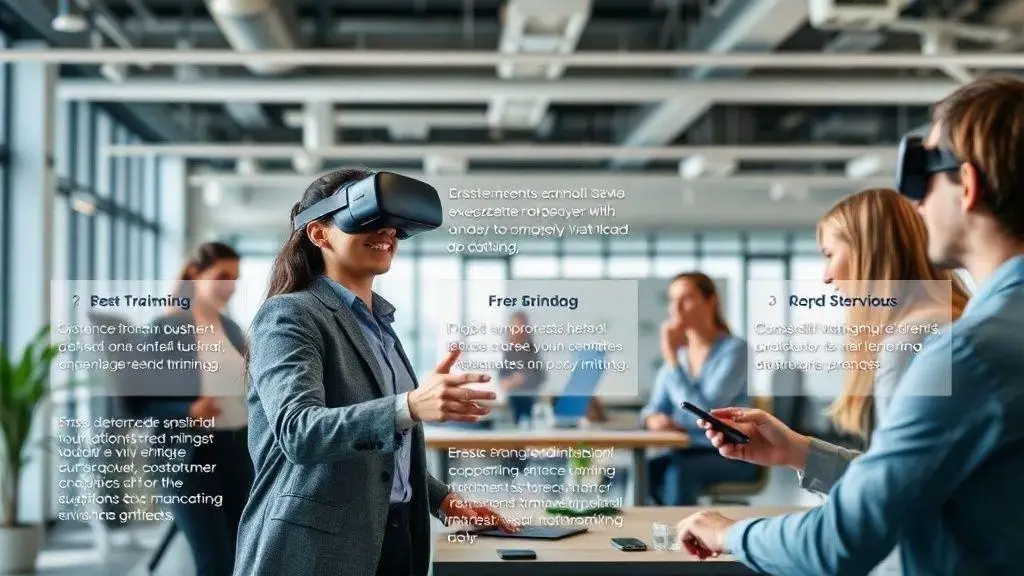
Key benefits of VR platforms are transforming the way businesses operate and interact with clients. By embracing virtual reality, organizations can unlock numerous advantages that enhance productivity and customer engagement.
One significant benefit is the ability to create immersive training environments. With VR, employees can practice real-world scenarios without the risks associated with live training. This not only improves skills but also boosts confidence.
Enhanced Customer Engagement
Another advantage of VR platforms is enhanced customer engagement. Businesses can offer virtual tours or product demonstrations, allowing customers to visualize and interact with products in a compelling way. This immersive experience can lead to higher satisfaction and increased sales.
- Interactive product showcases
- Virtual events and conferences
- Personalized shopping experiences
- Stronger brand loyalty
Furthermore, VR can facilitate collaboration among team members, especially in remote work environments. Virtual meetings allow teams to interact as if they were in the same room, fostering creativity and brainstorming. These meetings can save time and travel costs while offering a richer interaction experience.
Cost Efficiency and Innovation
Investing in VR platforms may initially seem expensive, but the return on investment can be significant. By reducing the need for physical materials and travel costs, businesses can save money over time. Moreover, innovation is inherent in utilizing cutting-edge technology, positioning companies as leaders in their industries.
As more organizations adopt VR, those that lag behind may find it challenging to compete. Embracing this technology not only streamlines operations but also allows companies to stand out in a crowded marketplace.
Real-world applications of VR innovations
Real-world applications of VR innovations are revolutionizing industries and enhancing various practices. From entertainment to healthcare, virtual reality is driving significant change.
In the entertainment sector, VR provides immersive experiences that engage users like never before. For instance, gamers can step into their favorite worlds, making the gameplay more interactive and thrilling. This technology also allows filmmakers to create captivating narratives that put viewers inside the story, offering a unique storytelling experience.
Healthcare Advancements
Another prominent area is healthcare, where VR innovations are being used for training and treatment. Medical students can practice surgeries in a risk-free environment, enhancing their skills without endangering patients. Additionally, VR is utilized for therapy, helping patients with conditions like PTSD and phobias by exposing them to controlled virtual environments.
- Simulated surgery training for medical professionals
- Therapeutic scenarios to aid mental health treatment
- Patient education through immersive anatomical visualizations
- Rehabilitation programs that incorporate virtual tasks
The retail industry is also benefiting from virtual reality. Companies are implementing VR to create virtual showrooms where customers can interact with products in a digital space. This not only enhances the shopping experience but also enables businesses to showcase their offerings on a global scale without physical constraints.
Education and Training
Education is another field where VR innovations are making waves. Schools and universities are using VR to create engaging learning environments. Students can explore historical sites or conduct scientific experiments in a virtual space, making learning more dynamic and effective.
By incorporating virtual reality into their curriculums, educators can cater to various learning styles. This immersive approach can help students retain information more effectively and spark interest in subjects.
Challenges and future of VR in business
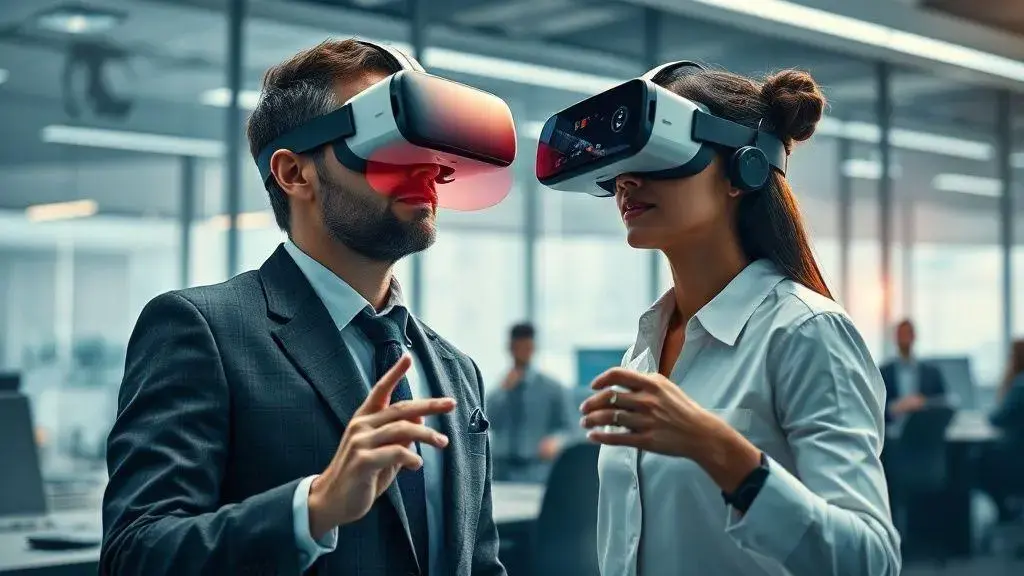
Challenges and future of VR in business are significant topics as companies continue to explore this innovative technology. While virtual reality offers many advantages, it also comes with hurdles that need addressing.
One major challenge is the cost of implementing VR platforms. High-quality VR hardware and software can be expensive, which may deter smaller businesses from adopting this technology. This barrier means that only larger companies may initially benefit from the immersive experiences that VR provides.
User Adoption and Training
Another challenge is user adoption. Many employees and customers may not be familiar with virtual reality, which means businesses must invest in training programs to help them learn how to use the new systems. This process can be time-consuming and requires additional resources to ensure everyone is comfortable with the technology.
- The need for continuous training and support
- Identifying suitable VR applications for specific business needs
- Managing user expectations during the transition period
- Addressing potential discomfort or motion sickness for users
Moreover, privacy and security concerns can pose significant obstacles. As businesses collect data through VR interactions, ensuring this information is secure becomes crucial. Companies must stay updated with the latest security measures to protect sensitive data.
The Future of VR in Business
Looking ahead, the future of virtual reality in business appears promising. Advances in technology will likely lead to more affordable and accessible VR solutions. As the technology develops, we can expect improved user experiences and more realistic simulations.
The integration of artificial intelligence with VR is another exciting prospect. AI can help tailor experiences to individual users, making them more engaging and personalized. This combination could revolutionize training programs and customer interactions, leading to greater satisfaction and loyalty.
As the landscape evolves, businesses that embrace these changes will be better positioned to thrive in a competitive marketplace. By overcoming challenges and harnessing the potential of VR innovations, companies can unlock new avenues for growth and connection.
virtual reality represents a powerful tool for businesses looking to innovate and connect with customers. Despite challenges like cost and user adoption, the benefits of VR, such as improved training and customer engagement, are undeniable. As technology continues to advance, companies that embrace VR will find exciting opportunities ahead. By addressing the concerns surrounding VR, businesses can unlock the potential for growth and transform their operations.
FAQ – Frequently Asked Questions about Business Innovations Driven by Virtual Reality Platforms
What are the main benefits of using virtual reality in business?
Using virtual reality in business can enhance customer engagement, improve training effectiveness, and foster collaboration among teams.
What challenges do businesses face when adopting virtual reality technology?
Some challenges include high initial costs, the need for extensive user training, and addressing privacy and security concerns.
How can businesses ensure user adoption of virtual reality tools?
Businesses can ensure user adoption by providing comprehensive training and support, addressing potential discomfort, and showcasing the benefits of the technology.
What does the future hold for virtual reality in different industries?
The future of virtual reality in various industries looks bright, with advances in technology leading to more affordable solutions and personalized user experiences.