VR Training Apps: Strivr’s Q1 2025 Impact on Skill Development
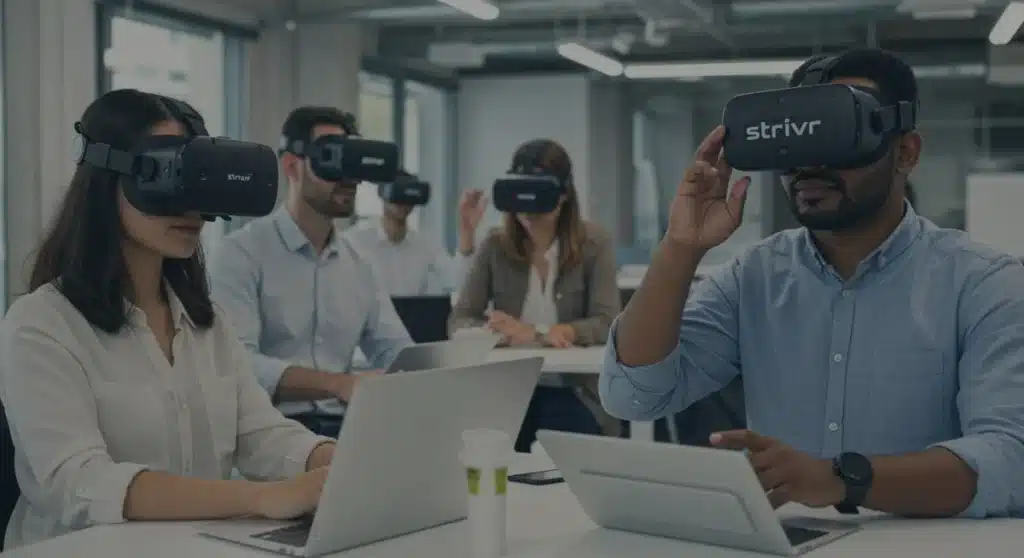
Strivr’s VR training apps are profoundly reshaping corporate skill development by offering immersive, data-driven learning experiences that enhance retention and performance across various industries.
In the rapidly evolving landscape of corporate education, the emergence of advanced virtual reality solutions is revolutionizing how employees acquire and refine critical skills. Among these innovations, Strivr VR Training apps have carved out a significant niche, promising unparalleled immersive learning experiences. This review delves into Strivr’s offerings and their demonstrable impact on skill development as of Q1 2025.
The Evolution of VR Training and Strivr’s Position
Virtual reality training has moved beyond novelty, becoming a strategic imperative for organizations aiming to boost efficiency, safety, and employee satisfaction. This shift is driven by VR’s unique ability to create realistic, risk-free environments for practice and repetition. Strivr, a pioneer in this space, has been at the forefront of developing enterprise-grade VR solutions.
Strivr’s journey began with a focus on sports training but quickly expanded into corporate applications, recognizing the immense potential for immersive learning across various sectors. Their platform is designed not just to deliver content but to measure, analyze, and optimize the learning process, providing actionable insights for businesses.
Key Milestones in Strivr’s Development
- Early Adoption: Initial partnerships with major retailers and logistics companies validated the efficacy of VR for soft skills and operational training.
- Platform Refinement: Continuous investment in AI and data analytics has enabled Strivr to offer personalized learning paths and performance tracking.
- Content Expansion: A growing library of industry-specific modules addresses diverse training needs, from customer service to complex technical procedures.
The company’s commitment to robust technology and pedagogical effectiveness has solidified its position as a market leader. By Q1 2025, Strivr has established a reputation for delivering measurable results, making them a go-to solution for many Fortune 500 companies.
Strivr’s approach emphasizes experiential learning, allowing trainees to apply theoretical knowledge in practical scenarios. This hands-on method significantly improves knowledge retention and transfer to real-world job performance, a critical advantage over traditional training methods.
Assessing Strivr’s Core Technology and Features
At the heart of Strivr’s success lies its sophisticated platform, which combines cutting-edge VR hardware integration with a powerful software suite. This synergy enables the creation and deployment of highly effective training modules. The technology is designed for scalability, allowing organizations of all sizes to implement VR training.
The platform supports a wide range of VR headsets, ensuring flexibility for businesses already invested in specific hardware or those looking to expand their VR infrastructure. Strivr’s software development kit (SDK) also allows for custom content creation, catering to unique organizational needs that off-the-shelf solutions cannot meet.
Platform Highlights and Innovations
- Data Analytics Dashboard: Provides detailed insights into trainee performance, identifying areas for improvement and overall program effectiveness.
- Content Authoring Tools: Simplifies the creation and customization of VR training scenarios, reducing reliance on third-party developers.
- AI-Powered Feedback: Offers real-time, personalized coaching within simulations, adapting to individual learning styles and progress.
Strivr’s emphasis on data-driven insights is a game-changer. By tracking metrics such as decision-making speed, error rates, and emotional responses, businesses can fine-tune their training programs for maximum impact. This analytical capability transforms training from a cost center into a strategic investment with clear ROI.
The user experience is also a critical consideration. Strivr designs its applications to be intuitive and engaging, minimizing cognitive load and maximizing immersion. This focus ensures that trainees remain focused on the learning objectives rather than struggling with technology.
Impact on Skill Development: Case Studies and Metrics
The true measure of any training program lies in its ability to foster tangible skill development and improve job performance. Strivr has accumulated a robust portfolio of case studies demonstrating significant positive outcomes across diverse industries. These studies often highlight improvements in both soft and hard skills.
For instance, major retailers have reported substantial reductions in customer complaints and increased sales figures after implementing Strivr for customer service training. Similarly, manufacturing companies have seen decreases in safety incidents and improved operational efficiency through VR-based procedural training.
Quantifiable Benefits Observed
- Increased Retention: Studies show up to 75% higher knowledge retention compared to traditional methods.
- Faster Proficiency: Trainees achieve competency up to 4x faster in VR simulations.
- Reduced Training Costs: Significant savings on travel, equipment, and instructor time.
- Improved Safety: Practicing hazardous procedures in VR eliminates real-world risks.
These metrics underscore the transformative potential of Strivr’s VR training. The ability to simulate high-stakes situations without real-world consequences allows employees to experiment, make mistakes, and learn in a safe environment. This freedom to fail is crucial for effective learning and confidence building.
Furthermore, the consistent and standardized nature of VR training ensures that every employee receives the same high-quality instruction, regardless of location or instructor. This consistency is vital for maintaining brand standards and operational excellence across distributed workforces.
User Experience and Accessibility Considerations
While the technological prowess of Strivr is undeniable, the user experience (UX) and accessibility of its VR training apps are equally important. A clunky or inaccessible system can quickly negate the benefits of immersive learning. Strivr has made considerable efforts to ensure its platform is user-friendly for a broad audience.
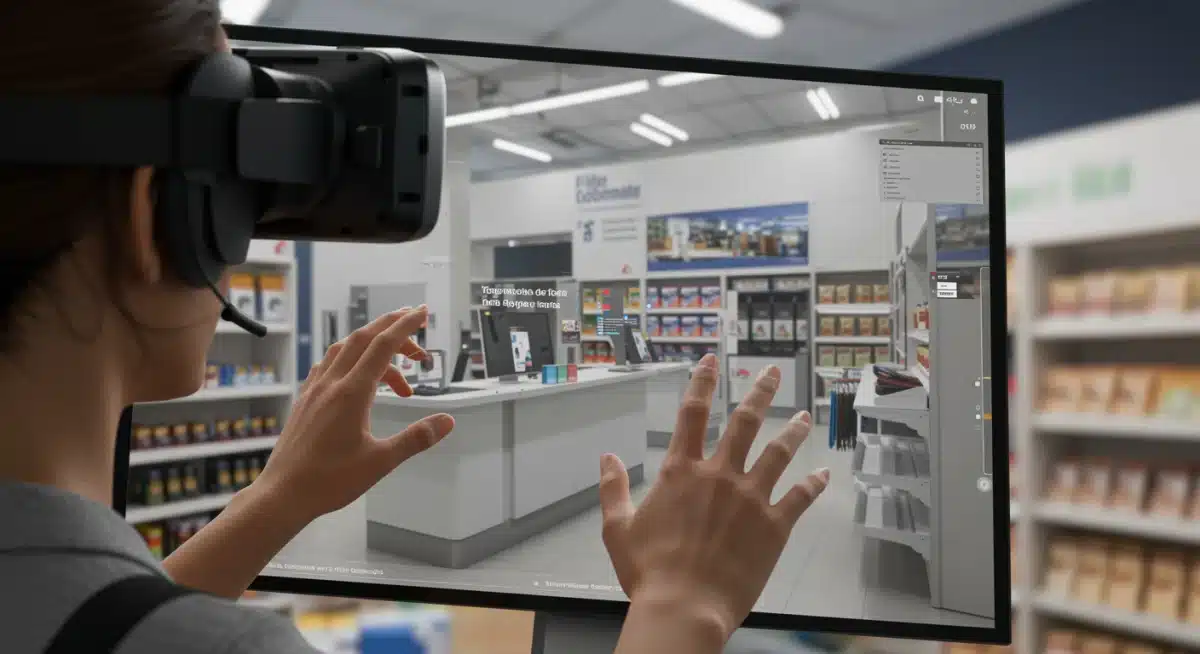
The onboarding process for new trainees is streamlined, often requiring minimal technical expertise. The interfaces within the VR simulations are designed to be intuitive, using familiar visual cues and natural interactions. This focus on ease of use helps reduce anxiety for first-time VR users and allows them to concentrate on the training content.
Enhancing Inclusivity in VR Training
Accessibility is a growing concern in all digital technologies, and VR is no exception. Strivr addresses this through various features:
- Customizable Settings: Options for adjusting visual and auditory elements cater to different sensory needs.
- Motion Sickness Mitigation: Techniques like teleportation locomotion and reduced field of view help minimize discomfort for sensitive users.
- Multi-language Support: Training modules can be adapted for diverse linguistic backgrounds, broadening reach.
By prioritizing UX and accessibility, Strivr ensures that its training solutions are not just effective but also equitable. This inclusive approach means that more employees can benefit from the advanced learning opportunities that VR provides, fostering a more skilled and confident workforce.
Feedback mechanisms are also integrated, allowing users to report issues or suggest improvements directly. This continuous feedback loop helps Strivr refine its applications, ensuring they remain at the cutting edge of both technology and user satisfaction.
Challenges and Future Outlook for Strivr
Despite its impressive advancements, Strivr, like any technology leader, faces challenges. The rapid pace of VR hardware development means constant adaptation and optimization. Additionally, the initial investment in VR infrastructure can be a barrier for some smaller organizations, though costs are steadily decreasing.
Another challenge lies in the continuous creation of high-quality, relevant content. While Strivr offers authoring tools, developing truly effective VR experiences requires a blend of technical expertise, instructional design, and creative vision. Ensuring content remains engaging and up-to-date is an ongoing effort.
Addressing Future Hurdles
- Hardware Agnosticism: Maintaining compatibility with emerging VR devices will be crucial for market penetration.
- Content Scalability: Developing more efficient methods for creating and updating training modules to meet diverse industry demands.
- Integration with L&D Ecosystems: Seamless integration with existing Learning & Development (L&D) platforms will enhance utility.
Looking ahead, Strivr is well-positioned to capitalize on the increasing acceptance of VR in the enterprise. The company’s focus on data analytics and performance measurement will likely become even more critical as businesses seek to quantify the ROI of their training investments. The future of work demands adaptable and highly skilled employees, and VR training is uniquely suited to meet this need.
The potential for Strivr to expand into new sectors, such as healthcare and government, remains significant. As the technology becomes more accessible and affordable, its applications will only broaden, further cementing its role in the future of skill development.
Competitive Landscape and Strivr’s Differentiators
The VR training market is becoming increasingly competitive, with new players constantly emerging and established tech giants also entering the fray. Understanding Strivr’s unique selling propositions is key to appreciating its continued leadership in this dynamic environment. While many companies offer VR content, Strivr distinguishes itself through a holistic approach.
Many competitors focus solely on content creation or hardware provision. Strivr, however, offers an end-to-end solution that encompasses platform technology, content development tools, and robust analytics. This integrated approach simplifies deployment and management for businesses, providing a single point of contact for their VR training needs.
Strivr’s Competitive Advantages
- Integrated Platform: A comprehensive solution combining hardware integration, content authoring, and analytics.
- Advanced Analytics: Superior data collection and interpretation capabilities for measuring training effectiveness.
- Proven Track Record: Extensive portfolio of successful enterprise deployments and measurable ROI.
- Focus on Enterprise: Tailored specifically for corporate training needs, understanding the nuances of large-scale deployments.
Furthermore, Strivr’s strong partnerships with leading academic institutions and research bodies ensure that its methodologies are grounded in sound pedagogical principles. This scientific backing gives their solutions an edge in terms of efficacy and credibility compared to less rigorously developed alternatives.
The company’s commitment to continuous innovation, particularly in areas like AI-driven adaptive learning and enhanced realism in simulations, keeps it ahead of the curve. As the market matures, these differentiators will become even more crucial for maintaining a competitive edge and attracting new clients.
| Key Aspect | Description |
|---|---|
| Immersive Learning | Strivr’s VR apps create realistic, risk-free environments for practical skill acquisition. |
| Data Analytics | Platform provides deep insights into trainee performance and program efficacy. |
| Skill Development Impact | Demonstrated improvements in retention, proficiency, and safety across industries. |
| User Experience | Intuitive interfaces and accessibility features ensure broad user adoption and engagement. |
Frequently Asked Questions About Strivr VR Training
Strivr VR training is highly effective for developing both soft skills, such as customer service, leadership, and empathy, and hard skills, including operational procedures, technical maintenance, and safety protocols across various industries. Its immersive nature allows for realistic practice.
Strivr utilizes a comprehensive data analytics dashboard that tracks key performance indicators such as decision-making accuracy, task completion times, error rates, and trainee engagement. This data provides actionable insights into individual and program-wide effectiveness, allowing for continuous optimization.
Yes, Strivr’s platform is designed to be hardware-agnostic, supporting a wide range of commercially available VR headsets. This flexibility allows businesses to integrate Strivr into their current VR infrastructure or choose the most suitable hardware for their specific training needs and budget.
VR training offers several advantages, including increased knowledge retention (up to 75% higher), faster skill acquisition, reduced training costs, and the ability to practice dangerous scenarios safely. It provides a consistent, standardized learning experience that is highly engaging and experiential.
Strivr employs a combination of continuous content updates, user feedback mechanisms, and AI-powered adaptive learning. Its content authoring tools also empower clients to customize and create new modules, ensuring relevance. Regular research and development keep the simulations cutting-edge and engaging.
Conclusion
As Q1 2025 draws to a close, Strivr’s impact on corporate skill development through its VR training apps is undeniable. By leveraging immersive technology, data-driven insights, and a user-centric approach, Strivr has established itself as a pivotal force in transforming how organizations train their workforce. While challenges in content scalability and hardware evolution persist, Strivr’s integrated platform and commitment to innovation position it strongly for continued leadership. The future of learning is increasingly immersive, and Strivr is clearly at the forefront, equipping businesses with the tools to cultivate highly skilled, adaptable, and confident employees ready for the demands of tomorrow.