Top 3 VR Platforms for Enterprise Training in 2025: U.S. Market
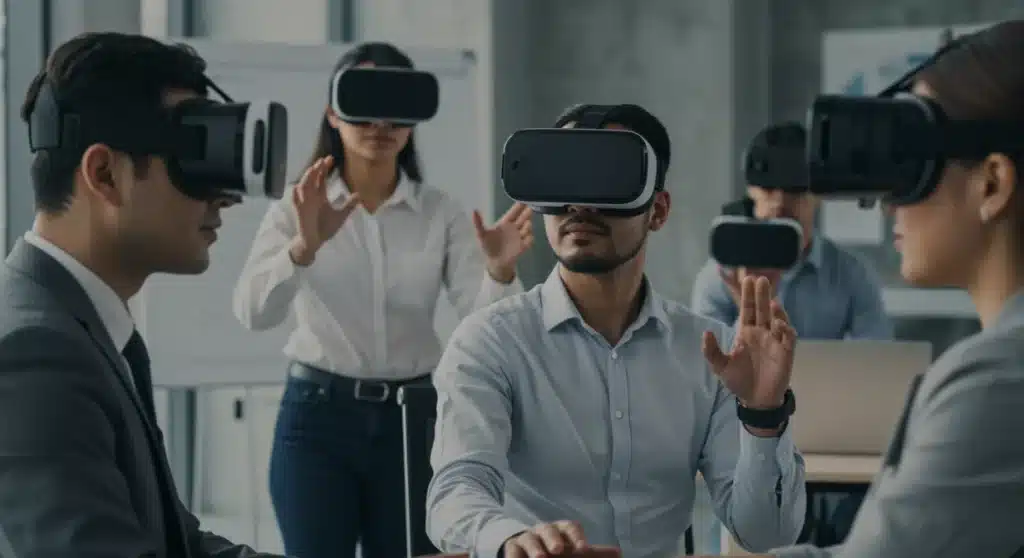
The top 3 VR platforms for enterprise training in the U.S. market by 2025 are poised to revolutionize corporate learning by offering immersive, cost-effective, and highly scalable solutions for skill development and operational efficiency.
As we approach 2025, the landscape of corporate learning is rapidly evolving, with virtual reality emerging as a transformative force. Businesses are increasingly recognizing the unparalleled benefits of immersive training, leading to a surge in demand for robust and scalable VR solutions. This article delves into an in-depth U.S. market comparison, focusing on VR enterprise training platforms that are set to define the industry, offering insights into their capabilities, advantages, and suitability for various organizational needs.
The Rise of VR in Corporate Learning: A Strategic Imperative
Virtual reality is no longer a futuristic concept but a present-day strategic imperative for businesses seeking to enhance training efficacy, reduce costs, and improve employee performance. The U.S. market, in particular, is witnessing significant adoption, driven by technological advancements and a growing understanding of VR’s potential beyond gaming.
Enterprises are leveraging VR for a multitude of training scenarios, from complex procedural simulations in manufacturing and healthcare to soft skills development in customer service and leadership. The immersive nature of VR allows for experiential learning that traditional methods simply cannot replicate, offering a safe environment for practice and repetition without real-world consequences.
Why VR Training is Gaining Traction
- Enhanced Engagement: VR captivates learners, leading to higher retention rates and deeper understanding.
- Cost Efficiency: Reduces expenses associated with travel, physical equipment, and on-site instructors over time.
- Scalability: VR modules can be deployed to a global workforce simultaneously, ensuring consistent training quality.
- Risk-Free Environment: Allows employees to practice dangerous or high-stakes tasks without actual risk.
The strategic shift towards VR training is not merely a trend; it represents a fundamental change in how companies invest in their human capital. By providing engaging and effective learning experiences, VR platforms contribute directly to increased productivity, reduced errors, and a more skilled workforce, solidifying their position as a cornerstone of modern enterprise development.
Platform Spotlight: ImmerseVR – The Immersive Leader
ImmerseVR stands out as a formidable player in the U.S. enterprise VR training market, renowned for its comprehensive suite of tools and a strong focus on high-fidelity simulations. This platform has garnered significant attention for its ability to deliver incredibly realistic and interactive training modules, making it a preferred choice for industries where precision and real-world applicability are paramount.
The platform’s strength lies in its advanced content creation capabilities, allowing businesses to develop highly customized scenarios that mirror specific operational challenges. ImmerseVR provides robust analytics, enabling trainers to track learner progress, identify areas for improvement, and measure the tangible impact of the training on performance metrics. Its integration capabilities with existing learning management systems (LMS) also streamline deployment and administration.
Key Features of ImmerseVR
- High-Fidelity Graphics: Delivers ultra-realistic visual and auditory experiences for maximum immersion.
- Custom Content Creation: Offers powerful authoring tools for tailored training scenarios.
- Performance Analytics: Provides detailed data on learner engagement and skill acquisition.
- Extensive Content Library: A growing collection of pre-built modules for various industries.
While ImmerseVR’s advanced features come with a higher investment, the return on investment for companies requiring highly specialized and impactful training can be substantial. Its commitment to continuous innovation and customer support further solidifies its position as a leading contender in the enterprise VR training space.
Platform Spotlight: EngageXR – The Collaborative Innovator
EngageXR distinguishes itself through its exceptional emphasis on collaborative and social learning experiences within virtual environments. This platform is particularly well-suited for organizations that prioritize teamwork, communication, and interpersonal skill development, offering virtual meeting spaces, classrooms, and event venues that foster a strong sense of presence among dispersed teams.
The platform’s intuitive user interface and cross-device compatibility make it accessible to a broader audience, ensuring that employees can participate in VR training regardless of their hardware setup. EngageXR’s focus on interactivity extends beyond individual training, allowing multiple users to engage with virtual objects, participate in role-playing exercises, and receive real-time feedback from instructors and peers. This collaborative approach enhances problem-solving skills and promotes a shared learning journey.
EngageXR also boasts a strong developer community and a marketplace for third-party content, offering businesses flexibility in sourcing and deploying training modules. Its scalable architecture supports large-scale deployments, making it an attractive option for multinational corporations looking to unify their global training initiatives.
The platform’s commitment to creating engaging and interactive multi-user experiences positions it as a leader in fostering a dynamic and connected learning environment, proving that VR training can be both effective and highly social.
Platform Spotlight: Strivr – The Performance Optimizer
Strivr has carved a significant niche in the enterprise VR training market by focusing heavily on performance optimization and skill transfer, particularly in high-stakes operational environments. Their approach is data-driven, utilizing advanced analytics to measure the impact of VR training on real-world job performance, making them a favorite among companies seeking quantifiable results.
The platform excels in delivering realistic simulations for tasks that require muscle memory, critical decision-making, and situational awareness. Industries such as retail, logistics, and public safety have greatly benefited from Strivr’s ability to replicate complex scenarios, allowing employees to repeatedly practice and refine their skills in a safe, controlled setting. The emphasis here is on bridging the gap between virtual practice and actual job execution.
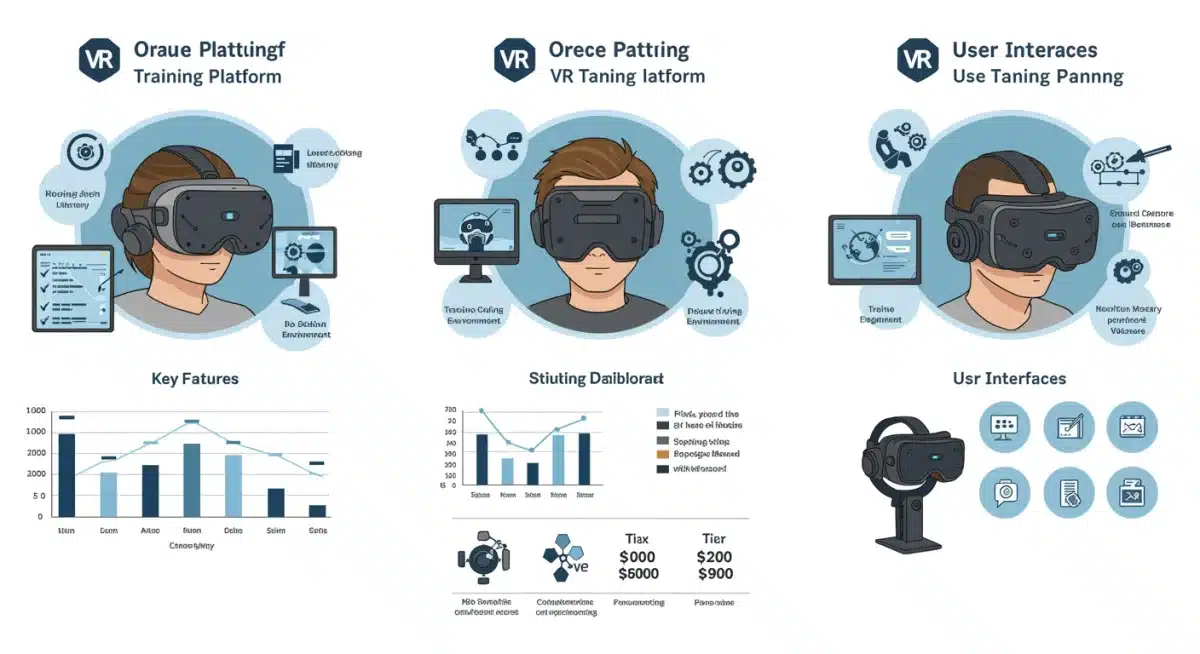
Strivr’s methodology integrates behavioral science principles into its module design, ensuring that training content is not only immersive but also psychologically optimized for maximum learning and retention. This scientific approach underpins their claim of significantly improving employee performance and reducing incidents in the workplace.
Strivr’s Core Strengths
- Performance-Driven Analytics: Measures actual skill transfer and ROI from VR training.
- Behavioral Science Integration: Designs modules for optimal learning and retention.
- High-Stakes Scenario Replication: Ideal for critical operational and safety training.
- Scalable Deployment: Easily integrates into existing corporate training infrastructures.
For organizations where operational efficiency and safety are paramount, Strivr offers a compelling solution, providing not just training but a measurable pathway to enhanced performance and reduced operational risks.
Comparative Analysis: Features, Cost, and Scalability
When evaluating VR enterprise training platforms, a direct comparison of features, cost implications, and scalability is crucial for making an informed decision. Each of the top three platforms—ImmerseVR, EngageXR, and Strivr—offers distinct advantages tailored to different business needs and budgets.
ImmerseVR typically targets enterprises requiring the highest fidelity and customization for complex simulations. Its cost model tends to be higher due to the advanced content creation tools and sophisticated analytics, but it offers unparalleled realism. Scalability is robust, allowing for global deployment, though content development can be resource-intensive initially.
EngageXR, on the other hand, provides a more accessible entry point, particularly for collaborative learning. Its pricing models are often more flexible, catering to a wider range of business sizes. The platform’s strength in social VR makes it highly scalable for engaging large, distributed teams, with a focus on ease of content sharing and community-driven learning.
Strivr positions itself as a premium solution for performance-critical training. While its initial investment might be comparable to ImmerseVR, its value proposition lies in measurable performance improvements and risk reduction, which can lead to significant long-term savings. Strivr’s scalability is strong, with a proven track record of deploying large-scale programs across major corporations.
Ultimately, the choice among these platforms will depend on a company’s specific training objectives, budget, and the desired level of immersion and analytical depth. Understanding these nuances is key to selecting the platform that best aligns with an organization’s strategic goals for enterprise training.
Future Trends and Considerations for U.S. Businesses
The VR enterprise training landscape is dynamic, with continuous innovation shaping its future. U.S. businesses must remain attuned to emerging trends and critical considerations to maximize their investment in virtual reality solutions. The integration of AI and machine learning is rapidly advancing, promising even more personalized and adaptive training experiences.
AI-powered virtual instructors can provide real-time feedback, adapt scenarios based on learner performance, and even generate dynamic content, making training more efficient and effective. Another significant trend is the increasing sophistication of haptic feedback, which will allow for more tactile and immersive interactions within VR simulations, particularly beneficial for hands-on technical training.
Key Future Trends
- AI Integration: Personalized learning paths, intelligent feedback, and dynamic content generation.
- Haptic Feedback: Enhanced tactile experiences for more realistic hands-on training.
- Interoperability Standards: Greater compatibility between platforms and hardware.
- Edge Computing: Reduced latency and improved performance for complex simulations.
Furthermore, the growing emphasis on data privacy and cybersecurity in VR environments will necessitate robust security protocols from platform providers. Businesses should prioritize platforms that demonstrate a strong commitment to protecting sensitive trainee data. As the technology matures, expect greater standardization and interoperability, simplifying the integration of VR training into existing IT infrastructures. Staying informed about these trends will be crucial for U.S. businesses looking to maintain a competitive edge in their training methodologies.
| Platform | Primary Focus |
|---|---|
| ImmerseVR | High-fidelity, customized simulations |
| EngageXR | Collaborative and social learning experiences |
| Strivr | Performance optimization and skill transfer |
Frequently Asked Questions About VR Enterprise Training
VR enterprise training offers benefits such as enhanced learner engagement, improved knowledge retention, significant cost savings over time by reducing travel and physical resource needs, and the ability to practice high-risk scenarios in a safe, controlled virtual environment without real-world consequences or damage.
Selecting the right platform involves assessing your specific training needs, budget, desired level of immersion, and scalability requirements. Consider factors like content customization, analytics capabilities, ease of integration with existing systems, and the platform’s focus (e.g., high-fidelity simulations, collaborative learning, or performance optimization).
While initial setup costs for VR hardware and content development can be significant, the long-term cost benefits often outweigh the investment, even for SMBs. Reduced travel expenses, increased training efficiency, and improved employee performance can lead to a positive ROI, making it increasingly viable for businesses of all sizes.
VR enterprise training content can range from realistic simulations for technical skills (e.g., machinery operation, medical procedures) to soft skills development (e.g., customer service, leadership, public speaking). It can also include virtual tours, onboarding experiences, and collaborative virtual meeting spaces for remote teams.
Future trends include deeper integration of AI and machine learning for personalized and adaptive learning experiences, advancements in haptic feedback for more realistic tactile interactions, improved interoperability standards between platforms, and the use of edge computing to enhance performance and reduce latency in complex VR simulations.
Conclusion
The U.S. market for VR enterprise training is rapidly maturing, with platforms like ImmerseVR, EngageXR, and Strivr leading the charge in transforming how businesses approach learning and development. These platforms offer diverse strengths, from high-fidelity simulations and collaborative environments to data-driven performance optimization, catering to a wide spectrum of corporate needs. As technology continues to evolve, integrating AI and advanced haptics, the efficacy and reach of VR training will only grow, solidifying its role as an indispensable tool for fostering a highly skilled, engaged, and productive workforce in 2025 and beyond. Businesses that strategically adopt these innovative solutions will undoubtedly gain a significant competitive advantage in a dynamic global economy.