US AR Landscape 2025: Enterprise Growth & Investment Trends
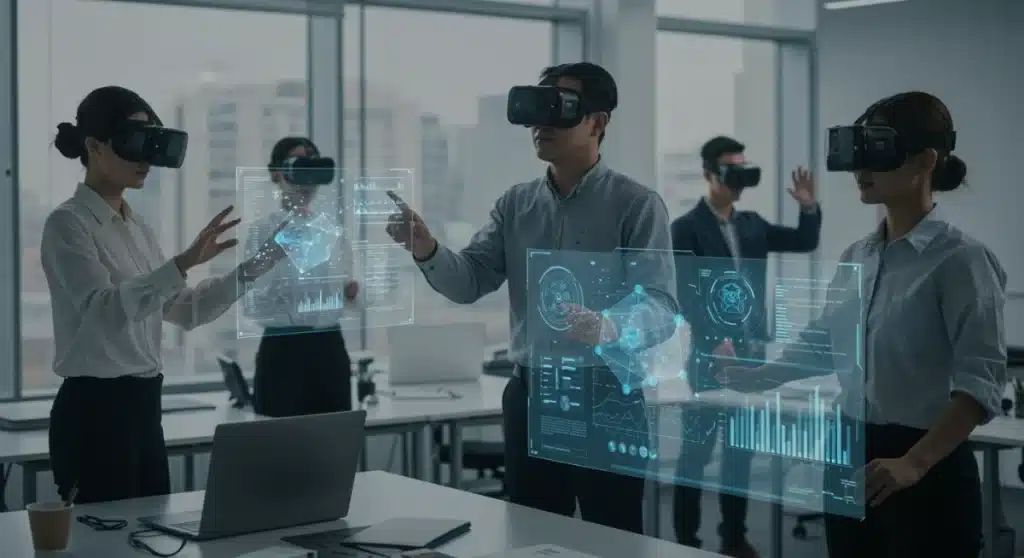
The 2025 US AR landscape is poised for a significant transformation, with key technological advancements and substantial investments projected to drive a remarkable 30% growth in enterprise solutions.
As we approach 2025, the US AR enterprise growth trajectory is becoming increasingly clear, pointing towards a future where augmented reality is not just a novelty but a fundamental tool for business. This transformative technology is rapidly moving beyond consumer entertainment, embedding itself into the very fabric of industrial, healthcare, and educational sectors. Understanding the key trends and investment patterns now is crucial for any organization looking to leverage AR for a competitive edge and to capitalize on the anticipated 30% surge in enterprise solutions.
The evolving US AR market: a snapshot of 2025
The augmented reality market in the United States is experiencing an unprecedented period of expansion, particularly within the enterprise sector. Projections for 2025 indicate a robust 30% growth, fueled by both technological maturity and a growing understanding of AR’s practical applications. This growth isn’t uniform; it’s concentrated in specific areas where AR offers tangible benefits, such as improved efficiency, enhanced training, and advanced remote collaboration capabilities. The shift from experimental deployments to widespread adoption is a defining characteristic of this period, marking AR as a critical component of digital transformation strategies.
Several factors contribute to this rapid evolution. The increasing availability of more affordable and sophisticated AR hardware, coupled with robust software development kits (SDKs) and platforms, has lowered the barrier to entry for many businesses. Furthermore, the COVID-19 pandemic inadvertently accelerated AR adoption by highlighting the critical need for remote solutions and contactless interactions. Industries previously hesitant to invest are now recognizing AR as a strategic imperative, driving both innovation and significant capital expenditure. This dynamic environment sets the stage for a period of intense development and competitive differentiation.
Hardware advancements driving adoption
- Lighter, more comfortable headsets: New designs prioritize ergonomics, making AR devices suitable for extended use in professional settings.
- Improved field of view: Wider and clearer displays enhance immersion and practical utility for complex tasks.
- Enhanced processing power: On-device computing capabilities are increasing, allowing for more sophisticated AR applications without relying solely on cloud processing.
- Integrated spatial computing: Better tracking and environmental understanding enable more precise and interactive digital overlays.
The convergence of these hardware improvements with more powerful and user-friendly software is creating a fertile ground for enterprise AR solutions. Businesses are no longer just envisioning AR’s potential; they are actively deploying it, seeing measurable returns on investment. The focus is now on scalability and seamless integration into existing workflows, ensuring that AR enhances, rather than complicates, operational processes. This pragmatic approach is key to sustaining the projected growth and solidifying AR’s role as an indispensable enterprise technology. The market is maturing, moving beyond initial hype to deliver real-world value across a diverse range of industries.
Key trends shaping enterprise AR solutions
The enterprise augmented reality landscape in 2025 is being sculpted by several powerful trends that are fundamentally altering how businesses operate. One of the most prominent trends is the widespread adoption of AR for remote assistance and collaboration. As globalized workforces and distributed teams become the norm, AR provides an invaluable tool for experts to guide on-site personnel, diagnose issues, and conduct inspections from anywhere in the world. This capability drastically reduces travel costs, minimizes downtime, and ensures that specialized knowledge is accessible exactly when and where it’s needed.
Another significant trend is the integration of AR into advanced training and simulation programs. Traditional training methods often fall short in providing realistic, hands-on experience, especially for complex or hazardous tasks. AR overlays digital information onto real-world environments, allowing trainees to practice procedures in a safe, controlled setting with immediate feedback. This leads to faster skill acquisition, reduced errors, and improved retention rates, making it a compelling investment for industries ranging from manufacturing to healthcare. The ability to simulate real-world scenarios without physical risk or resource consumption is a game-changer for workforce development.
AR in manufacturing and logistics
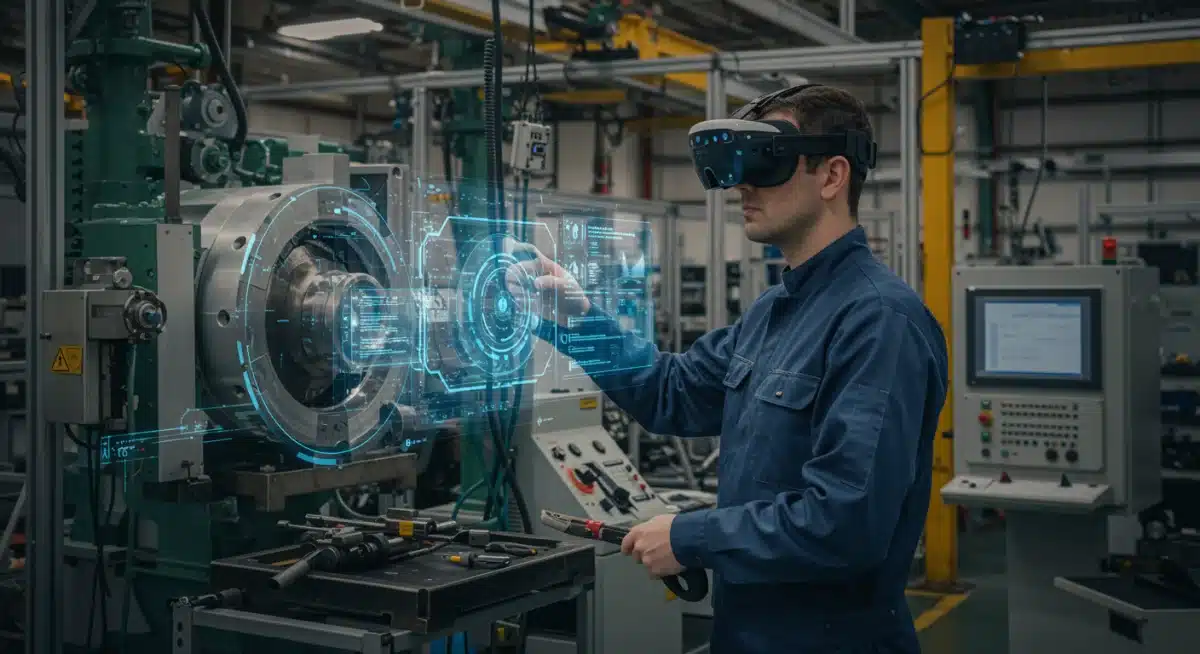
In manufacturing, AR is transforming assembly lines, quality control, and maintenance operations. Workers can receive step-by-step instructions overlaid directly onto machinery, significantly reducing errors and improving efficiency. For logistics, AR-powered smart glasses guide warehouse workers through picking and packing processes, optimizing routes and minimizing manual input. This not only speeds up operations but also enhances accuracy and reduces training time for new employees. The practical benefits are clear: reduced operational costs and increased productivity.
- Guided assembly: Digital instructions superimposed on physical components.
- Quality assurance: Real-time defect detection and measurement.
- Predictive maintenance: Visualizing sensor data on equipment for proactive repairs.
- Warehouse optimization: AR-guided navigation for efficient order fulfillment.
The impact of these trends extends beyond mere operational improvements; they are fundamentally redefining workflows and creating new paradigms for how work is done. Businesses that embrace these AR-driven transformations are likely to see significant competitive advantages in terms of efficiency, cost-effectiveness, and workforce empowerment. The focus is on creating intuitive, powerful tools that seamlessly integrate into the daily lives of employees, enhancing their capabilities rather than replacing them.
Strategic investments fueling AR innovation
The projected 30% growth in US enterprise AR solutions by 2025 is not occurring in a vacuum; it’s a direct result of substantial strategic investments from both established tech giants and innovative startups. These investments are multifaceted, spanning hardware development, software platforms, content creation tools, and specialized industry applications. Companies are pouring capital into research and development to push the boundaries of AR capabilities, focusing on areas like enhanced spatial computing, improved user interfaces, and seamless integration with artificial intelligence (AI) and the Internet of Things (IoT).
Venture capital firms and corporate investors are recognizing the immense market potential of enterprise AR, particularly as success stories emerge from pioneering companies. Early adopters demonstrating clear ROI in areas like remote assistance, training, and design visualization are attracting further investment, creating a virtuous cycle of innovation and adoption. This financial backing is crucial for developing the next generation of AR technologies, making them more accessible, powerful, and tailored to specific business needs. The investment landscape signals a strong belief in AR’s long-term value proposition for the enterprise.
Key investment areas
- Hardware miniaturization and power efficiency: Developing lighter, more powerful AR glasses that can be worn comfortably for extended periods.
- AI-powered AR platforms: Integrating machine learning for better object recognition, contextual awareness, and predictive analytics within AR applications.
- Cloud infrastructure for AR: Building scalable cloud solutions to support complex AR experiences, real-time data processing, and content delivery.
- Specialized industry solutions: Funding startups focused on niche AR applications for sectors like healthcare, construction, and retail.
The scale of these investments reflects a broader understanding that AR isn’t just a feature but a foundational technology for future business operations. Companies are not just buying AR products; they are investing in entire ecosystems, from the underlying chipsets to the end-user applications. This comprehensive approach ensures that the technology continues to mature rapidly, addressing current limitations and unlocking new possibilities. The strategic nature of these investments underscores the confidence in AR’s ability to deliver significant returns and reshape various industries.
Impact on workforce training and development
Augmented reality is fundamentally reshaping workforce training and development, offering immersive and highly effective learning experiences that traditional methods often cannot match. The ability to overlay digital instructions, 3D models, and real-time data onto physical objects or environments transforms how employees acquire new skills and perform complex tasks. This is particularly impactful in industries requiring hands-on proficiency, such as manufacturing, healthcare, and field services, where mistakes can be costly or dangerous.
AR-powered training modules allow employees to learn at their own pace, in a safe and controlled environment, without the need for expensive physical prototypes or travel to specialized facilities. For example, a new technician can practice assembling a complex machine by following holographic instructions that highlight each component and step. This not only accelerates the learning curve but also improves knowledge retention and reduces the cognitive load on trainees. The shift towards experiential learning through AR is creating a more competent and adaptable workforce, ready to tackle the challenges of modern industries.
Benefits of AR in training
- Reduced training time: Faster skill acquisition through intuitive visual guidance.
- Improved safety: Practicing hazardous procedures in a virtual overlay without real-world risks.
- Enhanced retention: Experiential learning leads to better memory recall than passive methods.
- Customized learning paths: Tailoring training content to individual needs and skill levels.
Furthermore, AR facilitates continuous learning and upskilling, allowing employees to access relevant information and expert guidance on demand. This ‘just-in-time’ learning approach ensures that workers always have access to the most current procedures and best practices, directly at their point of need. The integration of AR into training frameworks is not just an efficiency gain; it’s a strategic investment in human capital, fostering a culture of continuous improvement and empowering employees with cutting-edge tools. This makes AR an indispensable asset for companies aiming to maintain a highly skilled and competitive workforce.
AR for remote collaboration and field services
Remote collaboration and field services stand as two of the most immediate and impactful applications of augmented reality within the enterprise sector. In an increasingly interconnected yet geographically dispersed world, AR bridges distances, allowing experts to provide real-time assistance to technicians on the ground, regardless of their location. This capability is revolutionizing how companies manage maintenance, repairs, and installations, significantly reducing the need for costly and time-consuming on-site visits by specialized personnel.
Imagine a scenario where a field technician encounters an unfamiliar piece of equipment. Instead of waiting for a senior expert to travel, they can wear an AR headset and connect with an expert remotely. The expert can then see exactly what the technician sees, annotate the real-world view with digital instructions, highlight specific components, or even share relevant schematics and 3D models. This hands-on, visual guidance ensures that complex problems are resolved quickly and accurately, minimizing downtime and improving first-time fix rates. This capability is not just about efficiency; it’s about democratizing expertise and ensuring operational continuity.
Transforming field operations
- Live visual guidance: Experts draw and annotate directly on the field technician’s view.
- Virtual presence: Remote experts feel as though they are physically present, enhancing communication.
- Access to digital twins: Overlaying virtual replicas or performance data onto physical assets.
- Reduced travel costs: Minimizing the need for experts to travel to distant sites.
The implications for field services are profound. Companies can deploy less experienced technicians with confidence, knowing that expert support is always just an AR call away. This optimizes resource allocation, extends the reach of specialized knowledge, and ultimately leads to higher customer satisfaction through faster problem resolution. Furthermore, AR can be used for remote inspections and quality checks, allowing supervisors to virtually tour sites and verify work without leaving their offices. The ability of AR to provide context-aware, real-time collaboration is making it an indispensable tool for modern enterprises facing complex operational challenges.
Challenges and future outlook for US enterprise AR
While the outlook for US enterprise AR in 2025 is overwhelmingly positive, with a projected 30% growth, the path forward is not without its challenges. One significant hurdle remains the cost of high-performance AR hardware, which, despite reductions, can still be a substantial investment for small and medium-sized businesses. This is coupled with the need for robust IT infrastructure to support complex AR deployments, including high-bandwidth connectivity and secure data storage solutions. Overcoming these initial investment barriers is crucial for broader market penetration.
Another challenge lies in the development of user-friendly content creation tools and platforms. While AR SDKs are improving, creating compelling and effective AR experiences still often requires specialized skills and significant development time. Simplifying this process, perhaps through no-code or low-code AR development platforms, will be vital for enabling more businesses to create and deploy their own tailored AR solutions. Furthermore, data privacy and security concerns surrounding the collection and processing of real-world environmental data through AR devices must be rigorously addressed to build user trust and ensure compliance with evolving regulations.
Addressing future challenges
- Standardization of platforms: Developing common protocols and frameworks to ensure interoperability.
- Talent gap: Training a new generation of AR developers, designers, and implementers.
- User acceptance: Overcoming initial resistance and integrating AR seamlessly into daily workflows.
- Ethical considerations: Addressing issues of privacy, data ownership, and responsible use of AR.
Despite these challenges, the future outlook for US enterprise AR remains incredibly bright. Continued advancements in hardware, coupled with increasingly sophisticated software and AI integration, will lead to more intuitive, powerful, and cost-effective solutions. As the technology matures and becomes more accessible, its applications will diversify even further, extending into new sectors and transforming existing ones. The journey to widespread AR adoption is an iterative one, characterized by continuous innovation and a growing understanding of how this technology can unlock unprecedented value for businesses across the nation. The projected growth is a testament to the undeniable potential that AR holds for the enterprise world.
| Key Trend | Brief Description |
|---|---|
| Remote Collaboration | AR enables experts to provide real-time visual guidance to remote field technicians, reducing travel and downtime. |
| Enhanced Training | Immersive AR simulations offer hands-on practice for complex tasks, improving skill acquisition and safety. |
| Industrial Efficiency | AR guides manufacturing assembly, quality control, and logistics, boosting productivity and reducing errors. |
| Strategic Investments | Significant funding in hardware, software, and AI integration fuels rapid innovation and market expansion. |
Frequently asked questions about US enterprise AR in 2025
The growth is primarily driven by advanced hardware, sophisticated software platforms, increased strategic investments, and the proven ROI in areas like remote assistance, training, and operational efficiency. The need for flexible, remote work solutions also played a significant role in accelerating adoption across various industries.
Key industries experiencing significant impact include manufacturing, healthcare, logistics, field services, and engineering. AR offers substantial benefits in these sectors for tasks ranging from guided assembly and remote diagnostics to surgical planning and immersive training simulations, enhancing precision and productivity.
AR transforms workforce training by providing immersive, hands-on experiences. Benefits include reduced training time, improved safety through virtual practice, enhanced knowledge retention, and customized learning paths. It allows employees to learn complex tasks in a realistic yet controlled environment, minimizing errors and accelerating skill development.
Despite rapid growth, enterprise AR faces challenges such as the high cost of advanced hardware, the need for robust IT infrastructure, and the complexity of content creation. Addressing data privacy, security, and fostering greater user acceptance are also crucial for overcoming adoption barriers and ensuring seamless integration into business workflows.
Strategic investments from tech giants and VCs are fueling R&D in critical areas like hardware miniaturization, AI integration, and cloud infrastructure. This capital accelerates technological maturity, lowers costs, and supports the development of specialized solutions, making AR more accessible and powerful for a wider range of enterprise applications.
Conclusion
The 2025 US augmented reality landscape is clearly poised for substantial transformation, with enterprise solutions leading the charge towards a projected 30% growth. This expansion is not merely a technological fad but a fundamental shift in how businesses operate, driven by tangible benefits in efficiency, training, and remote collaboration. While challenges such as hardware costs and content creation complexity remain, the continuous strategic investments and rapid innovation across the ecosystem indicate a robust and promising future. For businesses in the United States, embracing augmented reality is no longer an option but a strategic imperative to remain competitive and unlock new levels of productivity and innovation in the coming years.