2026 AR Training Revolution: Cut Industrial Onboarding Costs 20%
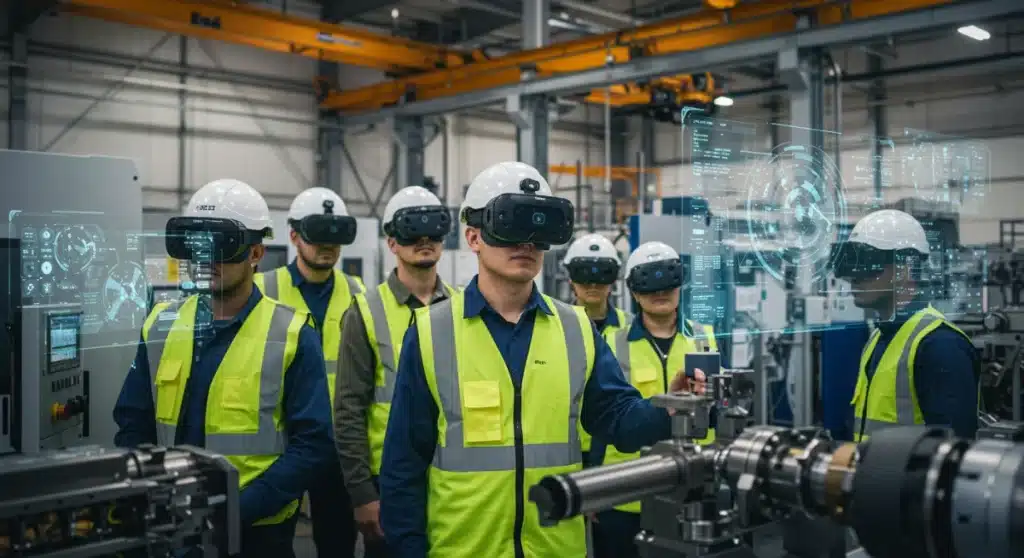
The 2026 AR Training Revolution is set to significantly reduce industrial onboarding costs by 20% for new US employees, leveraging immersive augmented reality experiences for enhanced learning and operational efficiency.
Imagine a future where new industrial employees in the US are not just learning, but truly experiencing their roles from day one, leading to significant cost reductions. The year 2026 is poised to witness a monumental shift, as The 2026 AR Training Revolution: Reducing Onboarding Costs by 20% for New US Employees in Industrial Sectors promises to redefine how businesses approach workforce integration and skill development. This isn’t just about new technology; it’s about a smarter, more efficient path to productivity.
The Imperative for Change in Industrial Onboarding
Traditional industrial onboarding processes often face significant challenges, including high costs, lengthy training periods, and inconsistent learning outcomes. These issues directly impact a company’s bottom line and can hinder a new employee’s ability to quickly become a productive member of the team. As industries evolve and complexity increases, the need for a more effective and efficient training paradigm becomes critical.
The current landscape in US industrial sectors highlights several pain points that AR training is uniquely positioned to address. The demand for skilled labor is high, yet the pipeline for new talent often struggles with outdated training methodologies. This creates a gap between the skills required and the capabilities of new hires, leading to extended probationary periods and increased supervisory overhead.
Hidden Costs of Traditional Onboarding
Many businesses underestimate the true cost of onboarding, which extends far beyond initial salaries. These hidden expenses can accumulate rapidly, affecting profitability and operational efficiency.
- Reduced Productivity: New employees take time to reach full productivity, impacting team output.
- Trainer Resources: Experienced staff dedicate significant time to training, diverting them from their primary roles.
- Material Waste: Mistakes during hands-on training can lead to wasted materials and rework.
- Safety Incidents: Inexperienced workers are more prone to accidents, incurring medical and liability costs.
Addressing these challenges effectively requires innovative solutions that can streamline the learning process, enhance knowledge retention, and ensure a safer, more productive workforce from the outset. Augmented reality offers a compelling answer, promising to transform these traditional bottlenecks into opportunities for growth and efficiency.
Understanding Augmented Reality in Industrial Training
Augmented Reality (AR) overlays digital information onto the real world, creating an interactive experience where virtual objects appear to coexist with real ones. In the context of industrial training, this means new employees can receive real-time, contextual guidance directly on the equipment or environment they are working with. This immersive approach drastically differs from traditional methods that rely on manuals, videos, or purely theoretical instruction.
The power of AR lies in its ability to provide hands-on learning without the risks or limitations of physical prototypes. Trainees can practice complex procedures, identify components, and troubleshoot issues in a safe, simulated environment, building confidence and competence before engaging with actual machinery. This immediate feedback loop is crucial for accelerating skill development and reducing errors.
Key Components of an AR Training System
A robust AR training system typically comprises several interconnected elements that work in synergy to deliver a seamless learning experience.
- AR Headsets/Smart Glasses: Devices like Microsoft HoloLens or Magic Leap, which project digital content onto the user’s field of view.
- Content Creation Platforms: Software tools that allow trainers to develop interactive 3D models, step-by-step instructions, and guided workflows.
- Tracking and Sensing Technologies: Systems that accurately map the physical environment and track user movements and interactions.
- Data Analytics: Tools to monitor trainee performance, identify areas for improvement, and measure the effectiveness of the training modules.
The integration of these components allows for highly customizable and scalable training solutions. Companies can tailor modules to specific job roles, equipment types, and complexity levels, ensuring that each new employee receives targeted and relevant instruction. This adaptability is key to achieving significant cost savings and improving training efficacy across diverse industrial operations.
How AR Drives a 20% Reduction in Onboarding Costs
The promise of a 20% reduction in onboarding costs for new US employees in industrial sectors through AR training is not merely aspirational; it is grounded in tangible benefits that directly impact expenditures. By streamlining the learning curve, enhancing safety, and improving knowledge retention, AR fundamentally alters the cost structure of bringing new talent up to speed. This efficiency gain translates into fewer resources spent on traditional training methods and faster integration into productive roles.
One primary driver of cost reduction is the accelerated time-to-proficiency. With AR, new hires can grasp complex procedures much quicker than through conventional means. This means they spend less time in non-productive training phases and more time contributing to the company’s output. The reduction in errors during initial tasks also conserves materials and prevents costly rework, further bolstering the economic benefits.
Accelerated Skill Acquisition
AR makes learning intuitive and interactive, allowing new employees to internalize complex information faster.
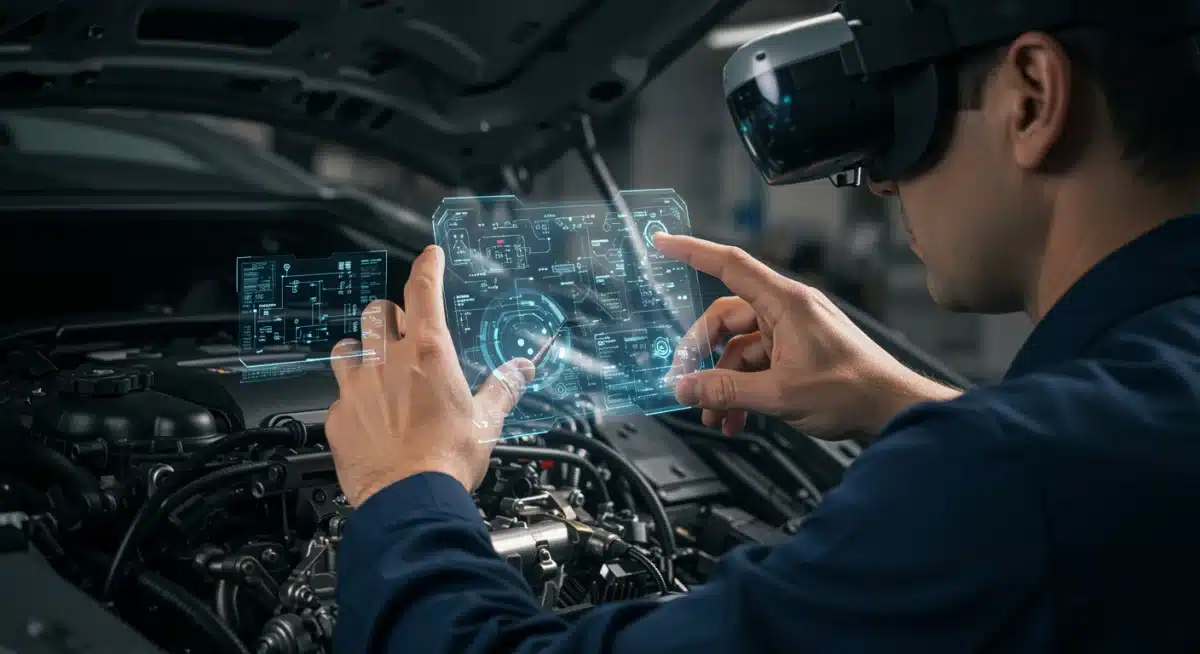
- Visual Guidance: Overlaying step-by-step instructions directly onto equipment eliminates ambiguity and guesswork.
- Repetitive Practice: Trainees can repeat procedures virtually until mastery, without consuming actual resources.
- Contextual Learning: Knowledge is acquired in the actual work environment, making it immediately applicable.
Furthermore, AR training reduces the reliance on highly skilled personnel to deliver one-on-one instruction. Instead, these experts can focus on more advanced tasks, while AR modules handle the foundational training. This reallocation of valuable human resources represents a significant operational saving. The ability to standardize training across multiple locations also ensures consistent quality, regardless of the instructor’s availability or experience, leading to a more uniformly skilled workforce and fewer post-training issues.

Case Studies and Early Adopters in the US Industrial Sector
While the full impact of the 2026 AR training revolution is yet to unfold, early adopters in the US industrial sector are already demonstrating compelling results. These pioneering companies are leveraging AR to address specific training challenges, ranging from complex assembly to critical maintenance procedures, and are reporting significant improvements in efficiency and cost savings. Their experiences provide a blueprint for broader industry adoption.
For instance, a major aerospace manufacturer implemented AR for training new technicians on engine assembly. The previous method involved extensive classroom time and hands-on practice with expensive mock-ups. By switching to AR, they observed a 30% reduction in training time and a notable decrease in assembly errors during initial production runs. This success underscores AR’s potential to not only cut costs but also enhance the quality of work.
Success Stories Across Industries
Various industrial sectors are finding unique ways to integrate AR into their training programs, yielding diverse benefits.
- Automotive Manufacturing: AR guides workers through intricate vehicle assembly steps, reducing training time and improving quality control.
- Energy Sector: Field technicians use AR for guided repairs and maintenance of complex machinery, minimizing downtime and safety risks.
- Medical Device Production: AR assists in sterile environment procedures and device assembly, ensuring precision and compliance.
Another prominent example comes from a large logistics and warehousing company that utilized AR glasses to train new employees on optimal package sorting and forklift operation. This led to a 25% faster onboarding process and a 15% reduction in workplace incidents during the initial months. These real-world applications highlight AR’s versatility and its capacity to deliver measurable returns on investment, paving the way for widespread adoption by 2026.
Overcoming Implementation Challenges and Future Outlook
While the benefits of AR training are clear, successful implementation in industrial settings is not without its challenges. Companies must navigate issues such as initial hardware costs, content development complexities, and integrating AR solutions with existing IT infrastructure. However, with technological advancements and increasing vendor support, these hurdles are becoming more manageable, making AR a viable option for a growing number of businesses.
The cost of AR headsets, for example, is steadily decreasing, and their capabilities are rapidly advancing. Moreover, intuitive content creation platforms are emerging, empowering in-house teams to develop training modules without extensive programming knowledge. Addressing cybersecurity concerns and ensuring data privacy are also paramount, requiring robust IT policies and secure system architectures.
Key Considerations for Successful AR Deployment
Strategic planning and a phased approach are essential for realizing the full potential of AR in training.
- Pilot Programs: Start with small, controlled deployments to test effectiveness and gather feedback.
- Stakeholder Buy-in: Secure support from management and involve employees in the transition process.
- Scalable Content: Develop modular training content that can be easily updated and adapted for different roles or equipment.
- Ongoing Support: Provide technical assistance and training for both users and content creators.
Looking ahead to 2026, the future of AR training in industrial sectors appears bright. Continued innovation in AR hardware and software will make solutions even more accessible and powerful. Furthermore, the integration of AI with AR will enable personalized learning paths, adaptive difficulty levels, and even more sophisticated real-time guidance. As companies increasingly recognize the long-term strategic advantages, AR is set to become an indispensable tool for workforce development, solidifying its role in reducing onboarding costs and fostering a highly skilled labor force.
The Strategic Advantage: Beyond Cost Reduction
While the 20% reduction in onboarding costs is a compelling driver for adopting AR training, the strategic advantages extend far beyond mere financial savings. Investing in augmented reality for new US employees in industrial sectors positions companies for long-term growth, enhanced competitiveness, and a more resilient workforce. This technology fosters a culture of innovation and continuous improvement, which are vital in today’s rapidly evolving industrial landscape.
One significant strategic benefit is improved employee retention. New hires who feel adequately trained, supported, and quickly become proficient are more likely to remain with the company. AR training provides a superior learning experience, reducing frustration and boosting confidence, thereby lowering turnover rates—a substantial hidden cost for many industrial firms. A highly skilled and stable workforce is a significant asset that contributes to overall operational excellence.
Long-Term Benefits of AR Integration
- Enhanced Safety: AR can simulate dangerous scenarios and provide immediate hazard warnings, leading to a safer work environment.
- Standardized Training: Ensures consistent quality of instruction across all locations and trainees, leading to uniform skill levels.
- Knowledge Transfer: Facilitates the capture and transfer of expert knowledge, mitigating the impact of an aging workforce.
- Innovation Culture: Adopting cutting-edge technology signals a forward-thinking approach, attracting top talent.
Moreover, AR training enhances a company’s agility, allowing for quicker adaptation to new technologies, processes, and product lines. As industrial environments become more complex and dynamic, the ability to rapidly reskill and upskill the workforce becomes a critical competitive differentiator. By integrating AR, businesses are not just solving today’s onboarding challenges; they are building a future-proof training infrastructure that supports continuous learning and innovation, ultimately strengthening their position in the global market.
| Key Aspect | Description |
|---|---|
| Cost Reduction Target | Aiming for a 20% decrease in onboarding expenses for new US industrial employees by 2026. |
| AR Training Mechanism | Augmented reality overlays digital instructions onto real-world equipment for immersive, hands-on learning. |
| Key Benefits | Accelerated skill acquisition, reduced errors, enhanced safety, and improved employee retention. |
| Strategic Impact | Fosters innovation, standardizes training, and future-proofs workforce development for industrial sectors. |
Frequently Asked Questions About AR Training
AR training in industrial settings involves using augmented reality devices, like smart glasses, to superimpose digital information, such as step-by-step instructions or 3D models, directly onto real-world machinery or work environments. This allows new employees to learn hands-on with contextual guidance.
AR reduces costs by accelerating skill acquisition, minimizing errors during initial tasks, and decreasing the need for extensive one-on-one supervision. It also lowers material waste from training mistakes and can improve safety, thereby reducing incident-related expenses.
Key challenges include the initial investment in AR hardware and software, the complexity of creating effective AR content, and integrating new systems with existing IT infrastructure. Data security and ensuring user acceptance also require careful planning and execution.
Sectors with complex machinery, intricate assembly processes, or high safety risks, such as manufacturing, aerospace, energy, logistics, and automotive, stand to benefit significantly from AR training due to its precision and immersive learning capabilities.
Beyond cost reduction, AR training offers substantial benefits like improved employee retention, enhanced workplace safety, standardized training quality, and more efficient knowledge transfer. It also fosters an innovative company culture and increases workforce agility.
Conclusion
The trajectory towards 2026 clearly points to augmented reality as a transformative force in industrial onboarding across the US. The targeted 20% reduction in costs for new employees is a powerful incentive, but the true revolution lies in the holistic benefits AR brings: faster skill acquisition, enhanced safety, and a more engaged, resilient workforce. Companies that embrace this shift will not only optimize their financial outlays but also secure a strategic advantage in an increasingly competitive and technologically driven industrial landscape.