Augmented Reality in US Education: Transforming Learning by 2026
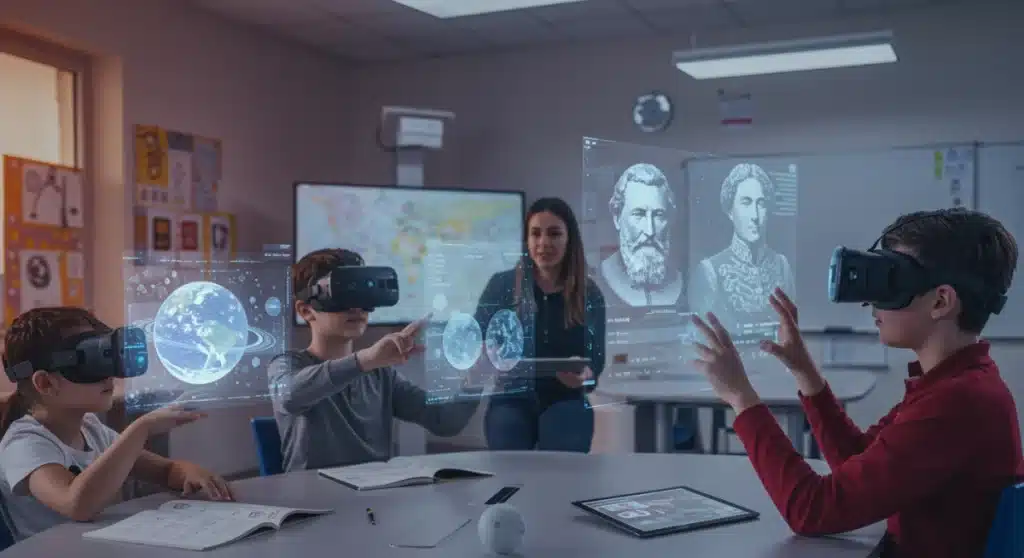
The landscape of education is constantly evolving, driven by technological advancements and a growing understanding of how students learn best. Among the myriad of innovations shaping the future of pedagogy, Augmented Reality (AR) stands out as a particularly disruptive and promising technology. By 2026, AR is poised to become an integral component of the US education system, fundamentally transforming how students interact with learning materials, comprehend complex concepts, and engage with their academic environment. This comprehensive guide delves into the profound impact of AR on US education, exploring its current applications, future potential, and the strategic roadmap for its widespread adoption.
Augmented Reality in US Education: A 2026 Guide to Enhanced Learning Outcomes for K-12
Imagine a classroom where students can dissect a virtual frog without harming an animal, explore ancient Roman ruins from their desks, or visualize complex mathematical equations floating in 3D space. This isn’t science fiction; it’s the promise of AR US Education. Augmented Reality, which overlays digital information onto the real world, is rapidly moving from a niche technology to a mainstream educational tool. Its ability to create immersive, interactive, and highly engaging learning experiences makes it uniquely suited to address many of the challenges faced by traditional educational models, particularly within the K-12 sector in the United States.
The Dawn of Immersive Learning: Why AR Matters for US Education
Traditional teaching methods, often reliant on textbooks and lectures, can sometimes struggle to capture the attention of a generation raised on digital interactivity. This is where AR US Education steps in. AR doesn’t replace the real world; it enhances it. By blending digital content with physical environments, AR creates a learning experience that is both tangible and deeply engaging. For K-12 students, this translates into a more dynamic and memorable educational journey.
The benefits of integrating AR into the curriculum are multifaceted. Firstly, it significantly boosts student engagement. When learning becomes an interactive exploration rather than passive reception, students are more likely to participate actively and retain information. Secondly, AR can simplify complex concepts. Abstract ideas, such as molecular structures or historical events, become concrete and understandable when visualized in 3D and placed within a familiar context. Thirdly, AR promotes experiential learning. Students can experiment, manipulate virtual objects, and observe real-time consequences, fostering a deeper understanding that goes beyond rote memorization. Finally, AR offers unparalleled accessibility, allowing students to access rich learning content regardless of their physical location or the availability of specialized equipment.
The year 2026 is not just a distant future; it’s a near-term horizon where strategic investments and pilot programs in AR US Education are expected to bear significant fruit. Educational institutions, technology providers, and policymakers are increasingly recognizing the potential of AR to address equity gaps, personalize learning pathways, and prepare students for a future workforce that will demand advanced digital literacy and problem-solving skills.
Current Applications and Success Stories in K-12 AR US Education
While widespread adoption is still a few years away, numerous pilot programs and early adopters are already showcasing the power of AR US Education in K-12 settings. These early successes provide a blueprint for future implementation and demonstrate the versatility of AR across various subjects.
Science Education: Bringing Concepts to Life
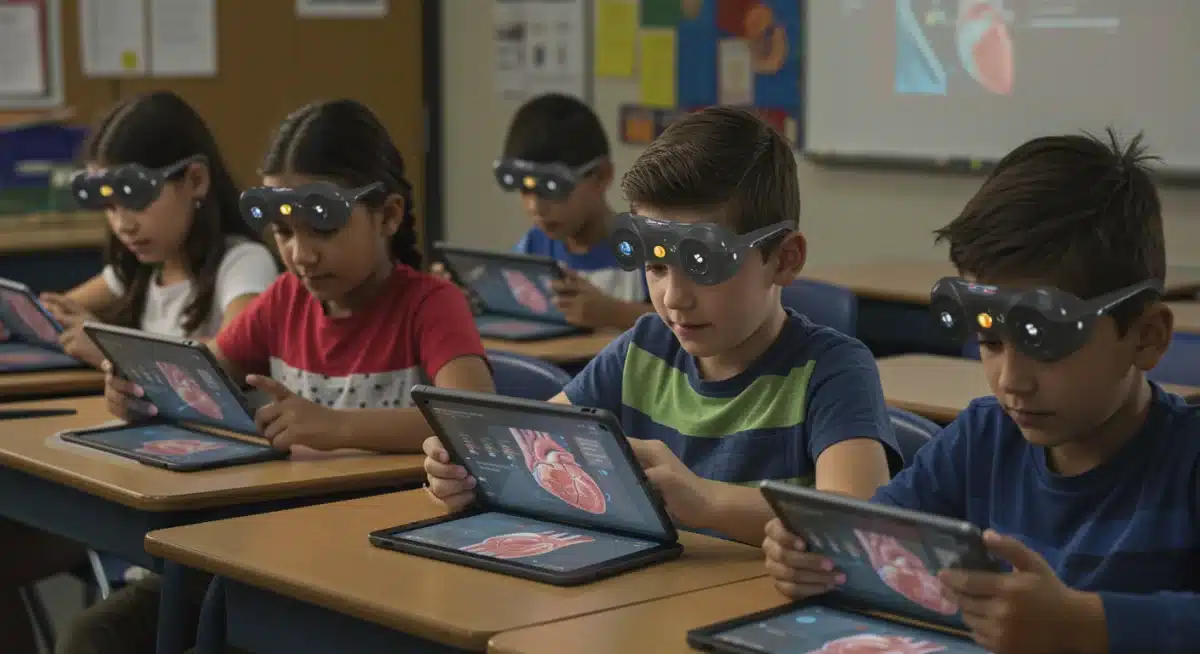
In science, AR is a game-changer. Students can use AR apps on tablets or smartphones to overlay anatomical diagrams onto models, virtually dissect organisms, or conduct simulated chemistry experiments without the risks and costs associated with real labs. For instance, an AR application might allow students to explore the internal organs of a human body as if standing inside it, or to manipulate virtual molecules to observe chemical reactions. This direct, interactive engagement with scientific principles fosters a deeper understanding and ignites a passion for scientific inquiry.
History and Social Studies: Walking Through Time
Imagine a history lesson where students can virtually walk through ancient Rome, explore a Civil War battlefield, or witness historical events unfold before their eyes. AR US Education makes this possible. By overlaying historical reconstructions onto current environments or providing 3D models of artifacts, AR can transport students to different eras, making history more relatable and memorable. This experiential approach helps students develop empathy and a more nuanced understanding of past societies and cultures.
Mathematics: Visualizing Abstract Ideas
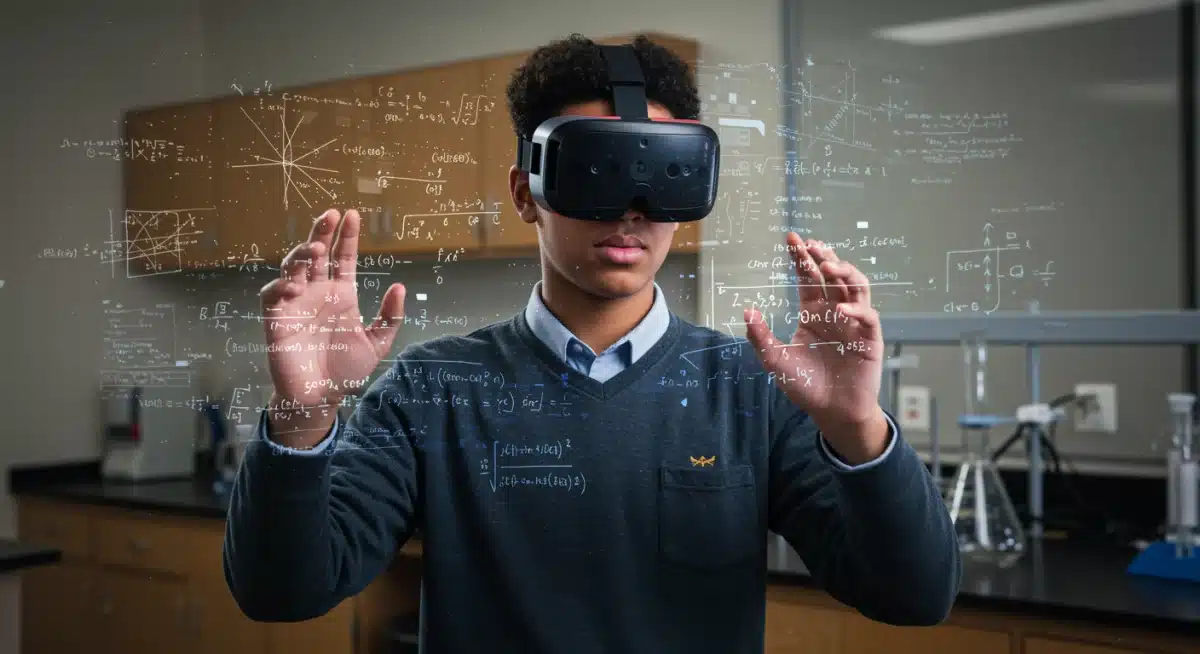
Mathematics often presents abstract concepts that can be challenging for students to grasp. AR can transform these abstract ideas into tangible, manipulable objects. Students can visualize geometric shapes in 3D, manipulate graphs in real-time, or even see mathematical equations come to life as they solve problems. This visual and interactive approach can demystify complex mathematical principles and make learning more intuitive and enjoyable.
Language Arts: Immersive Storytelling and Vocabulary Building
AR can enhance language arts by bringing stories to life, providing interactive vocabulary exercises, and creating immersive writing prompts. Imagine an AR book where characters appear as holograms on the page, or a vocabulary app that overlays definitions and pronunciations onto real-world objects. These applications can significantly improve reading comprehension, vocabulary acquisition, and creative writing skills.
The Technological Landscape for AR US Education by 2026
For AR US Education to reach its full potential by 2026, several technological advancements and infrastructure developments are crucial. The accessibility and affordability of AR hardware, the robustness of educational AR software, and the widespread availability of high-speed internet are all key factors.
Hardware Evolution: From Smartphones to Dedicated Headsets
Currently, many AR experiences in schools leverage existing devices like smartphones and tablets. These devices, with their built-in cameras and processing power, offer an accessible entry point. However, by 2026, we can expect to see a greater proliferation of dedicated AR headsets and glasses. These devices, becoming more lightweight, comfortable, and affordable, will offer a truly hands-free and immersive experience. Companies like Meta, Apple, and Google are heavily investing in these technologies, and as they mature, their educational applications will become even more powerful.
Software and Content Development: The Core of AR Learning
The success of AR US Education hinges on the quality and breadth of educational content. Developers are creating engaging and pedagogically sound AR applications tailored to specific curriculum standards. This includes interactive simulations, 3D models, gamified learning experiences, and tools for creating custom AR content. The development of user-friendly authoring tools will also empower educators to create their own AR lessons, further customizing the learning experience for their students.
Connectivity and Infrastructure: The Digital Backbone
Reliable and high-speed internet connectivity is fundamental for streaming AR content and supporting collaborative AR experiences. Schools will need robust Wi-Fi networks capable of handling numerous AR devices simultaneously. Furthermore, cloud-based AR platforms will enable seamless content delivery and management, making it easier for educators to deploy and update AR applications across their institutions.
Challenges and Considerations for Widespread AR US Education Adoption
While the promise of AR US Education is immense, several challenges need to be addressed to ensure its successful and equitable implementation by 2026. These challenges range from funding and teacher training to ethical considerations and content quality.
Funding and Equity: Bridging the Digital Divide
The cost of AR hardware and software can be a significant barrier for many school districts, particularly those in underserved communities. Ensuring equitable access to AR technology will require substantial public and private investment, as well as innovative funding models. Policy initiatives aimed at providing grants and subsidies for AR adoption in schools will be crucial to prevent the widening of the digital divide.
Teacher Training and Professional Development
Even the most advanced technology is ineffective without educators who are proficient in its use. Teachers will need comprehensive training not only on how to operate AR devices and software but also on how to effectively integrate AR into their pedagogical practices. Professional development programs will need to focus on curriculum design, active learning strategies, and assessment methods that leverage the unique capabilities of AR. Empowering teachers to become confident facilitators of AR-enhanced learning environments is paramount.
Curriculum Integration and Content Quality
Simply introducing AR into the classroom without careful curriculum integration will yield limited results. AR content needs to be aligned with learning objectives, age-appropriate, and of high pedagogical quality. Developing a robust library of vetted AR educational resources will require collaboration between educators, content creators, and subject matter experts. A standardized framework for evaluating AR educational content could also prove beneficial.
Health and Safety Considerations
As with any new technology, there are health and safety considerations to address, particularly for younger students. Concerns about eye strain, screen time, and spatial awareness need to be carefully managed. Guidelines for appropriate usage duration, regular breaks, and age-specific content will be essential to ensure the well-being of students. Furthermore, data privacy and security protocols must be robust to protect student information when using AR applications.
Ethical Implications and Digital Citizenship
The immersive nature of AR also brings ethical considerations. Educators will need to teach students about digital citizenship in the context of AR, including responsible interaction with virtual content, understanding the difference between augmented and real environments, and critical evaluation of information presented through AR. Discussions around potential biases in AR content and the responsible creation of virtual identities will also become increasingly important.
The Roadmap to 2026: Strategic Implementation for AR US Education
Achieving widespread and effective integration of AR US Education by 2026 requires a concerted effort from all stakeholders. A strategic roadmap should encompass policy development, pilot programs, infrastructure upgrades, and continuous evaluation.
Policy and Standards Development
Government agencies and educational bodies will play a critical role in establishing policies and standards for AR in education. This includes guidelines for content development, hardware procurement, data privacy, and teacher certification for AR-enhanced instruction. Clear policies will provide a framework for schools to confidently adopt and implement AR technologies.
Pilot Programs and Research
Continued investment in pilot programs and educational research is essential to understand the most effective ways to leverage AR for different subjects, age groups, and learning styles. These programs can help identify best practices, refine pedagogical approaches, and gather empirical evidence on the impact of AR on student learning outcomes. Sharing findings from these initiatives will accelerate learning across the educational community.
Collaborative Ecosystems
The future of AR US Education will be built on collaboration. Partnerships between technology companies, educational publishers, universities, and school districts will be vital for developing innovative AR solutions, creating high-quality content, and providing ongoing support for educators. Open-source AR platforms and content repositories could also foster a vibrant ecosystem of educational resources.
Scalable Infrastructure and Support
As AR adoption grows, so too will the demand for scalable infrastructure and technical support. Schools will need dedicated IT staff trained in managing AR devices and networks. Furthermore, readily available technical support for troubleshooting and maintenance will be crucial to minimize disruptions to learning.
Beyond 2026: The Future Vision of AR in US Education
Looking beyond 2026, the evolution of AR US Education promises even more transformative possibilities. As AR technology becomes more sophisticated, seamlessly integrated, and ubiquitous, it will pave the way for truly personalized and adaptive learning environments.
Personalized Learning Pathways
AR can provide highly personalized learning experiences, adapting to individual student needs and learning paces. Intelligent AR systems could identify areas where a student is struggling and provide targeted interventions, or offer advanced challenges for those who are excelling. This level of personalization could revolutionize differentiated instruction.
Remote and Hybrid Learning Enhancement
The lessons learned from recent shifts to remote and hybrid learning models highlight the need for engaging virtual experiences. AR can bridge the gap between physical and virtual classrooms, offering immersive field trips, collaborative project work, and interactive lectures that transcend geographical boundaries. Students could feel as though they are in the same room, even when miles apart, fostering a stronger sense of community and collaboration.
Skill Development for the Future Workforce
As industries increasingly adopt AR and VR technologies, familiarizing students with these tools in K-12 education will provide them with essential skills for the future workforce. AR can be used for vocational training, simulating real-world scenarios in fields like engineering, healthcare, and manufacturing, preparing students for careers that require hands-on experience and problem-solving in complex environments.
Integration with Artificial Intelligence (AI)
The combination of AR and AI holds immense potential. AI-powered AR systems could offer intelligent tutoring, provide real-time feedback, and even anticipate student questions, creating a highly responsive and adaptive learning companion. This synergy could lead to truly breakthrough educational experiences, making learning more efficient, effective, and deeply personalized.
Conclusion: Embracing the Augmented Future of Learning
The journey towards widespread AR US Education by 2026 is an exciting and challenging one. While obstacles such as funding, teacher training, and content development need careful navigation, the potential rewards – more engaged students, deeper understanding, and a more equitable learning environment – are well worth the effort. By embracing Augmented Reality, the US education system can move beyond traditional boundaries, fostering a generation of critical thinkers, innovators, and lifelong learners prepared for the complexities of the 21st century.
As we look to 2026 and beyond, AR is not just another technological fad; it is a fundamental shift in how we conceive and deliver education. It offers a powerful lens through which students can explore, discover, and interact with knowledge in ways previously unimaginable. The future of learning is augmented, and the time to prepare for this transformative era in AR US Education is now.