VR in AEC: Drastically Reducing Design Iteration Cycles by 18% in 2026 Projects
The Architecture, Engineering, and Construction (AEC) industry is undergoing a profound transformation, driven by technological advancements. Among these, Virtual Reality (VR) stands out as a game-changer, promising to revolutionize how projects are conceptualized, designed, and executed. Recent industry analyses and projections indicate a significant impact: VR is poised to reduce design iteration cycles by an impressive 18% in 2026 projects. This isn’t just a marginal improvement; it represents a fundamental shift in efficiency, collaboration, and profitability across the entire AEC spectrum. The implications of this reduction are vast, touching every aspect from initial client meetings to final construction, ultimately leading to faster project delivery, reduced costs, and higher client satisfaction. Understanding the mechanisms behind this projected improvement and preparing for its widespread adoption is crucial for any firm looking to maintain a competitive edge in the evolving AEC landscape.
Understanding the Challenge of Design Iteration in AEC
Design iteration is an inherent and often time-consuming part of any AEC project. From the initial conceptual sketches to the detailed structural plans, projects evolve through numerous cycles of design, review, feedback, and revision. Traditionally, this process has been heavily reliant on 2D drawings, physical models, and static 3D renderings. While these methods have served the industry for decades, they come with significant limitations. Misinterpretations of complex designs are common, leading to errors that are costly to fix later in the project lifecycle. Stakeholder feedback can be challenging to integrate effectively, as visualizing changes based on static representations requires a high degree of imagination and technical understanding from non-experts. Each iteration, whether minor or major, consumes valuable time and resources, directly impacting project timelines and budgets. The larger and more complex the project, the more pronounced these challenges become, leading to extended schedules, budget overruns, and sometimes, a compromise on the original design vision.
The core problem lies in the disconnect between the abstract nature of design documentation and the tangible reality of the built environment. Clients and non-technical stakeholders often struggle to fully grasp the spatial relationships, material finishes, and overall aesthetic impact from blueprints or even conventional 3D models. This lack of intuitive understanding necessitates multiple rounds of revisions as stakeholders gradually articulate their vision, often after seeing a more advanced (and therefore more expensive to change) stage of the design. Furthermore, internal coordination among architects, structural engineers, MEP (mechanical, electrical, plumbing) engineers, and other specialists can be hampered by fragmented communication and differing interpretations of design intent. Identifying clashes and inconsistencies late in the design phase, or even during construction, is a particularly expensive and time-consuming issue that traditional methods struggle to prevent proactively. This iterative loop, while essential for refinement, is ripe for optimization.
How VR Transforms the Design Review Process
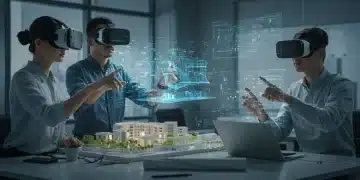
Virtual Reality offers a paradigm shift in how design reviews are conducted, directly addressing the inefficiencies of traditional methods. Instead of interpreting 2D drawings or static 3D models, stakeholders can now step inside a fully immersive, true-to-scale virtual representation of the proposed building or infrastructure. This immediate and intuitive understanding of space, light, and materials fundamentally changes the nature of feedback. Clients can walk through rooms, examine façade details, and even experience the flow of a building before it’s ever built. This level of immersion significantly reduces misinterpretations and allows for more precise, actionable feedback earlier in the design cycle. Imagine a client instantly identifying that a corridor feels too narrow or that a window offers an obstructed view, long before any physical work begins. This early detection of issues is paramount to cost and time savings.
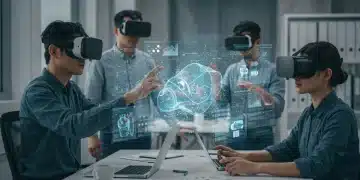
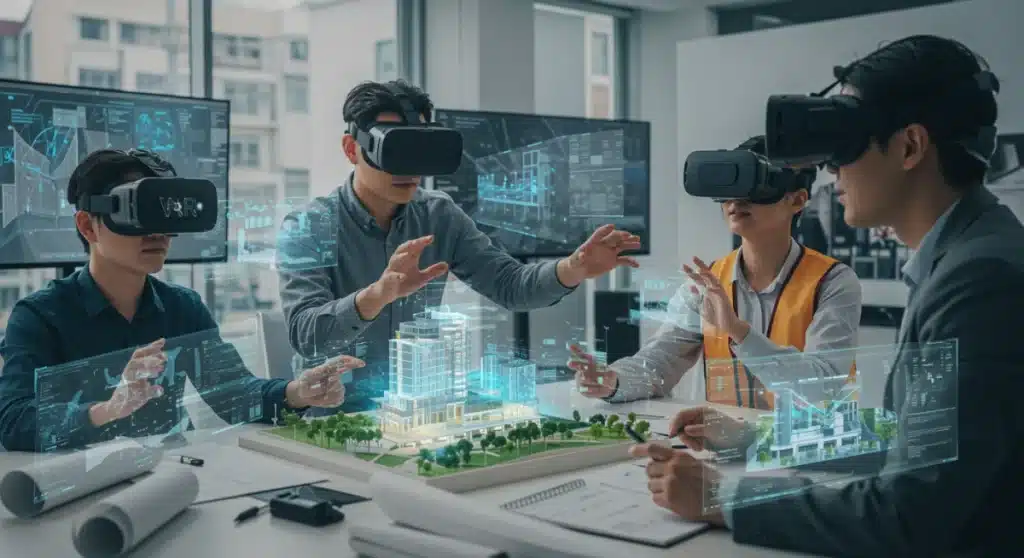
Beyond client engagement, VR revolutionizes internal team collaboration. Architects, engineers, and contractors can simultaneously enter the same virtual model, regardless of their physical location, and conduct real-time design reviews. This collaborative environment fosters a shared understanding of the project, facilitating immediate discussion and problem-solving. Structural engineers can visualize how their designs integrate with architectural elements, MEP engineers can identify potential clashes with other systems, and contractors can assess constructability challenges – all within the virtual space. Tools within VR platforms allow for annotations, measurements, and even real-time modifications, streamlining the feedback loop. This direct interaction eliminates the need for lengthy email chains, conference calls, and repeated meetings to clarify design points, drastically cutting down the time spent on communication and coordination. The ability to perform clash detection in a dynamic, immersive environment allows teams to identify and resolve conflicts proactively, preventing costly rework during construction. This proactive approach is a cornerstone of the 18% reduction in design iteration cycles projected for 2026 projects, as it front-loads problem-solving and minimizes late-stage surprises.
Quantifying the 18% Reduction: A Deeper Dive
The projection of an 18% reduction in design iteration cycles by 2026 is not an arbitrary figure; it’s based on an aggregation of pilot programs, early adopter case studies, and industry analyses that highlight the tangible benefits of VR integration. This reduction stems from several key areas. Firstly, the enhanced clarity and immersion provided by VR lead to more accurate and comprehensive feedback in the initial design stages. When stakeholders can truly ‘experience’ the design, they are far more likely to identify critical issues that would otherwise go unnoticed until later, more expensive phases. This front-loading of problem identification means fewer major revisions are needed down the line.
Secondly, the real-time collaborative capabilities of VR significantly compress the feedback loop. Instead of waiting for revised drawings or updated renders, teams can make decisions and implement changes almost instantly within the virtual environment. This agility reduces the cumulative time spent on each iteration. Thirdly, VR’s ability to facilitate early clash detection – identifying conflicts between different building systems (e.g., HVAC ducts running through structural beams) – prevents costly rework during construction. Resolving these clashes in the virtual world, rather than on the job site, saves immense amounts of time and money, thereby reducing the need for design changes driven by on-site discoveries.
Consider a typical large-scale commercial project. Traditionally, a project might undergo 10-15 significant design iterations, each taking weeks or even months to complete. An 18% reduction could mean eliminating 2-3 of these major cycles entirely, or significantly shortening the duration of all of them. This translates directly into months saved on the overall project schedule. For a project with a multi-million-dollar budget, these time savings alone can represent substantial financial benefits, not to mention the earlier revenue generation from project completion. Moreover, the improved communication and reduced errors contribute to a higher quality final product and fewer disputes, further enhancing project efficiency and stakeholder satisfaction. The cumulative effect of these improvements across multiple projects within an organization is what drives the compelling 18% reduction forecast, making VR an indispensable tool for forward-thinking AEC firms.
Key Technologies Powering VR in AEC
The effectiveness of VR in AEC is not solely dependent on the headsets themselves, but on a sophisticated ecosystem of interconnected technologies. At its core, high-fidelity 3D modeling software, such as Autodesk Revit, Rhino, SketchUp, and Bentley Systems’ solutions, provides the foundational data. These Building Information Modeling (BIM) platforms are crucial for creating detailed, data-rich models that can be seamlessly imported into VR environments. The richer the BIM model, the more immersive and informative the VR experience becomes, allowing for the visualization of not just geometry, but also materials, systems, and performance data.
Once the 3D model is created, specialized VR visualization and collaboration platforms come into play. Software like Enscape, Lumion, Fuzor, and The Wild (now part of Autodesk Workshop XR) are designed to optimize these models for real-time VR rendering, ensuring smooth navigation and realistic visual fidelity. These platforms often include features for multi-user collaboration, allowing teams to meet within the virtual space from anywhere in the world. They also provide tools for annotation, markups, measurement, and even light analysis, enhancing the utility of the VR review session. The integration of cloud-based solutions is also critical, enabling easy sharing of large VR-ready models and ensuring that all collaborators are working with the most up-to-date version of the design.
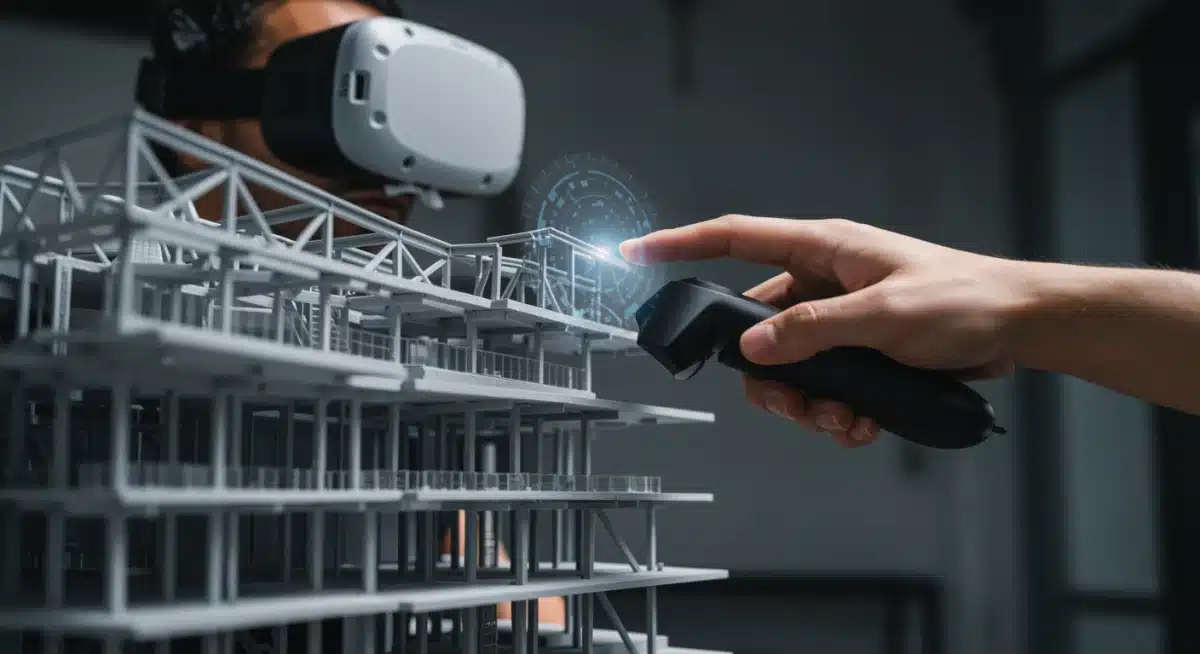
Hardware advancements are equally important. The increasing accessibility and performance of VR headsets, such as the Meta Quest series, HTC Vive, and Varjo, have made high-quality immersive experiences more attainable for AEC firms. These devices offer improved resolution, wider fields of view, and more comfortable designs, reducing motion sickness and extending usage times. Furthermore, advancements in tracking technology allow for more precise interaction with virtual objects, making design manipulation and review feel natural and intuitive. The synergy between powerful BIM software, specialized VR platforms, and advanced hardware creates a robust ecosystem that drives the efficiency gains seen in the reduction of design iteration cycles, making VR an increasingly practical and powerful tool for the AEC industry.
Overcoming Implementation Challenges
While the benefits of VR in AEC are compelling, its widespread adoption is not without challenges. One of the primary hurdles is the initial investment in hardware and software. High-end VR headsets and powerful workstations capable of rendering complex architectural models in real-time can represent a significant capital outlay, especially for smaller firms. Beyond the financial aspect, there’s a steep learning curve associated with integrating new technologies. Employees need training not only on how to use the VR equipment but also on understanding the new workflows and collaboration protocols that VR introduces. This requires dedicated time and resources for professional development.
Another significant challenge lies in data interoperability. AEC projects often involve multiple software platforms used by different disciplines, and ensuring seamless transfer of detailed BIM models into VR environments can be complex. Maintaining data integrity and ensuring that all relevant information is accurately represented in VR requires robust data management strategies and careful file conversion processes. Furthermore, managing large project files for VR can demand substantial computing power and storage, posing technical challenges for IT infrastructure.
Resistance to change is also a factor. Many professionals are accustomed to traditional 2D workflows and may be hesitant to embrace a new technology that fundamentally alters their established practices. Overcoming this requires strong leadership, clear communication of VR’s benefits, and a phased implementation approach that allows teams to gradually adapt. Addressing these challenges effectively involves strategic planning, investing in comprehensive training programs, fostering a culture of innovation, and selecting VR solutions that offer strong interoperability and user-friendliness. As the technology matures and becomes more standardized, these barriers are expected to diminish, paving the way for even broader VR adoption across the AEC industry.
Case Studies and Success Stories
The theoretical benefits of VR in AEC are being increasingly validated by real-world applications. Firms globally are reporting significant improvements in project delivery and client satisfaction. For instance, a leading international architectural firm implemented VR for design reviews on a large-scale hospital project. By allowing medical staff and administrators to virtually walk through the proposed facility, the firm was able to gather critical feedback on room layouts, equipment placement, and patient flow much earlier than with traditional methods. This proactive engagement led to the identification and resolution of several functional conflicts before construction began, ultimately saving an estimated two months on the design phase and preventing costly on-site modifications. The firm reported a 20% reduction in design changes requested during the construction phase, directly attributable to the early VR reviews.
Another compelling example comes from an engineering consultancy working on a complex infrastructure project, involving bridges and tunnels. They used VR to conduct collaborative design reviews with multidisciplinary teams scattered across different continents. Engineers from structural, civil, and geotechnical departments could simultaneously inspect the virtual model, pinpointing potential interferences and optimizing design elements in real-time. This virtual collaboration environment dramatically reduced travel time and expenses for coordination meetings and cut down the time for critical design sign-offs by 25%. The ability to visualize the complex underground structures and their interaction with above-ground elements in an immersive way allowed for better informed decisions, leading to a more robust and efficient design, and a significant decrease in project risk.
These success stories underscore the tangible impact of VR in reducing design iteration cycles. They demonstrate that the technology is not just a novelty but a powerful tool that delivers quantifiable improvements in efficiency, accuracy, and collaboration. As more firms adopt and refine their VR workflows, these positive outcomes are expected to become the industry standard, further solidifying the projection of an 18% reduction in design iteration cycles by 2026.
The Future Landscape: Beyond 2026
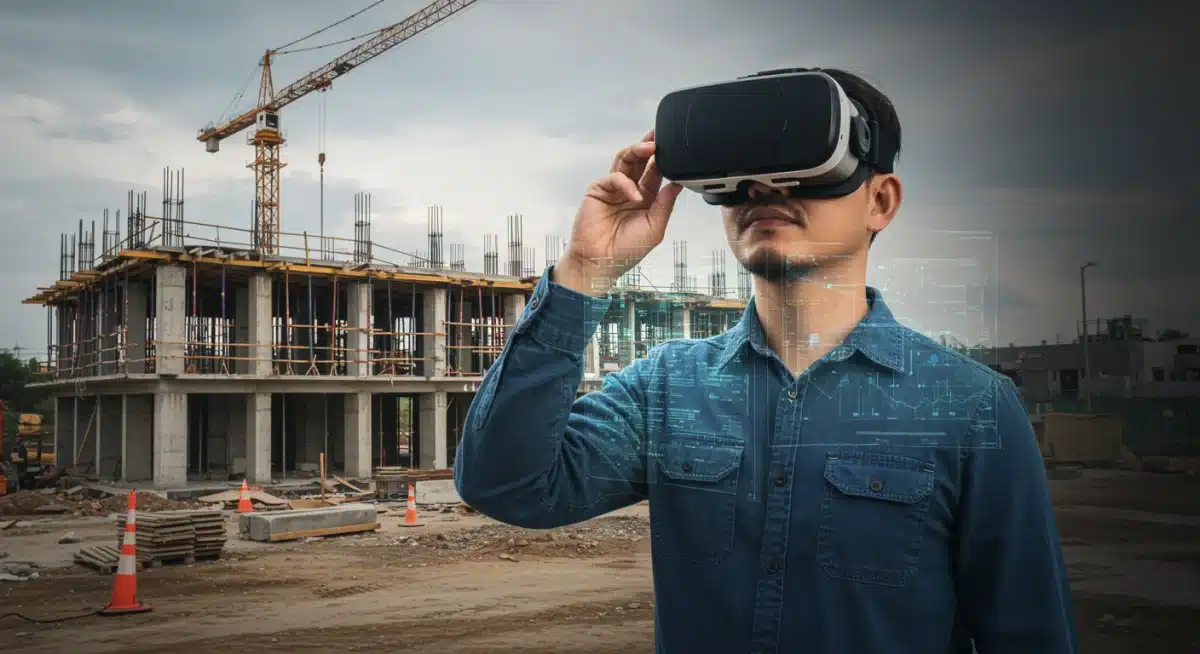
The projected 18% reduction in design iteration cycles by 2026 is just the beginning of VR’s transformative journey in the AEC industry. Looking beyond this immediate horizon, the integration of VR with other cutting-edge technologies promises even greater efficiencies and innovations. Augmented Reality (AR), for instance, will increasingly complement VR by overlaying digital information onto the real world, allowing for on-site design verification, progress monitoring, and even guiding construction tasks. Imagine a construction worker wearing AR glasses and seeing a holographic overlay of the building’s MEP systems directly on the unfinished walls, ensuring accurate installation.
The convergence of VR with Artificial Intelligence (AI) and Machine Learning (ML) will unlock new levels of design optimization. AI algorithms could analyze VR-based feedback to suggest design improvements, automate clash detection with even greater precision, or even generate optimized design alternatives based on performance criteria. This intelligent assistance will further streamline the iteration process, pushing reductions beyond the 18% mark. Furthermore, the development of more advanced haptic feedback systems will allow users to ‘feel’ virtual objects, enhancing the realism and tactile understanding of materials and structures in the design phase.
The rise of the metaverse and digital twins will also play a crucial role. VR will serve as a primary interface for interacting with comprehensive digital twins of buildings and infrastructure throughout their entire lifecycle, from design and construction to operation and maintenance. This continuous digital thread will ensure that design decisions made in VR have lasting impacts on the performance and sustainability of the built asset. As VR hardware becomes lighter, more powerful, and even more affordable, its integration into daily AEC workflows will become as commonplace as CAD software is today. The ultimate vision is an AEC industry where design iteration is not a bottleneck, but a fluid, highly efficient, and collaborative process, constantly informed by immersive technologies, leading to faster, more sustainable, and higher-quality projects globally.
Conclusion: Embracing the VR Revolution in AEC
The evidence is clear: Virtual Reality is not merely a futuristic gadget but a powerful, practical tool fundamentally reshaping the Architecture, Engineering, and Construction industry. The projection of an 18% reduction in design iteration cycles by 2026 is a testament to VR’s profound ability to enhance clarity, foster collaboration, and accelerate decision-making across all project phases. By allowing stakeholders to immerse themselves in designs, identify issues proactively, and collaborate in real-time, VR directly addresses the traditional inefficiencies that have plagued the iterative design process for decades.
Firms that embrace this VR revolution will gain a significant competitive advantage. They will be able to deliver projects faster, within budget, and with a higher degree of accuracy and client satisfaction. While challenges related to investment, training, and data interoperability exist, the rapidly evolving technological landscape and the compelling return on investment make these hurdles increasingly surmountable. The future of AEC is collaborative, efficient, and deeply immersive, with VR at its forefront.
For any AEC professional or firm looking to stay relevant and thrive in the coming years, understanding and integrating VR into their workflows is no longer an option but a strategic imperative. The 18% reduction is not just a statistic; it’s a call to action, signaling a new era of productivity and innovation in the built environment. As we move towards 2026 and beyond, the firms that leverage VR to streamline their design processes will be the ones leading the charge, building the future with unprecedented speed and precision.