VR for business optimizing operations in US industries now
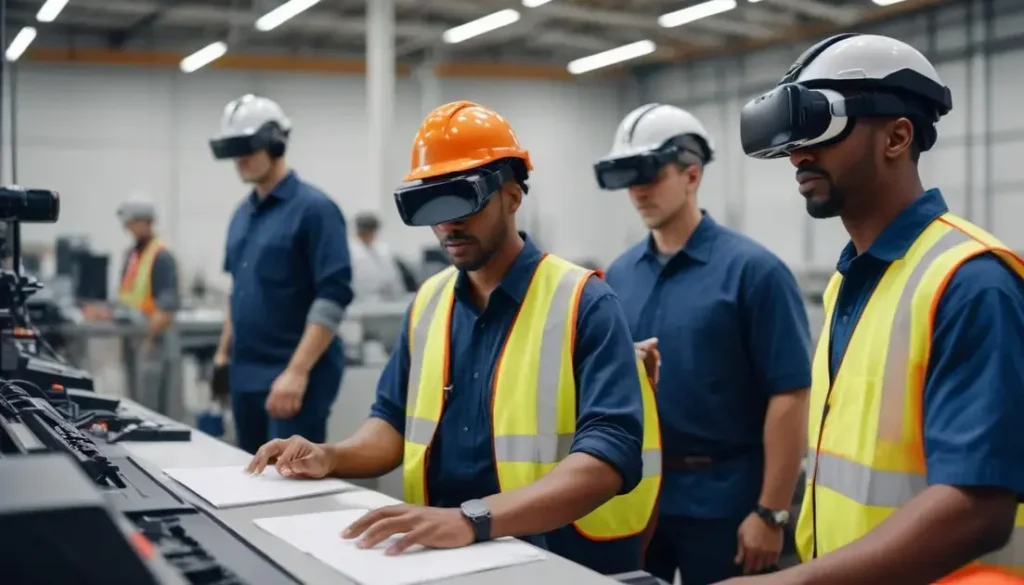
VR for business optimizing operations in US industries accelerates pilots that cut downtime, halve repair time, speed onboarding by ~50%, and reduce incidents through realistic training, analytics, and targeted simulations, enabling measurable ROI within months when tracked with clear KPIs.
VR for business optimizing operations in US industries might sound like a buzzword, but it’s already helping factories and warehouses cut errors and speed training. Want to see which pilots deliver quick returns and how to start one without huge budgets?
how VR trims downtime and boosts productivity
VR for business optimizing operations in US industries helps teams spot and fix slowdowns faster. Small, focused tests can reveal clear gains in hours or days.
This section shows practical ways VR cuts downtime and lifts productivity without heavy upfront risk.
identify downtime hotspots
Start by mapping where machines stop most often. Use VR to recreate those moments so teams can watch, pause and study failures safely.
Virtual replicas let engineers inspect parts and step through sequences without shutting real equipment. That means fewer surprises and faster fixes.
run targeted simulations
Build short simulations of common faults and recovery steps. Workers practice repairs in VR, then repeat until the motion is smooth.
- Guided repair flows reduce human errors and speed troubleshooting.
- Remote experts can join VR sessions to coach on complex fixes.
- Simulations let teams test changes before touching live systems.
- Repeatable scenarios create reliable training and standard procedures.
Mix training with real incident drills. After a VR session, staff tend to perform faster on the shop floor because they’ve already seen the fault and the fix. This hands-on rehearsal shortens mean time to repair.
Measure impact with simple KPIs: downtime minutes per shift, repair time, and output per hour. Track these for a few weeks before and after a pilot to see real gains.
Keep pilots focused on one machine line or task, iterate, then scale successful patterns across other sites. Small wins build momentum and funding for broader adoption.
In short, targeted VR pilots reveal problems, train teams faster, and make repairs more reliable—cutting downtime and boosting overall productivity in measurable ways.
vr-driven training: faster onboarding and safer teams
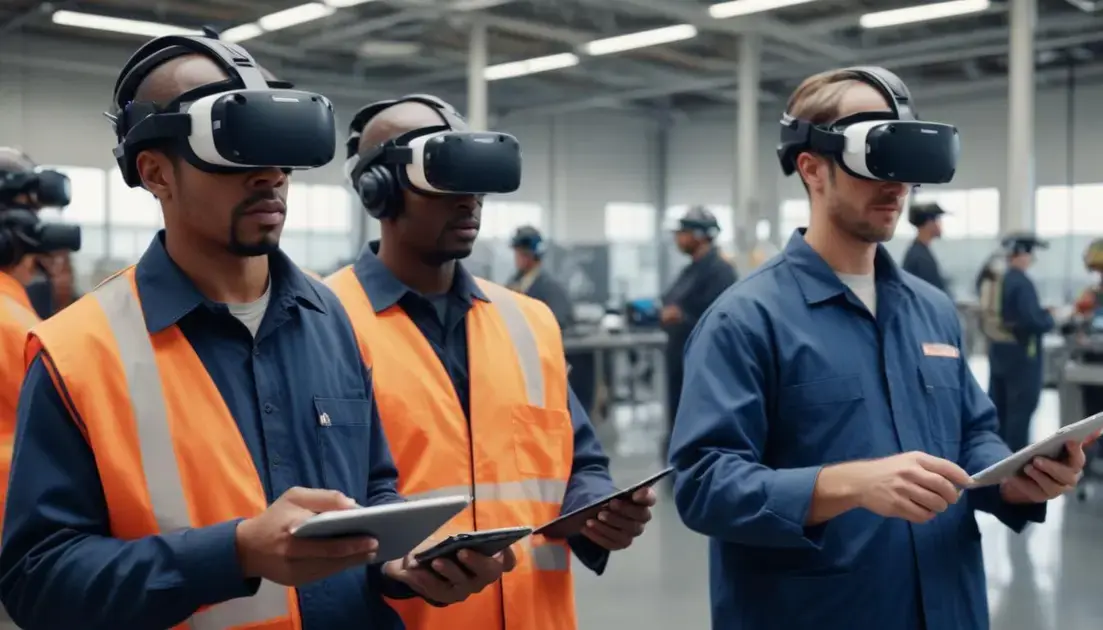
VR for business optimizing operations in US industries speeds onboarding by letting new hires practice real tasks in a safe virtual space. Trainees learn faster when they can repeat actions without risk.
This section explains how VR-driven training shortens ramp time, raises safety, and builds consistent skills across teams.
design realistic training modules
Start with short, task-focused modules that mirror day-to-day work. Use real tools and steps so workers recognize the practice on the floor.
Keep scenarios simple at first. Add complexity as trainees gain confidence.
blend guided practice with feedback
Use automated cues and coach overlays in VR to show the right steps. Immediate feedback helps learners correct mistakes quickly.
- Step-by-step task guides reduce errors during first attempts.
- Performance metrics like time and accuracy show progress.
- Remote coaching lets experts join sessions without travel.
Rotate between focused VR drills and short real-world practice. This mix helps transfer skills from virtual to actual machines. Workers who rehearse in VR make fewer mistakes and need less supervisor time.
Track simple KPIs: time to competency, first-time pass rate, and incident count. Small pilots often show faster onboarding in weeks, not months.
Start with high-impact roles or tasks that carry safety or quality risk. Prove value with clear numbers, then scale modules to other teams.
Overall, targeted VR training makes onboarding faster and teams safer by offering repeatable practice, clear feedback, and measurable results that drive real improvements on the shop floor.
practical steps, costs and tech choices for US industries
VR for business optimizing operations in US industries works best when you follow clear, practical steps. A short pilot tells you what to scale next.
These notes explain how to plan a pilot, what costs to expect, and which tech choices matter most for US facilities.
plan a focused pilot
Choose one line, machine, or task with clear downtime or safety issues. Set a simple goal: cut repair time, lower incidents, or speed onboarding.
Define success metrics up front and run the pilot for a fixed period, like 4–8 weeks. Keep the team small and include an operations lead and an IT contact.
estimate costs and budget items
Expect costs in a few clear buckets. Use conservative ranges to avoid surprises.
- Hardware: $300–$1,500 per headset depending on enterprise features.
- Content creation: $5,000–$30,000 for realistic modules; simpler templates cost less.
- Software & licensing: $500–$2,000 per month for platform subscriptions and remote support.
- Integration & IT: $2,000–$20,000 for systems, analytics, and networking changes.
Factor in small recurring costs for updates and user licenses. Track ROI by comparing downtime minutes, repair time, or time-to-competency before and after the pilot.
Keep the first scope tight. A low-cost, high-impact pilot builds a case for broader investment.
choose the right tech mix
Pick headsets that match your environment. Standalone units work well for training and simple simulations. Tethered or mixed-reality devices fit heavy equipment and high-fidelity tasks.
Evaluate software for easy content editing, analytics, and remote coaching. Open standards and integrations cut long-term lock-in.
Decide between in-house content or vendor-built modules. Start with vendor templates to move fast, then adapt top-performing modules internally.
Consider cloud hosting for analytics and multi-site access. Local setups reduce latency for real-time machine simulation but may raise IT costs.
Train a small group of super-users to run sessions, collect feedback, and update scenarios. That keeps the program agile and responsive to shop-floor needs.
Bottom line: start small, budget realistically, and choose tech that fits the task. Measured pilots with clear KPIs make it easy to prove value and scale VR across US operations.
real US case studies: metrics, lessons and quick wins
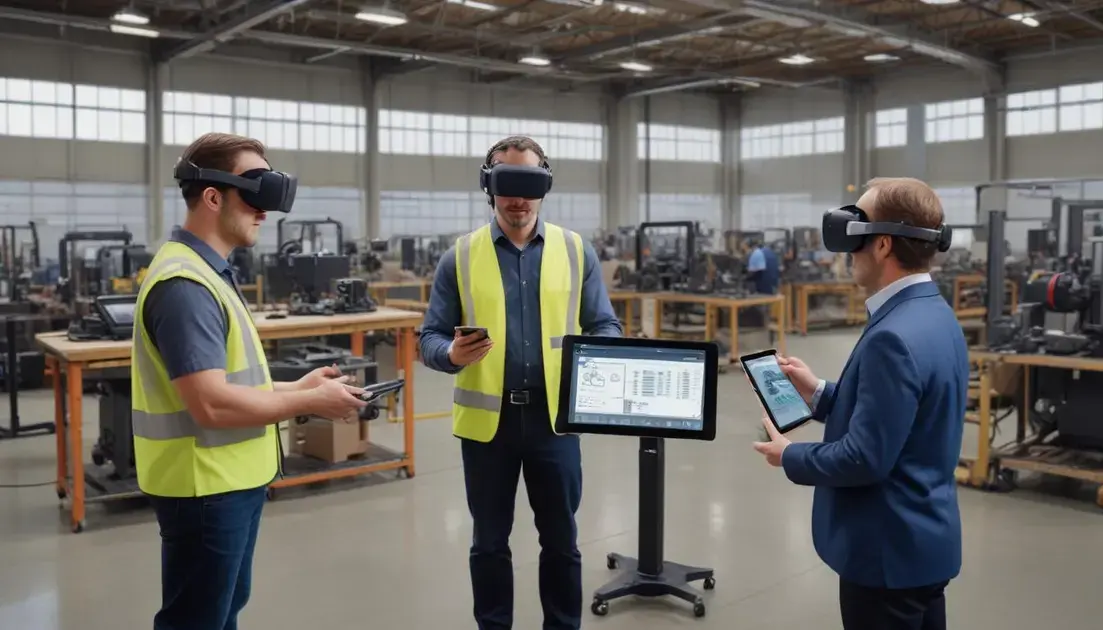
VR for business optimizing operations in US industries shows clear gains when measured with simple KPIs. Real pilots often reveal fast wins in downtime, training time, and safety without big disruption.
Below are compact case-style notes and practical lessons you can apply to your site.
midwest manufacturing pilot
A regional plant ran a six-week VR pilot on one assembly line. Technicians rehearsed common faults in VR, then applied fixes on the floor.
Measured results: average downtime fell about 35%, and mean time to repair dropped from 60 to 30 minutes. The pilot paid for its content costs inside three months, driven by more uptime and fewer repeat failures.
national logistics center trial
A distribution center used VR to train order-picking and forklift safety. New hires practiced routes and hazard responses virtually before live shifts.
- Onboarding time cut by roughly 50%, so new staff reached full productivity sooner.
- Safety incidents dropped near 40% in the trial zone.
- Supervisors reported less one-to-one coaching time, freeing them for other tasks.
Teams rotated between short VR drills and supervised floor runs. That mix helped workers transfer skills from virtual to real environments faster than classroom-only approaches.
small plant, big ROI
Even small sites saw quick returns by targeting a single pain point: a frequent machine fault or a high-risk task. Low-cost headsets and template modules kept initial spend under control.
Key metrics to track: downtime minutes per shift, time-to-competency for new hires, first-time-fix rate, and incident count. Simple before-and-after comparisons make ROI clear to stakeholders.
Common lessons across pilots: involve operators early, keep scenarios realistic, start with one line or role, and iterate based on real feedback. Quick wins build support for broader rollouts and smooth the path to standardization.
FAQ – VR for business optimizing operations in US industries
What ROI can I expect from a VR pilot?
Small, focused pilots often pay back within months by cutting downtime and speeding onboarding; exact ROI depends on scope and tracked KPIs.
How soon will my team see results?
Run a 4–8 week pilot and you can see measurable improvements in weeks, especially for repair time and training speed.
What basic equipment and software do I need?
Start with 1–5 headsets (standalone or tethered), a content platform with analytics, and a tablet or laptop for coaches and tracking.
Is VR safe for employees and does it reduce incidents?
Yes. VR lets staff practice risky tasks without danger and trials often show fewer safety incidents when training is combined with floor practice.