The Best VR Storytelling Apps of 2026: A Critical Look at Immersion and Engagement
In the rapidly evolving landscape of virtual reality, 2026 stands as a pivotal year for narrative experiences. The promise of true immersion, once a distant dream, is now a tangible reality, largely thanks to the sophisticated advancements in VR storytelling apps. These applications are not just games or passive viewing experiences; they are meticulously crafted worlds designed to transport users into narratives with unprecedented depth and emotional resonance. This article delves into the leading VR storytelling apps of 2026, critically analyzing how they achieve groundbreaking levels of immersion and foster profound user engagement, ultimately redefining the art of storytelling itself.
The journey from rudimentary VR experiences to today’s highly polished narrative masterpieces has been swift and transformative. Early VR efforts often struggled with technical limitations, clunky interfaces, and narratives that felt more like tech demos than fully realized stories. Fast forward to 2026, and the scene is dramatically different. Powerful hardware, refined interaction paradigms, and a deeper understanding of human psychology in virtual environments have converged to create experiences that are not merely seen, but truly lived. Understanding what makes these VR storytelling apps successful requires a close examination of their core components: how they build worlds, craft characters, and allow users to influence the unfolding drama.
Defining Immersion in VR Storytelling
Immersion, in the context of VR storytelling apps, is far more than just high-resolution graphics. It’s a multi-faceted concept encompassing presence, cognitive absorption, and emotional connection. In 2026, the best apps excel at creating a powerful sense of ‘being there,’ making the virtual environment feel as real and tangible as the physical one. This is achieved through a combination of cutting-edge technology and brilliant narrative design.
Technological Pillars of Immersion
- Photorealistic Graphics and Advanced Rendering: Modern VR headsets boast resolutions and refresh rates that minimize screen-door effects and motion sickness, while advanced rendering techniques, including real-time ray tracing and neural rendering, create environments that are virtually indistinguishable from reality. This visual fidelity is crucial for suspending disbelief and drawing the user deeper into the narrative.
- Haptic Feedback Systems: Beyond visual and auditory stimuli, haptics play a vital role. Full-body haptic suits and sophisticated haptic gloves provide tactile feedback, allowing users to ‘feel’ virtual objects, character interactions, and environmental phenomena. The sensation of rain, the texture of a character’s clothing, or the impact of a blow significantly enhances the sense of presence.
- Spatial Audio with Directional Cues: Impeccable 3D audio, often powered by AI-driven soundscapes, places sounds accurately within the virtual space, creating a believable acoustic environment. This not only adds to realism but also serves as a critical narrative tool, guiding attention and building suspense.
- Eye-Tracking and Foveated Rendering: Eye-tracking technology allows for foveated rendering, where only the area the user is directly looking at is rendered in full detail, optimizing performance without sacrificing visual quality. More importantly, eye-tracking is now being integrated into narrative mechanics, allowing characters to react to a user’s gaze, deepening interaction and realism.
- Advanced Locomotion and Navigation: Eliminating motion sickness remains a priority. Innovative locomotion solutions, from intuitive teleportation to sophisticated full-body tracking systems that allow for natural walking within virtual spaces, contribute to a seamless and comfortable immersive experience.
Narrative Design for Deep Immersion
Technology provides the canvas, but narrative design paints the masterpiece. The top VR storytelling apps of 2026 understand that true immersion comes from a story that resonates on a personal level.
- First-Person Perspective and Player Agency: Nearly all leading VR narratives place the user directly into the protagonist’s shoes, enhancing identification. Crucially, they offer meaningful choices and agency, allowing users to influence the plot, character relationships, and outcomes. This shifts the user from a passive observer to an active participant, making the story ‘theirs.’
- Believable Character Interactions: AI-driven NPCs (Non-Player Characters) exhibit highly realistic behaviors, emotions, and conversational abilities. Their responses are nuanced, adapting to the user’s actions, choices, and even emotional state, creating a sense of genuine connection and making the virtual world feel alive.
- Environmental Storytelling: The virtual environments themselves are rich with narrative cues, hidden details, and subtle hints that deepen the lore and context of the story. Exploring these environments becomes an integral part of the narrative discovery.
- Emotional Resonance: The most impactful VR storytelling apps are those that evoke strong emotions. Whether it’s fear, joy, sorrow, or wonder, these apps are expertly crafted to tap into the user’s emotional core, creating memorable and profound experiences that linger long after the headset comes off.
Engagement Beyond Immersion: Interactive Narratives in 2026
While immersion is about feeling present within a story, engagement is about actively participating in and caring about its outcome. The leading VR storytelling apps of 2026 master the art of engagement by offering unprecedented levels of interactivity and choice.
Branching Narratives and Dynamic Plotlines
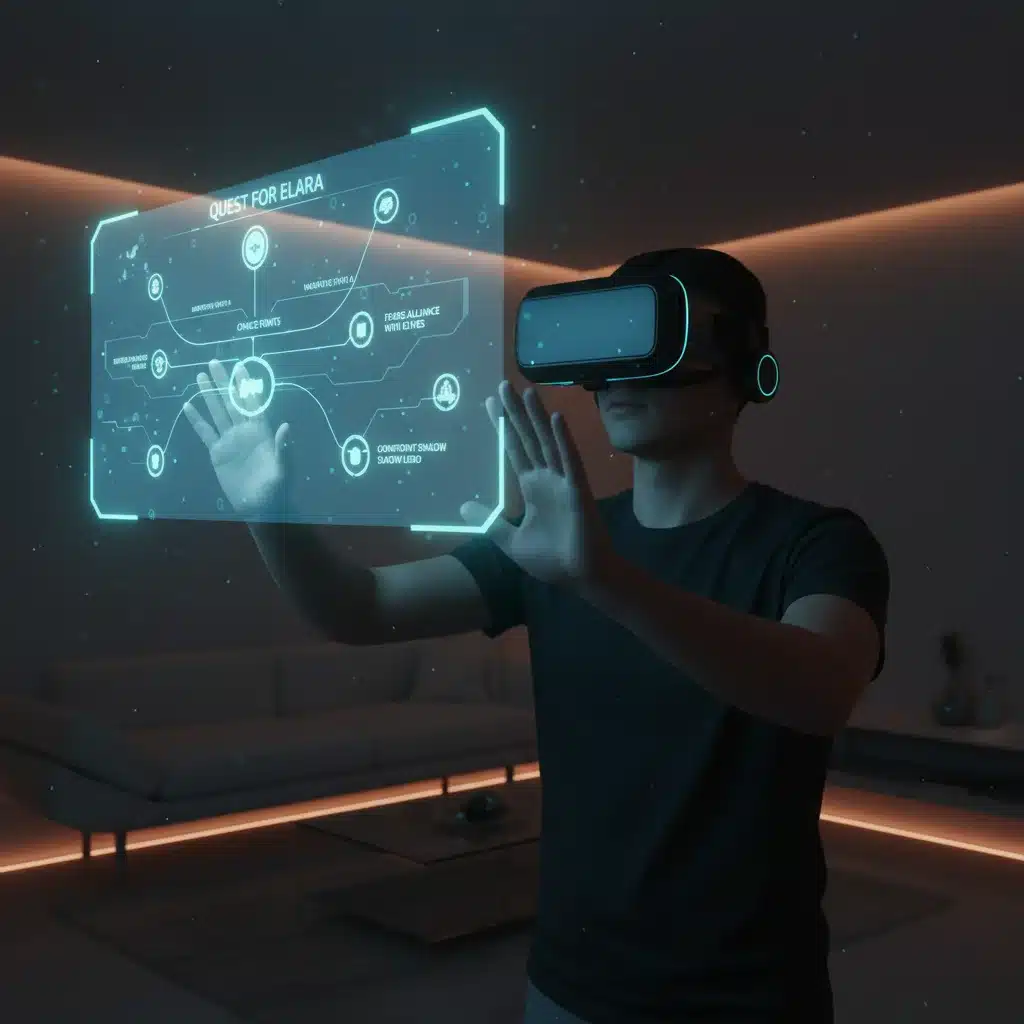
Gone are the days of linear stories. Modern VR storytelling apps feature complex branching narratives where every decision, big or small, can significantly alter the story’s progression. This isn’t just about choosing option A or B; it often involves subtle interactions, conversations, or even the order in which information is discovered, all contributing to a unique narrative path for each user. This replayability adds immense value and encourages users to explore multiple possibilities.
Meaningful Choices and Consequences
Engagement skyrockets when choices have tangible and believable consequences. The best VR storytelling apps ensure that user decisions ripple through the narrative, impacting character relationships, the state of the world, and the ultimate resolution. This sense of responsibility deepens the user’s investment in the story and its characters.
Procedural Content Generation for Ever-Evolving Stories
A burgeoning trend in 2026 is the integration of procedural content generation (PCG) alongside human-authored narratives. This allows for elements of the story, such as side quests, environmental details, or even minor character arcs, to be dynamically generated, ensuring that even repeat playthroughs offer novel experiences. This keeps the narrative fresh and prevents predictability, fostering long-term engagement.
Social VR Storytelling and Collaborative Narratives
The social aspect of VR has matured significantly. Many VR storytelling apps now offer co-op narrative experiences where multiple users can collectively shape a story, solve puzzles, and interact with characters. This adds a layer of emergent storytelling, as human interaction and collaboration become integral to the narrative’s unfolding. Shared emotional experiences in VR amplify their impact, making them even more memorable.
Case Studies: Exemplary VR Storytelling Apps of 2026
To illustrate these concepts, let’s look at a few of the standout VR storytelling apps that are defining the genre in 2026.
1. "Echoes of Elysium"
"Echoes of Elysium" is a masterpiece of environmental storytelling and emotional depth. Set in a breathtaking post-apocalyptic world reclaimed by nature, the app puts users in the role of an explorer uncovering the mysteries of a lost civilization. Its immersion comes from:
- Unparalleled Visuals: Lush, sprawling environments rendered with hyper-realistic flora and dynamic weather systems.
- Subtle Haptic Cues: Feeling the vibration of ancient machinery, the rustle of leaves, or the gentle touch of a spectral guide.
- Non-Linear Discovery: The story unfolds through exploration, deciphering ancient ruins, and interacting with AI remnants of the past. Users piece together the narrative at their own pace, leading to varied interpretations and discoveries.
- Profound Emotional Impact: The narrative explores themes of loss, resilience, and the cyclical nature of civilization, often evoking deep introspection and empathy.
2. "Chronos Nexus"
"Chronos Nexus" is lauded for its innovative approach to player agency and branching narratives. It’s a sci-fi thriller where users are time-traveling agents tasked with preventing catastrophic paradoxes. Its engagement factors include:
- Complex Choice Architecture: Every decision, from who to trust to which timeline to prioritize, has immediate and long-term consequences, leading to dozens of distinct endings.
- Adaptive AI Companions: Your AI partner learns from your decisions and personality, offering tailored advice and reactions, making the relationship feel incredibly personal.
- Real-time Consequence Visualization: A unique "timeline ripple" mechanic visually shows how your choices alter future events, reinforcing the weight of your actions.
- Multiplayer Narrative Missions: Optional co-op missions allow teams of players to tackle complex temporal puzzles, requiring synchronized decision-making.
3. "The Weaver’s Song"
"The Weaver’s Song" breaks new ground in social VR storytelling. It’s an evolving fantasy epic where players collaboratively build the narrative. Key elements include:
- Shared World, Shared Story: Players inhabit a persistent fantasy realm, collectively influencing its history, political landscape, and major events through their actions and interactions.
- Dynamic NPC Lore: NPCs remember past interactions with individual players and the collective community, adapting their personalities and stories accordingly.
- Community-Driven Quests: Major narrative arcs are often initiated and resolved by player consensus or significant collective achievements, making the story truly emergent.
- Interactive Storytelling Tools: Players are given tools to physically manifest their ideas within the world, like drawing constellations that influence prophecies or crafting items that become legendary artifacts.
The Challenges and Future of VR Storytelling Apps
Despite the incredible progress, the development of VR storytelling apps still faces challenges. High production costs, the need for powerful hardware, and the steep learning curve for developers to master narrative design in 3D interactive spaces remain significant hurdles. However, the trajectory is clear: innovation continues at a rapid pace.
Accessibility and Broader Adoption
Efforts are underway to make VR more accessible, with standalone headsets becoming more powerful and affordable. Simplified interfaces and more intuitive onboarding processes will lower the barrier to entry, bringing these rich narrative experiences to a wider audience. Cloud-based VR rendering could also democratize access, allowing high-fidelity experiences on less powerful local hardware.
The Evolution of AI in Narrative
The role of AI in VR storytelling apps is only set to expand. Future iterations will likely feature even more sophisticated narrative AI that can dynamically generate entire storylines, adapt to user emotions in real-time, and create truly personalized and infinitely replayable experiences. Imagine an AI dungeon master that crafts a bespoke fantasy epic just for you, based on your preferences and previous choices.

Interoperability and the Metaverse
As the concept of the metaverse solidifies, VR storytelling apps will likely become more interconnected. Imagine carrying your reputation, skills, or even character from one narrative experience to another, creating a grand, overarching story that spans multiple virtual worlds. This interoperability will deepen engagement and create a persistent sense of presence across different platforms.
Ethical Considerations
As VR narratives become increasingly immersive and emotionally potent, ethical considerations will become paramount. Questions around psychological impact, data privacy, and the blurring lines between virtual and reality will require careful consideration and robust guidelines from developers and platforms alike. The power to evoke such strong emotions comes with a significant responsibility.
Conclusion: The Unfolding Chapter of VR Storytelling
The year 2026 marks a golden age for VR storytelling apps, delivering experiences that are not just visually stunning but deeply engaging and emotionally resonant. Through a harmonious blend of advanced technology and masterful narrative design, these applications have transcended traditional forms of media, offering users the unique opportunity to step into stories and actively shape their outcomes. The future promises even greater innovations, with AI, social connectivity, and enhanced accessibility pushing the boundaries of what’s possible. As we move forward, the line between experiencing a story and living it will continue to blur, cementing virtual reality’s place as a transformative medium for narrative expression. The journey into immersive storytelling has only just begun, and the chapters yet to be written are bound to be extraordinary.