
In the dynamic landscape of modern commerce, the US retail sector stands on the precipice of a profound transformation, largely driven by technological innovation. Among these innovations, Augmented Reality (AR) is emerging not just as a trend, but as a fundamental shift in how consumers interact with products and brands. By 2026, AR is projected to be an indispensable tool for retailers, redefining customer engagement and significantly boosting conversion rates across various segments. This comprehensive exploration delves into the current state, future trajectory, and the immense potential of AR US Retail, offering a snapshot of what to expect in the coming years.
The journey of AR in retail began with novelty applications, but it has rapidly evolved into sophisticated tools that address real consumer pain points and enhance the shopping experience. From virtual try-ons for apparel and cosmetics to interactive product visualizations for furniture and electronics, AR is bridging the gap between the digital and physical worlds, offering unparalleled convenience and confidence to shoppers. This evolution is not merely about showcasing products; it’s about creating immersive, personalized, and memorable experiences that foster deeper connections between brands and their customers.
The investment in AR technology by major US retailers is a clear indicator of its perceived value. Companies are recognizing that in an increasingly competitive market, offering a superior customer experience is paramount. AR provides a unique avenue to achieve this, differentiating brands and cultivating loyalty. As we approach 2026, the integration of AR will move beyond isolated applications to become a seamless part of the entire retail journey, from initial product discovery to post-purchase support. This holistic approach will unlock new levels of efficiency, personalization, and, crucially, profitability for retailers.
The Current Landscape of AR in US Retail
Even before 2026, the footprint of AR in US retail is substantial and growing. Early adopters have demonstrated the technology’s power to captivate audiences and drive measurable results. Consider the beauty industry, where virtual try-on apps allow customers to experiment with different makeup shades and styles without ever touching a physical product. This not only enhances the online shopping experience but also reduces returns, a significant cost for retailers.
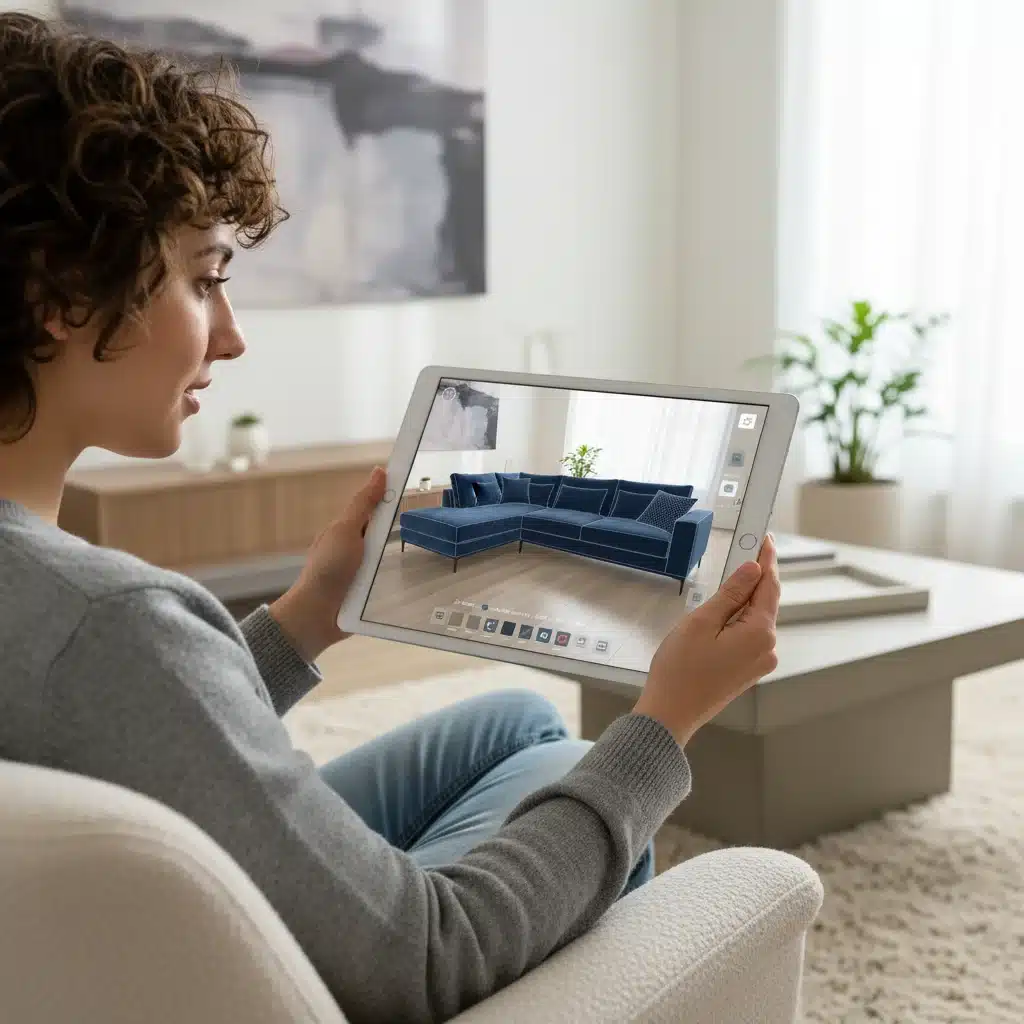
Furniture retailers have also been pioneers, enabling customers to visualize how a sofa or a dining table would look in their own homes before making a purchase. This eliminates guesswork and instills confidence, directly impacting conversion rates. Similarly, in fashion, AR apps are helping shoppers virtually try on clothes, assess fit, and even receive styling advice, blurring the lines between online and in-store experiences.
Beyond these prominent examples, AR is infiltrating other sectors. Automotive dealerships are using AR to showcase vehicle features and customization options in interactive ways. Jewelry stores are offering virtual try-ons for rings and necklaces. Even grocery stores are experimenting with AR overlays to provide nutritional information or suggest recipes based on items in a customer’s cart. The versatility of AR is its strength, allowing it to be tailored to diverse retail environments and product categories.
The success of these early implementations has provided valuable insights into consumer preferences and technological capabilities. Retailers are learning what works, what doesn’t, and how to optimize AR experiences for maximum impact. This continuous learning cycle is paving the way for more sophisticated and widespread AR adoption by 2026.
Augmented Reality’s Impact on Customer Engagement by 2026
By 2026, AR US Retail will be synonymous with enhanced customer engagement. The interactive and immersive nature of AR inherently draws customers in, offering a level of interaction that traditional online or even in-store shopping often lacks. Imagine walking into a store, and instead of static displays, you’re greeted by interactive AR elements that bring products to life, providing detailed information, usage scenarios, and personalized recommendations.
One of the most significant ways AR boosts engagement is through personalization. AR applications can leverage customer data to offer tailored experiences, suggesting products that align with individual preferences, past purchases, and even real-time contextual information. For example, an AR app could recommend a jacket based on local weather conditions or suggest a gadget based on a user’s smart home ecosystem.
The gamification aspect of AR also plays a crucial role in engagement. Retailers are increasingly incorporating game-like elements into their AR experiences, making shopping more entertaining and memorable. This could involve virtual treasure hunts, interactive challenges to unlock discounts, or simply making the product discovery process more playful. Such experiences not only keep customers engaged for longer but also create positive emotional associations with the brand.
Furthermore, AR facilitates a deeper understanding of products. Instead of relying solely on images and descriptions, customers can virtually interact with products, examining them from all angles, understanding their scale, and even seeing them in action. This hands-on, albeit virtual, experience builds trust and confidence, reducing the cognitive load on the customer and making the decision-making process smoother and more enjoyable. The novelty factor, while diminishing as AR becomes mainstream, will still contribute to a more engaging and modern brand image.
Driving Conversion Rates with AR: A 2026 Outlook
The ultimate goal for any retail technology is to drive sales, and AR is proving to be a powerful catalyst for increased conversion rates. By 2026, the direct correlation between AR adoption and higher conversions will be undeniable in AR US Retail. Several factors contribute to this phenomenon.
Firstly, AR significantly reduces purchase uncertainty. When customers can virtually try on clothes, visualize furniture in their homes, or inspect a product’s intricate details, they gain a clearer understanding of what they are buying. This clarity minimizes the risk of dissatisfaction and, consequently, the likelihood of returns. A confident buyer is a more likely buyer.
Secondly, AR streamlines the decision-making process. By providing rich, interactive information upfront, AR helps customers make quicker and more informed choices. This efficiency is particularly valuable in today’s fast-paced retail environment where consumers expect instant gratification. The ability to compare products side-by-side in a virtual space, or to see how different configurations look, accelerates the path to purchase.
Thirdly, AR creates a sense of urgency and excitement. The immersive nature of AR can evoke stronger emotional responses, transforming a routine shopping task into an exciting experience. This emotional connection can be a powerful motivator for conversion. Limited-time AR experiences, exclusive virtual content, or personalized offers delivered through AR can further incentivize immediate purchases.
Finally, AR enhances the overall brand experience, which indirectly impacts conversions. Brands that offer cutting-edge AR experiences are perceived as innovative, customer-centric, and forward-thinking. This positive brand perception fosters loyalty and encourages repeat purchases, contributing to long-term conversion growth. By 2026, retailers who have successfully integrated AR will likely see a significant competitive advantage in their conversion metrics.
Technological Advances Propelling AR in Retail
The rapid advancements in underlying technologies are crucial to the widespread adoption and effectiveness of AR US Retail. By 2026, we anticipate even more sophisticated capabilities that will further enhance AR experiences.
One key area is improved hardware. The proliferation of powerful smartphones with advanced cameras and processors has made AR accessible to a broad audience. Looking ahead, dedicated AR glasses and headsets are becoming more refined, lighter, and more affordable. These devices will offer truly hands-free, seamless AR experiences, enabling customers to interact with products in ways currently unimaginable with handheld devices. Imagine walking through a store and seeing product information, reviews, and personalized offers overlaid directly onto your vision.
Software advancements are equally critical. Improved computer vision algorithms allow for more accurate object recognition, tracking, and environmental understanding. This means AR applications will be able to place virtual objects more realistically into real-world environments, with proper lighting, shadows, and occlusion. Real-time rendering capabilities are also becoming more sophisticated, delivering visually stunning and highly realistic virtual representations of products.
The integration of Artificial Intelligence (AI) with AR is another game-changer. AI can power personalized recommendations within AR apps, analyze user behavior to optimize experiences, and even generate dynamic AR content. For instance, an AI-powered AR stylist could offer real-time fashion advice based on a customer’s body type, existing wardrobe, and desired occasion.
Furthermore, 5G connectivity is playing a vital role. The high bandwidth and low latency of 5G enable faster loading of AR content, smoother interactions, and more complex multi-user AR experiences. This is particularly important for in-store AR applications where multiple customers might be interacting with the same virtual environment simultaneously. These technological synergies will create a robust foundation for the pervasive presence of AR in retail by 2026.
Challenges and Considerations for AR Adoption in US Retail
While the future of AR US Retail appears bright, several challenges and considerations need to be addressed for its successful and widespread adoption by 2026.
One significant hurdle is the cost of implementation. Developing and maintaining high-quality AR applications, especially those tailored to specific product lines or retail environments, can be expensive. Retailers need to carefully assess the return on investment (ROI) and ensure that AR initiatives align with their overall business strategy. This includes investing in the right talent, from AR developers to UX/UI designers who can create intuitive and engaging experiences.
Another challenge is user adoption and education. While younger generations are often more comfortable with new technologies, a significant portion of the consumer base might require guidance and encouragement to embrace AR. Retailers need to design AR experiences that are easy to use, provide clear instructions, and offer compelling value propositions. In-store demonstrations and marketing campaigns highlighting the benefits of AR will be crucial.
Data privacy and security are also paramount. AR applications often collect data about user interactions, preferences, and even physical environments. Retailers must ensure transparent data collection practices, adhere to privacy regulations, and implement robust security measures to protect customer information. Building trust in this regard is essential for long-term AR success.
Interoperability and standardization are evolving. As more AR platforms and devices emerge, ensuring that AR content and experiences are compatible across different ecosystems will be important. Retailers might face challenges in managing multiple AR strategies for different channels or devices. Industry collaboration and the development of open standards will help mitigate these issues.
Finally, the quality of AR content is critical. Poorly designed or glitchy AR experiences can frustrate users and detract from the brand. Retailers must invest in creating high-fidelity 3D models of their products, ensuring accurate scaling, realistic textures, and seamless integration into the real world. The visual fidelity and performance of AR experiences directly impact customer satisfaction and engagement.
The Future of In-Store AR Experiences
By 2026, the physical retail store will be profoundly transformed by AR. It won’t be about replacing the in-store experience but rather augmenting it, creating a hybrid environment that blends the best of both physical and digital worlds. This will be a defining characteristic of AR US Retail.
Imagine walking into a clothing store where smart mirrors, powered by AR, allow you to virtually try on outfits without stepping into a changing room. These mirrors could also suggest complementary accessories, display customer reviews, and even show how an item looks in different lighting conditions. This not only saves time but also enhances the exploratory aspect of shopping.
In a home goods store, AR will enable customers to scan their living space and instantly visualize different furniture layouts, color schemes, and decor items in real-time. This eliminates the need for physical samples and provides a much more accurate representation than traditional catalogs or online images. Shoppers can confidently make decisions knowing exactly how a product will fit and look in their environment.
Navigation within large retail spaces will also be revolutionized. AR-powered indoor navigation apps can guide customers directly to specific products, highlight ongoing promotions, or provide interactive information about items on shelves. This reduces frustration and improves the efficiency of the shopping trip, leading to a more positive overall experience.
Furthermore, AR will empower sales associates with powerful tools. They can use AR tablets to provide customers with detailed product information, demonstrate complex product functionalities, or even collaborate with customers on design choices in real-time. This elevates the role of the sales associate from a mere transaction facilitator to a knowledgeable consultant, offering personalized and expert guidance.
Personalization and Immersive Experiences
The core strength of AR US Retail lies in its unparalleled ability to deliver personalized and truly immersive experiences. By 2026, this will be a non-negotiable expectation for consumers.
Personalization goes beyond simply showing relevant products. With AR, it can extend to dynamically generated content that adapts to the individual user’s context, preferences, and even mood. For example, an AR app could offer a virtual tour of a product’s manufacturing process, tailored to a customer’s interest in sustainability, or present a product story reflecting their cultural background.
Immersive experiences will become more sophisticated, moving beyond simple product overlays. We can expect AR to create interactive narratives around products, allowing customers to virtually ‘step into’ the world of a brand or explore the story behind a product in a compelling way. Imagine an AR experience that allows you to virtually tour the vineyard where a bottle of wine was produced or see the craftsmanship involved in creating a luxury watch.
The integration of haptic feedback and spatial audio with AR will further enhance immersion. Imagine trying on a virtual jacket and feeling the texture through a haptic glove, or hearing the subtle sounds associated with a product’s use. These multi-sensory experiences will make AR interactions even more realistic and engaging, deepening the emotional connection with products.
Moreover, AR facilitates co-creation and customization. Customers can use AR tools to design and visualize personalized products, from custom-engraved jewelry to bespoke furniture. This participatory element not only enhances engagement but also creates a stronger sense of ownership and connection to the purchase, further boosting conversion rates.
Measuring the ROI of AR in Retail by 2026
For retailers to justify significant investments in AR, demonstrating a clear Return on Investment (ROI) is crucial. By 2026, robust analytics and measurement frameworks will be in place to accurately quantify the impact of AR US Retail initiatives.
Key metrics for measuring AR ROI will include:
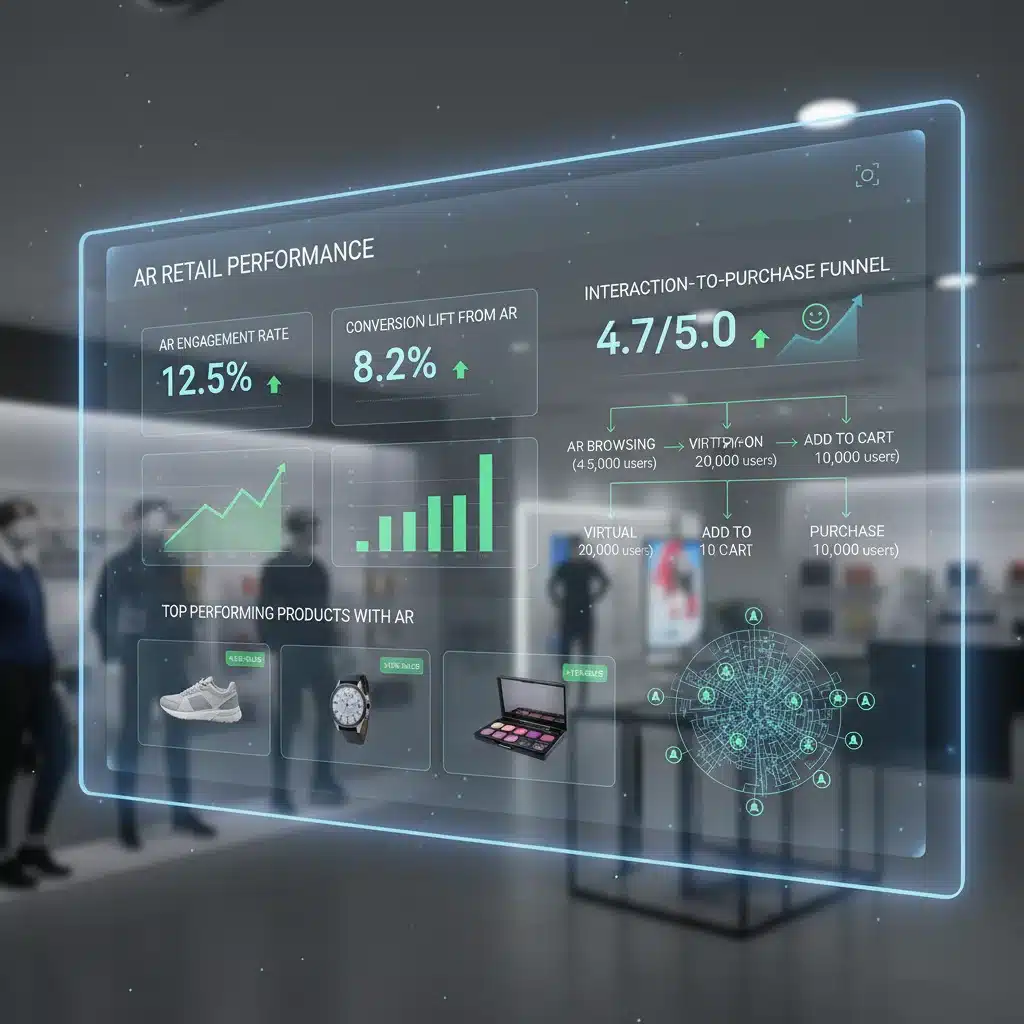
- Conversion Rate Uplift: The most direct measure of AR’s success, comparing conversion rates for customers who used AR versus those who did not.
- Reduced Return Rates: AR’s ability to minimize purchase uncertainty directly translates to fewer returns, a significant cost saving for retailers.
- Increased Average Order Value (AOV): Engaged customers using AR may be more inclined to add complementary products or opt for higher-value items.
- Improved Customer Satisfaction Scores (CSAT): Enhanced experiences lead to happier customers, which can be measured through surveys and feedback.
- Dwell Time and Engagement Metrics: Tracking how long customers interact with AR experiences and the depth of their engagement provides insights into the effectiveness of the content.
- Brand Perception and Loyalty: While harder to quantify directly, metrics like repeat purchase rates and social media mentions can indicate improved brand perception.
Advanced analytics platforms will integrate AR usage data with sales data, providing a holistic view of the customer journey and the impact of AR at various touchpoints. Machine learning algorithms will be employed to identify patterns, predict future behavior, and optimize AR content for maximum effectiveness. This data-driven approach will enable retailers to continuously refine their AR strategies, ensuring that every investment yields tangible business benefits.
The Competitive Edge: Why Retailers Must Embrace AR
In a retail landscape characterized by fierce competition and rapidly evolving consumer expectations, embracing AR is no longer a luxury but a strategic imperative. By 2026, retailers who have successfully integrated AR US Retail will possess a distinct competitive advantage.
Firstly, AR differentiates a brand. In a crowded market, offering innovative and engaging shopping experiences sets a retailer apart from its competitors. It signals to consumers that the brand is forward-thinking, customer-centric, and willing to invest in creating superior shopping journeys.
Secondly, AR helps attract and retain a younger demographic. Millennials and Gen Z are digital natives who expect seamless, tech-driven experiences. Brands that leverage AR effectively will resonate more strongly with these generations, building loyalty that can last for decades.
Thirdly, AR creates a ‘wow’ factor that generates buzz and media attention. Novel and impressive AR applications can go viral, providing invaluable organic marketing and amplifying brand reach. This public recognition can translate into increased foot traffic (both virtual and physical) and higher conversion rates.
Finally, AR future-proofs the retail business. As technology continues to advance, consumer expectations will only grow. By investing in AR now, retailers are building a foundation for future innovation, ensuring they remain relevant and competitive in an ever-changing market. Those who hesitate risk being left behind as the retail world moves towards a more augmented future.
Conclusion: A Vision for AR in US Retail by 2026
The trajectory of Augmented Reality in US retail by 2026 is clear: it will be a cornerstone technology, fundamentally reshaping customer engagement and driving significant increases in conversion rates. From virtual try-ons and immersive product visualizations to personalized in-store guidance and enhanced associate tools, AR will touch every aspect of the shopping journey, creating experiences that are more interactive, informative, and enjoyable.
The convergence of advanced hardware, sophisticated software, AI, and high-speed connectivity will unlock new possibilities, pushing the boundaries of what’s achievable with AR. While challenges related to cost, adoption, and privacy remain, proactive retailers are already navigating these hurdles, paving the way for a more augmented future.
For consumers, AR US Retail will mean greater confidence in purchase decisions, more personalized recommendations, and a truly immersive shopping adventure. For retailers, it will translate into stronger brand loyalty, reduced returns, and, most importantly, a healthier bottom line. The era of AR-powered retail is not just coming; it’s already here, and by 2026, its transformative impact will be felt across every corner of the US retail landscape.