Extend VR Hardware Warranty: Avoid Unexpected Costs for US Businesses

Extend Your VR Hardware Warranty: 7 Key Considerations for US Businesses to Avoid Unexpected Costs
In the rapidly evolving landscape of business technology, Virtual Reality (VR) is no longer a niche gadget but a powerful tool transforming industries from training and design to marketing and healthcare. US businesses are increasingly investing in sophisticated VR hardware to gain a competitive edge, streamline operations, and enhance customer experiences. However, like any advanced technology, VR hardware represents a significant capital expenditure, and its longevity and reliability are paramount to realizing a positive return on investment.
The initial purchase price of VR equipment is just one piece of the financial puzzle. Without proper protection, unexpected malfunctions, accidental damage, or premature wear and tear can lead to exorbitant repair or replacement costs, disrupting workflows and eroding budgetary allocations. This is where the strategic importance of extending your VR Hardware Warranty into sharp focus. For US businesses, understanding the nuances of extended warranties is not just about mitigating risk; it’s about safeguarding your operational continuity and financial health.
This comprehensive guide will delve into seven critical considerations that US businesses must evaluate when contemplating an extended warranty for their VR hardware. By addressing these points proactively, you can make informed decisions that protect your investments, minimize downtime, and shield your bottom line from unforeseen expenses.
1. Assess Your VR Hardware Investment and Usage Intensity
Before even considering an extended warranty, the first crucial step is to meticulously assess your current VR Hardware portfolio and how that hardware is being utilized within your organization. Are you deploying a few high-end standalone headsets for executive training, or a fleet of tethered systems for daily engineering design work? The scale, type, and intensity of use directly influence the likelihood of wear and tear, accidental damage, and component failure.
Consider the following:
- Quantity and Value: How many VR units do you own? What is the cumulative value of this equipment? A higher investment naturally warrants greater protection.
- Usage Frequency: Is the hardware used daily, weekly, or occasionally? Equipment in constant use, especially in public-facing or high-traffic environments, is exposed to more stress and potential damage.
- User Environment: Is the hardware used in a controlled office environment, a rugged industrial setting, or by multiple users with varying levels of care? The environment significantly impacts durability.
- Criticality to Operations: How essential is this VR hardware to your core business functions? If a system failure brings critical operations to a halt, the cost of downtime far outweighs the cost of an extended warranty.
- Depreciation and Obsolescence: While an extended warranty doesn’t prevent obsolescence, it does ensure that your current investment remains operational and performs optimally for its intended lifecycle, maximizing its value before replacement.
By conducting a thorough internal audit of your VR hardware assets, their operational role, and the environment in which they function, you can establish a clear picture of the inherent risks and the potential financial impact of equipment failure. This assessment forms the bedrock for determining the necessity and scope of any extended VR Hardware Warranty plan.
2. Understand the Limitations of the Standard Manufacturer’s Warranty
Every piece of VR hardware comes with a standard manufacturer’s warranty, typically ranging from one to three years. While these initial warranties provide basic protection, it’s imperative for US businesses to scrutinize their terms and conditions closely. Many businesses mistakenly assume comprehensive coverage, only to discover significant limitations when a claim arises.
Common limitations often include:
- Duration: The most obvious limitation is the finite period. Once this expires, you’re fully exposed to repair costs.
- Coverage Scope: Standard warranties often cover manufacturing defects and component failures under normal use. They rarely cover accidental damage (drops, spills), power surges, cosmetic damage, or wear and tear from heavy use.
- Exclusions: Pay close attention to what’s explicitly excluded. This could be software issues, third-party accessories, or damage resulting from unauthorized modifications or repairs.
- Service Level Agreements (SLAs): Manufacturer warranties might offer basic repair services, but often lack expedited repair times, on-site support, or advanced replacement options crucial for business continuity.
- Transferability: If you plan to resell or reallocate hardware, check if the warranty is transferable.
The gap between what a standard warranty covers and the real-world risks faced by business-critical VR hardware is precisely where an extended VR Hardware Warranty adds significant value. Identifying these gaps allows you to seek extended coverage that truly meets your operational needs and risk profile.
3. Evaluate the Cost-Benefit Analysis of Extended Coverage
The decision to purchase an extended VR Hardware Warranty should always be backed by a robust cost-benefit analysis. While the upfront cost of an extended warranty might seem like an additional expense, it often pales in comparison to the potential costs of unexpected repairs or replacements, especially for high-value VR systems.
Consider the following financial implications:
- Repair/Replacement Costs: Research the typical out-of-warranty repair costs for common VR hardware issues (e.g., screen replacement, controller repair, battery issues). Compare these against the cost of the extended warranty. Often, a single significant repair can exceed the warranty price.
- Downtime Costs: What is the financial impact of a VR system being out of commission? This includes lost productivity, delayed projects, missed deadlines, and potential revenue loss. For critical applications, downtime can be catastrophic.
- Administrative Overhead: Managing out-of-warranty repairs involves research, obtaining quotes, shipping logistics, and internal approval processes, all of which consume valuable staff time and resources.
- Budget Predictability: An extended warranty transforms unpredictable, potentially large capital outlays for repairs into a predictable, manageable operating expense, aiding in more accurate budget forecasting.
- Peace of Mind: While intangible, the assurance that your VR investments are protected allows your team to focus on core business objectives rather than worrying about hardware failures.
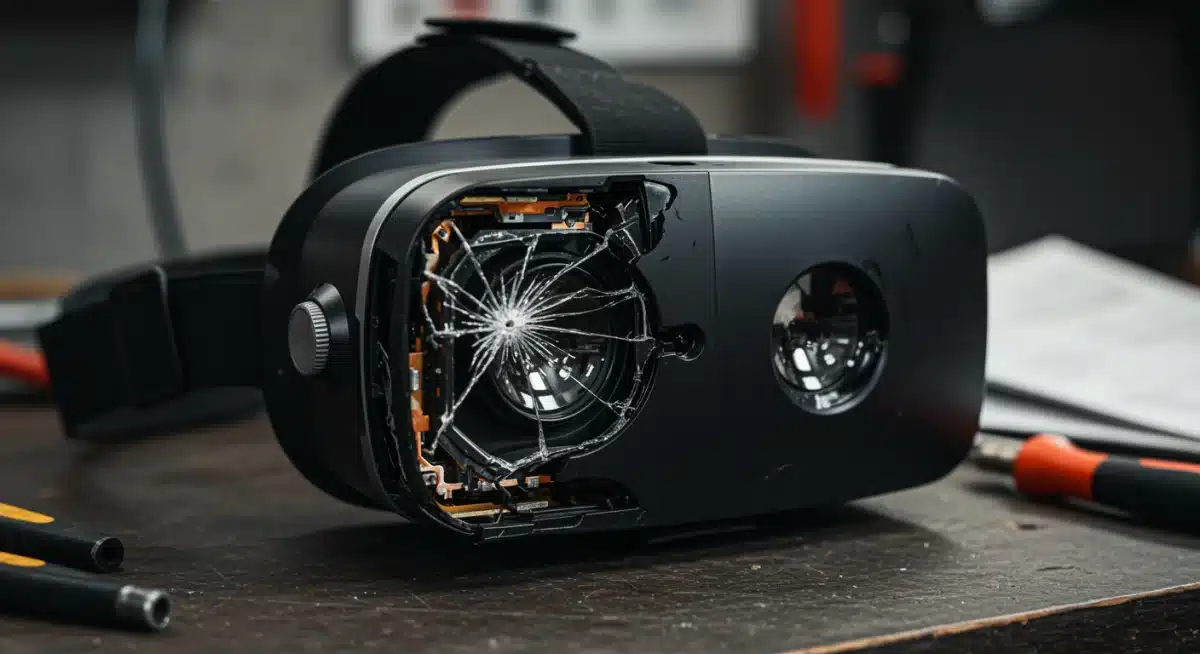
By quantifying these potential costs and weighing them against the extended warranty premium, US businesses can clearly see the financial prudence of protecting their valuable VR assets. It’s not just an expense; it’s a strategic investment in operational resilience.
4. Scrutinize the Terms and Conditions of Extended Warranty Providers
Not all extended warranties are created equal. Once you’ve decided that extended coverage for your VR Hardware Warranty is necessary, the next critical step is to meticulously scrutinize the terms and conditions offered by various providers. This requires a deep dive into the fine print, as seemingly minor details can have significant implications when you need to make a claim.
Key areas to examine include:
- Coverage Scope: Does the extended warranty cover accidental damage, liquid spills, power surges, and wear and tear, which are often excluded from standard warranties? Ensure it aligns with your risk assessment.
- Duration: How long does the extended coverage last? Does it meet your expected operational lifespan for the VR equipment?
- Deductibles and Fees: Are there any deductibles per claim? Are there hidden fees for service calls, shipping, or diagnostic tests?
- Service Level Agreements (SLAs): What are the promised repair times? Is there an option for advanced replacement, on-site service, or expedited shipping? For businesses, quick turnaround times are often critical.
- Claim Process: How easy and straightforward is the claims process? What documentation is required? A convoluted process can negate the benefits of the warranty.
- Repair vs. Replacement Policy: Under what conditions will the hardware be repaired versus replaced? Is replacement with new or refurbished equipment specified?
- Transferability: If you plan to upgrade or sell your VR systems in the future, can the extended warranty be transferred to a new owner?
- Provider Reputation: Research the provider’s reputation for customer service and claims fulfillment. Look for reviews and testimonials from other businesses.
Don’t hesitate to ask specific questions and seek clarification on any ambiguous clauses. A well-understood extended VR Hardware Warranty agreement is a powerful shield against unexpected costs.
5. Consider Specialized Business-Grade Warranty Options
While many retailers offer generic extended warranties, US businesses should actively seek out specialized, business-grade warranty solutions tailored for commercial VR deployments. These differ significantly from consumer-grade plans and are designed to meet the more stringent demands of enterprise environments.
Business-grade warranties often feature:
- Enhanced Damage Protection: Specific coverage for accidental damage, even in high-use or public settings.
- Expedited Service & Support: Faster repair turnaround times, often with dedicated business support lines and advanced replacement options to minimize operational disruption.
- On-Site Service: For complex multi-unit deployments, on-site diagnostic and repair services can be invaluable.
- Volume Discounts: Providers may offer better terms or pricing for businesses purchasing coverage for multiple units.
- Customizable Plans: The ability to tailor coverage to specific hardware types, usage scenarios, and budget constraints.
- Centralized Management: A single point of contact and streamlined processes for managing warranties across an entire fleet of devices.
- Data Security Considerations: For certain industries, ensuring data sanitization or secure handling during repairs is critical, and business-grade warranties may address this.
Partnering with a provider that understands the unique challenges and requirements of commercial VR applications ensures that your extended VR Hardware Warranty is not just a safety net, but an integral part of your business continuity plan. This specialized approach offers a level of protection and service that generic consumer plans simply cannot match.

6. Factor in Technology Evolution and Upgrade Cycles
The VR industry is characterized by rapid innovation and frequent hardware upgrades. When planning your extended VR Hardware Warranty strategy, it’s essential to consider your company’s technology refresh cycles and the pace of VR hardware evolution. An extended warranty should align with your anticipated usage period for the current generation of hardware.
Ask yourself:
- What is the expected useful life of your current VR hardware? If you anticipate upgrading to newer models in 2-3 years, a 5-year extended warranty might be excessive.
- How quickly does your industry adopt new VR technologies? In some sectors, staying at the cutting edge is crucial, necessitating shorter refresh cycles.
- Does the extended warranty offer any upgrade incentives or trade-in programs? Some providers might have flexible options that account for technology upgrades.
- What is the residual value of your VR hardware? An extended warranty can help maintain the hardware in good condition, potentially increasing its resale or trade-in value when you decide to upgrade.
Balancing the desire for long-term protection with the reality of technological advancement is key. The goal is to maximize the operational lifespan and value of your current investment without over-insuring hardware that will soon be replaced. A well-thought-out extended VR Hardware Warranty plan considers both immediate risks and future technological trajectories.
7. Document Everything: Maintenance, Usage, and Incidents
The final, yet often overlooked, consideration for US businesses extending their VR Hardware Warranty is the critical importance of meticulous documentation. Even the most comprehensive warranty can be invalidated or challenging to claim against if you cannot demonstrate proper care, usage, and a clear record of incidents.
Implement a robust system for tracking:
- Purchase Records: Keep all receipts, invoices, and warranty registration details readily accessible.
- Usage Logs: For shared or public-facing VR systems, maintain logs of usage hours, users, and any notable events.
- Maintenance Records: Document all routine cleaning, software updates, and any preventative maintenance performed. This demonstrates responsible ownership.
- Incident Reports: For any damage, malfunction, or unusual behavior, create detailed incident reports. Include dates, times, descriptions of the event, photos (if applicable), and names of involved personnel.
- Warranty Claim History: Keep a record of all past warranty claims, including dates, claim numbers, resolutions, and any communication with the warranty provider.
- User Training: Document that users have received proper training on how to handle and operate the VR hardware, especially if accidental damage is a concern.
This comprehensive documentation serves multiple purposes: it streamlines the claims process, provides evidence of compliance with warranty terms, and helps identify recurring issues or patterns that might inform future hardware purchases or training needs. In essence, good record-keeping is your best ally in ensuring that your extended VR Hardware Warranty delivers on its promise when you need it most.
Conclusion: Proactive Protection for Your VR Investments
Virtual Reality is a transformative technology, offering unparalleled opportunities for innovation and growth within US businesses. However, realizing the full potential of these investments hinges on their reliability and longevity. Ignoring the need for robust protection against hardware failures and unexpected costs is a gamble that few businesses can afford to take in today’s competitive environment.
By carefully considering these seven key factors – from assessing your investment and understanding standard warranty limitations to scrutinizing extended coverage terms and maintaining meticulous records – US businesses can develop a proactive and strategic approach to their VR Hardware Warranty management. An extended warranty, when chosen wisely, is not merely an expense but a critical component of your financial planning and operational resilience, ensuring that your VR initiatives continue to drive value without interruption or unexpected budgetary drain. Protect your innovation; protect your investment.