Discover the premier VR headsets business 2026 for U.S. enterprises, analyzing their critical features and performance to inform strategic purchasing decisions for enhanced operational efficiency and innovation.
The landscape of enterprise technology is rapidly evolving, with virtual reality (VR) emerging as a transformative tool for U.S. businesses. As we approach 2026, selecting the right VR headset is more critical than ever, influencing everything from employee training and product development to remote collaboration and customer engagement. This comprehensive analysis will delve into The Top 5 VR Headsets for Business in 2026: A Comparative Analysis of Enterprise-Grade Features and Performance for U.S. Companies, providing insights crucial for informed decision-making.
The Evolving Role of VR in U.S. Business Operations
Virtual reality has moved beyond its gaming origins to become an indispensable asset in the corporate world. U.S. companies are increasingly leveraging VR for a myriad of applications, recognizing its potential to revolutionize workflows, cut costs, and foster innovation. The demand for robust, reliable, and feature-rich VR hardware tailored for enterprise use is at an all-time high, prompting manufacturers to innovate rapidly.
From immersive training simulations that reduce on-the-job risks to virtual showrooms that enhance customer experience, VR offers tangible benefits. Its ability to create highly realistic and interactive environments allows businesses to prototype designs, conduct remote inspections, and facilitate global collaboration without the need for physical travel. This shift underscores the importance of understanding the specific capabilities of each VR headset as it pertains to business objectives.
Key Business Applications of VR
VR’s versatility makes it suitable for numerous enterprise functions, driving efficiency and new opportunities across various sectors.
- Training and Simulation: Creating safe and repeatable environments for complex procedures, reducing real-world risks and costs.
- Product Design and Prototyping: Visualizing and iterating on designs in 3D, accelerating development cycles and minimizing physical prototypes.
- Remote Collaboration: Enabling geographically dispersed teams to meet and work in shared virtual spaces, fostering stronger connections and productivity.
- Marketing and Sales: Offering immersive product demonstrations and virtual tours, engaging customers in novel ways.
The strategic deployment of VR hardware can lead to significant competitive advantages for U.S. businesses. Investing in the right technology now ensures companies are well-positioned to capitalize on these emerging opportunities, driving both immediate gains and long-term growth.
Methodology for Selecting Top Enterprise VR Headsets
Our selection process for identifying the top 5 VR headsets for business in 2026 is rigorous, focusing on criteria paramount to enterprise success. We evaluate devices not just on raw specifications, but on their practical applicability, scalability, and overall value proposition for U.S. companies. This ensures that our recommendations are grounded in real-world business needs and future-proof considerations.
Key factors considered include hardware performance, software ecosystem, security features, ease of deployment and management, and manufacturer support. We also weigh user comfort for extended periods, crucial for professional applications, and the adaptability of the headset to various industry-specific needs. The goal is to identify solutions that offer a compelling blend of innovation and practicality.
Critical Evaluation Criteria
To provide a comprehensive analysis, we scrutinize each headset against a set of predefined enterprise-centric benchmarks:
- Display Resolution and Field of View (FoV): Essential for visual fidelity and immersion, impacting clarity for detailed tasks.
- Processing Power and Graphics: Dictates the complexity of applications the headset can run smoothly, from intricate simulations to large-scale virtual environments.
- Tracking Accuracy and Latency: Crucial for precise interaction and minimizing motion sickness, ensuring a comfortable and effective user experience.
- Ergonomics and Comfort: Important for prolonged use in professional settings, reducing user fatigue and enhancing productivity.
- Enterprise Management Features: Including device management, security protocols, and integration with existing IT infrastructure.
By dissecting these elements, we aim to offer a granular understanding of each headset’s strengths and weaknesses within an enterprise context. This detailed approach allows U.S. businesses to align their technological investments with their strategic objectives, ensuring optimal return on investment.
Meta Quest Pro: Versatility and Collaboration
The Meta Quest Pro continues to stand out in 2026 as a powerhouse for enterprise VR, particularly for its advanced mixed reality capabilities and robust collaboration features. Designed with professionals in mind, it seamlessly blends virtual content with the physical world, offering unprecedented flexibility for training, design, and remote work scenarios. Its self-contained nature and powerful processing make it an attractive option for businesses seeking an all-in-one solution.
The headset boasts high-resolution displays, precise eye-tracking, and natural facial expressions captured for avatars, significantly enhancing virtual meeting realism. Its open platform and strong developer ecosystem mean a wide array of enterprise applications are readily available or can be custom-developed. For U.S. companies prioritizing immersive collaboration and mixed reality integration, the Quest Pro remains a top contender.
Key Enterprise Features of Meta Quest Pro
The Meta Quest Pro is engineered to meet the demanding requirements of corporate environments, offering a suite of features that support diverse business applications.
- Advanced Mixed Reality: Full-color passthrough cameras enable seamless blending of digital information with the real world, ideal for augmented work instructions or interactive design reviews.
- High-Fidelity Visuals: Sharp displays and a wide field of view ensure clarity for detailed tasks and immersive experiences.
- Natural Avatars: Eye and face tracking translate user expressions into virtual avatars, fostering more engaging and natural interactions in collaborative spaces.
- Enterprise-Grade Security and Management: Features designed for IT departments to deploy, manage, and secure devices across an organization.
While its price point is higher than some consumer-grade alternatives, the investment in a Meta Quest Pro can be justified by its comprehensive feature set and its ability to drive significant improvements in productivity and innovation for U.S. businesses.
HTC Vive XR Elite: Modular Design and XR Flexibility
The HTC Vive XR Elite emerges in 2026 as a formidable competitor, particularly for U.S. businesses seeking a highly modular and flexible extended reality (XR) solution. Its innovative design allows for easy transformation between a standalone VR headset and a lightweight pair of smart glasses, catering to various use cases from intensive simulations to on-the-go augmented reality assistance. This adaptability makes it a compelling choice for dynamic enterprise environments.
The XR Elite offers impressive visual clarity, accurate tracking, and a comfortable fit, even during prolonged use. Its focus on open software development and strong integration capabilities with existing enterprise systems positions it as a versatile tool for companies looking to explore the full spectrum of XR applications. The ability to remove the battery and connect directly to a power source also provides an advantage for stationary, long-duration deployments.
Advantages for Business Use Cases
The Vive XR Elite’s unique modularity and robust performance translate into distinct advantages for corporate applications.
- Modular Form Factor: Easily convertible design supports diverse scenarios, from immersive VR training to lightweight AR field assistance.
- High-Resolution Pass-through: Excellent passthrough quality for mixed reality applications, enhancing situational awareness and real-world interaction.
- Powerful Processing: Capable of running demanding enterprise applications with minimal latency and high frame rates.
- Open XR Ecosystem: Facilitates integration with a wide range of platforms and custom software solutions, offering IT departments greater control and flexibility.
For U.S. enterprises that require a single device capable of handling both immersive VR and practical AR tasks, the HTC Vive XR Elite presents a compelling, future-proof option. Its design philosophy emphasizes versatility and user experience, critical for widespread adoption within an organization.
Varjo XR-4 Series: Unparalleled Visual Fidelity for Industrial Use
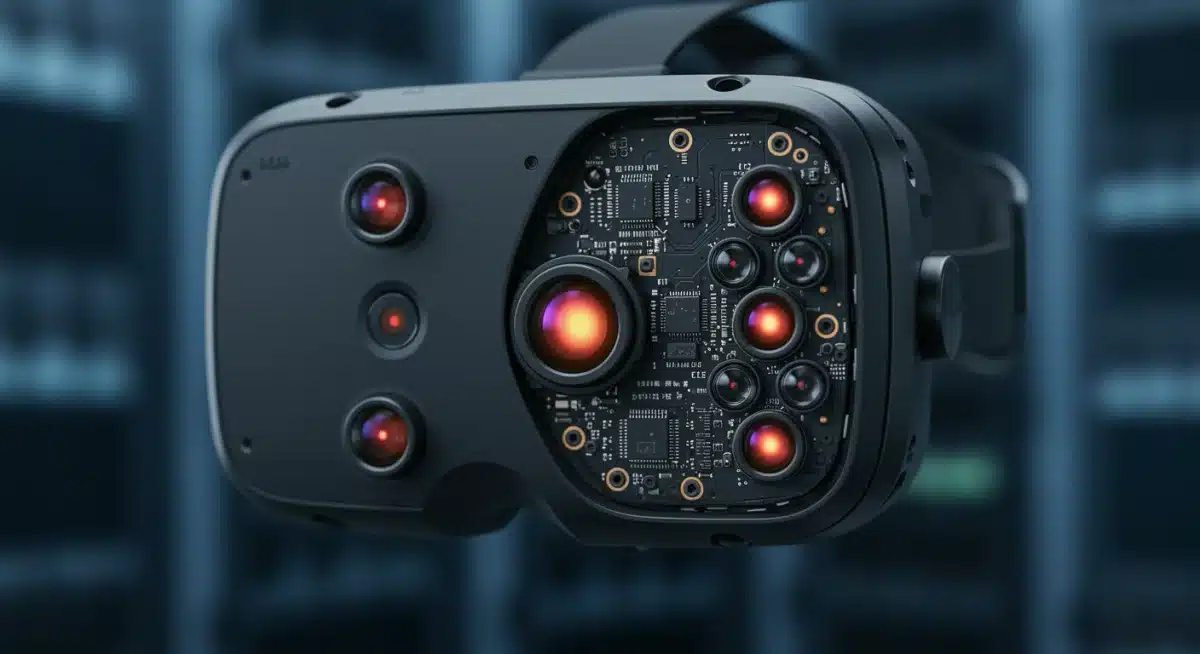
When it comes to visual fidelity and precision, the Varjo XR-4 series stands alone in 2026 as the undisputed leader for U.S. industrial and professional applications. Engineered for the most demanding tasks, such as flight simulation, architectural visualization, and complex medical training, the XR-4 offers human-eye resolution that blurs the line between virtual and real. Its focus on extreme clarity and color accuracy makes it indispensable where visual detail is paramount.
The XR-4 series integrates seamlessly with professional software ecosystems and offers advanced features like integrated eye-tracking and specialized sensors for highly accurate mixed reality overlays. While its premium price point positions it for specialized enterprise use, the return on investment for industries requiring absolute visual precision and realism is substantial. For U.S. companies in engineering, healthcare, and advanced manufacturing, the Varjo XR-4 is not just a headset but a critical professional instrument.
Why Varjo XR-4 Excels in Professional Environments
The Varjo XR-4’s design and capabilities are specifically tailored for industries where compromise on visual quality is not an option.
- Human-Eye Resolution Displays: Delivers unparalleled clarity, allowing for intricate detail examination crucial in design, education, and simulation.
- Photorealistic Mixed Reality: Advanced passthrough cameras provide high-fidelity video of the real world, seamlessly augmented with virtual content for highly accurate interactions.
- Professional-Grade Calibration: Ensures consistent color reproduction and spatial accuracy, vital for critical review processes.
- Robust Software Integration: Designed to work with leading professional 3D software and simulation platforms, supporting complex enterprise workflows.
The Varjo XR-4 series represents the pinnacle of enterprise VR technology for industries where visual perfection directly impacts operational outcomes. Its specialized nature makes it a targeted investment, but one that delivers unmatched performance for U.S. companies with specific, high-fidelity requirements.
Pico 4 Enterprise: Accessibility and Scalability
The Pico 4 Enterprise emerges as a compelling option in 2026 for U.S. businesses prioritizing accessibility, ease of deployment, and scalability without compromising on performance. Positioned as a strong contender for widespread corporate adoption, the Pico 4 Enterprise offers a balanced set of features at a more accessible price point than some of its premium counterparts. Its lightweight design and comfortable fit make it suitable for prolonged use across various departments.
This headset boasts a sharp display, reliable inside-out tracking, and a user-friendly interface, making it ideal for large-scale deployments in training, onboarding, and virtual meetings. Pico’s dedicated enterprise software and management solutions simplify device administration, allowing IT teams to efficiently manage multiple units. For U.S. companies looking to integrate VR across their organization broadly, the Pico 4 Enterprise offers a pragmatic and powerful solution.
Enterprise Advantages of Pico 4
The Pico 4 Enterprise is built with a focus on practical business implementation, offering features that simplify large-scale adoption.
- Cost-Effective Solution: Provides a strong feature set at a competitive price, making widespread deployment more feasible for businesses of all sizes.
- Lightweight and Comfortable: Ergonomic design ensures user comfort during extended sessions, crucial for training and collaborative work.
- Dedicated Enterprise OS: Features a customized operating system and management tools for streamlined deployment, content distribution, and security.
- Strong Wireless Performance: Offers excellent standalone capabilities, reducing setup complexity and increasing mobility for users.
The Pico 4 Enterprise is an excellent choice for U.S. businesses aiming for broad VR integration, offering a blend of performance, manageability, and affordability. Its emphasis on a seamless user experience and robust IT support makes it a strong contender for companies scaling their VR initiatives.
Apple Vision Pro: The Future of Spatial Computing in Enterprise
While still relatively new to the enterprise VR/AR scene in 2026, the Apple Vision Pro represents a significant leap forward in spatial computing, holding immense potential for U.S. businesses. Its unprecedented display quality, intuitive interaction methods, and deep integration with the Apple ecosystem position it as a revolutionary tool for specific high-value enterprise applications. Vision Pro isn’t just a VR headset; it’s a spatial computer designed to blend digital content seamlessly into the user’s physical environment with remarkable fidelity.
Its advanced sensor array, powerful M2 and R1 chips, and visionOS operating system allow for incredibly natural interaction with virtual objects, making it ideal for complex design reviews, data visualization, and specialized training where precision and intuitive control are paramount. While its premium cost and initial focus on individual productivity applications might deter some, its potential for transforming specific enterprise workflows is undeniable for companies willing to invest in cutting-edge technology.
Impact on High-Value Enterprise Workflows
The Apple Vision Pro’s unique capabilities promise to redefine how professionals interact with digital content in their physical workspaces.
- Unrivaled Display Quality: Micro-OLED displays deliver stunning visual clarity and color accuracy, ideal for detailed design work and content creation.
- Intuitive Spatial Interaction: Hand and eye tracking provide a seamless and natural way to interact with virtual interfaces and objects, reducing the learning curve.
- Robust Ecosystem Integration: Leveraging the Apple ecosystem, Vision Pro can integrate deeply with existing business tools and applications, enhancing productivity.
- Advanced Spatial Computing: Enables complex multi-application workflows within a personal spatial canvas, fostering new forms of productivity and collaboration.
For U.S. businesses at the forefront of innovation, particularly in creative industries, engineering, and data analysis, the Apple Vision Pro offers a glimpse into the future of enterprise spatial computing. Its capabilities suggest a paradigm shift in how professionals interact with digital information, making it a strategic investment for forward-thinking organizations.
| Headset Model | Key Enterprise Advantage |
|---|---|
| Meta Quest Pro | Versatility for collaboration and mixed reality applications. |
| HTC Vive XR Elite | Modular design offering XR flexibility across diverse use cases. |
| Varjo XR-4 Series | Unparalleled visual fidelity for high-precision industrial applications. |
| Pico 4 Enterprise | Accessibility and scalability for broad organizational deployment. |
Frequently Asked Questions About Enterprise VR in 2026
VR offers U.S. businesses enhanced training simulations, cost-effective product development, improved remote collaboration, and innovative marketing strategies, leading to increased efficiency, reduced risks, and competitive advantages across various sectors.
Choosing the best VR headset involves evaluating your specific business needs, budget, and desired applications. Consider factors like display quality, processing power, comfort, enterprise management features, and the headset’s software ecosystem for optimal integration and ROI.
The Apple Vision Pro, while groundbreaking, is best suited for U.S. enterprises requiring cutting-edge spatial computing for high-value applications like detailed design, data visualization, and specialized training, given its premium cost and current ecosystem integration.
For enterprise VR headsets, prioritize features such as robust data encryption, secure device management protocols, user authentication, and integration with existing corporate security frameworks to protect sensitive business information and ensure compliance.
Many enterprise-grade VR headsets are designed for integration with existing business software and platforms. Look for devices with open SDKs, strong developer support, and compatibility with common enterprise tools to ensure seamless workflow incorporation.
Conclusion
As we navigate towards 2026, the selection of an appropriate VR headset for U.S. businesses is a strategic decision that can significantly impact operational efficiency, innovation, and competitive standing. The headsets we’ve analyzed—Meta Quest Pro, HTC Vive XR Elite, Varjo XR-4 Series, Pico 4 Enterprise, and Apple Vision Pro—each offer distinct advantages tailored to varying enterprise needs. From immersive collaboration and modular flexibility to unparalleled visual fidelity and scalable accessibility, the market provides diverse, powerful tools. By carefully considering the specific requirements of their operations, U.S. companies can make informed investments in VR technology that will drive tangible benefits and position them for future success in the rapidly evolving digital landscape.