Virtual reality solutions improving business training
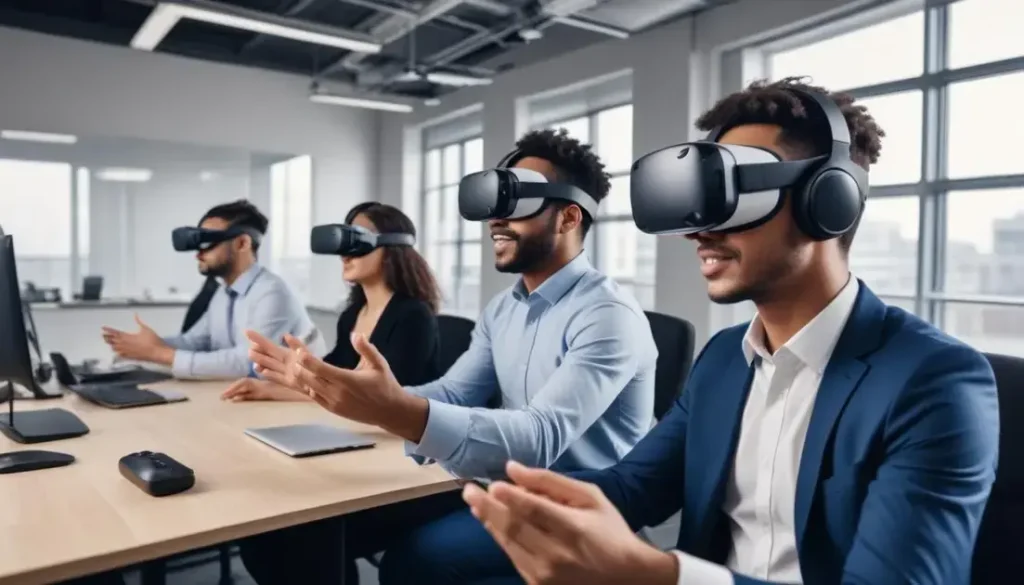
Virtual reality solutions are revolutionizing business training in US companies by providing immersive, engaging, and personalized learning experiences that significantly enhance employee skills and retention.
Virtual reality solutions improving business training are transforming how companies in the US approach employee development. Imagine immersing your staff in realistic scenarios that prepare them for real-life challenges. Excited to learn how VR can make a difference?
Understanding virtual reality in business training
Understanding virtual reality in business training is essential for companies looking to enhance their training programs. This innovative technology allows organizations to create immersive learning experiences that engage employees and improve retention.
What is Virtual Reality?
Virtual reality (VR) is a simulated environment that users can interact with using special equipment, such as VR headsets. By placing individuals in a virtual world, businesses can replicate real-life situations that employees might face. This hands-on approach makes training more effective and enjoyable.
For example, a company can simulate a customer service scenario where trainees interact with virtual customers. This practice helps employees develop skills in a safe and controlled setting, reducing the anxiety associated with real-life interactions.
Benefits of VR in Business Training
- Increased engagement: Employees are more likely to participate in training that feels like a game or an adventure.
- Improved retention: The immersive nature of VR helps employees remember information better than traditional methods.
- Tailored experiences: Training can be customized to fit the specific needs of various job roles.
Furthermore, feedback can be provided instantly in these simulations, giving employees immediate insight into their performance. This real-time analysis can lead to quicker improvements in skills and knowledge.
Adopting virtual reality solutions in business training also allows companies to save time and resources. Training sessions can often be conducted less frequently, as VR experiences can cover a lot of material and provide thorough insights.
The future of business training is indeed transforming as technology advances. Companies that embrace virtual reality as a training tool will not only enhance employee learning but also maintain a competitive edge in their industry.
Benefits of virtual reality solutions for training
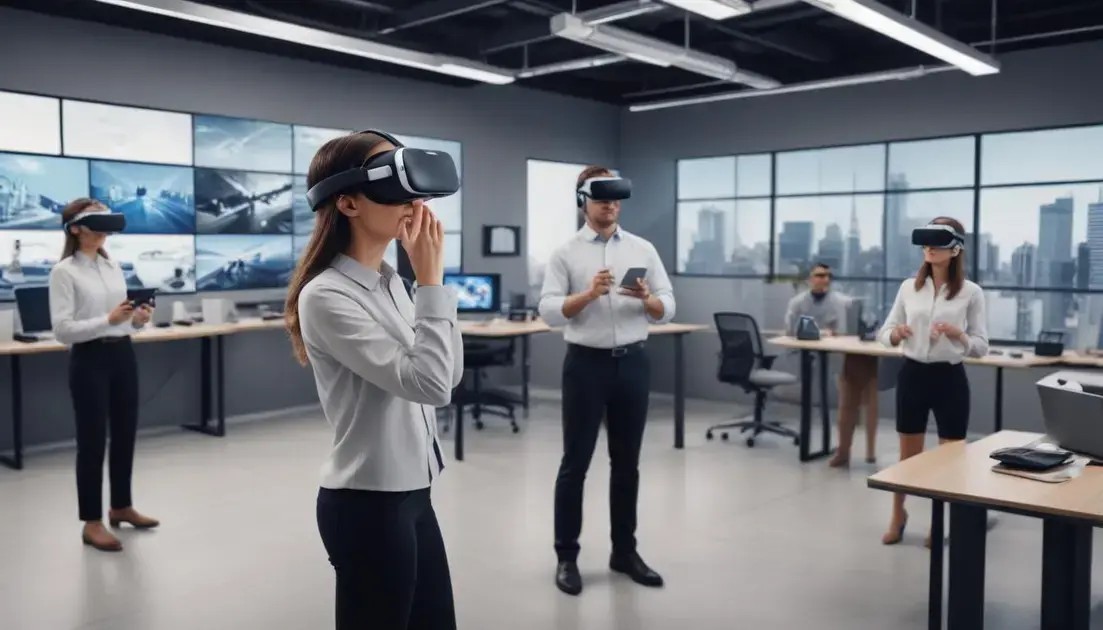
The benefits of virtual reality solutions for training are transforming how companies educate their employees. By embracing this advanced technology, businesses unlock a world of possibilities that enhance learning experiences.
Enhanced Engagement
One significant advantage of VR is the heightened engagement it fosters. Employees are more likely to participate actively when training feels immersive and interactive. Instead of traditional lectures, they can explore realistic scenarios that capture their attention and motivate them to learn.
Realistic Learning Environments
Virtual reality offers employees the chance to practice their skills in a safe environment. They can make mistakes without real-world consequences and learn from those errors. This practice improves their confidence and prepares them for actual challenges.
- Safe experimentation: Employees can try different approaches without fear.
- Instant feedback: VR experiences can provide immediate insights, enabling quick improvements.
- Increased retention: Learning in realistic environments helps improve memory of the training material.
Moreover, using virtual reality solutions allows companies to tailor experiences to specific job roles. This customization ensures that training is relevant and directly applicable, enhancing the overall effectiveness of the program.
On top of that, VR training can be conducted anywhere, making it flexible and accessible. Employees can join from a remote location, which is especially beneficial in today’s increasingly hybrid work environments. As a result, businesses can maintain high training standards without logistical constraints.
Examples of US companies using VR for employee training
Many US companies are successfully implementing virtual reality for employee training, showcasing its transformative power. By adopting this technology, they enhance learning and prepare employees for real-world scenarios.
Walmart’s Approach
Walmart, one of the largest retailers, has introduced VR training programs for its employees. These programs help staff practice customer service skills and manage crisis situations. Using VR, employees can experience the store environment and practice in various scenarios, improving their readiness for real interactions.
UPS Training Programs
United Parcel Service (UPS) also utilizes VR technology in their training programs. They focus on teaching employees about safety protocols and package handling. VR enables UPS employees to engage in simulations that emphasize proper lifting techniques and route planning. This immersive training reduces accidents and increases efficiency.
- Effective Skill Development: Employees can practice skills in a realistic environment.
- Cost Savings: Reduces the need for physical training spaces.
- Real-Time Feedback: Trainees receive immediate insights on their performance.
Another impressive example is the Marriott International hotel chain. Marriott uses VR to train its employees in customer service and hospitality scenarios. The training allows staff to interact in virtual settings, enhancing their communication skills, and improving service quality.
These examples of US companies demonstrate that virtual reality is not just an innovative trend, but a practical tool for effective employee training. By investing in VR training, organizations cultivate a skilled workforce that can adapt to challenges with confidence.
Future of virtual reality in corporate education
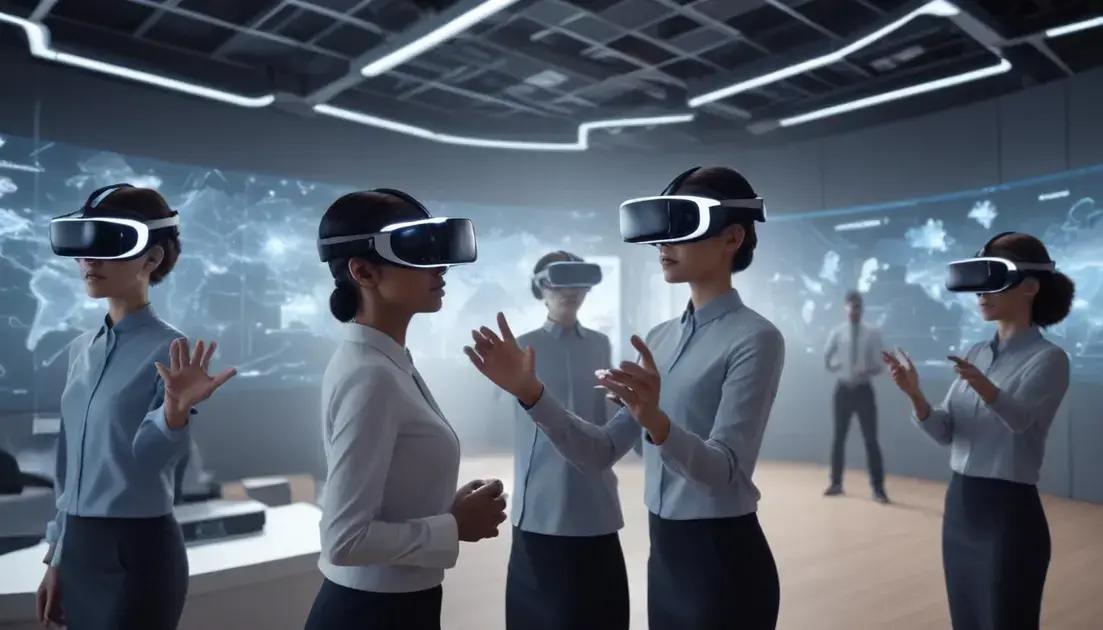
The future of virtual reality in corporate education is bright and full of potential. As technology advances, more companies are recognizing the benefits of immersive training experiences. This shift is set to redefine how organizations approach learning and development.
Growing Adoption
More businesses are expected to adopt VR solutions for training as the technology becomes more affordable. It allows companies to create customized training modules tailored to their specific needs. This adaptability gives organizations a competitive edge in workforce development.
Integration with AI
Another trend is the integration of artificial intelligence (AI) with VR training programs. AI can help create personalized learning experiences by adapting the training content based on individual employee performance and learning styles. This means employees receive training that is relevant to them, making it more effective.
- Enhanced learning paths: Personalized training modules cater to different skill levels.
- Data insights: Companies gain valuable data on employee performance during VR training.
- Increased accessibility: VR training becomes more inclusive for remote teams.
Additionally, the evolution of VR hardware and software will lead to even more realistic training environments. As virtual experiences improve, employees will benefit from a more engaging and effective learning process. This immersive approach not only boosts knowledge retention but also increases employee confidence when applying their skills in real-world situations.
Moreover, the potential applications of VR in corporate education are vast. From onboarding new hires to skill enhancement, the possibilities are endless. Companies that embrace these changes will likely see improvements in employee performance and job satisfaction.
FAQ – Frequently Asked Questions about Virtual Reality in Corporate Education
What are the main benefits of using virtual reality in training?
Virtual reality enhances engagement, provides realistic learning environments, and allows for safe practice without real-world consequences.
How can AI be integrated with virtual reality training?
AI can personalize training experiences by adapting content based on individual performance, making learning more effective.
Which companies are already using virtual reality in their training programs?
Companies like Walmart and UPS are using VR to simulate real-world scenarios, enhancing employee skills and readiness.
Is virtual reality training accessible for remote employees?
Yes, virtual reality training can be conducted remotely, making it accessible for all employees, regardless of their location.