Eye-Tracking VR: Critical Advancements for US Developers by 2027
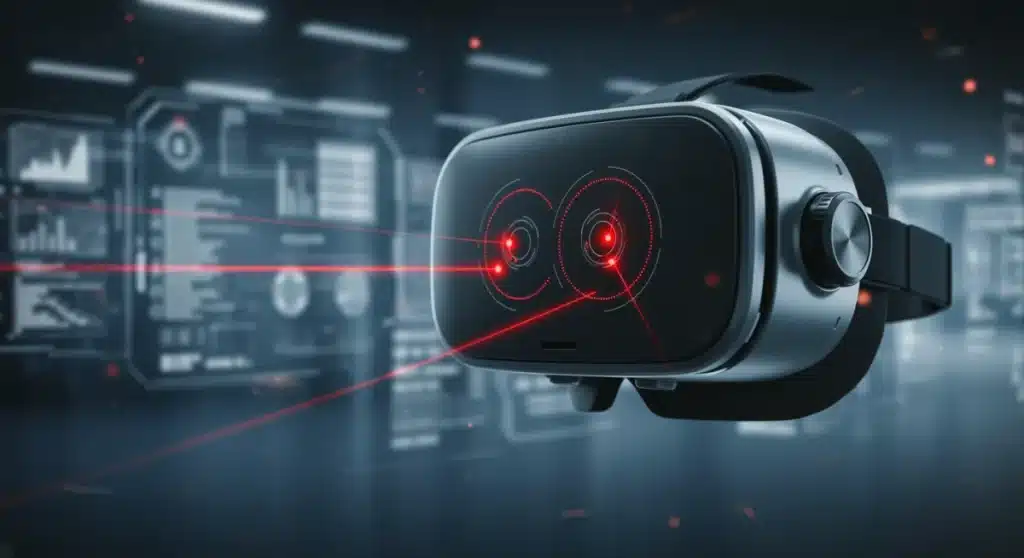
In the rapidly evolving landscape of virtual reality (VR), eye-tracking technology stands as a pivotal innovation, poised to redefine immersive experiences. For US developers, understanding and integrating the forthcoming advancements in VR eye-tracking hardware isn’t just an advantage; it’s a necessity for staying competitive. The period leading up to early 2027 is projected to bring about transformative changes that will fundamentally alter how users interact with virtual worlds and how developers design them. This comprehensive guide delves into the three critical advancements expected, offering insights into their technical implications, potential applications, and strategic importance for the US VR development community. The future of VR is gazing directly at us, and it’s imperative to be prepared.
The Dawn of Precision: Why VR Eye-Tracking Matters More Than Ever
Before we dive into the specifics of what’s coming, it’s crucial to grasp the foundational importance of eye-tracking in VR. Traditional VR relies heavily on head movements and hand controllers for interaction and navigation. While effective, this approach often falls short of delivering truly intuitive and natural experiences. The human eye, however, is a remarkable instrument, capable of conveying intent, focus, and even emotional states with incredible subtlety and speed. Integrating robust eye-tracking into VR hardware unlocks a new paradigm of interaction, making virtual environments feel more responsive, believable, and personalized.
For US developers, this translates into an opportunity to create applications that are not only more engaging but also more accessible and efficient. Consider the implications for training simulations, medical applications, architectural visualizations, or even social VR platforms. The ability to precisely know where a user is looking opens up a wealth of possibilities for dynamic content adjustment, intuitive menu navigation, and even understanding user cognitive load. The competitive edge this offers cannot be overstated, especially as the VR market matures and user expectations for realism and seamlessness continue to rise.
The current state of VR eye-tracking, while impressive in its own right, still faces challenges in terms of accuracy, latency, and integration cost. However, ongoing research and development are rapidly addressing these hurdles, paving the way for the next generation of hardware. The advancements we are about to explore are not incremental improvements; they represent fundamental shifts that will empower developers to build experiences previously confined to science fiction.
Critical Advancement 1: Hyper-Accurate & Low-Latency Foveated Rendering
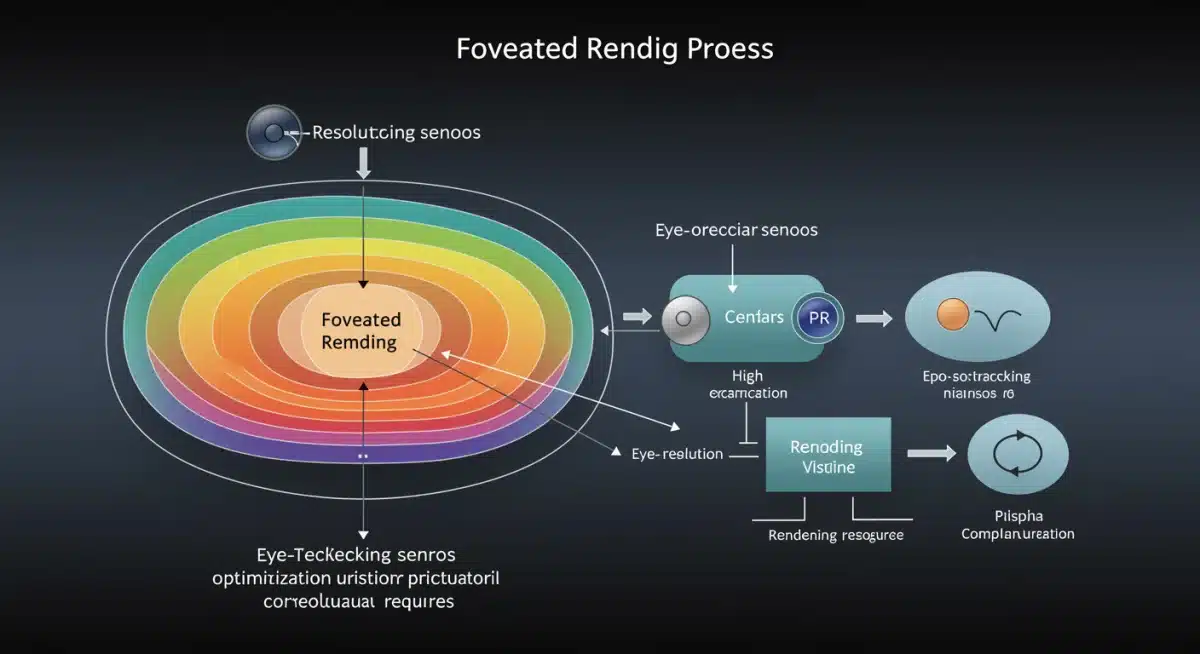
The first, and arguably most impactful, advancement in VR eye-tracking hardware by early 2027 will be the widespread implementation of hyper-accurate and low-latency foveated rendering. Foveated rendering is an optimization technique that capitalizes on the human eye’s visual acuity. Our central vision (fovea) is incredibly sharp, while our peripheral vision is less so. Foveated rendering dynamically renders the area where the user is looking (the fovea) at maximum resolution and fidelity, while reducing the resolution and detail in the peripheral areas. This significantly reduces the computational load on the GPU, allowing for higher frame rates, more complex scenes, or lighter, more power-efficient headsets.
Current foveated rendering implementations exist, but they often struggle with a few key limitations:
- Accuracy: If the eye-tracking isn’t precise enough, the high-resolution ‘foveal’ region might not perfectly align with where the user is actually looking, leading to noticeable blurriness or artifacts.
- Latency: There’s a inherent delay between when the eye moves and when the system tracks that movement and updates the rendered image. High latency can cause a distracting ‘swim’ effect as the high-resolution area lags behind the user’s gaze.
- Computational Overhead: The process of tracking the eyes, processing the data, and dynamically adjusting the rendering can itself consume significant resources.
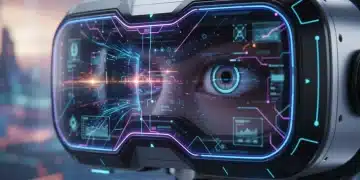
By early 2027, we anticipate a breakthrough in these areas. New sensor technologies, potentially leveraging advanced infrared arrays or even novel optical designs, will achieve sub-millisecond latency and sub-degree accuracy. This means the foveal region will instantly and perfectly match the user’s gaze, making the resolution changes imperceptible to the human eye. Furthermore, dedicated hardware acceleration for foveated rendering will become standard in VR chipsets, offloading the processing burden from the main GPU and making the technique highly efficient.
Implications for US Developers:
- Unprecedented Visual Fidelity: Developers will be able to create incredibly detailed and realistic environments without sacrificing performance. This is crucial for applications requiring high visual realism, such as medical training, engineering design, or photorealistic virtual tourism.
- Reduced Hardware Requirements/Increased Portability: By significantly lowering the computational demands, foveated rendering will enable VR experiences on less powerful hardware, expanding the market for mobile VR and standalone headsets. This opens up new opportunities for developers targeting a broader consumer base.
- Enhanced Immersion: The seamless visual experience will reduce eye strain and motion sickness, leading to longer, more comfortable, and deeply immersive sessions. This is vital for narrative-driven games, collaborative workspaces, and therapeutic VR applications.
- More Complex Scenes: Developers can integrate more polygons, higher-resolution textures, and more sophisticated lighting models, pushing the boundaries of what’s graphically possible in VR.
For US developers, this advancement means a fundamental shift in how they approach asset creation, scene optimization, and overall visual design. Mastering the nuances of foveated rendering will be key to unlocking the full potential of next-generation VR. They will need to consider how their content scales across different foveated rendering profiles and ensure their visual assets are optimized to look great both in central and peripheral vision.
Critical Advancement 2: Intuitive Gaze-Based Interaction & Dynamic UI
The second critical advancement will be the maturation of intuitive gaze-based interaction and dynamic user interfaces (UIs). While eye-tracking has been explored for UI navigation, its full potential for seamless and natural interaction is yet to be fully realized. By early 2027, we will see a shift from simple gaze-selection to sophisticated, context-aware interactions that feel as natural as looking at an object in the real world.
This advancement goes beyond merely highlighting what a user is looking at. It involves:
- Gaze-Triggered Actions: Imagine looking at a virtual button, and it subtly glows or expands, indicating it’s ready for activation with a simple blink or a slight controller gesture.
- Contextual Menus: Menus and information panels will dynamically appear or change based on where the user’s gaze rests, providing relevant options without cluttering the entire field of view. For example, looking at a character might bring up interaction options, while looking at an inventory item might display its description.
- Implicit Interaction: The system will infer user intent from gaze patterns. A prolonged gaze at a specific object could automatically trigger a zoom, a detailed information overlay, or the highlighting of related elements.
- Dynamic Depth of Field and Focus: As a user shifts their gaze, the VR environment will mimic natural vision by adjusting depth of field, bringing objects into sharp focus where the user is looking and subtly blurring the background. This adds another layer of realism and comfort.
- Collaborative Gaze Pointers: In social or collaborative VR, users’ gaze points can be shared, allowing for intuitive non-verbal communication and shared attention, making virtual meetings and co-working spaces far more effective.
The hardware underpinning this will feature even more refined eye-tracking sensors that can distinguish between a casual glance and a focused stare, potentially incorporating pupil dilation and blink patterns into their algorithms. Advanced AI and machine learning models will interpret these gaze patterns to predict user intent, making interactions predictive and proactive rather than purely reactive.
Implications for US Developers:
- Revolutionized UI/UX Design: Developers will need to rethink traditional UI paradigms. Gaze will become a primary input modality, requiring new design principles for menus, navigation, and object interaction. This opens up opportunities for highly intuitive and minimalist interfaces.
- Enhanced Accessibility: Gaze-based interaction can significantly improve accessibility for users with limited mobility, offering a powerful alternative to hand controllers.
- Deeper Immersion through Natural Interaction: When interactions feel natural and effortless, the barrier between the user and the virtual world diminishes, leading to a more profound sense of presence.
- New Gameplay Mechanics: Game developers can create innovative puzzles, stealth mechanics, and environmental interactions where gaze is central to the experience. For instance, a horror game might have creatures that only move when you’re not looking, or puzzles that require specific gaze sequences.
- More Efficient Workflows: For professional applications, gaze-based interaction can streamline complex workflows, allowing users to quickly access tools, information, or controls simply by looking at them.
US developers who master the art of designing for gaze-based interaction will be at the forefront of creating truly next-generation VR experiences. This requires a deep understanding of human visual perception and cognitive processes, moving beyond traditional button-press interactions.
Critical Advancement 3: Emotional Analytics & Cognitive Load Assessment
The third critical advancement, and perhaps the most groundbreaking for understanding user experience, is the integration of emotional analytics and cognitive load assessment through advanced eye-tracking. Beyond simply knowing where a user is looking, future VR eye-tracking systems will be capable of inferring a user’s emotional state, level of engagement, and even cognitive strain by analyzing subtle changes in pupil dilation, blink rate, and micro-saccades (tiny, involuntary eye movements).
This goes beyond simple metrics. Sophisticated algorithms, often powered by machine learning trained on vast datasets, will interpret these physiological signals to provide real-time insights into the user’s internal state. Imagine a VR system that can detect:
- User Frustration: Rapid, erratic eye movements combined with increased blink rate could signal frustration or confusion.
- Engagement and Interest: Sustained focus on a particular object or area, coupled with stable pupil dilation, could indicate deep engagement.
- Cognitive Overload: Constricted pupils, frequent shifts in gaze without clear focus, or increased blink latency might suggest the user is struggling to process information.
- Emotional Response: Pupil dilation can be a strong indicator of arousal or emotional response to specific stimuli, whether positive (excitement) or negative (fear).
The hardware enabling this will likely include even more sensitive and higher-frequency eye-tracking cameras, capable of capturing minute physiological changes. These will be tightly integrated with onboard processing units designed for real-time biometric analysis.
Implications for US Developers:
- Adaptive Experiences: Developers can create dynamic VR experiences that adapt in real-time to the user’s emotional and cognitive state. For example, a training simulation could automatically slow down or offer more guidance if it detects frustration, or a game could increase difficulty if it senses boredom.
- Personalized Content Delivery: Content can be tailored to individual users based on their emotional responses. This is particularly powerful for educational content, therapeutic applications (e.g., exposure therapy), and even marketing research.
- Enhanced User Testing & Analytics: For the first time, developers will have access to objective, physiological data on how users truly feel and react to their VR applications. This moves beyond self-reported feedback, providing invaluable insights for iterative design and optimization.
- Biometric Security & Identity: While still in early stages, advanced eye-tracking could contribute to biometric authentication within VR environments, enhancing security.
- Ethical Considerations: With great power comes great responsibility. US developers will need to navigate the ethical implications of collecting and utilizing such intimate user data, prioritizing privacy and transparency. Robust guidelines and best practices will be essential.
This advancement transforms VR from a passive display into an intelligent, responsive system that understands its user. US developers who embrace emotional analytics will be able to craft profoundly empathetic and impactful VR experiences, opening up entirely new markets and application domains.
Preparing for the Future: A Developer’s Roadmap
The advancements in VR eye-tracking hardware by early 2027 are not distant prophecies; they are imminent realities that US developers must actively prepare for. Here’s a roadmap to ensure you’re at the forefront of this technological wave:
- Stay Informed and Experiment: Keep a close watch on hardware announcements from major players like Meta, Apple, Valve, Varjo, and others. Invest in developer kits that feature early eye-tracking capabilities and start experimenting with the available SDKs. Even if current implementations are rudimentary, understanding the programming paradigms will be invaluable.
- Deep Dive into Foveated Rendering: Begin to understand the principles of foveated rendering. While hardware will handle much of the heavy lifting, developers will still need to optimize their assets and scenes to take full advantage of this technology. Learn about LOD (Level of Detail) systems, texture streaming, and shader optimization in the context of dynamic resolution.
- Rethink UI/UX for Gaze: Challenge your existing assumptions about user interfaces. Explore concepts of gaze-based selection, hover effects, and contextual menus. Prototype different interaction models using eye-tracking as a primary input. Consider how to provide clear feedback to the user when their gaze is being used for interaction.
- Explore Biometric Data & Ethics: Start researching the potential of biometric data from eye-tracking. Understand the ethical considerations, privacy implications, and best practices for responsible data collection and utilization. This is especially critical for applications in healthcare, education, or sensitive training scenarios. Engage with legal experts to ensure compliance with data protection regulations.
- Collaborate and Share Knowledge: Join developer communities focused on VR and eye-tracking. Share your findings, learn from others, and participate in discussions. The collective knowledge of the community will accelerate innovation. Hackathons and specialized workshops can be excellent platforms for this.
- Invest in Talent and Training: Ensure your development team is up-to-date with the latest VR technologies. Consider specialized training in areas like advanced rendering techniques, machine learning for biometric analysis, and human-computer interaction design tailored for gaze input.
- Focus on User Experience (UX): Ultimately, the success of these advancements hinges on how well they enhance the user experience. Prioritize user comfort, intuitiveness, and immersion in all your development efforts. Conduct extensive user testing to refine gaze-based interactions and ensure they feel natural and effortless.
The Competitive Edge for US Developers
The US market is a hotbed of innovation, and its developers have historically been at the forefront of technological adoption. The rapid integration of these advanced VR eye-tracking capabilities presents a unique opportunity for US developers to solidify their leadership in the global VR ecosystem. By being early adopters and innovators in these areas, they can:
- Attract Top Talent: Working with cutting-edge technology is a significant draw for skilled developers and researchers.
- Secure Funding and Investment: Projects leveraging these advanced capabilities will be inherently more attractive to investors looking for the next big thing in immersive tech.
- Define New Industry Standards: Early movers have the chance to set the benchmarks for interaction design, performance optimization, and user experience in the next generation of VR.
- Open Up New Markets: Applications that were previously impossible due to technical limitations (e.g., highly realistic simulations on portable devices, deeply personalized therapeutic VR) will become viable.
The time-sensitive nature of these advancements means that proactive engagement is paramount. Waiting until these technologies are fully mature will mean playing catch-up. The developers who start integrating and experimenting now will be the ones shaping the future of VR.
Conclusion: Gaze into the Future of VR
The evolution of eye-tracking in VR hardware is not just an incremental upgrade; it represents a fundamental shift in how we perceive, interact with, and even understand virtual worlds. By early 2027, hyper-accurate foveated rendering, intuitive gaze-based interaction, and sophisticated emotional analytics will be standard features, empowering US developers to create experiences that are visually stunning, incredibly natural, and profoundly personal. This is a call to action for the US VR development community: embrace these advancements, innovate with them, and lead the charge into a truly immersive future. The gaze of the user is about to become the most powerful tool in your development arsenal. Are you ready to see what’s next?