VR for business adoption growing in US healthcare and real estate
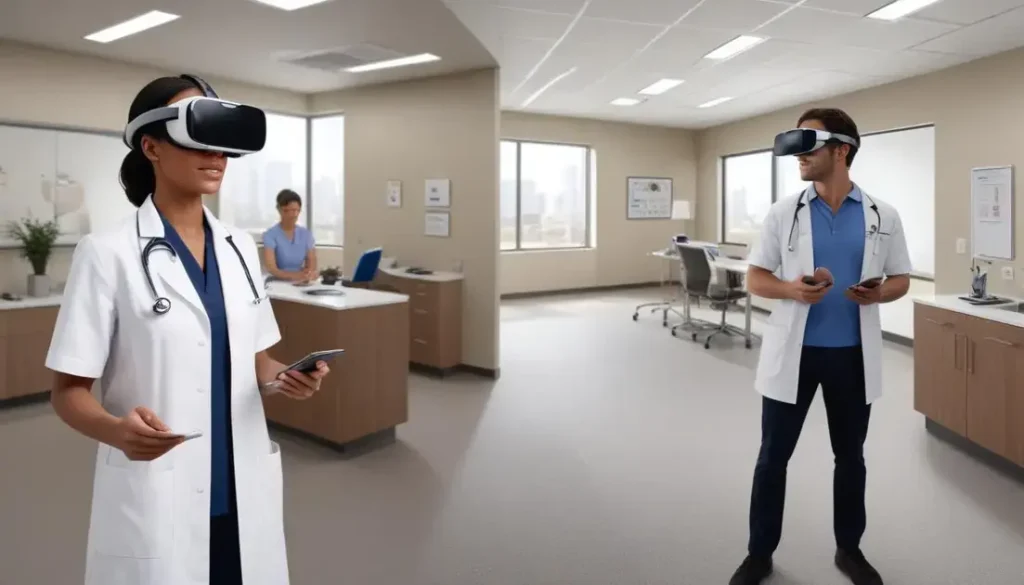
VR for business adoption growing in US healthcare and real estate is delivering measurable gains by speeding clinician training, improving patient therapy engagement, enabling remote specialist collaboration, and expanding virtual property tours that shorten sales cycles and reduce staging costs.
VR for business adoption growing in US healthcare and real estate is moving beyond pilots — but does it truly cut costs or improve care? Here we highlight real examples, common pitfalls and practical steps so you can judge whether VR fits your team or portfolio.
Key use cases in US healthcare: training, therapy, and remote collaboration
VR is being used in US healthcare to make training faster, therapy more engaging, and remote teamwork clearer. These real examples show how care teams and patients can benefit.
Below are practical use cases that hospitals and clinics are adopting today, with clear steps and outcomes to consider.
Training with realistic simulations
Clinicians use VR to practice procedures in a safe, repeatable setting. Simulations recreate rare emergencies and routine skills without risk to patients.
Students and staff build muscle memory and decision-making skills through hands-on practice that feels real but carries no harm.
Therapy and rehabilitation in virtual environments
Therapists guide patients through tailored VR exercises for pain management, exposure therapy, or motor rehab. The virtual setting keeps patients motivated and tracks progress precisely.
- Exposure therapy for anxiety and PTSD using controlled virtual scenarios.
- Physical rehab with gamified tasks that encourage movement and measure improvement.
- Pain distraction techniques during procedures or chronic pain sessions.
These tools let clinicians adjust difficulty, monitor outcomes, and keep patients engaged between visits.
Remote collaboration brings specialists into the room virtually. A surgeon can coach a remote team, or a therapist can observe sessions from another city. This expands access to expertise without long travel.
Simple hardware—headsets, a tablet, and a secure connection—can link teams and share a live, first-person view of a case. That view helps teams solve problems faster and learn together.
Practical tips for safe adoption
Start with focused pilots that measure skill gains and patient responses. Train staff on both the tech and the clinical workflow to avoid disruption.
- Choose evidence-based apps and test them with a small user group.
- Ensure data security and patient consent before wide use.
- Measure outcomes like time to competency, patient satisfaction, and therapy progress.
Track results, refine your approach, and scale what proves effective.
VR in US healthcare shines when it supports clear goals: better training, measurable therapy gains, and richer remote collaboration. Small pilots and focused metrics help teams decide what to scale.
How real estate leverages vr for sales, property tours, and design decisions

VR lets buyers walk through homes from anywhere, making listings feel real before a visit. It speeds decisions and widens your buyer pool.
This section shows practical uses for sales, property tours, and design choices that real estate teams can adopt today.
Virtual tours that close deals
High-quality 3D tours let buyers explore layout, light, and flow on their own time. Agents use these tours to qualify leads and reduce wasted visits.
Integrate tours into listings and follow up with guided walk-throughs to answer questions and highlight features.
Staging and design decisions in VR
VR staging shows multiple design options without physical costs. Clients compare finishes, furniture, and layouts in real scale.
- Test color schemes and furniture placement instantly.
- Show renovation possibilities to increase perceived value.
- Provide customizable options for buyers to personalize spaces.
These views help buyers imagine living in the space and speed up agreement on upgrades or pricing.
Agents can combine live VR sessions with screen sharing to discuss changes and collect feedback in real time. This keeps conversations focused and decisions quick.
Sales workflow and analytics
Use VR metrics to track engagement: which rooms buyers visit, time spent, and interaction hotspots. Those signals guide targeted follow-ups.
Pair analytics with CRM data to prioritize leads who show strong interest in key features.
- Monitor tour engagement to identify hot leads.
- Use heatmaps to improve staging and marketing copy.
- Automate follow-ups based on tour behavior.
Simple dashboards help teams act fast and tailor messages to what each buyer values most.
VR also supports remote buyers and investors, enabling simultaneous guided tours across time zones. That expands reach and shortens sales cycles without extra on-site visits.
Start small with pilot listings, measure time-to-offer and buyer satisfaction, then expand to more properties once you see results.
Adopting VR for sales, property tours, and design decisions delivers clearer buyer insights, faster sales, and lower staging costs when paired with good analytics and simple workflows.
Measuring ROI and operational challenges when adopting vr at scale
VR can cut costs and boost outcomes, but true value shows when you measure results and solve operational issues at scale. Clear metrics and practical steps help leaders decide when to expand.
Below are ways to track return and the common problems teams face as adoption grows.
Key metrics to measure ROI
Choose a few clear metrics tied to your goals. Simple, repeatable measures make results easier to compare.
- Time to competency: how long staff take to reach required skill levels after VR training.
- Clinical outcomes: changes in patient recovery, readmission, or pain scores linked to VR therapy.
- Utilization rate: percentage of available sessions or tours actually used.
- Cost per outcome: total program cost divided by a key benefit, like successful procedures or closed sales.
Collect baseline data before pilots so you can show improvement and calculate real savings.
Data methods and evidence
Use mixed data: numbers and stories. Quantitative metrics show scale; qualitative feedback explains why results happened.
Run short pilots with control groups or A/B tests to isolate VR impact. Track usage logs, outcome data, and user surveys for a full view.
Operational challenges at scale
Scaling introduces issues that small pilots may not reveal. Plan for hardware, people, and process needs up front.
- Device lifecycle: headsets need updates, repairs, and replacement plans.
- Content management: keep VR scenarios current and clinically accurate.
- IT and network demands: bandwidth, security, and integration with existing systems.
- Staff adoption: time for training, change management, and workflow alignment.
Address privacy and consent early, especially in healthcare. Ensure vendors meet compliance and data protection standards.
Operational risks often come from unclear ownership: assign roles for device care, content updates, and data analysis to avoid gaps.
Practical rollout and governance tips
Start with tight pilots that have clear success criteria. Use findings to build a phased rollout plan and budget forecast.
- Define success metrics and reporting cadence from day one.
- Train a small group of superusers to support peers.
- Negotiate vendor SLAs for support, updates, and data access.
- Plan for spare devices and a repair workflow to reduce downtime.
Combine dashboards for real-time monitoring with regular reviews of clinical or sales outcomes. That keeps teams focused on impact, not just usage.
Measuring ROI and solving operational challenges are linked: clear metrics guide better operations, and solid operations produce reliable metrics. Small pilots, focused goals, and assigned ownership make scaling more predictable and cost-effective.
Steps for leaders: procurement, pilot design, and staff training tips
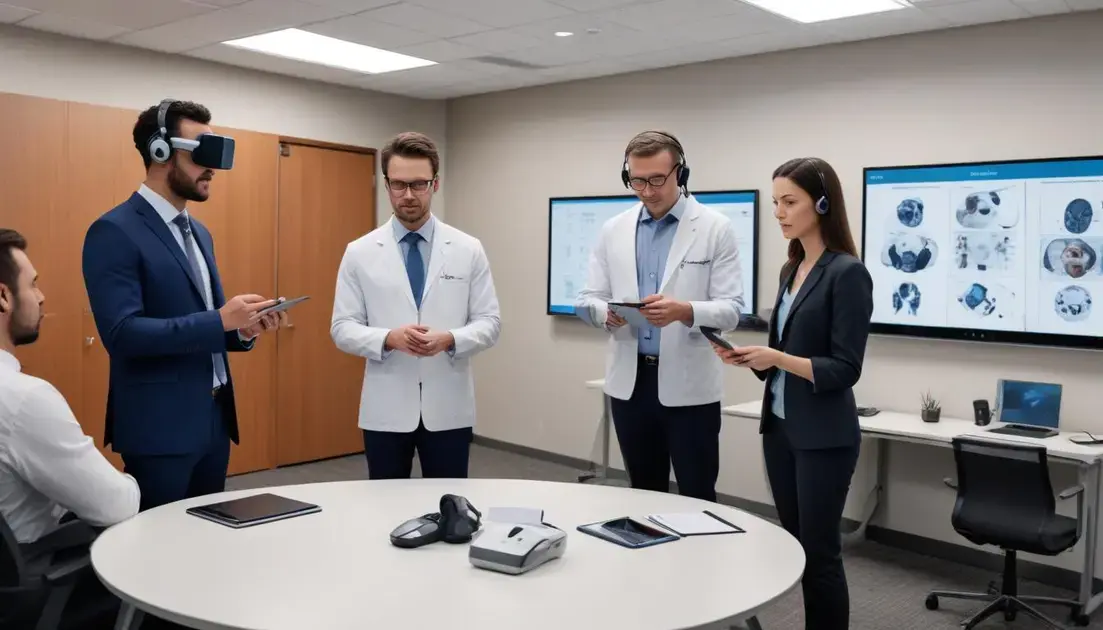
VR projects need clear steps for buying, testing, and training. Leaders who plan well cut delays and improve results.
This section lists practical procurement checks, pilot design choices, and simple staff training tips you can use now.
Procurement checklist for leaders
Buy with the end use in mind. Know the clinical or sales problem you want to solve first.
- Define the use case and success metrics before vendor discussions.
- Estimate total cost of ownership: devices, software, maintenance, and spares.
- Check security, compliance, and integration with existing systems.
- Evaluate vendor support, SLAs, and update policies.
Negotiate trials or short-term contracts to avoid heavy upfront commitments. Include service and replacement terms in any agreement.
Pilot design essentials
Design pilots that answer one or two clear questions. Keep pilots short and measurable.
- Set a hypothesis and 3–5 concrete metrics to track.
- Choose a small, representative user group and a control or comparison group.
- Plan data collection: usage logs, surveys, and outcome measures.
- Schedule a fixed pilot length and review points to decide next steps.
Make consent and privacy part of the pilot plan. Train staff on data capture and who owns results.
Collect both numbers and short user interviews. Numbers show scale; stories reveal why users did or did not adopt the tool.
Staff training and adoption tips
Train people on the workflow, not only the headset. Show how VR fits into daily tasks.
- Start with short hands-on sessions that build comfort with the device.
- Create superusers who coach peers and handle basic troubleshooting.
- Use mixed learning: demo, guided practice, and quick refresher modules.
- Schedule debriefs after sessions to capture feedback and improvement ideas.
Keep training materials simple: short videos, one-page checklists, and quick FAQs. That reduces anxiety and speeds uptake.
Assign clear ownership for devices, content updates, and program metrics. When roles are defined, pilots move faster and scale more smoothly.
Focus on small wins: short pilots, clear metrics, and hands-on training. These steps make procurement smarter, pilots more informative, and staff adoption easier for any VR program.
VR can deliver clear benefits in US healthcare and real estate when teams set specific goals, run focused pilots, and track simple metrics. Start small, train staff, and assign ownership for devices and data so operations stay smooth and results are measurable.
FAQ – VR for business adoption in US healthcare and real estate
What are the main benefits of VR for healthcare and real estate?
VR speeds up clinician training, improves therapy engagement, enables remote specialist collaboration, and lets buyers tour and customize properties remotely.
How can organizations measure ROI from VR?
Track simple metrics: time to competency, clinical or sales outcomes, utilization rate, and cost per outcome. Run a baseline pilot to compare results.
What operational challenges should we plan for?
Expect device maintenance, content updates, IT and bandwidth needs, staff training, and data privacy requirements. Assign clear owners for each area.
How long does a pilot typically take to show meaningful results?
A focused pilot often runs 4–12 weeks. With defined metrics and good data collection, teams can see clear signals within that period.