VR Hardware Refresh Rates: 120Hz Displays Standard for 2026 U.S. Business Training
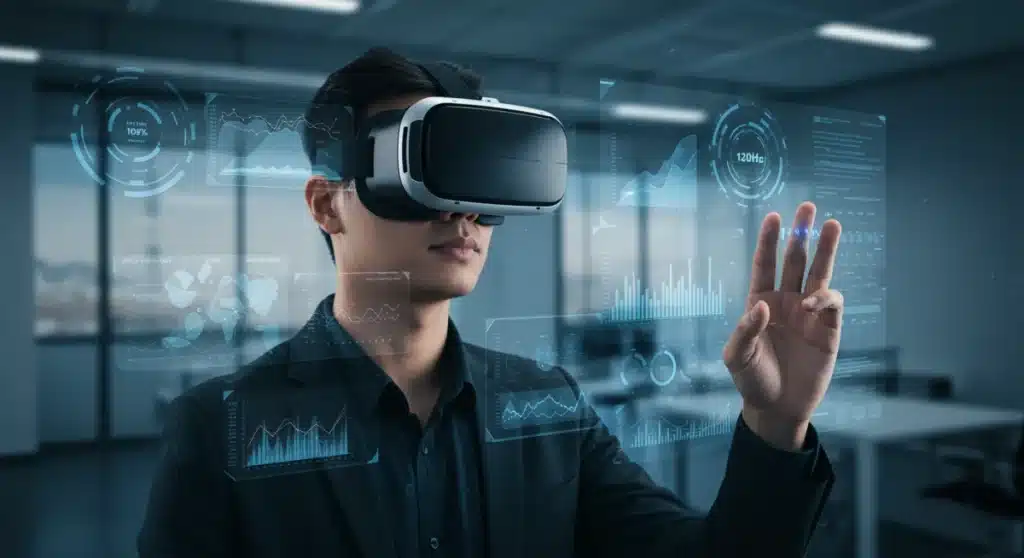
By 2026, 120Hz refresh rates are poised to become the standard for VR hardware in U.S. business training, significantly enhancing immersion, reducing motion sickness, and improving overall training effectiveness.
As we approach 2026, the landscape of corporate training is undergoing a profound transformation, with virtual reality at the forefront. Specifically, the focus on VR hardware refresh rates is intensifying, and 120Hz displays are rapidly emerging as the benchmark for immersive business training in the U.S. This evolution isn’t merely about technological advancement; it’s about optimizing the user experience to maximize learning outcomes and operational efficiency. Why is this particular refresh rate becoming so critical? Let’s delve into the technical and practical reasons.
The foundational role of refresh rates in VR immersion
Understanding refresh rates is fundamental to appreciating the quality of a virtual reality experience. In essence, the refresh rate dictates how many times per second a display updates its image. A higher refresh rate translates directly into smoother, more fluid visuals, which is paramount in VR to prevent motion sickness and enhance the perception of being truly present within a virtual environment.
For business training applications, this fluidity is not just a luxury; it’s a necessity. Training scenarios often involve intricate movements, rapid changes in perspective, and detailed interactions that demand a seamless visual experience. Lower refresh rates can lead to choppy visuals, a disconnect between virtual actions and real-world movements, and ultimately, a less effective training session.
Defining refresh rate and its impact on user experience
The refresh rate, measured in Hertz (Hz), indicates how many frames per second the display can draw. A 60Hz display refreshes 60 times per second, while a 120Hz display refreshes 120 times. This difference, while seemingly small in numbers, creates a dramatically different sensory experience for the user.
- Reduced motion sickness: Higher refresh rates minimize the lag between head movement and visual updates, a primary cause of VR-induced nausea.
- Enhanced realism: Smoother motion contributes significantly to the feeling of presence, making virtual environments feel more tangible and believable.
- Improved task performance: In training scenarios requiring precision and quick reactions, a higher refresh rate can lead to better performance and retention.
The shift towards 120Hz is therefore a direct response to the growing demand for more comfortable, realistic, and effective VR training solutions. It addresses core physiological and psychological aspects of human perception in virtual spaces, making training not just tolerable but genuinely engaging and impactful.
Why 120Hz is becoming the new baseline for business VR
The adoption of 120Hz displays as a standard isn’t an arbitrary technological leap; it’s a strategic move driven by several key factors crucial for business applications. As VR technology matures, the focus shifts from novelty to practical utility and user comfort, especially in professional settings where prolonged use is expected.
Businesses investing in VR training solutions are looking for tangible returns on investment, and a superior visual experience directly contributes to this. From onboarding new employees to conducting complex simulations for surgeons or engineers, the quality of immersion provided by higher refresh rates plays a pivotal role in the efficacy of the training.
The competitive edge of seamless immersion
In a competitive market, companies are constantly seeking ways to optimize training and development. VR offers a powerful tool, but its effectiveness is severely hampered if the experience is jarring or uncomfortable. 120Hz refresh rates provide a significant upgrade over previous standards, offering a smooth, almost imperceptible visual flow that keeps users engaged and focused.
- Greater comfort for extended sessions: Trainees can spend longer periods in VR without discomfort, leading to more comprehensive learning.
- Increased engagement and retention: A highly immersive experience is more memorable, leading to better knowledge retention and skill transfer.
- Wider industry adoption: As more VR hardware manufacturers integrate 120Hz displays, it naturally becomes the expected standard across the industry.
This push for higher refresh rates is also fueled by advancements in GPU technology, which can now render complex VR environments at these higher frame rates without significant performance drops. The synergy between display technology and processing power is making 120Hz not just desirable, but increasingly achievable for mainstream business VR applications.
Technical challenges and advancements enabling 120Hz
Achieving a consistent 120Hz refresh rate in VR is not without its technical hurdles. It demands significant processing power from the graphics card, efficient data transfer mechanisms, and optimized software rendering pipelines. However, ongoing advancements in these areas are rapidly overcoming these challenges, making 120Hz a practical reality for a broader range of VR hardware.
The continuous innovation in VR hardware, driven by both consumer and enterprise demands, ensures that the necessary computational muscle and display technologies are evolving at a rapid pace. This includes improvements in display panel technology, such as OLED and faster LCDs, alongside more powerful and efficient graphics processing units.
Overcoming bandwidth and latency limitations
Delivering 120 frames per second to a high-resolution VR display requires substantial data bandwidth. Older display interfaces and slower processing units struggled to keep up, leading to bottlenecks. Modern VR headsets and associated computing platforms have addressed this through:
- DisplayPort and HDMI 2.1: These modern display interfaces offer the necessary bandwidth to transmit high-resolution, high-refresh-rate video signals.
- Foveated rendering: A technique where only the area the user is directly looking at is rendered at full resolution, reducing the overall processing load.
- Advanced GPU architectures: Next-generation graphics cards are specifically designed with VR workloads in mind, offering increased raw power and specialized features for VR rendering.
These technological advancements work in concert to ensure that the promise of 120Hz is not merely a theoretical ideal but a practical and deliverable experience. The industry is effectively addressing the technical barriers, paving the way for widespread adoption in business training by 2026.
Impact on business training: realism, safety, and efficiency
The implications of widespread 120Hz adoption for business training are profound, touching upon realism, safety, and overall training efficiency. A more fluid and responsive virtual environment directly translates into a more effective learning experience, whether it’s for complex machinery operation, emergency response drills, or intricate procedural training.
Imagine a medical student practicing a delicate surgical procedure in VR. The difference between a choppy, disorienting experience and a smooth, realistic one could be the deciding factor in their ability to translate virtual skills to real-world competence. Similarly, for industrial training, reducing the risk of motion sickness means more productive training hours and less downtime.
Enhancing critical training outcomes
The benefits extend beyond mere comfort. Higher refresh rates contribute significantly to the perceived fidelity of the virtual environment, making simulations feel more authentic and the consequences of actions more real. This heightened realism is crucial for training that involves high stakes or requires precise motor skills.
- Improved spatial awareness: Trainees can navigate and interact with virtual objects more naturally, fostering better spatial understanding.
- Reduced cognitive load: A smoother visual experience reduces the mental effort required to process the virtual world, allowing trainees to focus more on the learning objectives.
- Safer training environments: For dangerous tasks, VR offers a risk-free space, and 120Hz enhances the safety aspect by making the simulation feel more immediate and responsive, mimicking real-world conditions more closely.
Ultimately, the move to 120Hz is about optimizing the training ecosystem to produce better-prepared professionals. It’s an investment in human capital, leveraging technology to create more effective and engaging learning pathways for the workforce of tomorrow.
Future-proofing VR investments: why 120Hz is a smart choice
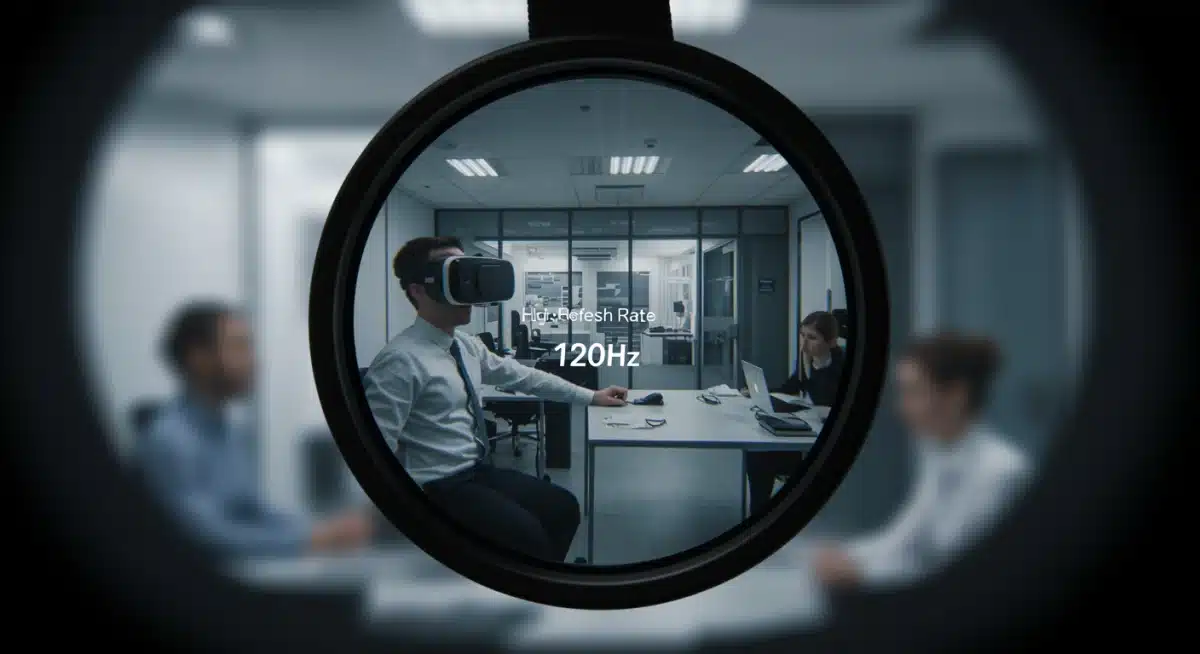
For businesses making significant investments in VR hardware and software, future-proofing is a critical consideration. Choosing VR systems capable of 120Hz refresh rates today ensures that these investments remain relevant and effective as industry standards evolve. By 2026, anything less than 120Hz may be considered suboptimal, impacting the longevity and utility of current purchases.
The rapid pace of technological change in the VR sector means that hardware purchased today needs to meet or exceed emerging standards to provide a competitive edge. Adopting 120Hz now positions organizations at the forefront of immersive training, ready to leverage the next wave of VR advancements without immediate obsolescence.
Longevity and adaptability in a dynamic tech landscape
Investing in 120Hz-capable VR hardware provides a solid foundation for future training initiatives. It ensures compatibility with more demanding VR applications that will inevitably emerge, requiring higher fidelity and responsiveness. This foresight protects against the need for premature upgrades and maximizes the return on initial capital outlay.
- Extended hardware lifespan: Systems meeting the 120Hz standard are likely to remain relevant for a longer period, delaying the need for costly replacements.
- Compatibility with advanced content: Future VR training simulations, likely to be more graphically intensive, will perform optimally on 120Hz displays.
- Attracting and retaining talent: Offering cutting-edge training technology can be a significant draw for potential employees, showcasing a company’s commitment to innovation.
Therefore, selecting VR hardware with 120Hz refresh rates is not just about current performance; it’s a strategic decision that aligns with the future trajectory of immersive technology and positions businesses for long-term success in their training endeavors.
The role of content and software optimization for 120Hz
While 120Hz displays provide the canvas for a superior VR experience, the content and software running on these systems are equally vital. Even the most advanced display will fall short if the VR applications are not optimized to render at high frame rates. This necessitates a concerted effort from content creators and software developers to build applications that can fully leverage the capabilities of 120Hz hardware.
Optimization involves more than just raw graphical power; it includes efficient coding, intelligent asset management, and sophisticated rendering techniques. As 120Hz becomes the standard, the tools and methodologies for creating optimized VR content will also mature, making it easier for developers to meet these performance targets.
Ensuring a holistic high-fidelity experience
The transition to 120Hz as a standard requires a holistic approach, where hardware capabilities are matched by software performance. Developers are increasingly employing techniques to ensure their applications can consistently deliver high frame rates, even in complex simulations.
- Performance profiling and optimization: Rigorous testing and fine-tuning of VR applications to identify and eliminate performance bottlenecks.
- Dynamic resolution scaling: Adjusting render resolution on the fly to maintain a consistent frame rate, prioritizing smoothness over absolute graphical fidelity when necessary.
- Developer education and best practices: Disseminating knowledge and tools to help developers create VR content optimized for high refresh rates.
The synergistic evolution of hardware and software is critical for the successful widespread adoption of 120Hz as the benchmark for business VR training. As we move towards 2026, the industry is increasingly focused on ensuring that the entire VR ecosystem supports and enhances the high-refresh-rate experience.
Navigating the market: choosing the right 120Hz VR hardware
With 120Hz refresh rates becoming the standard, businesses face the task of navigating a rapidly evolving market to select the most suitable VR hardware. This involves considering not just the refresh rate, but also factors like resolution, field of view, comfort, and ecosystem compatibility. Making an informed decision is crucial for maximizing the return on investment in VR training.
The choice of hardware should align with the specific training needs and budgetary constraints of the organization. While 120Hz is a key indicator of quality, it’s part of a broader set of specifications that collectively define the overall VR experience. A balanced approach to evaluation is essential to ensure the chosen hardware meets both current and future requirements effectively.
Key considerations beyond refresh rate
While 120Hz is a strong selling point, a comprehensive evaluation of VR hardware for business training should also include:
- Resolution: Higher pixel density contributes to sharper images and reduces the screen-door effect, enhancing realism.
- Field of view (FOV): A wider FOV increases immersion by filling more of the user’s peripheral vision.
- Ergonomics and comfort: For extended training sessions, a comfortable and well-balanced headset is paramount to user acceptance and engagement.
- Tracking accuracy: Precise head and hand tracking are essential for natural interaction within the virtual environment.
- Ecosystem and software support: Compatibility with existing VR platforms and access to a robust library of business training applications are crucial.
By carefully weighing these factors alongside the 120Hz refresh rate, businesses can make strategic decisions that equip them with cutting-edge VR solutions, ready to transform their training programs and empower their workforce for the challenges of 2026 and beyond.
| Key Aspect | Brief Description |
|---|---|
| 120Hz Refresh Rate | Essential for fluid visuals, reducing motion sickness, and enhancing VR training immersion and comfort. |
| Business Training Impact | Improves realism, safety, and efficiency in simulations, leading to better skill acquisition and retention. |
| Technical Enablers | Advanced GPUs, high-bandwidth interfaces, and foveated rendering overcome prior limitations. |
| Future-Proofing Investment | Adopting 120Hz now ensures hardware relevance and compatibility with future, more demanding VR content. |
Frequently asked questions about VR refresh rates
A 120Hz refresh rate is crucial for VR business training as it significantly enhances visual fluidity, reducing motion sickness and improving overall immersion. This leads to more realistic simulations, better trainee comfort during extended sessions, and ultimately, more effective learning outcomes and skill retention.
Compared to 60Hz or 90Hz, 120Hz offers a noticeably smoother and more comfortable visual experience. The higher frame rate minimizes latency between head movements and visual updates, drastically reducing the chances of VR-induced nausea and discomfort, which is vital for prolonged professional training.
Achieving 120Hz in VR is enabled by powerful graphics processing units (GPUs), high-bandwidth display interfaces like DisplayPort and HDMI 2.1, and optimized rendering techniques such as foveated rendering. These advancements ensure that the necessary data can be processed and transmitted quickly enough for a seamless experience.
While not all legacy platforms may fully support 120Hz, the trend indicates that most new and updated VR training platforms will be optimized for this refresh rate by 2026. Hardware manufacturers are making 120Hz a standard, pushing content developers to adapt and ensure compatibility for optimal performance.
Yes, investing in 120Hz VR hardware is a strategic move for future-proofing business training. As VR technology progresses, higher refresh rates will become the expected norm. Adopting 120Hz now ensures your hardware remains relevant, compatible with future advanced content, and provides a superior, long-lasting training solution.
Conclusion
The trajectory towards 120Hz refresh rates becoming the standard for VR hardware in U.S. business training by 2026 is clear and driven by a compelling blend of technological capability and practical necessity. This evolution isn’t just about faster screens; it’s about fundamentally enhancing the efficacy, comfort, and realism of virtual training experiences. Businesses that embrace this standard will not only provide a superior learning environment but also future-proof their investments in a rapidly advancing technological landscape. The benefits—from reduced motion sickness and increased engagement to improved skill retention and operational efficiency—underscore why 120Hz is not merely an upgrade, but a pivotal benchmark for immersive business training in the coming years.