VR Showrooms: Boost US Sales 25% by 2026
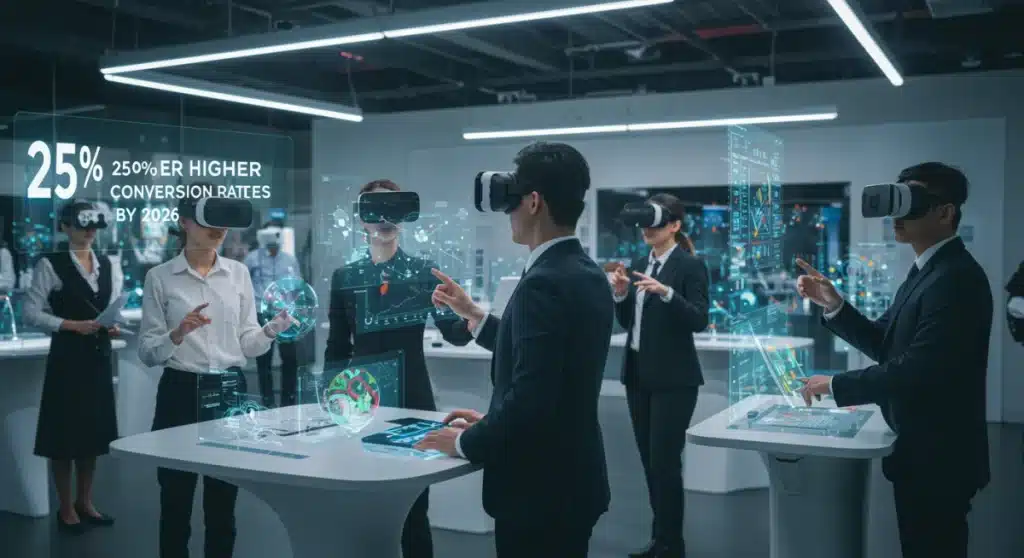
VR showrooms are poised to significantly enhance sales engagement in the United States, with projections indicating a 25% increase in conversion rates by 2026, offering immersive and interactive experiences that redefine customer interaction.
Are you ready to redefine your sales strategy? The landscape of commerce is rapidly evolving, and understanding how VR Showrooms Sales Engagement can dramatically impact your business in the United States is critical. Projections suggest that these immersive platforms could drive a remarkable 25% higher conversion rate by 2026, offering an unparalleled opportunity for growth and market leadership.
The Dawn of Immersive Sales Experiences
The traditional sales model, while still relevant, faces increasing challenges in capturing and retaining customer attention. In an age where digital interaction is paramount, businesses are seeking innovative ways to connect with their audience. Virtual Reality (VR) showrooms offer a compelling solution, transforming passive browsing into an active, engaging, and memorable experience that resonates deeply with modern consumers.
These virtual environments allow customers to explore products and services in a 3D, interactive space, breaking down geographical barriers and offering a level of detail and personalization previously unattainable. From inspecting intricate machinery to customizing a dream home, VR showrooms provide a sensory-rich experience that bridges the gap between digital representation and physical presence. This shift fundamentally alters the sales funnel, fostering greater understanding and emotional connection with offerings.
Redefining Customer Interaction
Gone are the days of static product images and generic descriptions. VR showrooms enable dynamic interactions, allowing customers to:
- Virtually walk through and examine products from every angle.
- Customize features and configurations in real-time.
- Experience product functionality in simulated environments.
- Collaborate with sales representatives in a shared virtual space.
The ability to interact with products in such a profound way not only educates the customer but also builds trust and confidence in their purchasing decisions. This immersive engagement is a powerful catalyst for higher conversion rates, as customers feel more informed and connected to their potential purchases.
In essence, VR showrooms are not just a technological gimmick; they are a strategic imperative for businesses aiming to thrive in the competitive United States market. By creating engaging, interactive, and personalized sales experiences, companies can significantly elevate their brand perception and accelerate their sales cycles.
Unlocking 25% Higher Conversion Rates by 2026
The ambitious projection of a 25% increase in conversion rates by 2026 is rooted in the inherent advantages of VR showroom technology. This isn’t just about novelty; it’s about addressing fundamental pain points in the sales process and leveraging psychological principles of engagement and immersion. When customers feel truly connected to a product, their likelihood of purchasing skyrockets.
VR showrooms facilitate a deeper emotional connection by allowing customers to ‘try before they buy’ in a highly realistic manner. This reduces perceived risk and increases buyer confidence. The interactive nature also means customers are actively participating in the sales journey, rather than passively receiving information, leading to higher retention of product details and a stronger sense of ownership even before purchase.
The Psychological Impact of Immersion
Immersion in VR goes beyond visual appeal; it taps into cognitive and emotional processes that enhance decision-making. When a customer can virtually inhabit a space or manipulate an object, their brain processes it as a more tangible experience. This leads to:
- Increased Product Recall: Immersive experiences are more memorable than traditional media.
- Reduced Cognitive Load: Complex information is presented in an intuitive, experiential format.
- Enhanced Emotional Connection: Users form stronger bonds with products they interact with virtually.
These psychological benefits translate directly into commercial success. Businesses utilizing VR showrooms report shorter sales cycles, higher average order values, and significantly improved customer satisfaction. The perceived value of products is elevated when experienced in a high-fidelity virtual environment, justifying premium pricing and fostering brand loyalty.
The pathway to achieving a 25% higher conversion rate involves strategic implementation, continuous optimization based on user feedback, and integration with existing CRM systems. Companies that embrace this technology early are positioning themselves as market leaders, ready to capitalize on the evolving consumer landscape.
Strategic Implementation: Building Your Virtual Showroom
Building an effective virtual showroom requires more than just technical prowess; it demands a strategic approach that aligns with business objectives and customer needs. The process involves careful planning, design, and integration to ensure the VR experience is seamless, engaging, and ultimately, drives sales. A poorly executed VR showroom can be detrimental, so a clear roadmap is essential.
The initial phase involves defining the scope and purpose of the showroom. What products will be featured? What level of interactivity is desired? Who is the target audience? Answering these questions provides a foundation for the design and development stages. Collaboration between marketing, sales, and IT departments is crucial to ensure all aspects of the business are represented and supported within the virtual environment.
Key Considerations for Development
Several critical factors must be addressed during the development of a VR showroom to maximize its impact:
- Platform Choice: Deciding between web-based VR, dedicated applications, or specific headset compatibility.
- Content Quality: High-fidelity 3D models and realistic environments are paramount for immersion.
- User Experience (UX): Intuitive navigation and interactive elements are key to engagement.
- Scalability: Ensuring the showroom can grow with your product line and customer base.
- Integration: Connecting with e-commerce platforms, CRM, and analytics tools.
Investing in skilled VR developers and designers is vital to create a showroom that not only looks impressive but also functions flawlessly. The goal is to replicate and enhance the best aspects of a physical showroom, offering personalized tours, instant product information, and guided interactions with sales professionals, all within a virtual space.
A well-implemented VR showroom serves as a powerful sales tool, extending brand reach, enhancing customer engagement, and providing valuable data insights into customer preferences and behaviors. This strategic investment is set to yield significant returns in the coming years.
Measuring Success: KPIs for VR Showrooms
To truly understand the impact of VR showrooms and to validate the projected 25% higher conversion rates, businesses must establish clear Key Performance Indicators (KPIs). Mere implementation is not enough; continuous measurement and analysis are essential for optimizing the virtual experience and ensuring it contributes effectively to sales objectives. Data-driven insights are the backbone of any successful digital strategy.
Beyond traditional sales metrics, VR showrooms offer a wealth of unique data points that can reveal deeper insights into customer behavior and engagement. Tracking these specific metrics allows for a nuanced understanding of what resonates with users and where improvements can be made, leading to iterative enhancements that further boost conversion potential.
Essential VR Showroom Metrics
When evaluating the performance of your virtual showroom, consider these crucial KPIs:
- Engagement Time: How long do users spend in the showroom and with specific products?
- Interaction Rates: Which interactive features are most utilized, and how often?
- Conversion Funnel Analysis: Tracking user journeys from entry to purchase completion.
- Lead Generation Quality: Assessing the quality and conversion rate of leads generated via VR.
- Customer Feedback: Direct input on the VR experience and product satisfaction.
These metrics provide a comprehensive view of the showroom’s effectiveness. For instance, high engagement time coupled with low conversion might indicate a captivating experience but one that lacks clear calls to action or a smooth purchasing process. Conversely, high interaction rates on certain product features can inform future product development and marketing strategies.
By diligently tracking and analyzing these KPIs, businesses can refine their VR showroom offerings, ensuring they are not just visually impressive but also highly effective in driving sales and achieving the ambitious conversion rate targets set for 2026. This analytical approach transforms VR from a novel technology into a quantifiable business asset.
Case Studies: Real-World VR Success Stories
While the concept of VR showrooms might seem futuristic, numerous companies are already leveraging this technology to achieve significant sales success and enhance customer engagement. These real-world examples provide tangible evidence of VR’s potential and offer valuable insights into best practices for implementation. Learning from pioneers in this space can inspire and guide businesses contemplating their own VR ventures.
From automotive giants to real estate developers and luxury retailers, diverse industries are finding innovative ways to apply VR showrooms. These success stories often highlight a common thread: the ability of VR to create a memorable, personalized, and highly effective sales environment that outshines traditional methods. The competitive advantage gained through early adoption is clear.
Pioneering Industries and Their Triumphs
Several sectors have emerged as leaders in VR showroom adoption, demonstrating impressive results:
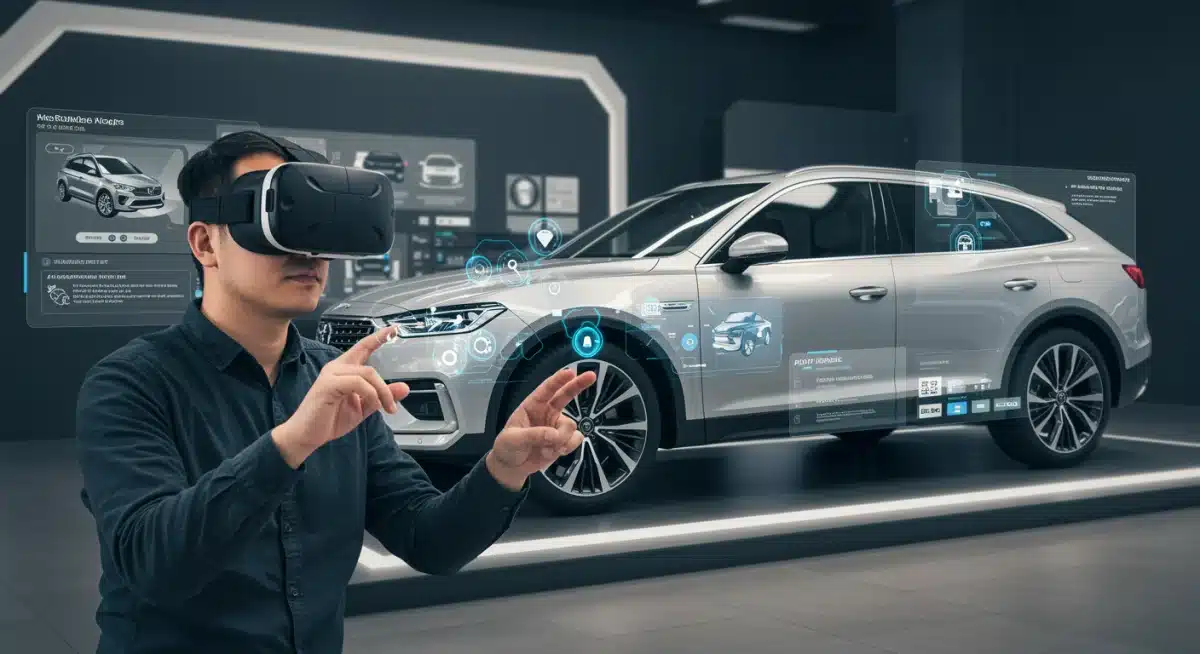
- Automotive: Brands like Audi and BMW use VR to let customers configure cars and take virtual test drives, significantly increasing customization orders.
- Real Estate: Developers offer virtual tours of properties, allowing potential buyers to explore homes remotely and visualize living spaces before construction is complete, accelerating sales cycles.
- Retail: Luxury brands create immersive shopping experiences, enabling customers to browse high-end products in virtual boutiques, enhancing brand perception and driving premium sales.
- Manufacturing: Companies showcase complex industrial equipment in VR, allowing clients to understand scale and functionality without visiting a physical factory, streamlining B2B sales.
These examples underscore the versatility and power of VR showrooms across different market segments. The common denominator is the provision of an experience that is both convenient and deeply informative, fostering a stronger connection between the customer and the product or service. The return on investment for these early adopters is proving substantial, setting a precedent for wider industry adoption.
The success stories serve as a powerful testament to the transformative potential of VR showrooms in maximizing sales engagement. They illustrate that the future of sales is immersive, interactive, and increasingly virtual, solidifying the projection of higher conversion rates for businesses that embrace this innovative approach.
The Future Landscape: VR and AI Integration
As we look towards 2026 and beyond, the evolution of VR showrooms will undoubtedly be shaped by the integration of Artificial Intelligence (AI). This powerful combination promises to unlock even greater levels of personalization, efficiency, and predictive analytics, further amplifying the impact on sales engagement and conversion rates. The synergy between VR’s immersive capabilities and AI’s intelligent processing will create truly next-generation sales environments.
AI can personalize the VR showroom experience in real-time, adapting content and interactions based on individual customer preferences, past behaviors, and expressed interests. This level of customization ensures that each virtual visit is uniquely tailored, making the sales journey more relevant and effective for every user. The ultimate goal is to create a sales process that feels less like a transaction and more like a personalized consultation.
Revolutionizing Personalization and Efficiency
The integration of AI into VR showrooms will introduce several groundbreaking features:
- AI-Powered Sales Assistants: Virtual guides that can answer questions, offer product recommendations, and navigate users through the showroom.
- Predictive Analytics: AI can analyze user behavior within the VR environment to predict purchasing intent and suggest optimal sales strategies.
- Dynamic Content Generation: Real-time customization of showroom layouts, product variations, and interactive scenarios based on user profiles.
- Enhanced Accessibility: AI can adapt VR experiences for users with different needs, improving inclusivity.
- Automated Follow-ups: AI-driven systems can track user interactions and trigger personalized follow-up communications.
This intelligent layer will make VR showrooms not just immersive but also incredibly smart, capable of learning and adapting to individual customer journeys. The result is a highly optimized sales environment that maximizes every interaction, leading to more qualified leads and significantly higher conversion rates. The future of sales engagement is intelligent immersion, driven by the powerful combination of VR and AI.
The continuous advancement of both VR and AI technologies ensures that the potential for innovation in sales engagement is virtually limitless. Businesses that strategically integrate these technologies will be well-positioned to dominate their markets in the coming years, far exceeding the projected 25% increase in conversion rates.
| Key Aspect | Brief Description |
|---|---|
| Immersive Engagement | VR showrooms create highly interactive 3D product experiences, fostering deeper customer connection. |
| Conversion Rate Boost | Projected 25% higher conversion rates by 2026 due to enhanced product understanding and buyer confidence. |
| Strategic Implementation | Requires careful planning, high-quality content, and integration with existing sales systems. |
| Future with AI | AI integration will personalize experiences, predict intent, and automate interactions for greater efficiency. |
Frequently Asked Questions About VR Showrooms
A VR showroom is a virtual, interactive 3D environment where customers can explore products or services using a VR headset or a web browser. Users can manipulate virtual objects, customize options, and often interact with sales representatives in a shared digital space, simulating a physical showroom experience from anywhere.
VR showrooms boost conversion rates by offering immersive, personalized product experiences. This deep engagement enhances understanding, builds trust, and reduces perceived purchase risk. Customers feel more connected to products through interactive exploration, leading to more confident and quicker buying decisions compared to traditional methods.
Industries dealing with complex, high-value, or customizable products benefit significantly. This includes automotive, real estate, manufacturing, luxury retail, and design. These sectors leverage VR to showcase intricate details, allow personalization, and provide experiential previews that are difficult or costly to replicate physically, enhancing the sales process.
Initial steps involve defining your objectives, target audience, and product scope. Then, choose a suitable VR platform (web-based, app). Next, focus on creating high-quality 3D models and an intuitive user interface. Finally, integrate the showroom with your existing sales and CRM systems for seamless operation and data tracking.
AI integration will revolutionize VR showrooms by enabling real-time personalization, predictive analytics, and intelligent virtual assistants. AI can tailor content, recommend products, and guide users based on their behavior and preferences, creating highly efficient and individualized sales journeys that maximize engagement and conversion potential.
Conclusion
The trajectory for VR Showrooms Sales Engagement in the United States is undeniably upward, with a compelling forecast of a 25% increase in conversion rates by 2026. This isn’t merely a technological fad, but a fundamental shift in how businesses connect with their customers, offering unparalleled immersion, personalization, and interaction. As industries continue to embrace and refine these virtual environments, integrating advanced AI capabilities, the competitive advantage for early adopters will only solidify. Companies that strategically invest in VR showrooms today are not just adopting new technology; they are actively shaping the future of sales, building stronger customer relationships, and unlocking significant growth opportunities in an increasingly digital world.