Powering VR Operations: 2026 Portable Battery Solutions Reviewed
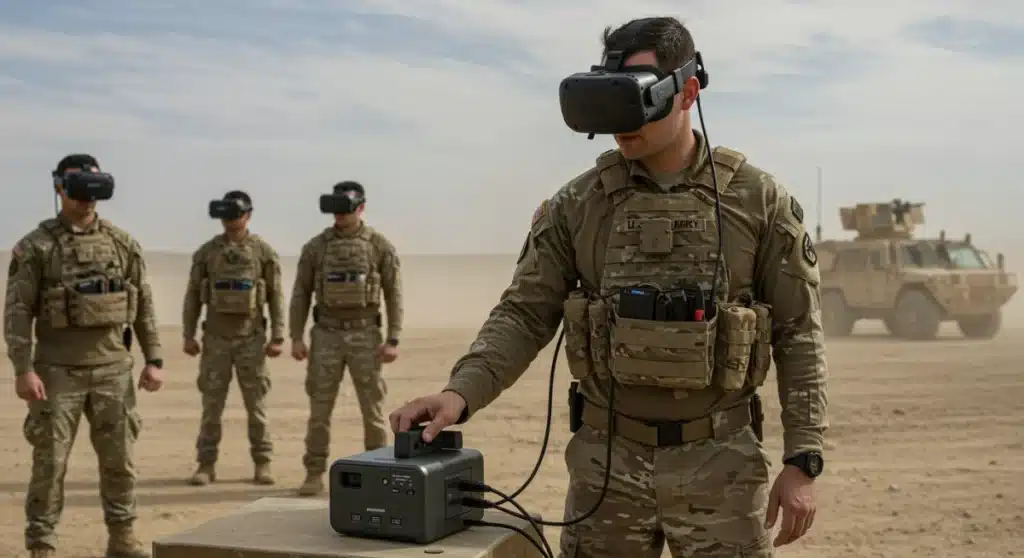
Portable battery solutions are critical for untethered VR hardware in U.S. field training, providing essential power to maintain operational continuity and immersive experiences in demanding environments.
Imagine the immersion of virtual reality, untethered and boundless, now apply that to critical U.S. field training scenarios. This vision is rapidly becoming a reality, and at its core lies the crucial need for robust power. Understanding the evolving landscape of VR portable battery solutions is paramount for maintaining seamless operations and maximizing the effectiveness of untethered VR hardware in these demanding environments.
The Evolution of Untethered VR in Field Training
The shift from tethered to untethered VR systems has revolutionized field training, offering unparalleled freedom of movement and realism. This evolution, however, brings with it significant power challenges that traditional battery solutions struggle to meet. The demands of sustained, high-fidelity VR experiences in austere conditions require innovative approaches to portable power.
Early Challenges and Limitations
In the early days, untethered VR headsets often came with integrated batteries that offered limited runtime, typically an hour or two. This was insufficient for comprehensive training modules that could span several hours. The bulk and weight of early external battery packs also hindered mobility, defeating the purpose of untethered systems.
- Limited native battery life of VR headsets.
- Heavy and cumbersome external power banks.
- Slow charging times for high-capacity batteries.
- Lack of robust, field-ready power solutions.
These initial hurdles highlighted the critical need for specialized power solutions that could keep pace with the advancements in VR hardware. The focus quickly shifted towards developing lighter, more powerful, and more resilient portable batteries capable of enduring the rigors of military and industrial field training.
The progression in untethered VR has been rapid, pushing the boundaries of what’s possible in immersive training. This growth has created a parallel demand for equally advanced power solutions, moving from simple power banks to sophisticated energy management systems designed for peak performance.
Key Technologies Driving Portable Battery Innovation
The advancements in portable battery technology are directly influencing the viability and effectiveness of untethered VR in field training. Several key innovations are at the forefront, offering higher energy density, faster charging, and improved durability. These technological leaps are essential for supporting the power-hungry nature of modern VR hardware.
Lithium-Ion and Solid-State Batteries
Lithium-ion batteries continue to dominate the market due to their established energy density and cost-effectiveness. However, solid-state battery technology is rapidly emerging as a game-changer. Solid-state batteries promise significantly higher energy density, faster charging, and enhanced safety, making them ideal for demanding applications like field VR training.
- Higher energy density for extended VR sessions.
- Faster recharge cycles to minimize downtime.
- Improved safety profiles, reducing fire risks.
- Lighter form factors for increased user comfort.
Beyond the core battery chemistry, advancements in battery management systems (BMS) are also crucial. These systems optimize power delivery, monitor battery health, and prevent overcharging or overheating, extending the lifespan and reliability of the power source. The integration of smart BMS features ensures consistent performance even under strenuous use.
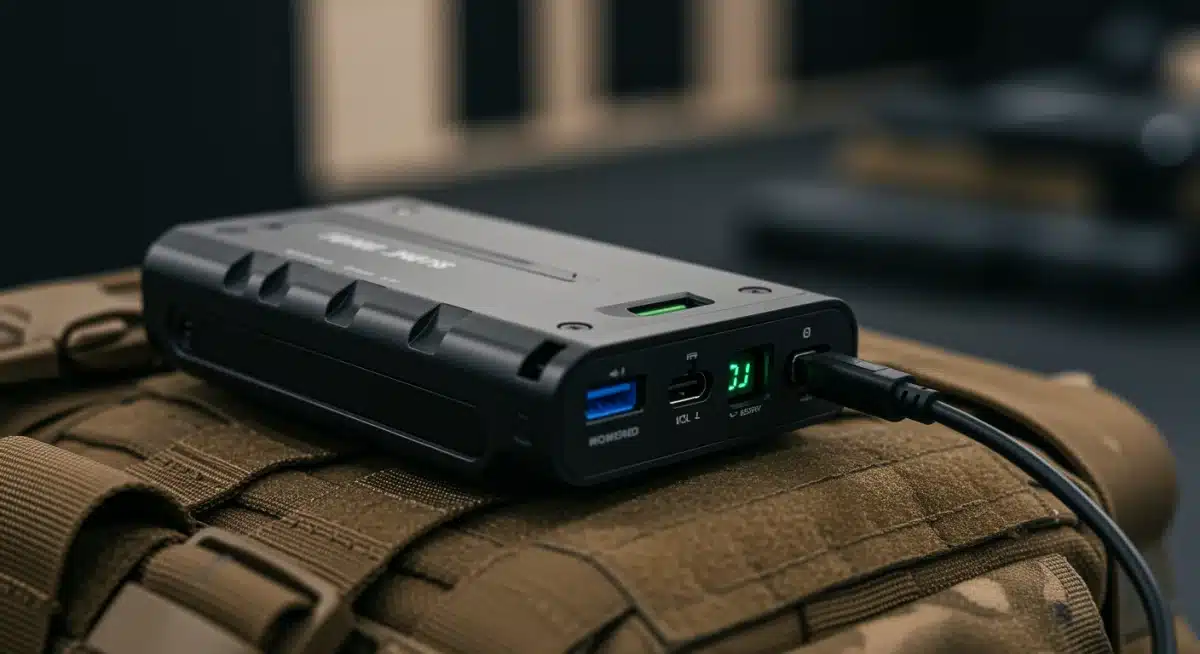
The development of these technologies is not just about increasing capacity; it’s about creating a holistic power ecosystem that seamlessly integrates with VR hardware and operational requirements. This includes not only the battery packs themselves but also the charging infrastructure and power distribution mechanisms.
Assessing Top Portable Battery Solutions for 2026
In 2026, the market for VR portable battery solutions offers a diverse range of products, each with unique strengths tailored for specific field training needs. Evaluating these solutions requires a keen eye on capacity, form factor, charging speed, and ruggedness. The ideal battery for one scenario might not be suitable for another, emphasizing the importance of a thorough assessment.
Leading Brands and Their Offerings
Several manufacturers have distinguished themselves by producing high-quality, reliable portable power solutions. Companies like Anker, Goal Zero, and specialized tactical power suppliers are offering products designed to meet the rigorous demands of military and industrial training. Their offerings range from compact, lightweight packs to larger, multi-port solutions.
- Anker PowerCore series: Known for high capacity and fast charging via USB-C.
- Goal Zero Sherpa series: Rugged designs with versatile output options, including AC.
- Specialized Tactical Power Units: Often custom-built for extreme conditions, emphasizing durability and secure connections.
- Hyperion Energy Solutions: Emerging player focusing on solid-state battery technology for ultra-light and powerful options.
When selecting a solution, it’s vital to consider the specific VR hardware being used, its power consumption, and the duration of the training exercises. Compatibility with proprietary connectors, if any, is also a critical factor. Many modern VR headsets utilize USB-C Power Delivery (PD), making compatible battery banks a versatile choice.
Beyond individual battery packs, some solutions integrate with tactical vests or modular systems, allowing for better weight distribution and seamless power management during prolonged field operations. This integrated approach enhances user comfort and reduces the risk of snagging cables.
Integration and Ergonomics in Field Training
The effectiveness of VR portable battery solutions in field training extends beyond mere power delivery; it heavily relies on seamless integration and ergonomic design. A powerful battery that is cumbersome or poorly integrated can detract from the immersive experience and even pose a safety risk. Ergonomics play a pivotal role in practical application.
Designing for Comfort and Mobility
Modern portable battery solutions are increasingly designed with the user in mind. This includes considerations for weight distribution, secure attachment points, and cable management. For instance, some battery packs are contoured to fit comfortably against the back or waist, while others are small enough to be stowed in a pocket without impeding movement.
- Lightweight and compact designs for minimal burden.
- Secure attachment mechanisms to prevent dislodgement.
- Integrated cable management systems to avoid snags.
- Aerodynamic profiles that do not interfere with movement or gear.
The goal is to make the power source virtually unnoticeable to the trainee, allowing them to focus entirely on the VR simulation. This requires close collaboration between VR hardware manufacturers, battery developers, and end-users to ensure that the solutions meet real-world operational demands.
Furthermore, the design must account for rapid battery swaps in the field, minimizing downtime. Quick-release mechanisms and standardized connectors are becoming increasingly common, streamlining the process of replacing depleted batteries with fresh ones, thus ensuring continuous training sessions without significant interruptions.
Durability and Reliability in Harsh Environments
U.S. field training environments are inherently challenging, often exposing equipment to extreme temperatures, dust, moisture, and physical impact. Therefore, VR portable battery solutions must be engineered for exceptional durability and unwavering reliability. A battery failure in the field can compromise the entire training exercise, highlighting the importance of robust construction.
Meeting Military and Industrial Standards
Leading portable battery solutions for field training undergo rigorous testing to meet or exceed military-grade durability standards. This includes resistance to water, dust, shock, and extreme temperatures. Materials like reinforced polymers, sealed enclosures, and impact-absorbing designs are commonly employed to ensure longevity.
- IP ratings (e.g., IP67) for dust and water resistance.
- MIL-STD-810G compliance for shock and vibration.
- Operational temperature ranges suitable for diverse climates.
- Protected ports and connectors to prevent damage from debris.
Beyond physical resilience, the internal components and battery management systems must also be reliable. Protection against short circuits, overcharging, and deep discharge is crucial for both safety and battery lifespan. These features ensure that the power source performs consistently, even under fluctuating load conditions and environmental stressors.
The ability to perform reliably in harsh conditions instills confidence in trainees and instructors alike, knowing that their VR equipment will remain powered throughout the most demanding simulations. This reliability is a cornerstone of effective and uninterrupted field training programs.
The Future Outlook for VR Power Solutions
Looking towards the future, the landscape of VR portable battery solutions is poised for even greater innovation, driven by advancements in battery chemistry, energy harvesting, and smart power management. The goal remains to achieve virtually limitless, seamless power for untethered VR hardware in increasingly complex training scenarios.
Emerging Technologies and Concepts
Beyond solid-state batteries, research into technologies like graphene-enhanced batteries and even micro-fuel cells promises even higher energy densities and faster charging capabilities. These advancements could lead to battery packs that are significantly smaller and lighter while offering substantially longer runtimes.
- Graphene-enhanced batteries for ultra-fast charging.
- Micro-fuel cells offering continuous power from liquid fuels.
- Kinetic energy harvesting integrated into user gear.
- Wireless power transfer for convenient recharging in designated zones.
Furthermore, the integration of artificial intelligence (AI) into battery management systems will allow for predictive maintenance, optimized power allocation based on usage patterns, and even dynamic power adjustments to extend battery life. Imagine a system that learns your training schedule and intelligently manages power cycles.
The concept of a ‘power mesh’ where multiple small, distributed power sources work in concert to power a VR system is also gaining traction. This distributed approach could offer greater redundancy and flexibility, ensuring that a single point of failure does not incapacitate the entire VR setup. The future promises a truly untethered and uninterrupted VR training experience.
| Key Aspect | Brief Description |
|---|---|
| Untethered VR Growth | Increased demand for robust portable power due to expanded use in field training. |
| Battery Technologies | Advancements in Li-ion and solid-state batteries offer higher energy density and faster charging. |
| Ergonomics & Durability | Integration and ruggedness are crucial for seamless and reliable field operations. |
| Future Innovations | Graphene, micro-fuel cells, and AI-driven power management are on the horizon. |
Frequently Asked Questions About VR Portable Batteries
The ideal capacity varies but typically ranges from 20,000mAh to 30,000mAh for extended VR sessions. This capacity allows for several hours of continuous operation, crucial for comprehensive training modules in the field without frequent recharging.
While still emerging, solid-state batteries are becoming more accessible in specialized high-end portable power solutions in 2026. They offer significant advantages in energy density and safety, making them a premium choice for demanding VR applications.
An IP rating is highly important for field training, indicating resistance to dust and water. An IP67 rating, for example, ensures the battery can withstand harsh environmental conditions, preventing damage and maintaining operational integrity during outdoor use.
While some standard power banks might work, dedicated VR portable battery solutions are preferred. These are optimized for higher power output, faster charging, and often include more robust construction and advanced safety features tailored for VR hardware and demanding field use.
Graphene-enhanced batteries, micro-fuel cells, and AI-driven power management systems are expected to have the most significant impact. These innovations promise to deliver ultra-fast charging, extended runtimes, and intelligent power optimization for future VR experiences.
Conclusion
The continuous advancement in VR portable battery solutions is not just an incremental improvement; it’s a foundational element enabling the transformative potential of untethered VR in U.S. field training. As VR hardware becomes more sophisticated and training scenarios more complex, the demand for robust, reliable, and ergonomically designed power sources will only intensify. The innovations seen in battery chemistry, intelligent power management, and ruggedized designs are paving the way for truly limitless and immersive virtual experiences, ensuring that trainees remain fully engaged and operations proceed without interruption, even in the most challenging environments. Embracing these advanced power solutions is key to unlocking the full capabilities of VR in critical operational contexts.