Augmented reality apps enhancing learning and education
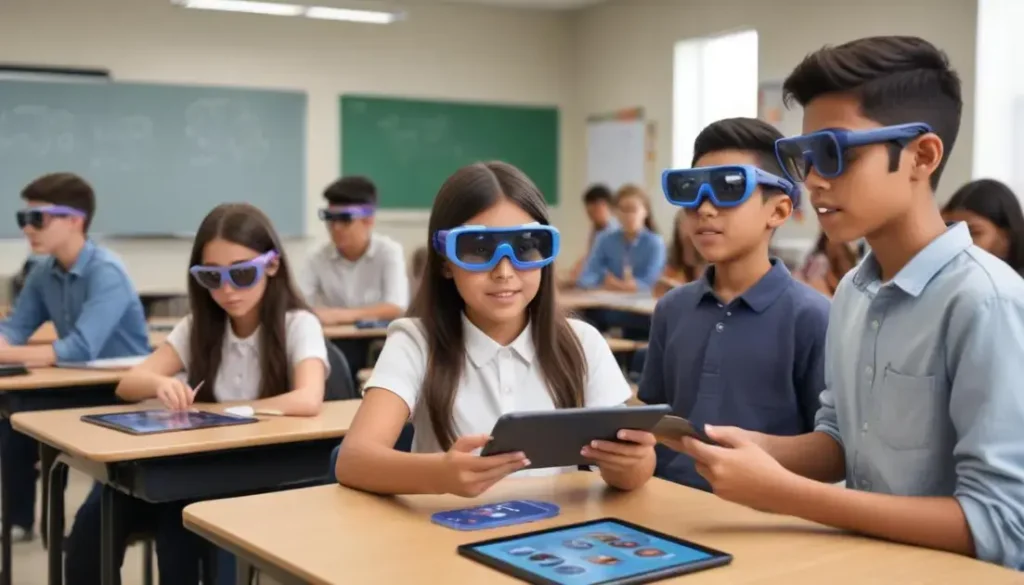
Augmented reality apps enhancing learning and education in the US provide immersive and interactive experiences, transforming traditional educational methods and addressing diverse learning styles while facing challenges like cost and teacher training.
Augmented reality apps enhancing learning and education in the US are changing the way students interact with information. Imagine a science lesson where students can visualize the solar system in 3D right from their desks. How cool is that?
Understanding augmented reality in education
Understanding augmented reality in education is essential for both teachers and students. This technology bridges the gap between digital content and the real world, enhancing learning experiences.
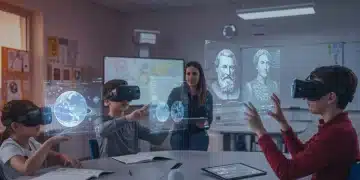
With augmented reality, students can explore subjects in ways never before possible. For example, in a history lesson, they might witness a historical event recreated right before their eyes. This immersive experience can foster greater interest and retention.
How Augmented Reality Works
At its core, augmented reality overlays digital information onto the real world. Using devices like smartphones and AR glasses, users can interact with 3D models and animations in their environment.
In classrooms, this means that students can view complex concepts—like the human anatomy or the solar system—right in front of them. This hands-on approach encourages exploration and inquiry.
Benefits of Augmented Reality in Education
- Enhances engagement by making lessons interactive.
- Boosts understanding through visual representation.
- Allows for personalized learning experiences.
- Encourages collaboration among students.
Furthermore, using augmented reality can cater to different learning styles. Visual learners benefit from the graphics and animations, while kinesthetic learners can engage through interactive elements.
As educators explore this technology, they discover even more applications. From virtual field trips to simulations of scientific experiments, the possibilities are truly exciting. Each application helps solidify knowledge by connecting theory with real-world applications.
Benefits of augmented reality apps for students
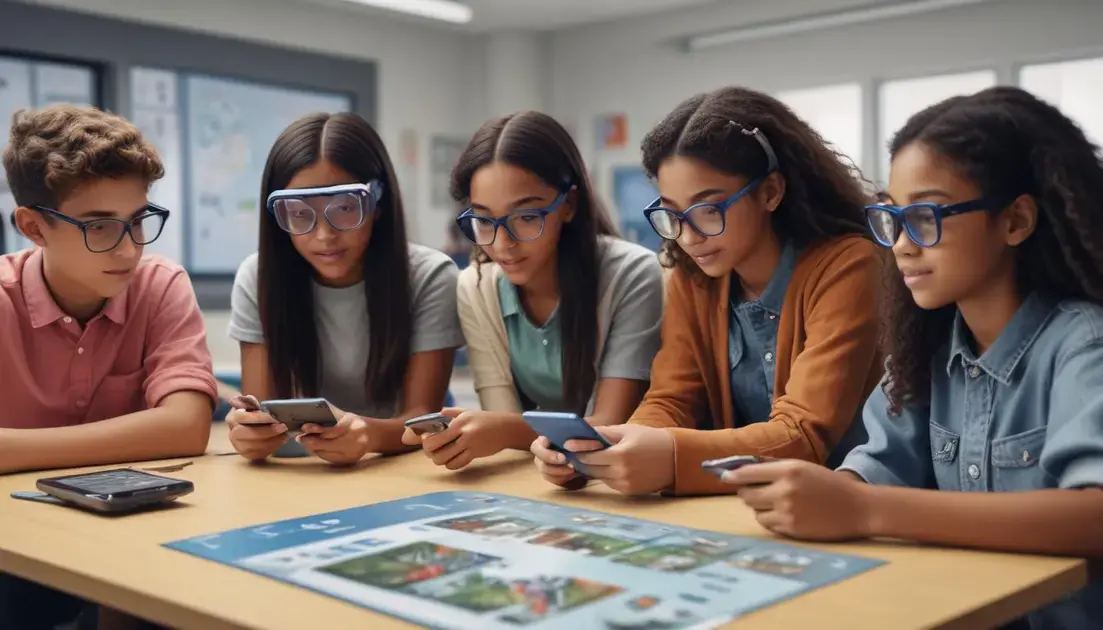
The benefits of augmented reality apps for students are profound and wide-ranging. By integrating this technology into the classroom, educators can significantly enhance learning experiences and outcomes.
One major advantage is the ability to create immersive environments. When students use augmented reality apps, they can explore concepts that are difficult to grasp through traditional methods. For instance, they can engage with 3D models of complex biological systems or geographical formations, making learning more tangible and memorable.
Engagement and Motivation
Furthermore, augmented reality increases overall engagement. Students find lessons more exciting and interactive. This increased interest encourages them to participate more actively in class discussions. When learning feels like a game or adventure, students are more motivated to dive deeper into the topic.
- Increased student participation.
- Enhances critical thinking skills.
- Promotes teamwork through collaborative projects.
- Caters to different learning styles.
Another significant benefit of augmented reality is the opportunity for personalized learning. Students can learn at their own pace, revisiting challenging topics without pressure. This flexibility allows for a deeper understanding, as they can take the time they need to master concepts.
Moreover, using these apps fosters creativity. Students can create their own AR content, using tools that let them express their understanding of subjects in innovative ways. This creative outlet not only reinforces their knowledge but also boosts their confidence.
Real-World Applications
With augmented reality, students can also connect what they learn in class to real-world applications. They can visit historical sites virtually or conduct science experiments in a safe, controlled digital environment. These experiences enrich their education and prepare them for future opportunities.
Top augmented reality apps for learning
There are several top augmented reality apps for learning that are making waves in classrooms across the United States. These applications enhance the educational experience by providing interactive and immersive tools for students.
One popular app is Google Expeditions. This app allows teachers and students to embark on virtual field trips, exploring everything from the depths of the ocean to the surface of Mars. Using a smartphone or tablet, users can view 3D images that make learning more engaging and visually interesting.
Merge Cube
Another standout is the Merge Cube. This innovative tool enables students to hold a digital object in their hands and interact with it. Whether it’s a historical artifact or a human anatomy model, the Merge Cube makes abstract concepts more concrete.
- Hands-on interaction with 3D models.
- Fosters creativity in learning.
- Compatible with various subjects.
Moreover, Quiver is a creative app that allows students to bring their coloring pages to life. After coloring a page, students can scan it with the app, making their artwork animated in a 3D environment. This encourages artistic expression while reinforcing concepts in a fun way.
ClassVR is another essential app, providing a classroom-friendly VR experience. It offers a wide range of resources and content, allowing teachers to integrate virtual reality lessons seamlessly.
Augment
For those more interested in retail scenarios, Augment helps students learn about product design and marketing. By using augmented reality to visualize products in real-world settings, learners grasp concepts like consumer behavior and advertising strategies more effectively.
Overall, these augmented reality apps for learning not only enhance engagement but also provide valuable tools that prepare students for future challenges. With these technologies, education can be transformed into a more interactive and enriched experience.
Challenges in implementing augmented reality in schools
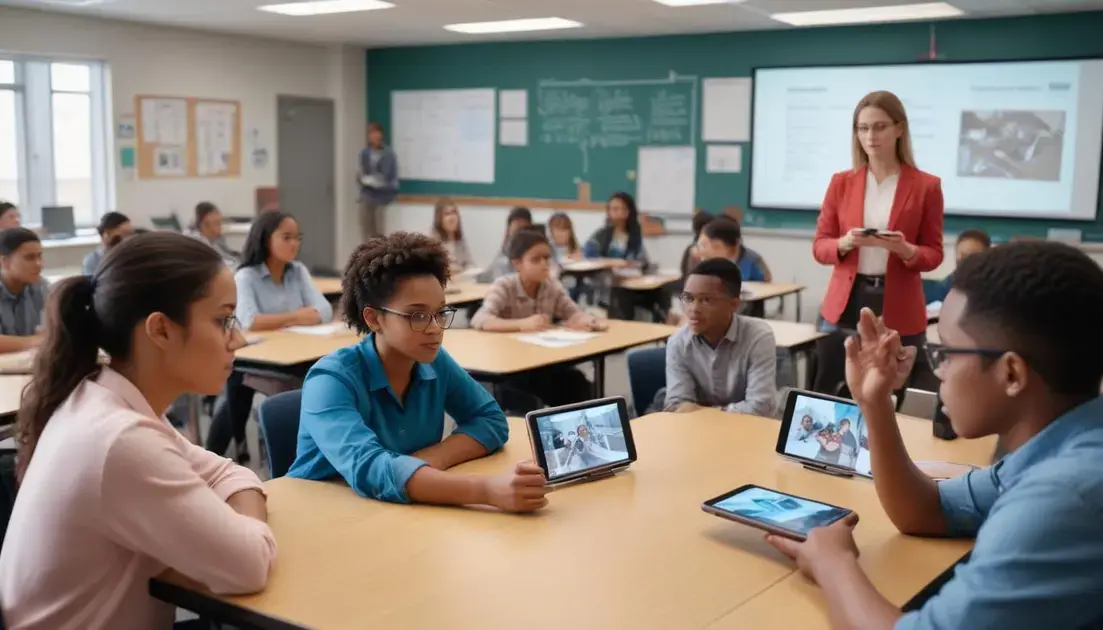
Implementing augmented reality in schools comes with its own set of challenges. While the technology offers exciting possibilities, several factors can hinder effective integration into the classroom.
One of the main challenges is the cost involved. Many augmented reality systems can be expensive, which may limit access for some schools. Purchasing devices, software subscriptions, and training for teachers can strain tight school budgets.
Training and Professional Development
Another significant hurdle is the need for adequate training. Teachers must be comfortable using technology to effectively implement augmented reality lessons. This often requires ongoing professional development sessions that take up valuable time.
- Time-consuming training sessions.
- Resistance to change among some educators.
- Need for continuous support and resources.
Moreover, the varying levels of tech-savviness among staff can lead to inconsistency in how effectively the technology is used. Some teachers may excel with the new tools, while others struggle, creating disparities in the learning experience.
Infrastructure also plays a crucial role. Schools must have reliable internet access and adequate bandwidth to ensure smooth operation of augmented reality apps. Without this, even the best-designed programs may fail to function as intended.
Content Alignment
Another challenge lies in aligning augmented reality content with curriculum standards. Teachers must ensure that the AR applications they choose support the required learning objectives, which can often be a time-consuming process.
Lastly, safety and privacy concerns are important to address. Schools must ensure that the data collected from students using AR apps is secure and that student privacy is protected. Implementing these measures can be complex and requires proper policies and technology.
FAQ – Frequently Asked Questions about Augmented Reality in Education
What are the main benefits of using augmented reality in schools?
The main benefits include increased engagement, hands-on learning experiences, and the ability to visualize complex concepts in a fun and interactive way.
What challenges do schools face when implementing augmented reality?
Challenges include high costs, the need for teacher training, reliable internet infrastructure, and ensuring that AR content aligns with curriculum standards.
How can teachers effectively use augmented reality apps in the classroom?
Teachers can choose apps that match their subjects, provide training opportunities, and incorporate AR experiences into lesson plans to enhance learning.
Are there any privacy concerns with augmented reality apps?
Yes, schools must ensure that student data collected through AR apps is secure and that privacy policies are in place to protect students.