VR for Creative Professionals: Top 6 Apps Launched Recently
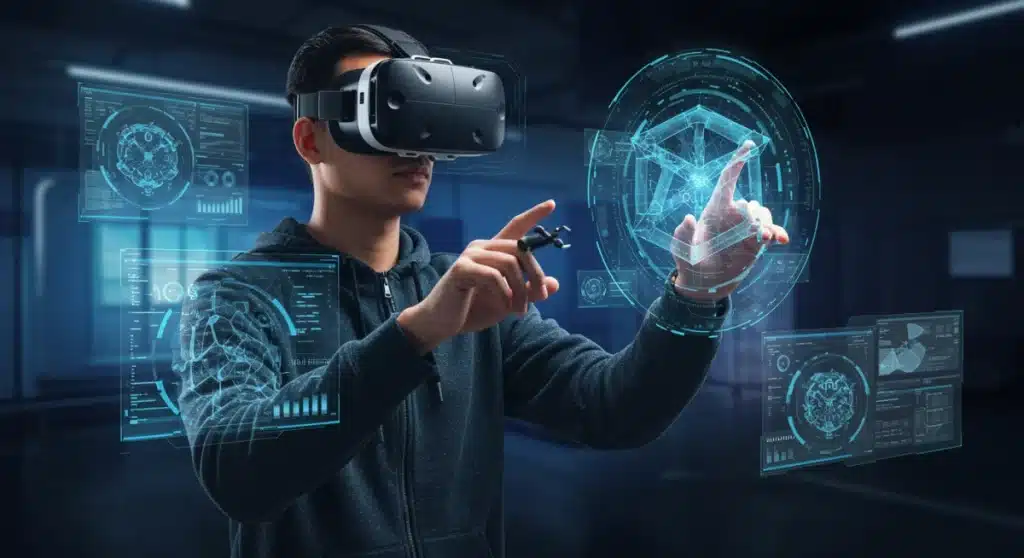
In recent years, Virtual Reality (VR) has transcended its origins as a niche gaming platform to emerge as a powerful tool for creative professionals across diverse industries. The immersive capabilities of VR are unlocking new dimensions for design, art, architecture, education, and even therapy. While gaming continues to be a significant driver of VR adoption, the real revolution lies in its potential to transform professional workflows and foster unprecedented levels of creativity and collaboration. The last six months have seen a surge of innovative applications specifically tailored for this burgeoning market, proving that VR is no longer just a futuristic concept but a tangible, impactful reality for those who shape our world.
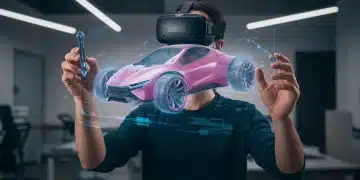
The allure of VR Creative Apps for professionals stems from their ability to offer an unparalleled sense of presence and spatial understanding. Imagine an architect walking through a building before it’s even constructed, a product designer manipulating a prototype with their bare hands, or an artist painting in three dimensions with infinite canvas space. These are not distant dreams but current capabilities, constantly being refined and expanded by pioneering developers. This article will delve into six of the most innovative VR apps launched within the last half-year, highlighting how they are pushing the boundaries of what’s possible for creative minds.
The Evolution of VR: Beyond Gaming
For many, the mention of VR still conjures images of intense gaming sessions and sci-fi escapades. However, the underlying technology, initially honed for entertainment, has matured significantly. High-resolution displays, more accurate tracking systems, and increasingly intuitive controllers have paved the way for professional-grade applications. The shift from consumer-focused entertainment to enterprise and professional tools marks a pivotal moment in VR’s journey. Businesses and independent creatives are recognizing that VR offers more than just novelty; it offers efficiency, deeper immersion, and entirely new ways of conceptualizing and executing projects.
This evolution is not just about hardware improvements. It’s also about a growing understanding of VR’s unique affordances. Unlike traditional 2D interfaces, VR allows users to interact with digital content in a truly spatial manner. This is particularly beneficial for disciplines that inherently deal with three-dimensional space, such as industrial design, urban planning, and visual arts. The ability to ‘step inside’ one’s work, to manipulate objects as if they were physically present, and to collaborate with others in a shared virtual environment, represents a paradigm shift in creative workflows. The VR Creative Apps we’ll explore exemplify this transformative power, offering solutions that were previously unimaginable.
1. Immersive Sculpting Studio (ISS): Redefining 3D Artistry
Launch Date: Approximately 4 months ago
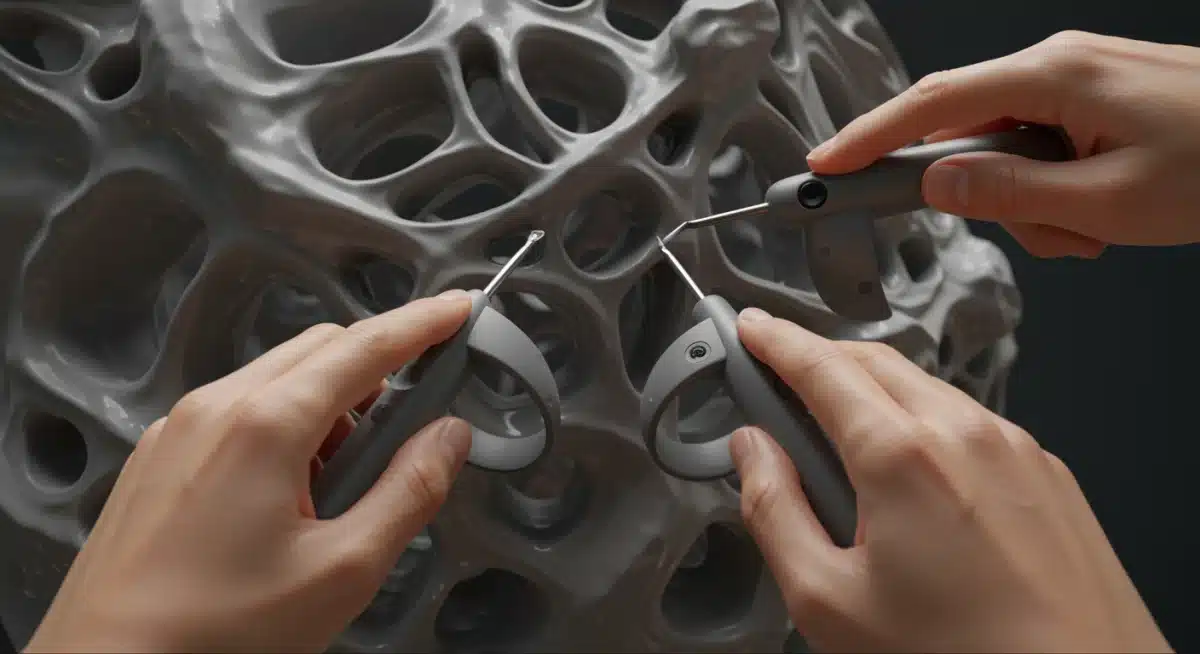
Immersive Sculpting Studio (ISS) has quickly become a game-changer for digital sculptors and artists. This application allows users to sculpt highly detailed 3D models with an unparalleled level of fluidity and control directly within a VR environment. Traditional 3D sculpting software, while powerful, often relies on complex keyboard shortcuts and mouse movements, creating a barrier between the artist’s intent and the digital medium. ISS breaks down this barrier by enabling natural, gestural interactions.
With ISS, artists can use their hands to push, pull, smooth, and add detail to virtual clay as if it were a physical medium. The haptic feedback integrated into many VR controllers enhances this tactile experience, providing a sense of resistance and texture. This direct manipulation not only speeds up the sculpting process but also allows for a more intuitive and expressive workflow. Features like dynamic tessellation, real-time rendering, and a vast library of brushes and materials make it suitable for everything from character design to architectural maquettes. The ability to scale the workspace infinitely means artists can work on intricate details as comfortably as they can on monumental structures. Furthermore, ISS supports direct export to popular 3D formats, ensuring seamless integration into existing production pipelines.
The impact of ISS on digital artistry is profound. It democratizes 3D sculpting, making it more accessible to artists from traditional backgrounds, while also empowering experienced digital artists with a more natural and efficient toolset. The sheer joy of creating in three dimensions with such immediacy is something that screenshots and videos cannot fully convey; it must be experienced. This app truly embodies the potential of VR Creative Apps to enhance and redefine artistic expression.
2. Architrek VR: Collaborative Architectural Visualization
Launch Date: Approximately 5 months ago
Architrek VR is revolutionizing how architects, interior designers, and real estate developers visualize and present their projects. This robust application transforms 2D blueprints and 3D models into fully immersive, interactive virtual environments. Gone are the days of static renders and limited fly-throughs. With Architrek VR, clients and design teams can literally walk through a proposed building, experience its scale, appreciate its materials, and understand the flow of space before a single brick is laid.
What sets Architrek VR apart is its powerful collaborative features. Multiple users, located anywhere in the world, can simultaneously inhabit the same virtual architectural model. They can point out specific features, make annotations, and even toggle between different design options in real-time. This level of interaction fosters clearer communication, reduces misunderstandings, and accelerates the decision-making process. Imagine a client in London and an architect in New York reviewing a design together, discussing changes as if they were in the same room, physically present within the building itself. This is the power Architrek VR brings to the table.
The app supports importing various CAD and BIM file formats, ensuring compatibility with existing industry standards. Its intuitive interface allows for easy navigation, material changes, lighting adjustments, and even furniture placement within the virtual space. For architectural firms, Architrek VR is not just a presentation tool; it’s a design validation platform that catches potential issues early, saving significant time and resources. It’s a testament to how VR Creative Apps are streamlining complex professional workflows.
3. ChromaCanvas VR: Painting in a New Dimension
Launch Date: Approximately 3 months ago
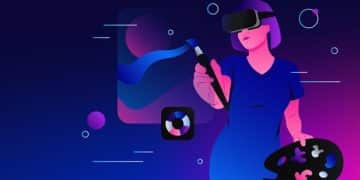
ChromaCanvas VR offers a refreshing take on digital painting, allowing artists to create vibrant, volumetric artworks in three dimensions. Unlike traditional 2D painting software, ChromaCanvas VR treats strokes not just as flat lines but as physical manifestations of color and light in space. This opens up entirely new artistic possibilities, enabling artists to create sculptures made of pure light, abstract forms that can be walked around, or immersive scenes that envelop the viewer.
The app provides a rich palette of brushes, textures, and effects, all designed to be manipulated intuitively with VR controllers. Artists can adjust brush size, opacity, and even emissive properties on the fly. The ability to move around and through one’s artwork provides an unprecedented perspective, allowing for a deeper understanding of form, depth, and composition. Imagine painting a nebula where you can fly through the swirling gases and stars you’ve created, or sculpting a floral arrangement where each petal has a tangible presence.
ChromaCanvas VR also includes features for animation and spatial sound design, allowing artists to bring their volumetric creations to life with movement and auditory elements. This makes it an invaluable tool for concept artists, animators, and experiential designers looking to create truly immersive pieces. The output can be exported as 3D models, animated sequences, or even interactive VR experiences, making it versatile for various professional applications. It truly expands the definition of what painting can be, making it a standout among new VR Creative Apps.
4. StoryScape VR: Immersive Narrative Design
Launch Date: Approximately 2 months ago
StoryScape VR is pioneering the field of immersive narrative design, offering a powerful platform for writers, filmmakers, game designers, and educators to construct and experience stories in 3D. This app moves beyond traditional linear storytelling, allowing creators to build interactive environments, populate them with characters and objects, and script events that unfold around the user.
The core innovation of StoryScape VR lies in its intuitive scene-building tools. Users can drag and drop assets, define character paths, set up triggers for events, and even record voiceovers directly within the VR environment. This enables a rapid prototyping process for narrative experiences, allowing creators to test different story branches and spatial layouts with immediate feedback. Imagine a screenwriter visualizing a complex scene from their script, walking through the setting, and even embodying a character to understand their motivations and interactions within the space. This is precisely what StoryScape VR facilitates.
Beyond traditional storytelling, StoryScape VR is proving invaluable for creating interactive training simulations, educational modules, and even therapeutic scenarios. Its focus on user-generated content and easy-to-use interface makes it accessible to storytellers without extensive programming knowledge, lowering the barrier to entry for creating compelling VR narratives. As the demand for immersive content grows, StoryScape VR positions itself as an essential tool for the next generation of storytellers, firmly placing it among the most impactful VR Creative Apps.
5. SoundSphere VR: Spatial Audio Design for Professionals
Launch Date: Approximately 6 months ago
SoundSphere VR is an innovative application dedicated to spatial audio design, a critical yet often overlooked aspect of immersive experiences. This app provides audio engineers, sound designers, and content creators with a dedicated VR environment to mix, place, and audition sounds in 3D space. Traditional audio mixing is done in stereo or surround sound, which, while effective, lacks the true spatial dimension required for convincing VR and AR experiences.
With SoundSphere VR, users can load 3D environments and place sound sources directly within them. They can then walk around the virtual space, hearing how sounds behave as they move closer or further away, or as they are occluded by virtual objects. The app features advanced binaural rendering, ensuring that the audio experience is as realistic as possible through headphones. It supports various audio formats and offers tools for simulating reflections, reverberations, and Doppler effects, allowing for highly nuanced and realistic soundscapes.
This level of precision in spatial audio design is crucial for creating truly immersive VR content, whether it’s for games, architectural walkthroughs, or cinematic experiences. SoundSphere VR not only streamlines the workflow for sound professionals but also elevates the quality of the final immersive product, making it an indispensable tool for anyone serious about creating compelling VR content. It represents a significant advancement in the specialized niche of VR Creative Apps focusing on audio.
6. Prowork VR: Remote Collaboration and Project Management
Launch Date: Approximately 1 month
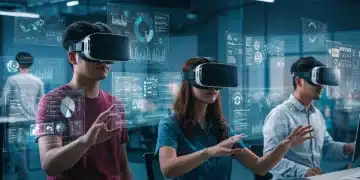
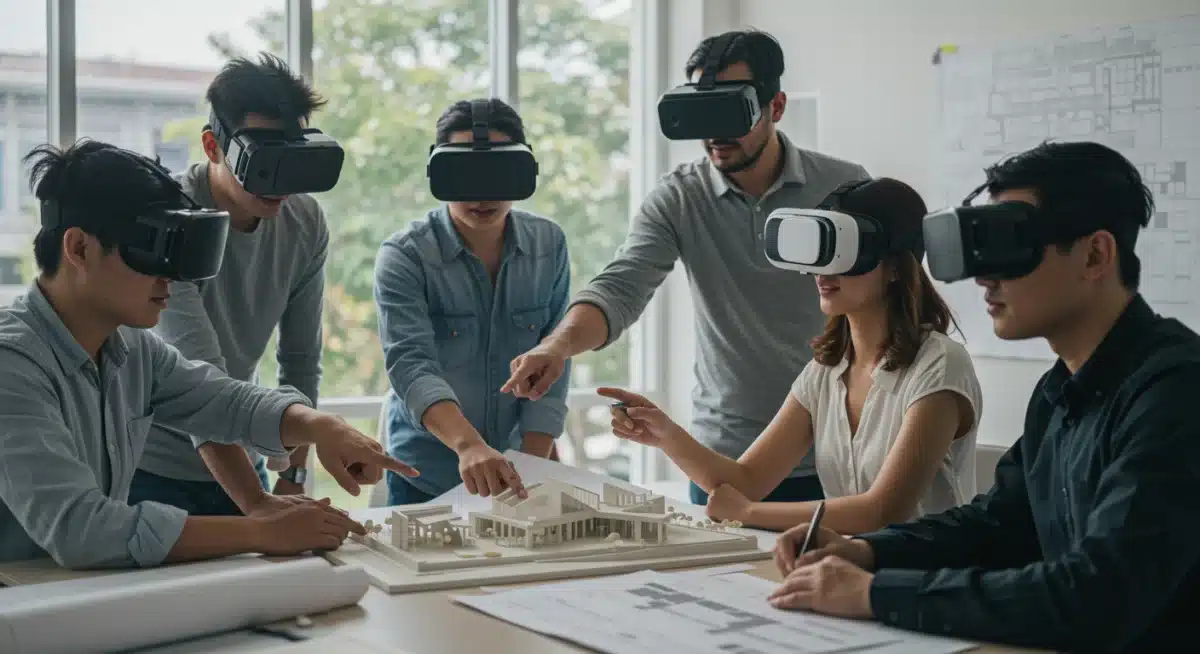
Prowork VR is a groundbreaking application designed to enhance remote collaboration and project management for creative teams. In an increasingly distributed work environment, Prowork VR offers a virtual office space where teams can meet, review 3D assets, brainstorm ideas on shared whiteboards, and manage project tasks in a truly immersive setting. It aims to replicate the benefits of in-person collaboration without the geographical constraints.
The app features customizable virtual meeting rooms, complete with interactive whiteboards, sticky notes, and the ability to import and manipulate 3D models and 2D documents. Team members can join from anywhere, interact with each other’s avatars, and communicate naturally using spatial audio. The ability to collectively review a 3D product prototype, brainstorm design iterations, or present a marketing campaign in a shared virtual space fosters a sense of presence and engagement that traditional video conferencing simply cannot match.
Prowork VR integrates with popular project management tools, allowing teams to track progress, assign tasks, and share files seamlessly within the VR environment. This holistic approach to remote work not only boosts productivity but also strengthens team cohesion, making it an essential tool for modern creative agencies and studios. It exemplifies how VR Creative Apps are addressing real-world professional challenges and improving the remote work experience.
The Broader Impact of VR Creative Apps
The six applications highlighted above represent just a snapshot of the innovation occurring within the VR space for creative professionals. Their emergence signifies a broader trend: VR is moving from a novelty to an essential toolset, fundamentally altering how creative work is conceived, executed, and shared. This shift has several far-reaching implications:
- Democratization of Creativity: VR tools can lower the barrier to entry for certain creative fields. The intuitive nature of direct manipulation in 3D can make complex tasks more accessible to a wider range of artists and designers, regardless of their proficiency with traditional software interfaces.
- Enhanced Collaboration: The ability to share and interact with 3D content in real-time, regardless of physical location, is fostering unprecedented levels of global collaboration. This leads to more diverse ideas, faster iteration, and stronger team dynamics.
- Increased Efficiency and Cost Savings: By allowing for early visualization, prototyping, and iteration, VR apps can significantly reduce development cycles and prevent costly mistakes in fields like architecture, product design, and manufacturing.
- New Forms of Expression: VR opens up entirely new artistic mediums and narrative possibilities. Artists can create volumetric paintings, sculpt with light, and design immersive stories that challenge traditional formats, pushing the boundaries of what art and storytelling can be.
- Improved Training and Education: The immersive and interactive nature of VR makes it an incredibly effective platform for professional training and education. Complex procedures can be practiced in a safe, virtual environment, and abstract concepts can be visualized in tangible ways.
Challenges and Future Outlook for VR Creative Apps
Despite the rapid advancements, the widespread adoption of VR Creative Apps still faces certain challenges. High hardware costs, the need for powerful computing, and the learning curve associated with new interfaces can be deterrents. Furthermore, ensuring seamless interoperability between different VR platforms and traditional software remains a key area for development.
However, the future for VR in creative professions looks incredibly bright. As VR hardware becomes more affordable, lighter, and more powerful (e.g., standalone headsets), and as developers continue to refine user experiences, these tools will become even more ubiquitous. We can anticipate even more specialized applications catering to niche creative fields, deeper integration with AI for generative design and automated tasks, and further advancements in haptic feedback for a truly tactile virtual experience.
The convergence of VR with other emerging technologies like Augmented Reality (AR) and Artificial Intelligence (AI) will also unlock new possibilities. Imagine an AR headset allowing a designer to overlay a virtual prototype onto a physical workspace, or an AI assisting an artist in generating variations of their 3D sculpture. The boundaries between the physical and digital are blurring, and creative professionals are at the forefront of this exciting transformation.
Conclusion: Embracing the Immersive Future
The last six months have provided compelling evidence that VR is far more than a gaming gadget; it is a serious platform for professional creativity and innovation. The six VR Creative Apps discussed – Immersive Sculpting Studio, Architrek VR, ChromaCanvas VR, StoryScape VR, SoundSphere VR, and Prowork VR – each demonstrate how immersive technology can empower professionals to design, create, collaborate, and visualize in ways previously thought impossible. From redefining 3D artistry to revolutionizing architectural visualization and remote collaboration, these tools are not just improving existing workflows; they are creating entirely new ones.
For creative professionals looking to stay ahead of the curve, exploring these and other emerging VR applications is not just an option but a necessity. Embracing VR means embracing a future where imagination knows no bounds, where ideas can be brought to life with unprecedented immediacy and depth, and where collaboration transcends geographical limitations. The immersive future is here, and it’s brimming with creative potential.