Top 4 VR Haptic Feedback Devices for US Training Simulations: A Deep Dive
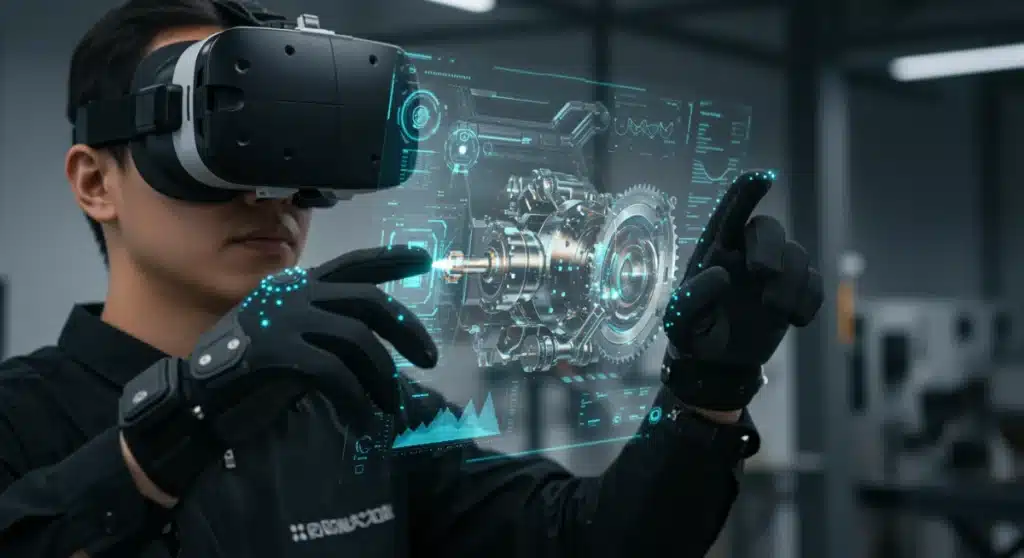
Virtual Reality (VR) has transcended its initial reputation as a novelty, becoming an indispensable tool across numerous sectors, particularly in advanced training and simulation. In the United States, industries ranging from defense and healthcare to manufacturing and education are increasingly leveraging VR to create immersive, cost-effective, and safe training environments. However, for these simulations to be truly effective, they require more than just visual and auditory fidelity; they demand a tangible sense of interaction. This is where haptic feedback devices play a pivotal role. By allowing users to ‘feel’ virtual objects, textures, and forces, haptics bridges the gap between the digital and physical worlds, significantly enhancing the realism and efficacy of VR training. This article provides a comprehensive VR Haptic Devices Comparison, examining four leading options currently available for US training simulations, offering insights into their technology, applications, and unique advantages.
The integration of haptic feedback into VR training is not merely about adding a cool feature; it’s about fundamentally improving learning outcomes. When trainees can physically interact with their virtual environment – feeling the recoil of a firearm, the resistance of a surgical tool, or the texture of a component – their motor skills, spatial awareness, and decision-making abilities are honed more effectively. This enhanced immersion translates to better retention of information, faster skill acquisition, and a more profound understanding of complex procedures. As the demand for highly skilled professionals grows, so does the need for sophisticated training methodologies, and VR with advanced haptics is at the forefront of this evolution.
Choosing the right haptic feedback device for a specific training simulation is crucial. The market offers a diverse range of technologies, each with its own strengths and limitations. Factors such as the type of haptic sensation required (e.g., vibration, force feedback, temperature simulation), the level of fidelity, the range of motion, and compatibility with existing VR systems all need to be carefully considered. This comparison aims to simplify that decision-making process by highlighting the key attributes of four prominent devices, enabling organizations to select the optimal solution for their unique training needs.
The Imperative of Haptic Feedback in Modern VR Training
Before delving into specific devices, it’s essential to understand why haptic feedback has become such a critical component of advanced VR training. Traditional training methods, while valuable, often fall short in replicating the sensory complexity of real-world scenarios. Textbooks, lectures, and even video demonstrations can convey information, but they lack the experiential learning that solidifies understanding and builds muscle memory.
VR, on its own, provides an unparalleled visual and auditory experience. Trainees can see and hear the environment, manipulate virtual objects, and navigate complex spaces. However, without the sense of touch, interactions can feel disembodied and artificial. Imagine a surgeon practicing a delicate operation without feeling the resistance of tissue, or a mechanic assembling an engine without sensing the weight and fit of parts. The absence of haptics diminishes the realism, reduces engagement, and ultimately limits the effectiveness of the training.
Haptic feedback addresses this fundamental limitation by adding a tactile layer to the virtual experience. It allows trainees to:
- Develop Muscle Memory: Repeated physical interaction with virtual objects, accompanied by realistic haptic feedback, helps build procedural memory and refine fine motor skills.
- Enhance Spatial Awareness: Feeling the boundaries and surfaces of virtual objects improves a trainee’s understanding of their spatial relationships within the environment.
- Improve Decision-Making: Realistic feedback on interactions (e.g., feeling a component snap into place, or sensing an impact) provides critical cues that inform and refine decision-making processes under pressure.
- Increase Immersion and Engagement: The ability to touch and feel makes the virtual world more believable and engaging, leading to higher trainee motivation and better learning outcomes.
- Reduce Training Costs and Risks: Practicing dangerous or complex tasks in a virtual environment with haptics significantly reduces the risks associated with real-world training, minimizes equipment wear and tear, and eliminates the need for expensive consumables.
The demand for this enhanced realism is driving innovation in the haptics market, leading to a diverse array of devices tailored for different applications. Our VR Haptic Devices Comparison will now turn its attention to some of the most impactful solutions.
Leading VR Haptic Devices for US Training Simulations
The landscape of VR haptic technology is evolving rapidly, with new devices constantly emerging. For the purpose of this comparison, we will focus on four prominent and widely adopted devices that offer distinct advantages for various training scenarios in the US market.
1. HaptX Gloves G1: Precision and True-Contact Haptics
HaptX Gloves G1 represent a significant leap forward in haptic technology, offering what the company describes as ‘true-contact haptics.’ Unlike many haptic solutions that rely solely on vibration, HaptX Gloves G1 provide microfluidic feedback that physically displaces the skin, simulating the feeling of touching and grasping virtual objects with remarkable fidelity. This system uses over 130 points of tactile feedback per hand, allowing users to feel shape, texture, and stiffness.
- Technology: Microfluidic actuators inflate and deflate against the user’s skin, creating localized pressure points that mimic physical contact. The gloves also incorporate force feedback, preventing the user’s fingers from passing through virtual objects, thus simulating resistance and object boundaries.
- Key Features:
- True-Contact Haptics: Unprecedented realism in tactile sensation.
- Force Feedback: Physical resistance up to 40 pounds per hand, simulating rigid objects.
- High-Fidelity Hand Tracking: Captures subtle finger movements with precision.
- Ergonomic Design: Lighter and more comfortable than previous generations, designed for extended use.
- Ideal Applications in US Training:
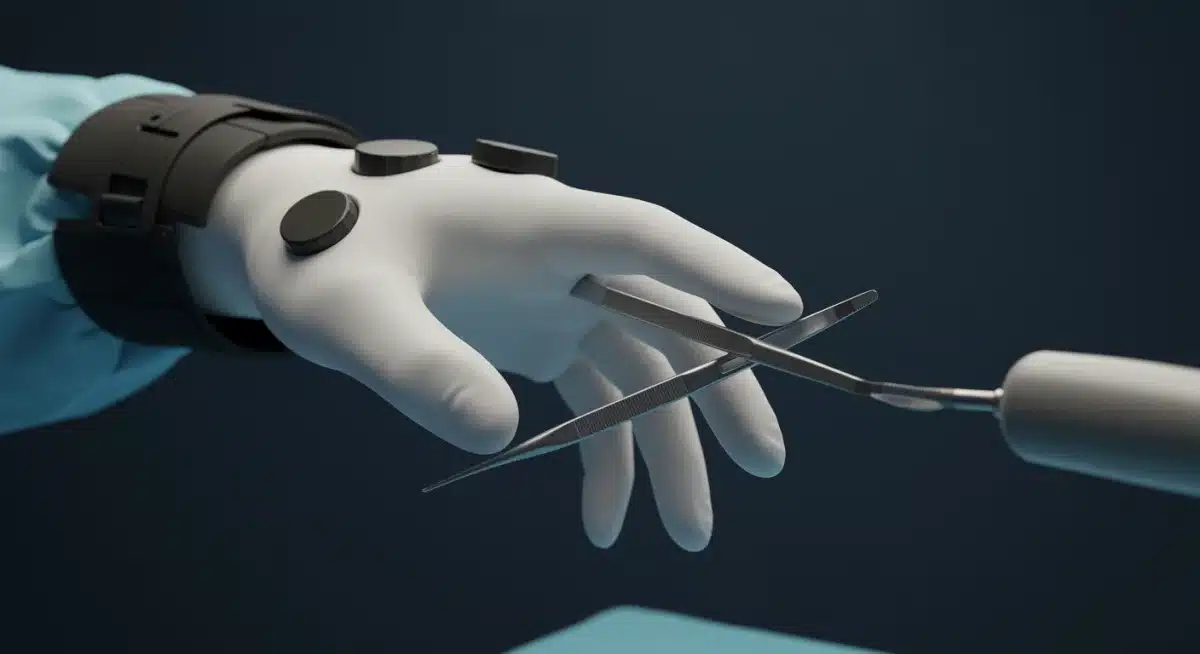
- Medical Simulation: Surgeons can practice delicate procedures, feeling the texture of organs, the resistance of tissue during incisions, and the precise manipulation of instruments.
- Robotics and Teleoperation: Operators can remotely control robots with tactile feedback, feeling the objects the robot interacts with, crucial for hazardous environments or precision tasks.
- Industrial Design and Manufacturing: Engineers can interact with virtual prototypes, feeling the fit and finish of components before physical production.
- Military and Defense: Training for bomb disposal, equipment assembly, and vehicle maintenance, where tactile feedback is critical for understanding object properties and interactions.
- Advantages: Offers the highest level of tactile realism, crucial for tasks requiring fine motor skills and precise object interaction. The force feedback significantly enhances the sense of presence and object permanence.
- Limitations: Higher cost compared to vibration-based haptics, and the microfluidic system requires an external air compressor, which can add to the setup complexity.
2. bHaptics TactSuit X40/X16: Full-Body Immersive Feedback
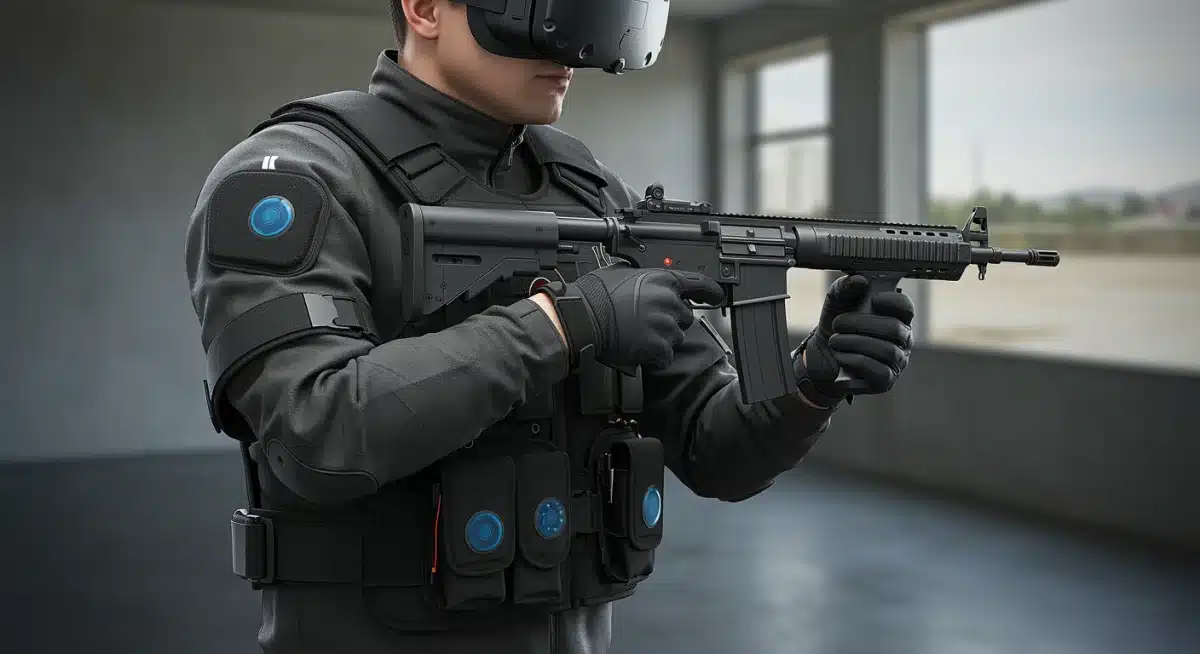
bHaptics has carved out a niche for itself by focusing on full-body haptic experiences. Their TactSuit series, particularly the X40 (vest with 40 haptic points) and X16 (vest with 16 haptic points), provides immersive feedback across the torso, enabling sensations like impacts, vibrations, and even directional cues. While not offering the granular tactile fidelity of gloves, they excel at delivering broad, impactful sensations that enhance situational awareness and environmental interaction.
- Technology: Utilizes an array of eccentric rotating mass (ERM) motors strategically placed across the vest, providing localized vibrations. These vibrations can be precisely controlled in terms of intensity and pattern to simulate various effects.
- Key Features:
- Multi-Point Haptic Feedback: 40 (X40) or 16 (X16) individually controllable haptic points.
- Wireless Connectivity: Bluetooth Low Energy for untethered movement.
- Cross-Platform Compatibility: Supports a wide range of VR headsets and PC VR titles.
- Directional Feedback: Can simulate the direction of impacts or forces.
- Ideal Applications in US Training:
- Military and Law Enforcement: Simulating bullet impacts, explosions, environmental hazards, and directional alerts in combat or tactical training scenarios.
- First Responder Training: Allowing firefighters or paramedics to feel environmental cues like heat (through simulated vibration patterns) or the impact of falling debris.
- Sports Training: Simulating impacts in contact sports, or providing biofeedback during performance analysis.
- Entertainment and Gaming: Enhancing immersion in VR games and experiences.
- Advantages: Excellent for conveying broad, impactful sensations and spatial awareness across the torso. Relatively affordable compared to high-end haptic gloves, and easy to integrate wirelessly.
- Limitations: Lacks fine tactile resolution for finger-level interaction. Primarily focuses on vibration, not true force feedback or skin displacement.
3. SenseGlove Nova: Dexterity and Force Feedback for Hand Interaction
SenseGlove Nova strikes a balance between tactile feedback and force feedback, specifically designed for highly interactive hand-based tasks. It offers a compact and wireless solution that allows users to feel the size, stiffness, and impact of virtual objects. The Nova focuses on providing a realistic sense of grasping and manipulating objects, making it a strong contender for tasks requiring fine motor control and object interaction.
- Technology: Combines haptic brakes on each finger for force feedback (up to 20N per finger) with vibrotactile feedback on the fingertips. This dual approach allows for both resistance against grasping and localized tactile sensations.
- Key Features:
- Compact & Wireless Design: Offers freedom of movement without tethers.
- Force Feedback per Finger: Realistic resistance when interacting with virtual objects.
- Vibrotactile Feedback: Provides texture and impact sensations.
- Integrated Hand Tracking: High-fidelity tracking for natural interaction.
- Ideal Applications in US Training:
- Assembly and Maintenance Training: Technicians can practice assembling complex machinery, feeling the resistance of parts and the tactile feedback of tools.
- Ergonomics Studies: Analyzing human interaction with virtual products and workstations, feeling forces and discomfort points.
- Product Prototyping: Designers can physically interact with virtual models, assessing their feel and functionality.
- Hazardous Material Handling: Training for manipulating dangerous substances or fragile objects without real-world risk.
- Advantages: Excellent balance of force feedback and tactile sensation for hand interactions. Its wireless and compact design makes it highly practical for various training setups. Offers a good balance between fidelity and portability.
- Limitations: While providing good hand haptics, it doesn’t offer full-body feedback like the TactSuit. The tactile feedback is primarily vibrotactile, not true skin displacement.
4. Ultrahaptics (now Ultraleap) STRATOS Inspire: Mid-Air Haptics
Ultraleap’s STRATOS Inspire offers a unique approach to haptic feedback: mid-air haptics. Instead of requiring users to wear a device, STRATOS Inspire uses focused ultrasound waves to create tactile sensations directly on the user’s bare skin in mid-air. This technology allows for touchless interaction, creating sensations like buttons, textures, or even virtual objects floating in space.
- Technology: Employs an array of ultrasonic transducers that emit precisely controlled sound waves. These waves converge at specific points in space, creating localized pressure changes that are felt as tactile sensations on the skin.
- Key Features:
- Mid-Air Tactile Feedback: No wearables required, enabling natural, touchless interaction.
- Highly Customizable Sensations: Can create a wide range of tactile effects, from clicks and pulses to complex textures.
- Integrated Hand Tracking: Often paired with Ultraleap’s Leap Motion hand tracking for precise interaction.
- Hygiene and Accessibility: Ideal for public installations or scenarios where sharing wearable devices is problematic.
- Ideal Applications in US Training:
- Public Safety Training: Simulating control panels or interfaces where trainees need to feel virtual buttons or dials without physical contact.
- Educational Demonstrations: Allowing multiple users to experience tactile feedback simultaneously without individual equipment.
- Automotive and Cockpit Training: Simulating dashboard controls and switches, where physical buttons might not be present in the VR environment.
- Virtual Kiosks and Interactive Displays: Providing tactile feedback for touchless interfaces in training simulations.
- Advantages: Unparalleled freedom of interaction as no device is worn. Excellent for multi-user experiences and public-facing training simulations where hygiene is a concern. Offers a novel and futuristic interaction paradigm.
- Limitations: Sensations are generally lighter and less intense than direct-contact haptics. Does not provide force feedback or resistance for grasping objects. The range of interaction is limited to the device’s projection area.
Choosing the Right VR Haptic Device for Your Training Needs
The selection of a VR haptic device is not a one-size-fits-all decision. It requires a careful assessment of your specific training objectives, budgetary constraints, and the level of realism required. This VR Haptic Devices Comparison highlights the diverse capabilities available, and here’s how to approach the selection process:
Define Your Training Objectives
What skills are you trying to impart? What specific sensations are critical for effective learning?
- If your training involves delicate manipulation, feeling textures, and precise object interaction (e.g., surgery, intricate assembly), devices like the HaptX Gloves G1 or SenseGlove Nova will offer the necessary fidelity.
- If the training focuses on full-body awareness, impacts, and environmental cues (e.g., military combat, emergency response), the bHaptics TactSuit provides an immersive experience.
- If your training requires touchless interaction, multi-user experiences, or simulating controls without physical counterparts (e.g., public safety interfaces, educational exhibits), Ultraleap STRATOS Inspire could be the ideal choice.
Consider the Required Level of Fidelity
How realistic do the haptic sensations need to be?
- High Fidelity (True-Contact, Force Feedback): For tasks where minute tactile details and physical resistance are paramount (e.g., feeling the ‘give’ of a material, the weight of a tool). HaptX Gloves G1 are a prime example.
- Medium Fidelity (Force Feedback, Vibrotactile): For tasks requiring strong grasping sensations and localized vibrations (e.g., manipulating tools, assembly). SenseGlove Nova fits this category well.
- Broad Fidelity (Vibrotactile, Full-Body): For conveying impacts, spatial cues, and environmental effects across a larger area (e.g., explosions, directional alerts). bHaptics TactSuit excels here.
- Mid-Air Fidelity (Air Pressure, Light Tactile): For touchless interaction and simulating virtual buttons or textures in open space. Ultraleap STRATOS Inspire is unique in this regard.
Evaluate Integration and Compatibility
Will the haptic device seamlessly integrate with your existing VR hardware, software, and training platforms? Check for SDKs, APIs, and compatibility with popular VR headsets (e.g., Meta Quest, Valve Index, Varjo).
Assess Budget and Scalability
Haptic devices vary significantly in price. Consider not only the initial purchase cost but also ongoing maintenance, software licenses, and the potential need for multiple units if you plan to scale up your training program. For instance, while HaptX Gloves G1 offer superior fidelity, their cost and complexity might be prohibitive for some budgets, whereas bHaptics TactSuit offers a more accessible entry point for full-body haptics.
User Experience and Comfort
For extended training sessions, comfort is paramount. Consider the weight, fit, and ease of donning/doffing the device. Wireless solutions often offer greater freedom of movement and comfort.
The Future of Haptics in US Training Simulations
The advancements in VR haptic feedback technology are relentless. We are witnessing a rapid evolution from simple vibratory feedback to sophisticated systems that can replicate temperature, texture, and even shear forces. The devices discussed in this VR Haptic Devices Comparison represent the current cutting edge, but the future promises even more immersive and realistic experiences.
- Miniaturization and Portability: Haptic devices will become smaller, lighter, and more integrated into standard VR equipment, reducing bulk and improving ergonomics.
- Multi-Modal Haptics: Future systems will likely combine different haptic technologies (e.g., force feedback gloves integrated with full-body suits and mid-air haptics) to create a truly comprehensive sensory experience.
- Advanced Materials and Actuators: Research into new materials and actuator designs will lead to more precise, powerful, and energy-efficient haptic feedback.
- AI-Driven Haptics: Artificial intelligence could play a role in optimizing haptic feedback in real-time, adapting sensations based on user interaction and environmental context.
- Standardization and Interoperability: As the market matures, there will likely be greater standardization, making it easier to integrate different haptic devices with various VR platforms.
For organizations in the US committed to delivering cutting-edge training, staying abreast of these developments is crucial. Investing in the right haptic technology today can provide a significant competitive advantage, enabling the creation of training programs that are not only effective but also engaging and memorable.
Conclusion
The journey through our VR Haptic Devices Comparison underscores the transformative power of touch in virtual reality training. From the surgical precision offered by HaptX Gloves G1 to the encompassing immersion of the bHaptics TactSuit, the dexterous interaction facilitated by SenseGlove Nova, and the innovative touchless experiences of Ultraleap STRATOS Inspire, each device brings unique capabilities to the table.
As US industries continue to embrace virtual reality for high-stakes and complex training scenarios, the role of haptic feedback will only grow in importance. The ability to feel, grasp, and interact tangibly with virtual environments moves training beyond passive observation into active, experiential learning. This not only accelerates skill development but also instills confidence and competence in trainees, preparing them more effectively for real-world challenges.
When making your selection, remember to align the device’s capabilities with your specific training objectives, considering factors like fidelity, integration, budget, and user comfort. By carefully evaluating these aspects, organizations can harness the full potential of VR haptic feedback, creating training simulations that are not just realistic, but truly impactful. The future of training is tactile, and with these leading devices, that future is already here.