Micro-LED & QLED VR Displays: Q3 2026 Consumer Outlook
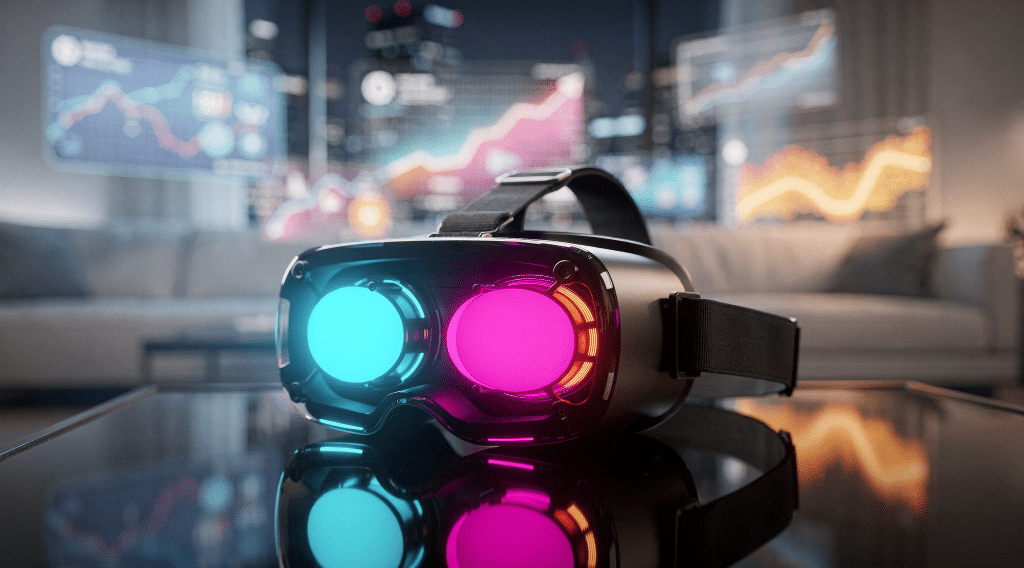
The landscape of virtual reality (VR) is constantly evolving, driven by relentless innovation in display technology. As we approach Q3 2026, the discussion around next-generation VR display advancements has intensified, with Micro-LED and QLED emerging as frontrunners to redefine the immersive experience for US consumers. These technologies promise to deliver unprecedented levels of visual fidelity, brightness, and color accuracy, addressing some of the most persistent challenges in current VR headsets.
For years, VR enthusiasts and developers have yearned for displays that can truly replicate the real world, free from the dreaded ‘screen-door effect’ and limited field of view. The current generation of VR headsets, while impressive, often grapples with trade-offs between resolution, refresh rate, and display size. However, the rapid progress in Micro-LED and QLED technologies is set to usher in a new era, fundamentally transforming how we interact with virtual environments. This comprehensive overview will delve into the technical underpinnings, current status, and future implications of these groundbreaking VR display advancements for the US consumer market.
The Quest for Perfect Immersion: Why Display Technology Matters in VR
At the heart of any truly immersive VR experience lies the display. It’s the window to the virtual world, and its quality directly impacts everything from user comfort to the sense of presence. Current VR displays, predominantly based on OLED or LCD technologies, have made significant strides, offering resolutions that were once unimaginable. Yet, limitations persist. Issues such as pixel density, brightness, contrast ratio, and color gamut often hinder the full potential of VR.
High pixel density is crucial to eliminate the ‘screen-door effect,’ where the gaps between individual pixels become visible. This effect breaks immersion and can lead to visual fatigue. Brightness and contrast are essential for realistic visuals, especially in outdoor or high-dynamic-range (HDR) virtual environments. Furthermore, a wide color gamut ensures that virtual worlds are rendered with vibrant and accurate colors, mirroring the richness of the real world. These are precisely the areas where Micro-LED and QLED technologies promise to deliver substantial VR display advancements.
The human visual system is incredibly sophisticated, capable of discerning minute details and a vast spectrum of colors. To truly trick the brain into believing it’s in a different reality, VR displays must meet incredibly high standards. This is not just about raw pixel count; it’s about the quality of each pixel, its ability to emit light independently, and its response time. The pursuit of perfect immersion is a complex challenge, and display technology is arguably the single most critical component in overcoming it.
Understanding the Current State of VR Displays
Before diving into the future, let’s briefly recap where we stand. Most mainstream VR headsets today utilize either AMOLED (Active Matrix Organic Light Emitting Diode) or LCD (Liquid Crystal Display) panels. AMOLED displays are favored for their deep blacks, high contrast, and fast response times, making them excellent for reducing motion blur. However, they can suffer from lower brightness compared to LCDs and are susceptible to burn-in over extended use, although this has become less common with recent advancements.
LCD panels, on the other hand, often offer higher brightness and are generally more cost-effective to produce. They typically have a longer lifespan and are less prone to burn-in. However, they struggle with true black levels because they rely on a backlight, which can lead to ‘light bleed’ and reduced contrast. Both technologies have their merits and drawbacks, and developers have continually optimized them to push the boundaries of what’s possible within these constraints. The imminent arrival of Micro-LED and QLED represents a significant leap beyond these established norms, promising to address their inherent limitations and unlock new possibilities for VR display advancements.
Micro-LED: The Pinnacle of Pixel Perfection
Micro-LED technology is arguably the most exciting development in the display world, not just for VR but for screens across the board. Imagine a display where every single pixel is its own tiny, self-emissive LED. That’s essentially what Micro-LED offers. Unlike OLED, which uses organic compounds that degrade over time, Micro-LEDs are inorganic, promising superior longevity and stability.
The advantages of Micro-LED for VR are profound. Firstly, they offer incredibly high brightness levels, far surpassing what OLED can achieve. This is crucial for outdoor VR experiences or for achieving realistic HDR content, where bright highlights and deep shadows need to coexist convincingly. Secondly, because each pixel is self-emissive, Micro-LED achieves perfect blacks and an infinite contrast ratio, similar to OLED, but without the risk of burn-in.
Furthermore, Micro-LEDs boast extremely fast response times, virtually eliminating motion blur and ghosting – critical factors for comfortable and realistic VR. The microscopic size of these LEDs also allows for incredibly high pixel densities, which is paramount for eliminating the screen-door effect in VR headsets. We’re talking about resolutions that could make individual pixels completely indistinguishable to the human eye, even when magnified by VR lenses. This level of detail is a game-changer for VR display advancements.
Challenges and Progress in Micro-LED for VR
Despite its immense promise, Micro-LED technology faces significant manufacturing challenges. The process of transferring millions of microscopic LEDs onto a substrate with perfect alignment and yield is incredibly complex and expensive. This has historically relegated Micro-LED to niche, high-end applications like massive commercial displays. However, significant research and development efforts are underway to overcome these hurdles, particularly for the smaller, high-density displays required for VR.
By Q3 2026, we anticipate seeing more refined manufacturing processes, potentially involving mass transfer techniques that can place millions of LEDs simultaneously. This will be key to bringing down production costs and making Micro-LED VR headsets more accessible to US consumers. Several tech giants and display manufacturers are heavily invested in Micro-LED, recognizing its potential to dominate the next generation of displays. The focus is not just on raw specifications but also on power efficiency, as VR headsets are battery-powered devices. Innovations in driver circuitry and LED efficiency are critical for practical implementation of these VR display advancements.
QLED: Quantum Dots Pushing the Boundaries of Color
While Micro-LED represents a radical shift, QLED (Quantum Dot Light Emitting Diode) technology offers a compelling evolution of existing LCD principles, augmented by the power of quantum dots. Unlike traditional LCDs, which use a standard LED backlight, QLED displays incorporate a layer of quantum dots that convert light from a blue LED backlight into pure, highly saturated red and green light. This combination, along with the original blue light, creates a much wider and more accurate color spectrum.
For VR, the primary benefit of QLED lies in its exceptional color volume and brightness. QLED displays can achieve incredibly vibrant and lifelike colors, making virtual environments feel more realistic and engaging. They also offer excellent brightness, which is crucial for fighting ambient light and ensuring a clear, punchy image. While QLEDs still rely on a backlight, advancements in local dimming technologies – where parts of the backlight can be turned off or dimmed independently – have significantly improved contrast ratios, approaching OLED-like performance in many scenarios.
QLED’s Strengths and Market Position in VR
QLED technology, particularly mini-LED QLED (which uses thousands of smaller LEDs in the backlight for more precise local dimming), presents a strong contender for next-gen VR. Its manufacturing processes are more mature than Micro-LED, potentially allowing for faster mass production and more competitive pricing in the short to medium term. For US consumers, this could mean more accessible high-fidelity VR experiences sooner.
The combination of high brightness, expansive color gamut, and improved contrast makes QLED an attractive option for VR, especially for experiences that benefit from vivid, impactful visuals. While not entirely self-emissive like Micro-LED or OLED, the sophistication of quantum dot technology and advanced backlighting systems allows QLED to deliver a premium visual experience. Its robustness and resistance to burn-in are also significant advantages for VR headsets, which often display static elements for extended periods. These qualities position QLED as a strong force in driving VR display advancements.
Micro-LED vs. QLED for VR: A Q3 2026 Perspective
By Q3 2026, the market will likely see both Micro-LED and QLED making significant inroads into high-end and enthusiast-grade VR headsets. Each technology brings its unique set of advantages and potential drawbacks, catering to different segments of the consumer market and different types of VR experiences.
Micro-LED’s Edge: Unrivaled Performance
Micro-LED is poised to deliver the absolute best in terms of raw display performance. Its self-emissive nature means perfect blacks, infinite contrast, and pixel-level control that no other technology can match. The extreme brightness and fast response times will make it ideal for high-fidelity simulations, professional VR applications, and experiences where visual realism is paramount. The ability to achieve incredibly high pixel densities without sacrificing brightness or longevity will be a hallmark of Micro-LED VR. For consumers seeking the ultimate, no-compromise visual experience in VR, Micro-LED will be the gold standard, albeit likely at a premium price point initially.
QLED’s Appeal: Balanced Performance and Accessibility
QLED, especially in its mini-LED form, will likely offer a more balanced proposition. It will provide a significant upgrade over current OLED and LCD VR displays, with brilliant colors, excellent brightness, and very good contrast thanks to advanced local dimming. Its more mature manufacturing process could translate to more affordable high-performance VR headsets, making these VR display advancements accessible to a broader range of US consumers. QLED VR headsets will be excellent for gaming, entertainment, and general-purpose VR, offering a visually stunning experience without the bleeding-edge cost of Micro-LED.
The choice between Micro-LED and QLED for consumers will largely depend on their budget and their specific VR use cases. Both technologies represent a monumental leap forward, moving beyond the incremental improvements we’ve seen in recent years. The competition between them will also spur further innovation, pushing both technologies to become even better.
Impact on US Consumers and the VR Ecosystem
The arrival of Micro-LED and QLED VR displays will have a transformative impact on US consumers and the broader VR ecosystem. Here’s a breakdown of what to expect:
- Unprecedented Visual Fidelity: The most immediate and noticeable benefit will be a dramatic improvement in visual quality. Sharper images, richer colors, and deeper blacks will make virtual worlds feel more real and engaging. The screen-door effect will become a relic of the past for high-end headsets.
- Enhanced Immersion: With superior displays, the sense of presence – the feeling of truly being in a virtual environment – will be significantly amplified. This will lead to more compelling gaming experiences, more effective training simulations, and more lifelike social VR interactions.
- Reduced Visual Fatigue: Higher resolutions and better display characteristics will reduce eye strain and visual fatigue, allowing for longer and more comfortable VR sessions. This is crucial for wider adoption and sustained engagement.
- New Content Opportunities: Developers will be empowered to create even more visually stunning and detailed virtual worlds, knowing that the underlying hardware can deliver their artistic vision. This could lead to a new generation of VR content that pushes graphical boundaries.
- Market Segmentation: We will likely see a clear segmentation in the VR market, with Micro-LED dominating the ultra-premium, professional, and enthusiast segments, while QLED offers high-end performance at a more consumer-friendly price point.
- Increased Adoption: As displays improve and prices become more competitive, the overall appeal of VR will grow, leading to increased adoption among US consumers. The ‘wow factor’ will be stronger than ever, drawing in new users.
- Competition and Innovation: The race between Micro-LED and QLED will drive further innovation in display technology, benefiting not just VR but also other screen-based devices. This healthy competition ensures that VR display advancements will continue at a rapid pace.
The implications extend beyond gaming and entertainment. Imagine architects visualizing their designs with perfect clarity, surgeons practicing complex procedures with photo-realistic fidelity, or students exploring historical sites with an unparalleled sense of being there. These VR display advancements will unlock countless new applications.
Beyond the Pixels: Other Factors in Next-Gen VR
While display technology is pivotal, it’s important to remember that it’s just one piece of the puzzle. For a truly next-gen VR experience, other factors must also evolve in tandem:
- Processing Power: Driving these ultra-high-resolution, high-refresh-rate displays will require immense computational power. We’ll need more powerful GPUs and optimized rendering techniques to fully exploit the capabilities of Micro-LED and QLED.
- Optics: The lenses used in VR headsets are just as important as the displays themselves. Advancements in pancake lenses and other optical designs are crucial to maintain a wide field of view, reduce aberrations, and keep headsets compact and lightweight.
- Eye Tracking and Foveated Rendering: Eye tracking will become standard, enabling foveated rendering – a technique where only the area the user is directly looking at is rendered in full resolution, significantly reducing the computational load and allowing for even higher perceived resolutions.
- Haptics and Input: Realistic haptic feedback and intuitive input methods are essential for completing the immersive loop. Haptic gloves and more sophisticated controllers will enhance the tactile experience.
- Wireless Connectivity: Untethered VR is the goal, and high-bandwidth, low-latency wireless technologies will be critical for transmitting the vast amounts of data required by these advanced displays without introducing noticeable lag.
- Battery Technology: Powering these sophisticated systems will demand significant advancements in battery density and efficiency to ensure comfortable session lengths without excessive weight.
All these components must work in harmony to deliver a seamless and convincing virtual experience. However, the display remains the primary interface, and its quality sets the fundamental ceiling for immersion. The VR display advancements discussed here are therefore foundational to the entire ecosystem’s progress.
The Road Ahead: What to Expect in Q3 2026 and Beyond
By Q3 2026, it is highly probable that we will see several high-profile VR headsets leveraging either Micro-LED or advanced QLED (likely mini-LED QLED) technology. These early adopters will set new benchmarks for visual quality in VR, showcasing the true potential of these displays. US consumers will begin to experience VR in a way that was previously confined to science fiction.
Initially, Micro-LED VR headsets will likely be premium products, targeting enthusiasts, professional users, and those for whom cost is less of a barrier than performance. QLED-based headsets will likely occupy the upper-mid to high-end consumer market, offering an an excellent balance of performance and value. Over time, as manufacturing processes mature and economies of scale kick in, both technologies will become more accessible, driving down prices and expanding their reach.
The next few years will be a period of intense innovation and competition in the VR display space. The insights from Q3 2026 will be crucial in understanding which technologies gain traction and how quickly they can be integrated into mainstream consumer products. The ultimate winners will be US consumers, who will benefit from a new generation of VR experiences that are more visually stunning, more immersive, and more comfortable than ever before. These profound VR display advancements are not just technical feats; they are gateways to new realities.
Conclusion: A Brighter, More Colorful Virtual Future
The future of VR displays is incredibly bright, both figuratively and literally. Micro-LED and QLED technologies are set to revolutionize how we perceive and interact with virtual worlds. By Q3 2026, US consumers will begin to witness the fruits of these VR display advancements, experiencing unparalleled visual fidelity, vibrant colors, and deep contrasts that will make the line between the real and the virtual increasingly blurred.
While challenges remain in cost and mass production, the trajectory of innovation is clear. The relentless pursuit of perfect immersion is leading us to a future where VR is not just a novelty but a truly transformative medium. Keep an eye on these display technologies, as they are the key to unlocking the next generation of virtual reality experiences.