Augmented Reality Manufacturing: Top 3 US Trends for the Next 6 Months
The landscape of US manufacturing is undergoing a profound metamorphosis, propelled by an accelerating wave of technological innovation. Among these transformative technologies, Augmented Reality (AR) stands out as a particularly potent force, poised to reshape operational paradigms, enhance workforce capabilities, and drive unprecedented levels of efficiency and productivity. As we look ahead to the next six months, specific AR manufacturing trends are emerging as dominant forces, promising to deliver significant impact across various facets of the industry.
For decades, manufacturing has been a cornerstone of the American economy, a sector synonymous with ingenuity, precision, and large-scale production. However, the demands of the 21st century – from global competition and supply chain complexities to the imperative for sustainability and the need for a highly skilled workforce – have necessitated a radical shift. Traditional methods, while foundational, are increasingly being augmented, and in some cases, supplanted by advanced digital tools. This is where Augmented Reality enters the picture, not merely as a futuristic gadget, but as a practical, scalable solution to real-world industrial challenges.
AR technology, which overlays digital information onto the real world, is moving beyond experimental phases and into mainstream adoption within manufacturing. Its ability to provide contextual, real-time data directly to workers’ line of sight is proving invaluable for tasks ranging from complex assembly and quality control to maintenance and training. The immediate benefits include reduced error rates, faster task completion, and improved safety. But the strategic implications are even more far-reaching, enabling greater agility, fostering a culture of continuous improvement, and empowering a new generation of skilled workers.
This article will delve into the three biggest AR manufacturing trends that are set to impact the US manufacturing sector significantly in the next six months. We will explore the nuances of each trend, examine their practical applications, and discuss the strategic advantages they offer. Understanding these trends is crucial for manufacturers looking to maintain a competitive edge, optimize their operations, and prepare their workforce for the future of industrial production.
Trend 1: Enhanced Workforce Training and Skill Development with AR
One of the most pressing challenges facing US manufacturing today is the significant skills gap. As older generations retire, there’s a critical need to train new workers quickly and effectively on increasingly complex machinery and processes. Traditional training methods, often relying on manuals, classroom sessions, or one-on-one mentorship, can be time-consuming, expensive, and sometimes less effective in retaining practical knowledge. This is where Augmented Reality is stepping in as a game-changer, revolutionizing how manufacturers approach workforce training and skill development.
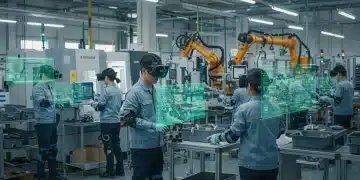
The first major AR manufacturing trend is the widespread adoption of AR-powered training modules. Imagine a new technician being able to learn how to operate a sophisticated machine by seeing digital instructions, safety warnings, and component identifications overlaid directly onto the physical equipment. This ‘learning by doing’ approach, facilitated by AR, accelerates the learning curve dramatically. Workers can practice complex procedures in a safe, simulated environment, or receive real-time guidance during actual operations, significantly reducing the likelihood of errors and increasing confidence.
Interactive, Contextualized Learning
AR training platforms offer interactive, contextualized learning experiences that far surpass static manuals or videos. For instance, an AR headset can guide a worker through the assembly of a product, highlighting each component, providing torque specifications, and even displaying a 3D model of how the finished assembly should look. This hands-on guidance ensures that workers not only understand the theory but also master the practical steps with precision. The ability to access information exactly when and where it’s needed minimizes downtime associated with searching for documentation or waiting for expert assistance.
Reduced Training Costs and Time
Beyond effectiveness, AR training offers substantial economic benefits. By reducing the need for extensive in-person instruction and minimizing material waste during the learning phase, companies can significantly cut training costs. The accelerated learning curve means new employees become productive much faster, contributing to the bottom line sooner. Furthermore, AR allows for standardized training across different shifts and locations, ensuring consistency in skill levels and operational procedures, which is critical for quality control and compliance.
Addressing the Skills Gap
The aging manufacturing workforce presents a looming crisis. AR provides a powerful tool to bridge this gap by enabling knowledge transfer from experienced personnel to new recruits more efficiently. Experts can record their procedures using AR, creating digital twins of their processes that new employees can then follow. This democratizes expertise and ensures that invaluable institutional knowledge is not lost with retirements. Companies investing in these AR manufacturing trends are actively building a more resilient and adaptable workforce for the future.
In the next six months, we expect to see a surge in manufacturers implementing AR solutions for onboarding new employees, upskilling existing staff for new technologies, and providing ongoing support for complex tasks. This proactive approach to workforce development is not just about adopting new technology; it’s about investing in human capital, making it a cornerstone of sustainable growth in the US manufacturing sector.
Trend 2: Enhanced Remote Assistance and Collaboration
The COVID-19 pandemic highlighted the critical need for robust remote work capabilities, and manufacturing, traditionally a hands-on industry, was no exception. While fully remote manufacturing remains largely unfeasible, remote assistance and collaboration have emerged as vital tools for maintaining operational continuity and addressing specialized technical challenges. This brings us to the second major AR manufacturing trend: the widespread adoption of AR for remote expert guidance and collaborative problem-solving.
Imagine a scenario where a complex machine breaks down on a remote factory floor. Historically, this would necessitate flying in a specialized technician, incurring significant travel costs and, more importantly, causing substantial downtime. With AR-powered remote assistance, this paradigm is completely transformed. An on-site technician, equipped with an AR headset, can connect instantly with an expert located anywhere in the world.
Real-time Visual Guidance
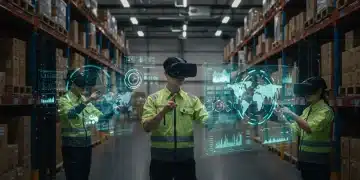
The expert can see exactly what the on-site technician sees, through the headset’s camera feed. Crucially, the expert can then overlay digital annotations, arrows, 3D models, or even live video feeds onto the technician’s view of the physical equipment. This allows for precise, step-by-step guidance, effectively putting the expert’s eyes and instructions directly into the technician’s line of sight. This real-time visual collaboration drastically reduces diagnostic and repair times, minimizes errors, and empowers less experienced technicians to perform tasks that would otherwise require highly specialized skills.
Reduced Downtime and Travel Costs
The economic benefits of AR remote assistance are substantial. By eliminating or significantly reducing the need for expert travel, companies save on flights, accommodation, and per diems. More importantly, the ability to resolve issues quickly and efficiently translates directly into reduced machine downtime, which can be incredibly costly in a production environment. This enhances overall equipment effectiveness (OEE) and contributes directly to increased output and profitability. The rapid response capabilities also improve customer satisfaction for equipment manufacturers who provide post-sales support.
Global Collaboration and Knowledge Sharing
AR remote assistance also fosters a new level of global collaboration and knowledge sharing. Experts can support multiple sites from a central location, optimizing their time and expertise. This is particularly valuable for multinational corporations or companies with geographically dispersed operations. It also facilitates the transfer of knowledge across different teams and regions, building a more connected and knowledgeable global workforce. This trend is not just about fixing problems; it’s about building a more resilient and interconnected operational network, crucial for navigating future disruptions.
Over the next six months, expect to see more manufacturers integrating AR remote assistance into their standard operating procedures for maintenance, troubleshooting, and even complex installation tasks. This will not only streamline operations but also create a more agile and responsive manufacturing ecosystem, better equipped to handle unforeseen challenges and leverage distributed expertise.
Trend 3: Data Visualization and Real-time Operational Insights
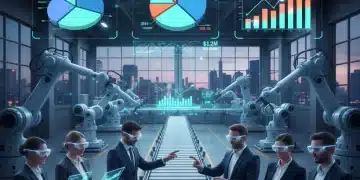
In the era of Industry 4.0, data is often referred to as the new oil. Manufacturing floors are generating vast amounts of data from sensors, machines, and production lines. However, raw data, without proper visualization and contextualization, can be overwhelming and difficult to act upon. This brings us to the third critical AR manufacturing trend: leveraging Augmented Reality for real-time data visualization and operational insights directly on the factory floor.
Traditional dashboards and monitors display data in a centralized location, often removed from the actual points of production. While valuable, this requires workers to constantly shift their attention between the physical process and a screen. AR changes this by bringing the data directly to the worker’s line of sight, overlaid onto the machinery or products they are interacting with.
Contextualized Performance Monitoring
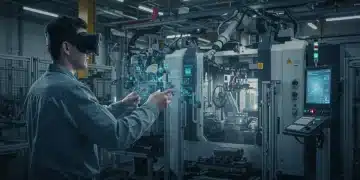
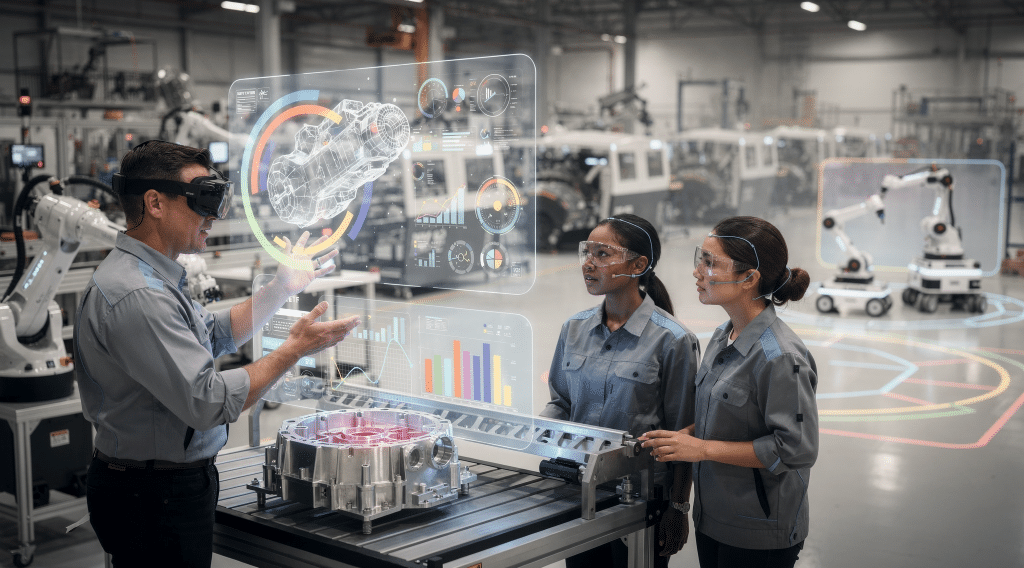
Imagine a production line worker wearing an AR headset. As they inspect a machine, they can see real-time performance metrics – temperature, pressure, output rates, energy consumption, or predictive maintenance alerts – floating above the relevant components. This contextualized data allows for immediate decision-making. If a machine’s temperature is trending upwards, the worker can see that alert instantly and take corrective action, rather than waiting for an alarm from a control room.
Quality Control and Inspection
For quality control, AR can overlay digital blueprints, tolerance specifications, or even 3D models onto a physical product. Inspectors can quickly verify dimensions, identify defects, or ensure proper component placement with unprecedented accuracy. This reduces human error, speeds up inspection processes, and ensures higher product quality. The ability to compare a physical object against its digital twin in real-time is a powerful application of AR in this domain.
Optimizing Workflow and Process Efficiency
AR can also visualize workflow instructions and process flows, guiding workers through optimal paths or highlighting bottlenecks. For example, in a complex assembly operation, AR can show the most efficient sequence of steps, highlight the next tool to use, or even indicate the optimal placement of parts from a bin. This not only streamlines individual tasks but also provides a holistic view of the production process, enabling managers to identify inefficiencies and make data-driven improvements.
Integration with IoT and AI
The power of AR in data visualization is amplified when integrated with other Industry 4.0 technologies like the Internet of Things (IoT) and Artificial Intelligence (AI). IoT sensors collect the raw data, AI algorithms analyze it for patterns and anomalies (e.g., predicting equipment failure), and AR then provides the human interface to visualize these insights in a tangible, actionable way. This synergy creates an intelligent manufacturing environment where real-time data drives proactive decision-making.
In the coming six months, expect to see a growing number of US manufacturers adopting AR solutions for real-time data visualization, moving away from static dashboards towards dynamic, contextualized insights directly on the factory floor. This shift will empower workers with more information, leading to smarter decisions, improved quality, and optimized operational efficiency. The strategic advantage of these AR manufacturing trends lies in their ability to transform data into immediate, actionable intelligence, creating a truly responsive and intelligent manufacturing environment.
The Broader Impact of AR on US Manufacturing
While the three trends discussed – enhanced workforce training, remote assistance, and real-time data visualization – represent the most impactful developments for the next six months, their collective influence extends far beyond these immediate applications. Augmented Reality is not just an incremental improvement; it’s a foundational technology that is driving a broader digital transformation within US manufacturing, leading to a more competitive, resilient, and innovative industry.
Increased Competitiveness and Innovation
By optimizing training, reducing downtime, and improving decision-making, AR directly contributes to increased productivity and efficiency. This allows US manufacturers to produce higher quality goods at a lower cost, making them more competitive in both domestic and global markets. Furthermore, the ability to rapidly prototype, test, and adapt production processes using AR fosters an environment of continuous innovation, enabling companies to bring new products to market faster and respond to changing customer demands with greater agility.
Attracting and Retaining Talent
The modernization brought about by AR also plays a crucial role in attracting a new generation of talent to manufacturing. Younger workers, accustomed to digital interfaces and immersive experiences, are more likely to be drawn to roles that leverage advanced technologies. By offering cutting-edge tools and engaging work environments, manufacturers can combat the perception of the industry as outdated and instead position it as a dynamic, technologically advanced sector. This is vital for addressing the long-term skills gap and ensuring a sustainable workforce.
Enhanced Safety and Ergonomics
Beyond the direct operational benefits, AR also has significant implications for worker safety and ergonomics. By providing clear, step-by-step instructions for complex or hazardous tasks, AR can reduce the likelihood of accidents. It can also highlight potential dangers in the environment or guide workers on optimal body positioning to prevent strain and injury. This commitment to worker well-being not only improves morale but also reduces costly workplace incidents and associated liabilities.
Supply Chain Resilience
The insights gained from real-time data visualization, combined with the flexibility offered by remote assistance, can significantly enhance supply chain resilience. Manufacturers can better monitor their production lines, anticipate potential disruptions, and rapidly deploy expertise to address issues, even across geographically dispersed facilities. This capability is becoming increasingly critical in a globalized economy prone to unpredictable events.
Challenges and Considerations for AR Adoption
While the benefits of these AR manufacturing trends are compelling, their successful implementation is not without challenges. Manufacturers considering AR adoption must address several key areas:
- Cost of Implementation: Initial investment in AR hardware (headsets, smart glasses) and software platforms can be significant. However, the ROI often justifies the expense through increased efficiency and reduced errors.
- Integration with Existing Systems: AR solutions need to seamlessly integrate with existing enterprise resource planning (ERP), manufacturing execution systems (MES), and other operational technologies. Data silos can hinder the full potential of AR.
- Workforce Acceptance and Training: While AR can accelerate training, workers may initially be resistant to new technologies. Proper change management, clear communication of benefits, and user-friendly interfaces are crucial for successful adoption.
- Data Security and Privacy: As AR systems collect and display sensitive operational data, robust cybersecurity measures are paramount to protect intellectual property and operational integrity.
- Scalability: Solutions must be scalable to meet evolving needs and adaptable to different production lines and processes within an organization.
Addressing these considerations proactively will be key for manufacturers looking to capitalize on the emerging AR manufacturing trends in the coming months and years. Strategic planning, pilot programs, and a focus on user experience are essential for a smooth transition and maximum benefit.
Conclusion: A Future Augmented by Intelligence
The next six months are set to be a pivotal period for the integration of Augmented Reality within US manufacturing. The three trends highlighted – enhanced workforce training and skill development, robust remote assistance and collaboration, and real-time data visualization for operational insights – are not merely technological novelties. They represent fundamental shifts in how manufacturers operate, train their staff, and make critical decisions.
By embracing these AR manufacturing trends, US companies can address critical challenges such as the skills gap, operational inefficiencies, and the need for greater agility. AR empowers workers, optimizes processes, and transforms raw data into actionable intelligence, paving the way for a more competitive, innovative, and resilient manufacturing sector. The future of US manufacturing is undoubtedly augmented, and those who proactively adopt these technologies will be best positioned to thrive in the evolving global industrial landscape.
The journey towards a fully digitized and intelligent factory is ongoing, but Augmented Reality is providing some of the most practical and impactful tools to accelerate this transformation. Manufacturers who recognize and act upon these trends will not only secure their near-term success but also lay a strong foundation for sustained growth and leadership in the decades to come.