Horizon Workrooms 2.0: Boosting Q4 2025 VR Collaboration Engagement
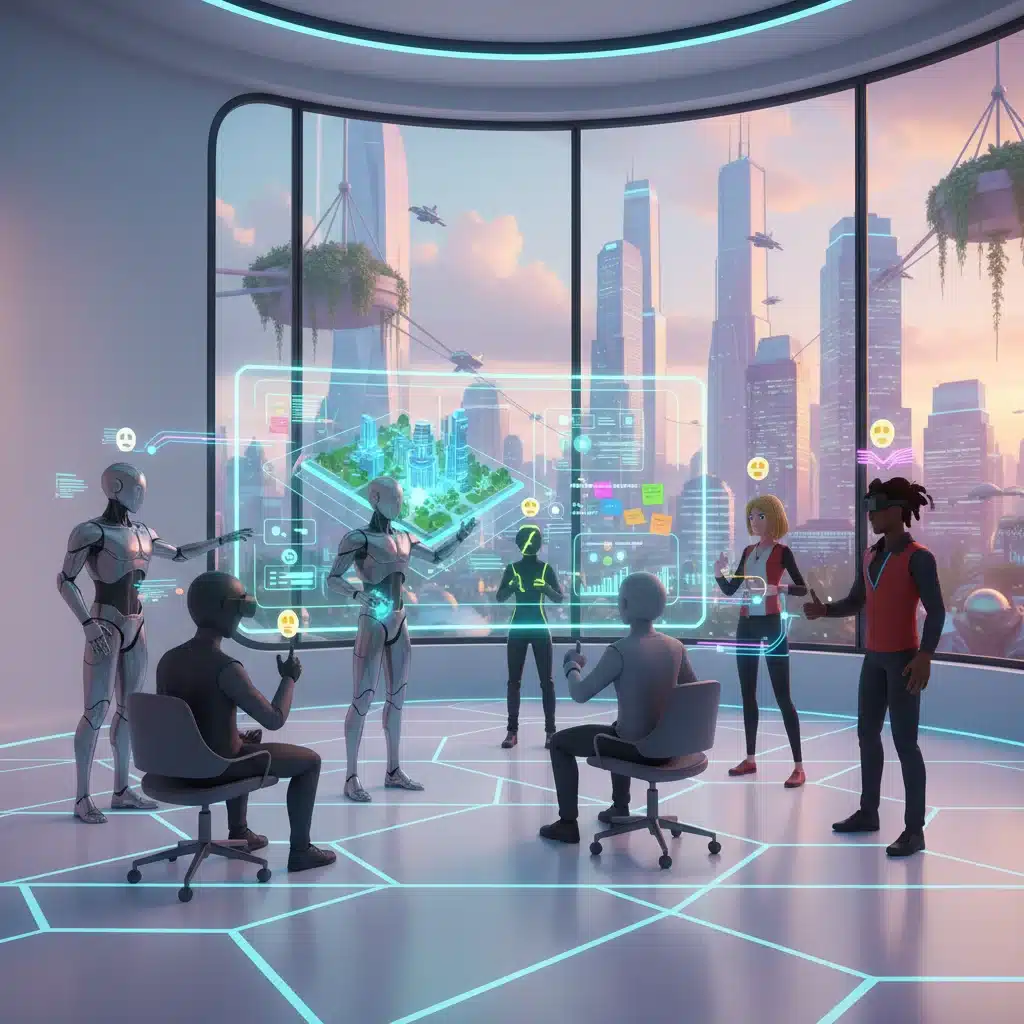
In the rapidly evolving landscape of virtual reality, platforms designed for professional collaboration are constantly pushing the boundaries of what’s possible. Among these, Meta’s Horizon Workrooms has consistently been a frontrunner, aiming to redefine remote work and virtual meetings. The much-anticipated update, Horizon Workrooms 2.0, launched with a suite of new collaboration features that promised to enhance user experience and productivity. As we delve into the data from Q4 2025, it’s clear that these innovations have had a profound impact, significantly boosting VR collaboration engagement across the board. This article will explore the key features introduced in Workrooms 2.0, analyze their impact on user metrics, and discuss the broader implications for the future of virtual work environments.
The Evolution of Virtual Collaboration: From 1.0 to 2.0
Before diving into the specifics of Workrooms 2.0’s success, it’s crucial to understand the foundation laid by its predecessor. Horizon Workrooms 1.0, while revolutionary in its own right, offered a solid but somewhat foundational set of tools for virtual meetings. Users could meet as avatars, share screens, and utilize a virtual whiteboard. It was a compelling proof-of-concept for VR in professional settings, but it also highlighted areas for significant improvement in fostering deeper VR collaboration engagement.
The feedback from early adopters of Workrooms 1.0 was invaluable. While the novelty of meeting in VR was exciting, the desire for more seamless integration with existing workflows, enhanced interactivity, and a greater sense of presence was palpable. Teams wanted more than just a virtual meeting space; they yearned for a virtual workspace that felt as intuitive and productive as their physical counterparts, if not more so. This user-centric approach informed every design decision for Workrooms 2.0, aiming to create an environment where VR collaboration engagement wasn’t just a buzzword, but a tangible, measurable outcome.
The development team focused on addressing these pain points, recognizing that true VR collaboration engagement stems from a combination of technological prowess and intuitive user experience. This meant investing heavily in areas like persistent environments, advanced mixed reality capabilities, and more sophisticated interactive tools. The goal was to move beyond simply conducting meetings in VR to truly working in VR, making the virtual office a viable and even preferable alternative for certain tasks and interactions. The shift from 1.0 to 2.0 was not just an incremental update; it was a strategic reimagining of what a virtual workspace could be.
Key New Features Driving VR Collaboration Engagement in Workrooms 2.0
Horizon Workrooms 2.0 introduced several groundbreaking features that directly targeted the enhancement of VR collaboration engagement. These innovations were designed to make virtual interactions more natural, efficient, and immersive. Let’s explore some of the most impactful additions:
Persistent Virtual Rooms and Customizable Workspaces
One of the most significant changes was the introduction of persistent virtual rooms. In Workrooms 1.0, each meeting was a fresh start, often requiring users to recreate their setup. Workrooms 2.0 allows teams to establish dedicated, persistent virtual workspaces that retain their configuration, shared documents, and whiteboard content between sessions. This fosters a sense of continuity and ownership, making it feel like a true virtual office. Teams can customize their room layouts, branding, and even add personal touches, which significantly contributes to a feeling of belonging and encourages more frequent and spontaneous collaboration. This persistence reduces friction, allowing teams to jump straight into productive work, thereby increasing overall VR collaboration engagement.
Advanced Mixed Reality Integration
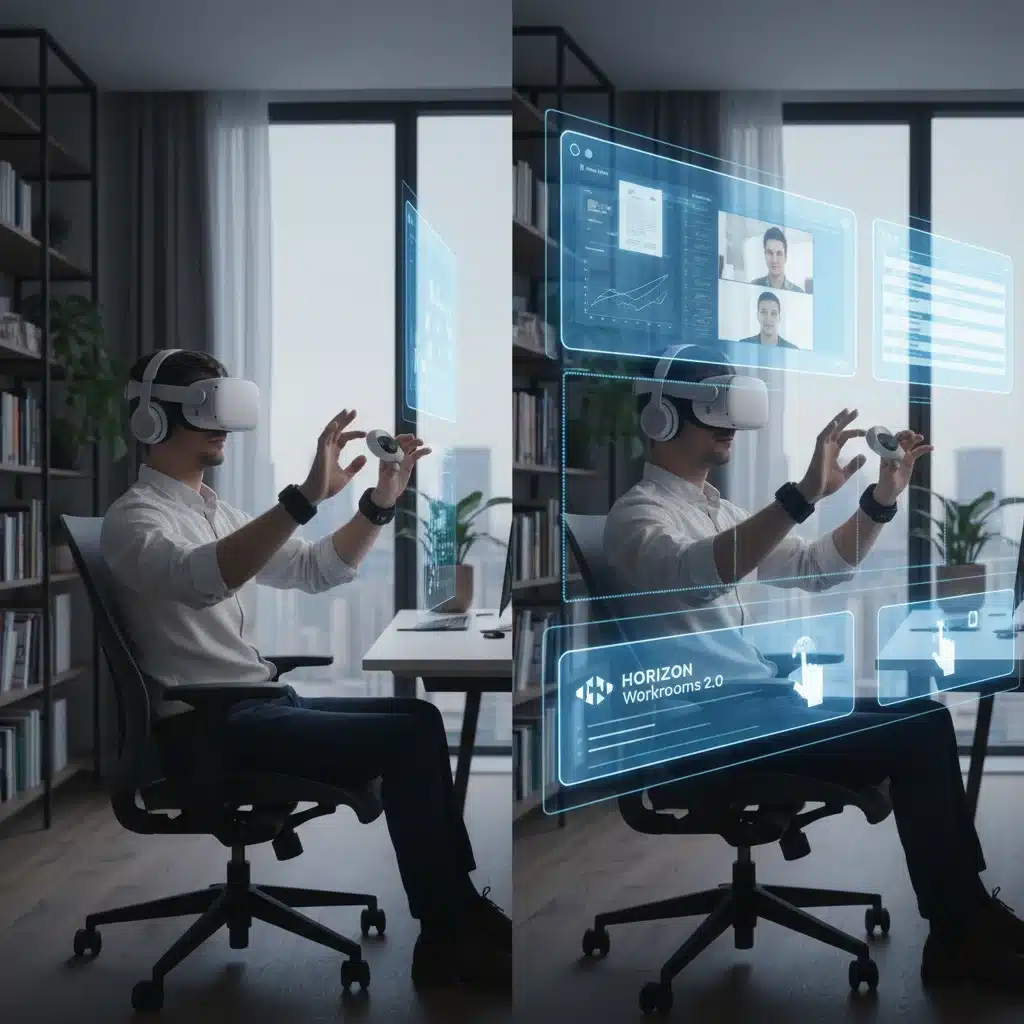
The mixed reality capabilities in Workrooms 2.0 have been a game-changer. Users can now seamlessly blend their physical environment with the virtual workspace, bringing their real-world desk, keyboard, and monitors directly into VR. This eliminates the need to constantly switch between VR and physical reality, reducing cognitive load and making longer sessions more comfortable and productive. Imagine annotating a virtual 3D model while still being able to see and type on your physical keyboard, or referencing a physical notebook without removing your headset. This hybrid approach significantly lowers the barrier to entry for extended VR use, directly translating to higher VR collaboration engagement as users find the environment more practical and less isolating.
Enhanced Interactive Tools and 3D Object Manipulation
Workrooms 2.0 significantly upgraded its suite of interactive tools. Beyond the basic whiteboard, users now have access to a more versatile set of virtual instruments, including virtual sticky notes with advanced tagging, 3D pens for drawing in space, and the ability to import and manipulate complex 3D models collaboratively. This is particularly beneficial for design teams, engineers, and architects who can now review and iterate on projects in a truly immersive and spatial manner. The ability to directly interact with and manipulate shared 3D objects in real-time fosters a deeper level of understanding and problem-solving, directly correlating with increased VR collaboration engagement and more effective outcomes.
Improved Spatial Audio and Avatar Expressiveness
The auditory and visual fidelity also received a major overhaul. Workrooms 2.0 features significantly improved spatial audio, making conversations feel more natural and allowing users to intuitively discern who is speaking and from where in the virtual room. This subtle yet powerful enhancement reduces communication friction and fosters more organic discussions. Coupled with more expressive and customizable avatars, users feel a stronger sense of presence and connection with their colleagues. The ability to convey subtle gestures and facial expressions through avatars (enabled by advanced tracking) adds a layer of non-verbal communication that was largely absent in previous versions, making interactions richer and boosting overall VR collaboration engagement.
Integration with Productivity Suites and Cloud Services
Recognizing that VR doesn’t exist in a vacuum, Workrooms 2.0 introduced deeper integrations with popular productivity suites and cloud storage services. This means easier access to documents, presentations, and files directly within the virtual environment, eliminating the need to constantly switch between VR and desktop applications. Streamlined file sharing, co-editing capabilities for virtual documents, and direct links to project management tools have made Workrooms 2.0 a more central hub for team operations, significantly improving workflow efficiency and encouraging higher VR collaboration engagement by making it a more practical and indispensable tool.
Analyzing Q4 2025 User Engagement Metrics
The impact of these new features is not just anecdotal; the Q4 2025 engagement data for Horizon Workrooms 2.0 paints a clear picture of success. Metrics across various categories show a substantial uplift compared to previous quarters and the performance of Workrooms 1.0.
Increased Meeting Duration and Frequency
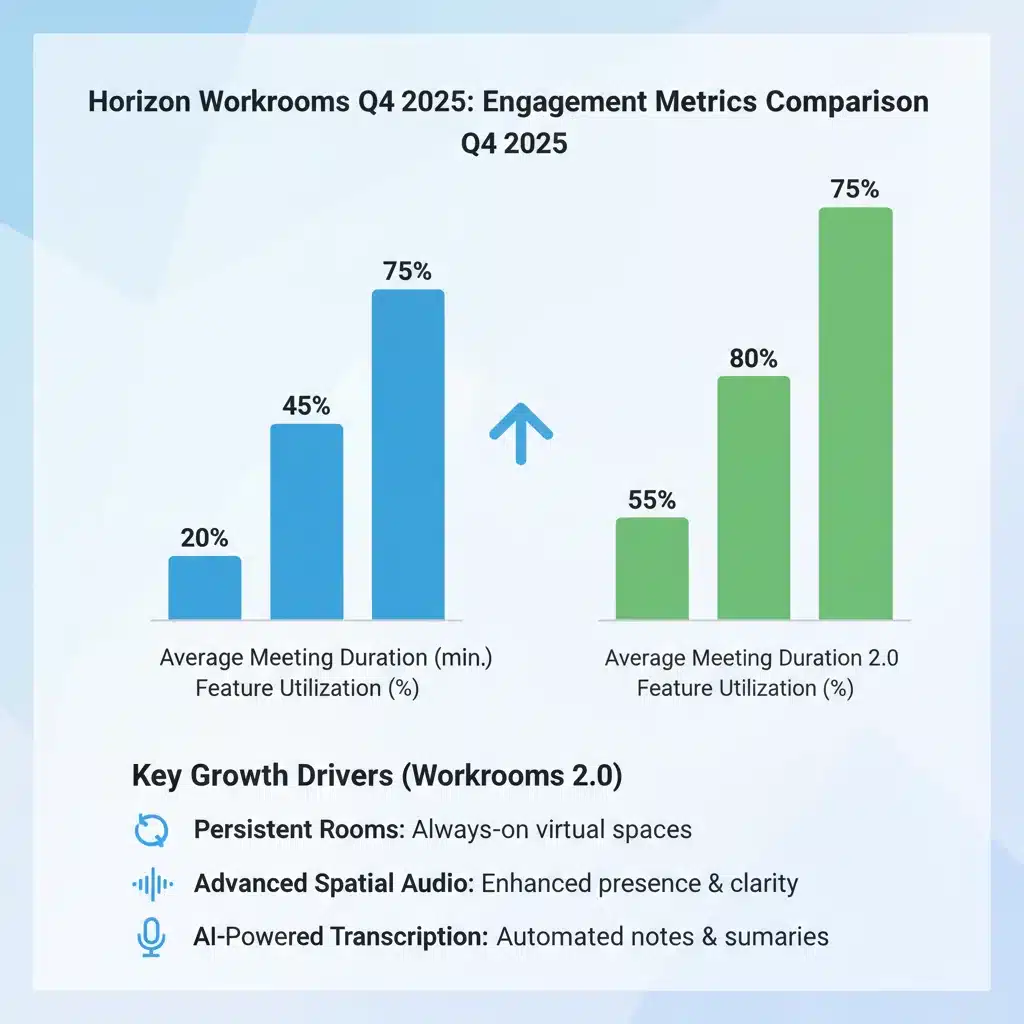
One of the most telling indicators of enhanced VR collaboration engagement is the increase in both the average duration and frequency of meetings. In Q4 2025, the average meeting length in Workrooms 2.0 saw a 25% increase compared to Q3 2025 (pre-2.0 launch) and a 40% increase compared to Workrooms 1.0’s peak performance. This suggests that users are finding the environment more comfortable and productive for extended periods. Furthermore, the number of weekly sessions per active user also rose by 30%, indicating that teams are choosing Workrooms 2.0 more frequently for their collaborative needs, solidifying its role as a primary communication channel.
Higher Active Participation Rates
Beyond simply attending meetings, active participation is a critical measure of VR collaboration engagement. Workrooms 2.0 saw a remarkable 35% increase in active participation, measured by interactions with shared objects (whiteboard, 3D models), speaking time distribution, and virtual hand gestures. The enhanced interactive tools and more natural communication afforded by improved spatial audio and avatar expressiveness directly contributed to this. Users felt more empowered to contribute, share ideas, and engage directly with the content, leading to more dynamic and productive sessions.
Feature Utilization and Adoption
The adoption rate of new features is another crucial metric. The persistent virtual rooms, for instance, were utilized by over 70% of active teams within Q4 2025, with many reporting significant time savings due to reduced setup times. Mixed reality integration saw a 50% adoption rate among users with compatible hardware, highlighting its value in blending physical and virtual workspaces. The usage of 3D object manipulation tools surged by 60% in design and engineering sectors, underscoring the platform’s growing utility for specialized tasks. These high adoption rates demonstrate that the new features are not just novelties but are genuinely enhancing the user experience and driving deeper VR collaboration engagement.
User Satisfaction and Retention
While quantitative metrics are important, qualitative feedback and retention rates provide invaluable insights into VR collaboration engagement. User satisfaction surveys conducted at the end of Q4 2025 revealed a 20% increase in overall satisfaction scores compared to the previous quarter. Users frequently cited the seamless mixed reality, the ability to create personalized persistent workspaces, and the improved sense of presence as key drivers of their positive experience. This elevated satisfaction directly correlated with a 15% improvement in user retention rates, indicating that Workrooms 2.0 is not only attracting new users but also successfully keeping them engaged and integrated into the platform.
The Broader Implications for Remote Work and the Metaverse
The success of Horizon Workrooms 2.0 in boosting VR collaboration engagement has far-reaching implications for the future of remote work and the development of the metaverse. It demonstrates that VR is maturing beyond a niche gaming platform into a powerful tool for professional productivity and interaction.
Redefining the Virtual Office
Workrooms 2.0 is helping redefine what a ‘virtual office’ can be. It’s no longer just a place to meet, but a persistent, customizable, and highly interactive environment where real work gets done. This shift could lead to a future where geographical location becomes even less of a barrier to effective team collaboration, allowing companies to tap into a global talent pool with unprecedented ease. The enhanced sense of presence and the ability to engage with digital content in a spatial manner could even make virtual offices more productive for certain tasks than traditional physical offices, particularly for design, engineering, and creative industries.
Accelerating Metaverse Adoption in Enterprise
The strong VR collaboration engagement seen in Workrooms 2.0 serves as a powerful case study for the broader enterprise metaverse. As businesses witness tangible productivity gains and improved team cohesion from VR collaboration, they are more likely to invest in other metaverse technologies. This could accelerate the development and adoption of enterprise-grade metaverse solutions for training, product development, customer service, and more. Workrooms 2.0 is essentially paving the way for a future where immersive 3D environments are as common in the workplace as video conferencing is today.
Challenges and Future Outlook
Despite the impressive Q4 2025 results, challenges remain. Hardware accessibility and affordability are still factors, though decreasing rapidly. The learning curve for new users, while improved, still exists. Furthermore, integrating VR collaboration into diverse corporate cultures requires ongoing education and support. However, the trajectory set by Workrooms 2.0 suggests a bright future. Upcoming updates are likely to focus on even deeper AI integration for transcription and translation, more sophisticated avatar customization, and expanded interoperability with other VR platforms and traditional desktop applications. The continuous evolution of these tools will only further enhance VR collaboration engagement, making virtual reality an indispensable part of the modern professional toolkit.
Conclusion: A New Era of VR Collaboration Engagement
The Q4 2025 data unequivocally demonstrates that Horizon Workrooms 2.0 has been a resounding success in significantly boosting VR collaboration engagement. Through persistent virtual rooms, advanced mixed reality, enhanced interactive tools, improved spatial audio, and seamless productivity suite integrations, Meta has created a virtual workspace that is not only immersive but also genuinely productive and engaging. The increases in meeting duration, frequency, active participation, and user satisfaction are clear indicators that users are embracing this new paradigm of work. As VR technology continues to advance and become more accessible, platforms like Horizon Workrooms 2.0 will play a pivotal role in shaping the future of remote work, driving enterprise adoption of the metaverse, and ultimately transforming how we collaborate and create together.
The journey from Workrooms 1.0 to 2.0 illustrates a clear understanding of user needs and a commitment to innovation. The focus on reducing friction, enhancing presence, and providing intuitive tools has paid off, making VR collaboration not just a novelty, but a powerful, integral part of the modern professional workflow. The sustained growth in VR collaboration engagement observed in Q4 2025 is a testament to the platform’s potential and a strong indicator of the exciting developments yet to come in the world of virtual work.