AR Retail Transformation: 4 Key Trends for US Retailers by 2026
The Future is Now: How AR is Transforming US Retail Experiences: A Look at 4 Key Trends for 2026
The retail landscape in the United States is in a constant state of flux, driven by technological advancements and evolving consumer expectations. Among the myriad innovations reshaping how we shop, Augmented Reality (AR) stands out as a particularly powerful force. Far from being a mere gimmick, AR is proving to be a transformative technology, offering unprecedented opportunities for retailers to engage customers, streamline operations, and drive sales. By 2026, the influence of AR will be deeply embedded in the fabric of US retail, creating more immersive, personalized, and efficient shopping journeys. This comprehensive article will delve into the critical role of AR retail transformation, exploring four key trends that are set to redefine the retail experience across the nation.
The journey towards an AR-centric retail future is not a distant dream; it’s a rapidly unfolding reality. From virtual try-ons to enhanced in-store navigation, AR is bridging the gap between the physical and digital worlds, offering consumers richer, more informed, and ultimately more satisfying interactions with brands and products. For US retailers, understanding and strategically implementing these AR trends will be paramount to maintaining competitiveness and fostering lasting customer loyalty in an increasingly digital-first marketplace.
Understanding the Power of Augmented Reality in Retail
Before we dive into the specific trends, it’s crucial to grasp why AR holds such immense potential for the retail sector. Unlike Virtual Reality (VR), which creates entirely immersive, artificial environments, AR overlays digital information onto the real world. This capability allows consumers to interact with virtual objects in their actual surroundings, providing context-rich experiences that are both practical and engaging. In retail, this translates to a multitude of applications, from visualizing furniture in one’s living room before purchase to trying on clothes virtually without stepping into a fitting room.
The core advantage of AR lies in its ability to reduce friction in the buying process. It empowers consumers with more information, greater confidence in their purchasing decisions, and a sense of personalization that traditional retail often struggles to deliver. For retailers, this means not only increased sales and reduced returns but also a unique opportunity to build stronger brand connections through innovative and memorable experiences. The AR retail transformation isn’t just about technology; it’s about fundamentally rethinking how customers interact with products and brands.
Moreover, AR is becoming increasingly accessible. With the widespread adoption of smartphones and the continuous development of more sophisticated AR hardware, the barrier to entry for both consumers and businesses is steadily decreasing. This democratized access is a key driver behind the projected growth and pervasive integration of AR into retail operations by 2026. The next few years will witness a significant acceleration in AR adoption, making it an indispensable tool for forward-thinking US retailers.
Trend 1: Hyper-Personalized Virtual Try-On and Product Visualization
One of the most impactful applications of AR in retail is its ability to facilitate hyper-personalized virtual try-on and product visualization. This trend is already gaining significant traction and is set to become a standard expectation for consumers by 2026. Imagine being able to try on a new pair of glasses, a watch, or even a full outfit from the comfort of your home, seeing exactly how it looks on your own face or body, with realistic sizing and fit. This is the promise of AR-powered virtual try-on.
Redefining the Shopping Journey
For apparel and accessories retailers, virtual try-on significantly mitigates one of the biggest challenges of online shopping: the inability to physically interact with products. Customers can use their smartphone cameras to overlay digital garments onto their live video feed, allowing them to see how different styles, colors, and sizes appear on them. This not only enhances the online shopping experience but also builds confidence, leading to higher conversion rates and fewer returns.
Beyond fashion, this trend extends to furniture and home decor. AR apps allow consumers to place virtual 3D models of sofas, tables, or lamps within their actual living spaces. They can walk around the virtual object, view it from different angles, and even change its color or material, ensuring it perfectly fits their decor and dimensions before making a purchase. This eliminates guesswork and provides a powerful visualization tool that traditional online catalogs simply cannot match.
Impact on Consumer Behavior and Retailer Benefits
The benefits of hyper-personalized virtual try-on are multi-faceted. For consumers, it offers unparalleled convenience, reduces decision fatigue, and provides a highly engaging and interactive shopping experience. For retailers, the advantages are even more compelling:
- Reduced Returns: Customers are more likely to be satisfied with their purchases when they have a realistic preview, leading to a significant decrease in product returns, a major cost for online retailers.
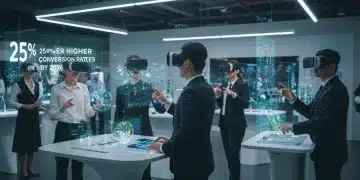
- Increased Conversion Rates: The enhanced confidence and engagement translate directly into higher sales conversions.
- Enhanced Brand Loyalty: Offering innovative and convenient shopping tools fosters a positive brand image and encourages repeat business.
- Data Insights: Interactions with virtual try-on tools can provide valuable data on customer preferences, popular styles, and sizing trends, informing future product development and marketing strategies.
By 2026, retailers who have not embraced robust virtual try-on and product visualization solutions will find themselves at a significant disadvantage. This trend is central to the AR retail transformation, moving beyond basic product images to truly immersive pre-purchase experiences.

Trend 2: Immersive In-Store Navigation and Experiential Shopping
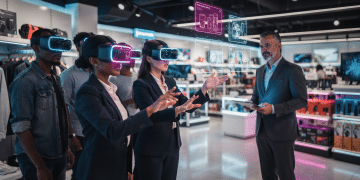
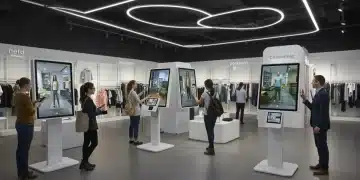
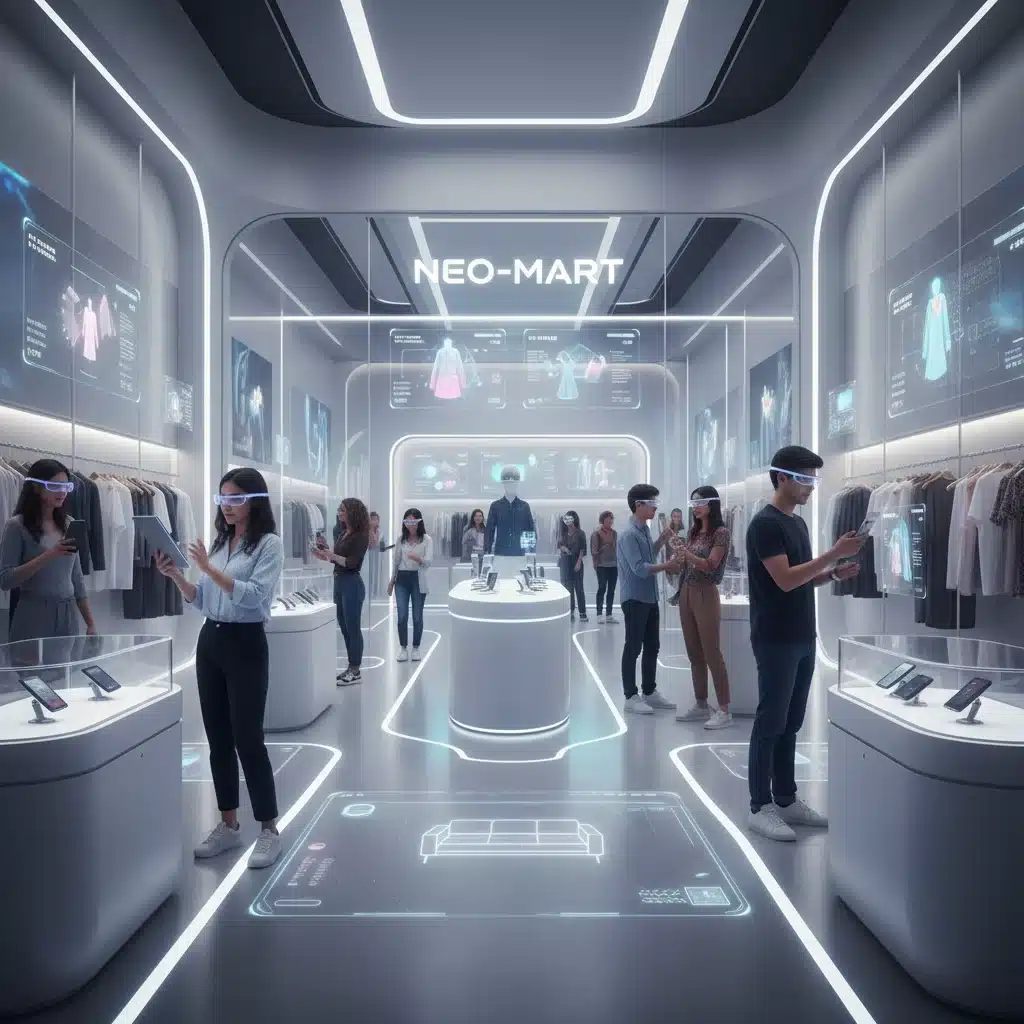
While often associated with online retail, AR is also revolutionizing the physical store experience. By 2026, brick-and-mortar stores will leverage AR to offer immersive navigation, interactive product information, and engaging experiential shopping opportunities that blend the best of digital convenience with the tangibility of physical retail.
Smart Stores and Enhanced Discovery
Imagine walking into a large department store and using your smartphone to activate an AR overlay that guides you directly to the product you’re looking for, highlighting the shortest path and even suggesting complementary items along the way. This is the essence of AR-powered in-store navigation. Beyond simple directions, AR can provide rich, contextual information about products as you browse. Point your phone at a new gadget, and an AR overlay can display specifications, customer reviews, instructional videos, or even comparisons with similar products, all without needing to find a sales associate.
This capability transforms the shopping journey from a potentially frustrating search into an efficient and informative discovery process. It empowers customers to find what they need quickly while also exposing them to additional relevant products they might not have otherwise considered. For stores with complex layouts or extensive inventories, AR navigation becomes an invaluable tool.
Experiential Retail: Beyond the Transaction
The AR retail transformation in physical stores isn’t just about utility; it’s about creating memorable experiences. Retailers are increasingly using AR to build interactive displays and engaging narratives around their products. For example, a sports brand might offer an AR experience where customers can see their favorite athlete virtually demonstrate a product, or a beauty brand might allow customers to virtually experiment with different makeup looks using an AR mirror.
These experiences transform shopping from a transactional activity into an entertainment and engagement opportunity. They encourage customers to spend more time in the store, interact more deeply with products, and ultimately strengthen their emotional connection with the brand. By providing unique, shareable moments, AR helps brick-and-mortar stores differentiate themselves in an era dominated by e-commerce.
Benefits for Physical Retailers
- Improved Customer Satisfaction: Easier navigation and access to information reduce frustration and enhance the overall shopping experience.
- Increased Dwell Time: Engaging AR experiences encourage customers to stay longer in the store.
- Higher Sales: Contextual product information and personalized recommendations can drive impulse purchases and upsells.
- Brand Differentiation: Innovative AR implementations create unique selling propositions and a modern brand image.
- Operational Efficiency: For staff, AR can assist with inventory checks, planogram compliance, and visual merchandising, making store operations smoother.
Trend 3: Enhanced Supply Chain and Operational Efficiency with AR
The impact of AR extends far beyond the customer-facing aspects of retail. By 2026, US retailers will increasingly leverage AR to optimize their supply chain, warehouse operations, and in-store logistics, leading to significant gains in efficiency, accuracy, and cost reduction. This internal AR retail transformation is less visible to the consumer but is equally vital for a retailer’s success.
Warehouse and Inventory Management
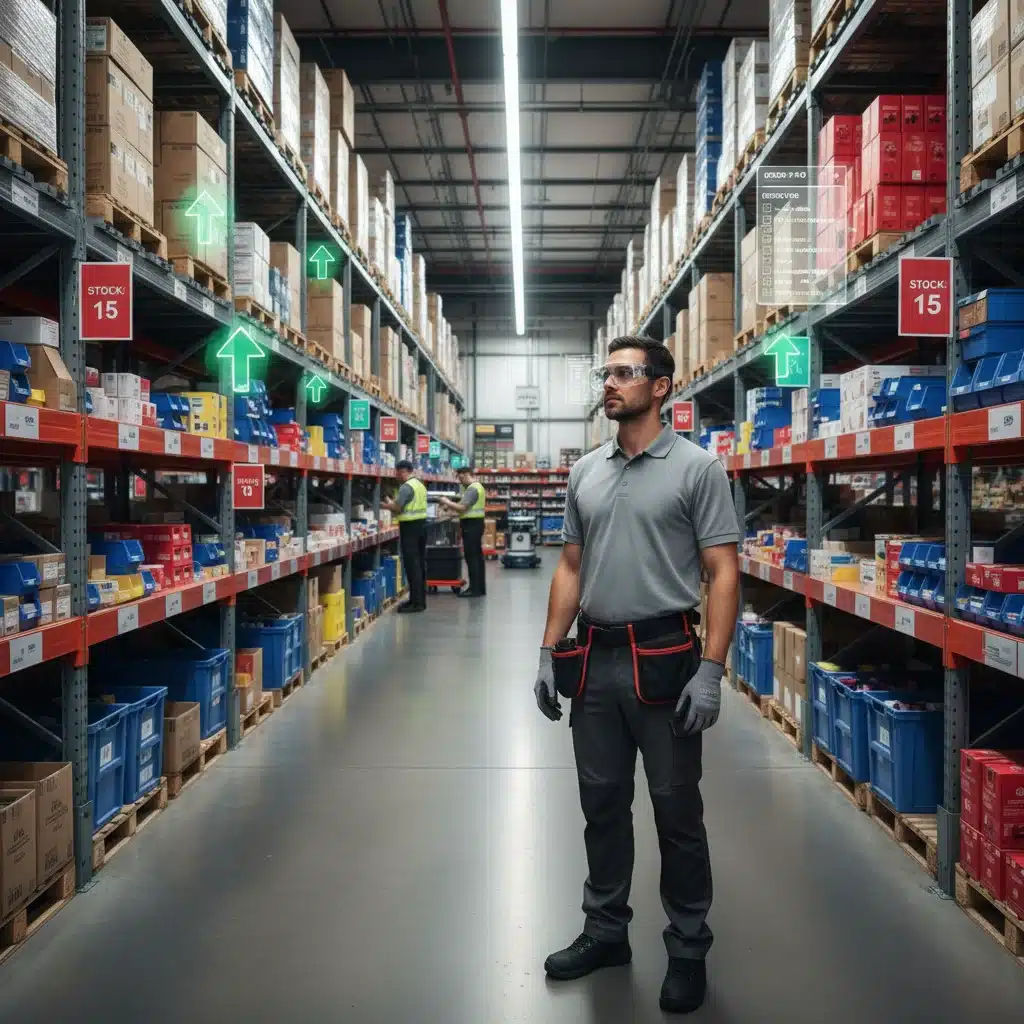
In large warehouses and distribution centers, AR smart glasses are becoming game-changers. Workers wearing these devices can see digital overlays of picking instructions, product locations, and optimal routes directly in their field of vision. This hands-free guidance drastically reduces errors, speeds up the picking process, and minimizes training time for new employees. Imagine a warehouse worker being directed by arrows overlaid on the floor, indicating the exact shelf and bin for the next item to be picked, along with a visual confirmation of the product itself.
AR also facilitates more accurate inventory management. By scanning products with AR-enabled devices, employees can quickly update stock levels, identify misplaced items, and conduct audits with greater precision. This real-time data visibility improves forecasting, reduces stockouts, and optimizes storage space utilization.
In-Store Operations and Visual Merchandising
Within the retail store itself, AR can empower staff to perform tasks more efficiently. For example, during restocking, AR can highlight exactly where new products should be placed on shelves according to the latest planograms, ensuring consistent visual merchandising across all locations. This reduces manual errors and ensures that product displays are always optimized for sales.
Furthermore, AR can be used for rapid employee training. New hires can be guided through complex tasks, such as operating specialized equipment or assembling displays, with step-by-step AR instructions overlaid onto their real-world view. This accelerated learning process reduces the burden on experienced staff and gets new employees up to speed faster.
Key Operational Benefits
- Increased Accuracy: Reduced human error in picking, packing, and stocking.
- Faster Fulfillment: Streamlined processes lead to quicker order processing and delivery.
- Reduced Costs: Lower error rates mean fewer returns, less wasted product, and optimized labor allocation.
- Improved Worker Safety: Hands-free operation can enhance safety in certain warehouse environments.
- Enhanced Training: Faster and more effective onboarding for new employees.
The operational efficiency gains from AR are substantial, making it an indispensable tool for any US retailer looking to optimize their back-end processes by 2026. This focus on internal applications underscores the holistic nature of the AR retail transformation.
Trend 4: Seamless Integration of AR Across Omnichannel Retail Strategies
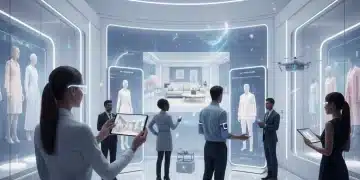
The modern consumer expects a seamless and consistent experience whether they are shopping online, in-store, or via mobile. By 2026, AR will be a crucial component in achieving this omnichannel harmony, acting as a connective tissue between various retail touchpoints. The AR retail transformation is fundamentally about creating a unified brand experience, and AR is uniquely positioned to facilitate this.
Bridging Online and Offline
AR excels at blurring the lines between digital and physical retail. For example, a customer might discover a product online, use an AR app to visualize it in their home, and then visit a physical store to see a similar item or complete the purchase. Conversely, while in a physical store, they might use AR to access extended product information or customer reviews that are typically found online.
This integration enhances both channels. Online shopping becomes more tangible and confident, while in-store experiences become more informative and personalized. AR can drive traffic to physical stores by offering unique in-store AR experiences or provide a compelling reason for online shoppers to convert by giving them a ‘real-world’ preview.
Personalized Marketing and Engagement
AR offers innovative avenues for personalized marketing. Imagine receiving a catalog or an email with an AR component that brings products to life on your coffee table. Or consider AR-enabled advertisements in public spaces that allow immediate interaction with a product or brand, perhaps even leading to a direct purchase link.
The data collected from AR interactions can also feed into a retailer’s broader CRM system, allowing for even more targeted and personalized marketing efforts. Understanding what products customers virtually try on or interact with can inform future recommendations and promotions, creating a truly tailored shopping journey across all platforms.
The Rise of AR-Enabled Social Commerce
Social media platforms are increasingly integrating AR filters and features. By 2026, retailers will heavily leverage these capabilities for social commerce. Customers can virtually try on products through AR filters on Instagram or Snapchat, share their experiences with friends, and even make direct purchases within the app. This taps into the power of social proof and peer recommendations, driving organic engagement and sales.
Key Aspects of Omnichannel Integration
- Consistent Brand Experience: AR ensures that the brand voice and product presentation are coherent across all customer touchpoints.
- Data Synergy: Insights from AR interactions enrich customer profiles, enabling better personalization across all channels.
- Enhanced Customer Journey: AR provides tools that guide customers smoothly from discovery to purchase, regardless of the channel.
- New Marketing Opportunities: Interactive AR content creates novel ways to engage and convert customers through digital and physical campaigns.
- Increased Sales & Loyalty: A frictionless and engaging omnichannel experience fosters customer satisfaction and repeat business.
The seamless integration of AR into omnichannel strategies will be a defining characteristic of leading US retailers by 2026, solidifying its role in the comprehensive AR retail transformation.
Challenges and Considerations for AR Adoption
While the benefits of AR in retail are clear, its widespread adoption is not without challenges. Retailers must consider several factors to ensure a successful AR retail transformation:
- Technology Investment: Developing and implementing robust AR solutions requires significant upfront investment in technology, talent, and infrastructure.
- Content Creation: Creating high-quality 3D models of products for AR applications can be complex and costly.
- User Experience Design: Poorly designed AR experiences can be frustrating and deter users. Intuitive and seamless interfaces are crucial.
- Data Privacy: As AR collects more data about user environments and interactions, ensuring data privacy and security will be paramount.
- Hardware Accessibility: While smartphones are ubiquitous, the full potential of AR might require dedicated AR glasses, which are not yet mainstream. Retailers need to design experiences that work across various devices.
- Integration with Existing Systems: AR solutions must seamlessly integrate with existing e-commerce platforms, inventory management systems, and CRM tools to provide a truly unified experience.
Addressing these challenges requires a strategic approach, often involving partnerships with specialized AR development firms and a phased implementation plan. Retailers must view AR not as a standalone technology but as an integral part of their broader digital strategy.
The Road Ahead: Preparing for the AR-Powered Retail Future
The trends outlined above paint a clear picture: Augmented Reality is not just an add-on but a fundamental driver of change in US retail. By 2026, retailers who have successfully navigated the AR retail transformation will be those who have invested in understanding its capabilities, embraced its potential, and strategically integrated it into every facet of their operations – from customer-facing interactions to back-end logistics.
For retailers looking to stay ahead, the time to act is now. This involves:
- Experimenting with Pilot Programs: Start small with specific AR applications to test their effectiveness and gather user feedback.
- Investing in Talent: Build or acquire teams with expertise in AR development, 3D modeling, and UX design.
- Prioritizing Data-Driven Decisions: Use insights from AR interactions to refine strategies and personalize customer experiences.
- Fostering an Innovation Culture: Encourage continuous exploration of new AR applications and technologies.
- Focusing on Seamless Integration: Ensure AR solutions enhance, rather than disrupt, existing omnichannel strategies.
The future of US retail is interactive, personalized, and augmented. By embracing these four key trends, retailers can not only meet but exceed the evolving expectations of consumers, securing their place in the next generation of commerce. The AR retail transformation is an exciting journey, promising a more engaging and efficient shopping experience for everyone involved.