Unlocking the Future of Workforce Development: How VR Training Can Reduce Employee Training Time by 30% by 2026
In the rapidly evolving landscape of the 21st-century workforce, businesses across the United States are grappling with the dual challenges of upskilling their employees efficiently and cost-effectively. Traditional training methods, while foundational, often fall short in delivering the immersive, engaging, and scalable experiences required to meet modern demands. Enter Virtual Reality (VR) training – a transformative technology poised to revolutionize how companies approach employee development. This comprehensive guide explores how U.S. businesses can leverage immersive VR modules to achieve a remarkable 30% reduction in employee training time by 2026, detailing the profound financial impact and strategic advantages of this innovative approach. Understanding the true VR training ROI is no longer optional; it’s a competitive imperative.
The Current State of Employee Training: Challenges and Opportunities
Before diving into the specifics of VR, it’s crucial to understand the current training ecosystem. Many organizations face common hurdles:
- Time Consumption: Traditional classroom-based training, on-the-job shadowing, and lengthy manual reviews consume significant employee and trainer time, leading to productivity dips.
- High Costs: Travel expenses, venue rentals, instructor fees, and material production contribute to substantial training budgets.
- Inconsistent Quality: Training effectiveness can vary widely depending on the instructor, location, and resources available, leading to uneven skill development across the workforce.
- Lack of Engagement: Passive learning environments often result in low retention rates and disengaged learners, diminishing the overall impact of training programs.
- Safety Risks: For industries involving hazardous materials or complex machinery, hands-on training can pose significant safety risks and require expensive specialized equipment.
These challenges highlight a pressing need for more efficient, engaging, and scalable training solutions. The opportunity lies in embracing technologies that can directly address these pain points, and VR training stands out as a leading contender for maximizing VR training ROI.
What is VR Training and Why is it a Game-Changer?
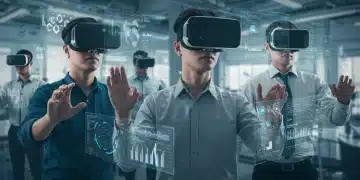
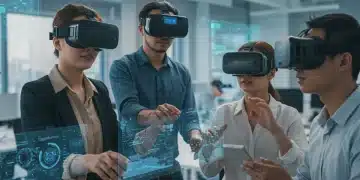
Virtual Reality training utilizes simulated environments to replicate real-world scenarios, allowing employees to practice skills, make decisions, and experience consequences in a safe, controlled, and immersive setting. Unlike traditional methods, VR offers:
- Immersive Learning: Users are fully immersed in the virtual environment, minimizing distractions and enhancing focus. This leads to deeper understanding and better knowledge retention.
- Experiential Learning: Employees learn by doing, not just by listening or reading. This hands-on approach is particularly effective for complex procedural tasks, customer service simulations, or hazardous operations.
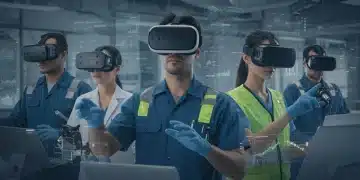
- Safe Practice: High-risk scenarios, such as operating heavy machinery, performing delicate surgical procedures, or responding to emergency situations, can be practiced repeatedly without actual danger or cost.
- Personalized Learning Paths: VR modules can adapt to individual learning paces and styles, providing tailored feedback and progression based on performance.
- Scalability and Consistency: Once developed, VR modules can be deployed to any number of employees across different locations, ensuring a consistent, high-quality training experience every time. This scalability directly contributes to a higher VR training ROI.
The 30% Training Time Reduction: How VR Makes it Possible
Achieving a 30% reduction in employee training time by 2026 with VR is not an ambitious dream; it’s a quantifiable goal grounded in the technology’s inherent advantages. Here’s how VR contributes to significant time savings:
Accelerated Skill Acquisition
VR’s immersive nature allows learners to absorb information and master skills much faster than in traditional settings. The ability to practice repeatedly in a risk-free environment, receive immediate feedback, and experience realistic scenarios compresses the learning curve. For instance, a complex assembly line procedure that might take weeks to learn through on-the-job shadowing can be simulated and mastered in days or even hours in VR.
Reduced Need for Physical Resources and Travel
A significant portion of training time is often spent on logistics – coordinating schedules, arranging travel, setting up physical training environments, and waiting for equipment availability. VR eliminates or drastically reduces these logistical overheads. Employees can access training modules from anywhere, at any time, cutting down travel time and the downtime associated with physical training setups. This directly impacts the overall time spent on training programs and enhances VR training ROI.
Enhanced Knowledge Retention
Studies consistently show that experiential learning leads to higher knowledge retention rates. When employees actively participate and apply what they learn in a VR simulation, they are more likely to remember and correctly apply that knowledge in real-world situations. This means less time spent on re-training or refreshing forgotten information, further contributing to overall time savings.
Efficient Feedback Loops
VR training platforms can provide instant, objective feedback on a learner’s performance. This immediate corrective action allows employees to identify and rectify mistakes on the spot, preventing the reinforcement of incorrect practices. In traditional settings, feedback might be delayed, less precise, or require significant trainer intervention, all of which consume more time.
Pre-Onboarding and Continuous Learning
VR can be integrated into pre-onboarding processes, allowing new hires to familiarize themselves with company procedures, safety protocols, and even office layouts before their first day. This significantly reduces the initial ramp-up time. Furthermore, VR modules can serve as readily available continuous learning tools, enabling employees to refresh skills or learn new ones as needed, without disrupting daily operations for extensive training sessions. This flexibility is a key driver for improving VR training ROI.
The Financial Impact: Quantifying the VR Training ROI
The reduction in training time directly translates into substantial financial benefits. Calculating the VR training ROI involves considering several factors:
1. Reduced Training Costs
- Lower Travel and Accommodation Expenses: Eliminating the need for employees to travel to central training facilities.
- Decreased Instructor Costs: While initial development costs exist, the long-term cost per learner decreases significantly as VR modules can be reused infinitely without additional instructor fees.
- Reduced Material Waste: No need for printed manuals or physical prototypes that can be damaged or become obsolete.
- Minimized Equipment Wear and Tear: Training on virtual machinery prevents damage to expensive physical assets.
2. Increased Productivity and Efficiency
- Faster Time-to-Proficiency: Employees become productive members of the team sooner, contributing to revenue generation more quickly.
- Reduced Errors and Rework: Better-trained employees make fewer mistakes, leading to less waste, fewer customer complaints, and reduced rework costs.
- Improved Employee Retention: Engaging and effective training can lead to higher job satisfaction and lower turnover rates, reducing recruitment and re-training costs.
3. Enhanced Safety and Compliance
- Fewer Accidents: Training for hazardous tasks in VR drastically reduces the risk of workplace accidents, leading to fewer injury-related costs, insurance claims, and lost workdays.
- Better Compliance: VR can ensure consistent adherence to regulatory standards and safety protocols, reducing the risk of fines and legal liabilities.
Example Scenario: A Manufacturing Company
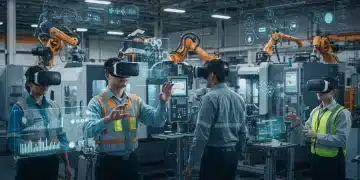
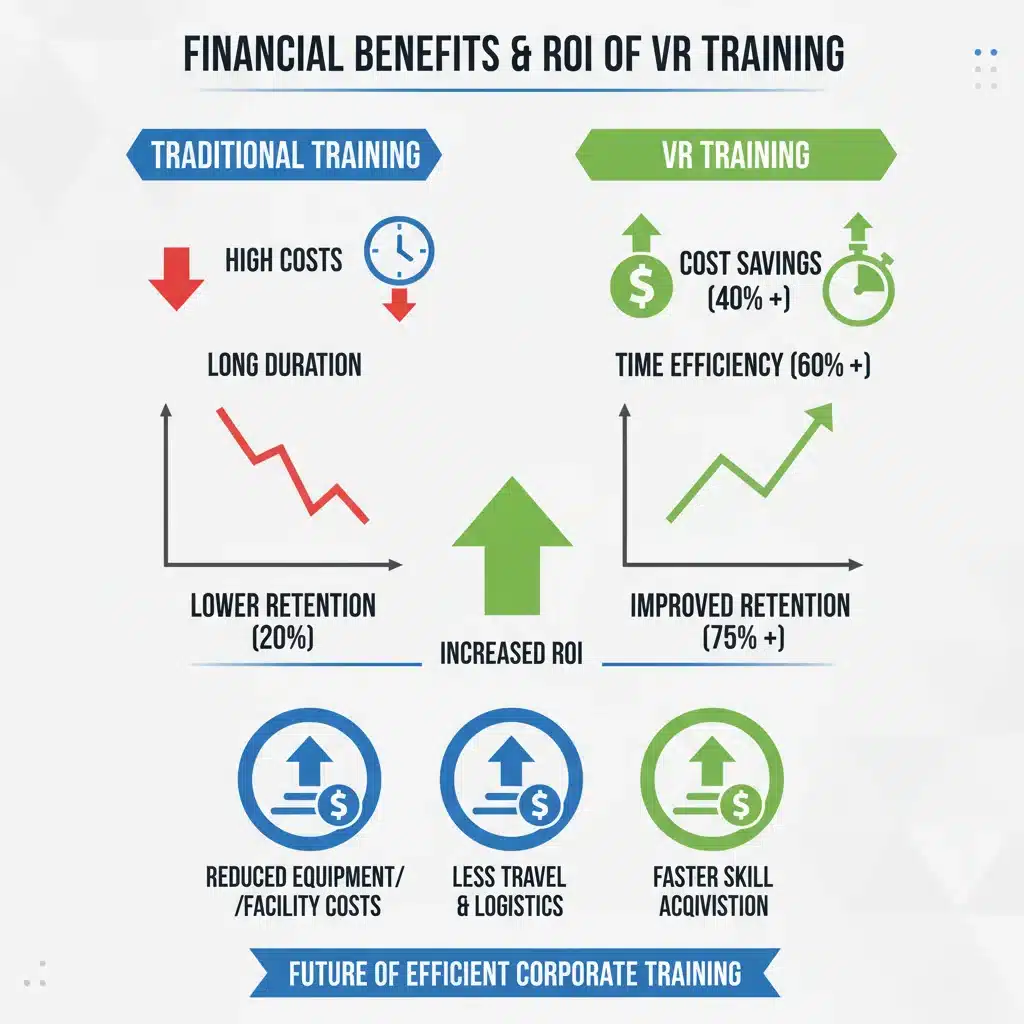
Consider a U.S. manufacturing company with 1,000 employees requiring annual safety and machine operation training. Traditionally, this involves:
- Duration: 3 days of off-site training per employee.
- Cost per employee: $1,500 (travel, accommodation, instructor, materials).
- Total annual cost: $1,500,000.
- Lost productivity: 3 days per employee = 3,000 lost workdays annually.
With VR training, they could potentially:
- Reduce training time by 30%: From 3 days to 2.1 days per employee.
- Reduce direct costs by 50%: VR module development: $200,000 (one-time). Per employee cost (headset, platform access): $500. Total for 1,000 employees: $500,000.
- Annual savings (after initial investment): $1,000,000 in direct costs in year one.
- Productivity gain: 0.9 days saved per employee = 900 additional productive workdays annually.
This simplified example clearly demonstrates a compelling VR training ROI within the first year, with even greater returns in subsequent years as the initial development cost is amortized.
Implementing VR Training: A Strategic Roadmap for U.S. Businesses
To successfully integrate VR training and realize its full potential, businesses should follow a structured approach:
1. Identify Key Training Needs and Pain Points
Start by pinpointing areas where current training is inefficient, costly, risky, or lacks engagement. High-risk tasks, complex procedures, customer service scenarios, and onboarding are often prime candidates for VR intervention.
2. Define Clear Objectives and KPIs
What do you aim to achieve? (e.g., reduce training time by 30%, decrease accident rates by 15%, improve customer satisfaction scores by 10%). Establish measurable Key Performance Indicators (KPIs) to track progress and quantify VR training ROI.
3. Pilot Program Development
Begin with a pilot program for a specific department or training module. This allows for testing, gathering feedback, and refining the VR experience before a broader rollout. Partner with experienced VR development companies that understand instructional design and your industry’s specific needs.
4. Technology and Content Selection
Choose appropriate VR hardware (headsets like Oculus Quest, HTC Vive, etc.) and a robust VR training platform. Decide whether to develop custom content or leverage existing off-the-shelf modules. Custom content often offers a higher degree of relevance but requires a larger initial investment.
5. Integration and Rollout
Integrate VR training into your existing learning management system (LMS) if possible. Develop a rollout strategy that includes user training on how to use the VR equipment, technical support, and clear communication about the benefits of the new training method.
6. Measure, Evaluate, and Iterate
Continuously monitor the effectiveness of your VR training programs against your defined KPIs. Collect data on completion rates, performance improvements, knowledge retention, and, crucially, time savings and cost reductions. Use this data to refine modules, update content, and expand the program to other areas, constantly optimizing your VR training ROI.
Challenges and Considerations
While the benefits are clear, implementing VR training isn’t without its challenges:
- Initial Investment: Hardware and custom content development can represent a significant upfront cost. However, the long-term ROI often justifies this.
- Technological Learning Curve: Some employees may initially be hesitant or unfamiliar with VR technology. Proper onboarding and support are crucial.
- Content Creation: Developing high-quality, effective VR training content requires specialized skills in 3D modeling, instructional design, and game development.
- Motion Sickness: A small percentage of users may experience motion sickness in VR. Designing experiences with comfort in mind (e.g., teleportation locomotion, stable environments) can mitigate this.
Addressing these challenges proactively through careful planning, vendor selection, and user-centric design will ensure a smoother transition and maximize the positive impact on your training programs and overall VR training ROI.
The Future is Immersive: VR Training Beyond 2026
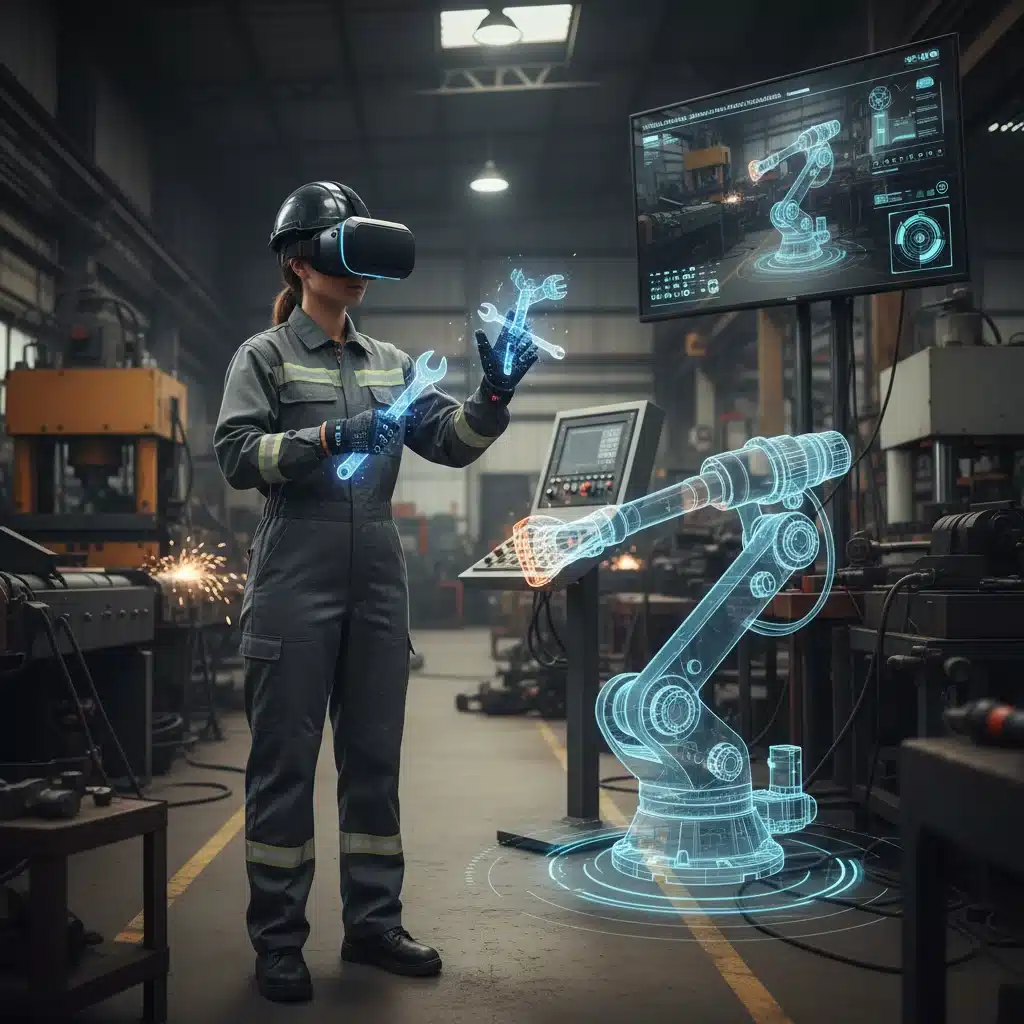
The trajectory of VR technology suggests even greater integration into corporate training beyond 2026. Advancements in haptic feedback, AI-driven adaptive learning within VR environments, and more accessible, lightweight hardware will further enhance the immersive experience and broaden its applicability. Imagine AI-powered virtual trainers providing real-time personalized coaching, or multi-user VR environments enabling collaborative training for geographically dispersed teams.
For U.S. businesses, embracing VR training now is not just about gaining a competitive edge; it’s about future-proofing their workforce. It’s about creating a more agile, skilled, and engaged employee base capable of adapting to the demands of an ever-changing global economy. The goal of a 30% reduction in training time is just the beginning of the transformative journey VR offers.
Conclusion: Seize the VR Advantage for Unprecedented Efficiency
The imperative for U.S. businesses to optimize employee training has never been greater. Immersive VR modules offer a powerful, innovative solution to achieve significant reductions in training time, enhance learning outcomes, and deliver a compelling financial return on investment. By strategically adopting VR training, companies can not only meet the ambitious goal of cutting training time by 30% by 2026 but also cultivate a more skilled, confident, and productive workforce. The time to invest in the future of learning is now. Evaluate your current training programs, identify where VR can make the most impact, and embark on a journey that will redefine efficiency, engagement, and ultimately, your bottom line through a superior VR training ROI.