
AR Overlays: Boosting US Business Productivity 15% by 2026
In the rapidly evolving landscape of business technology, one innovation stands poised to redefine efficiency and output: Augmented Reality (AR) overlays. As we look towards 2026, projections indicate a monumental shift, with US businesses potentially experiencing a 15% boost in productivity directly attributable to the strategic implementation of AR overlays. This isn’t just about futuristic gadgets; it’s about a fundamental transformation in how work is conceived, executed, and optimized across diverse industries.
The concept of AR overlays involves superimposing digital information – images, videos, 3D models, data – onto the real-world environment. Unlike virtual reality (VR), which creates an entirely immersive digital world, AR enhances our existing reality, providing contextual and real-time insights that can significantly streamline tasks, reduce errors, and accelerate decision-making. This article will delve into the mechanisms behind this projected productivity surge, explore key industry applications, and outline the strategic considerations for US businesses aiming to harness the full potential of AR overlays.
The Mechanics of a 15% Productivity Boost with AR Overlays
Achieving a 15% increase in productivity is no small feat, but the capabilities of AR overlays make this an entirely plausible, and perhaps even conservative, estimate for US businesses by 2026. The core of this improvement lies in several key areas:
Real-time Information Access and Contextual Guidance
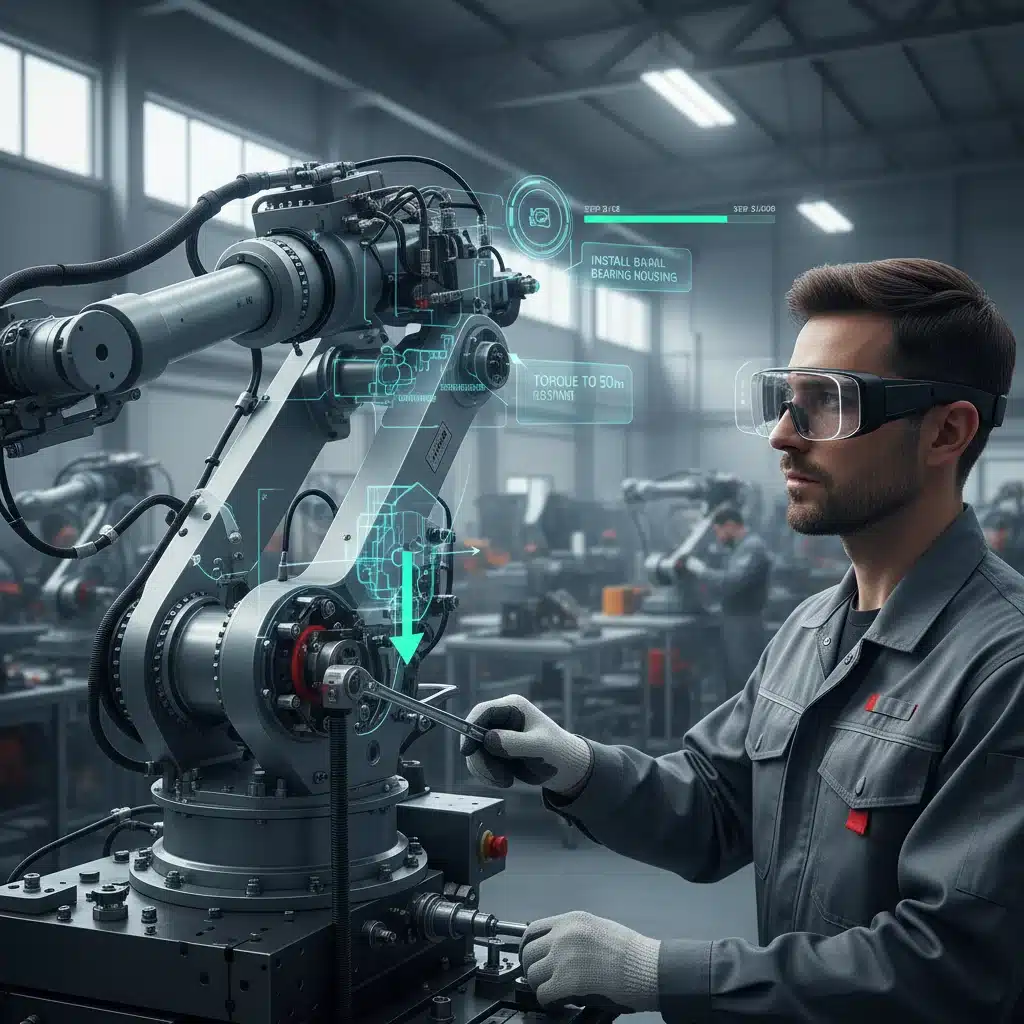
One of the most significant benefits of AR overlays is the ability to deliver relevant information directly into a worker’s field of vision, exactly when and where it’s needed. Imagine a field technician repairing complex machinery. Instead of consulting a manual or a tablet, AR glasses can overlay diagrams, repair instructions, and even performance data directly onto the equipment. This eliminates the need to switch focus between the task and a separate device, saving valuable time and reducing cognitive load. For US businesses, this translates to faster troubleshooting, reduced downtime, and more efficient maintenance operations across various sectors, from manufacturing to utilities.
Reduced Training Time and Enhanced Skill Transfer
Traditional training methods can be time-consuming and costly. AR overlays offer an immersive and interactive alternative. New employees can receive step-by-step visual guidance for complex procedures, practicing in a safe, simulated environment before tackling real-world tasks. Experienced workers can also benefit from AR-guided refreshers or learn new skills more rapidly. This accelerates the onboarding process, improves skill retention, and ensures a higher level of competency across the workforce. For industries facing skill shortages or rapid technological changes, AR overlays provide an invaluable tool for workforce development, directly contributing to increased productivity.
Error Reduction and Quality Improvement
Human error is an inevitable part of any complex process. AR overlays act as a digital safety net, providing visual cues, warnings, and verification steps that minimize mistakes. In manufacturing, AR can highlight incorrect parts, guide assembly sequences, and ensure precise placement. In logistics, it can direct workers to the correct items for picking and packing. By catching errors before they escalate, AR overlays prevent costly rework, reduce waste, and improve the overall quality of products and services. This direct impact on quality and waste reduction is a powerful driver of productivity gains for US businesses.
Improved Collaboration and Remote Assistance
AR overlays facilitate seamless collaboration, especially in remote or distributed work environments. Experts can remotely guide on-site technicians, sharing their view and annotating the real world with digital instructions and pointers. This ‘see what I see’ capability allows for instant problem-solving and knowledge transfer without the need for extensive travel or delays. For US businesses with geographically dispersed teams or complex equipment requiring specialized expertise, AR-powered remote assistance dramatically improves efficiency and reduces operational costs, directly boosting team productivity.
Key Industry Applications for AR Overlays in US Business
The versatility of AR overlays means their impact will be felt across a wide spectrum of US industries. Here are some of the sectors poised for significant productivity gains:
Manufacturing and Assembly
This sector is arguably one of the ripest for AR overlay adoption. From intricate electronics assembly to large-scale machinery construction, AR can guide workers through every step. Visual instructions overlaid directly onto components ensure accuracy, reduce rework, and accelerate production cycles. Quality control can also be enhanced, with AR highlighting deviations from design specifications. The potential for reducing training times for complex assembly lines is immense, making AR overlays a critical tool for US manufacturing competitiveness.
Field Service and Maintenance
Technicians often deal with a vast array of equipment variations and complex diagnostic procedures. AR overlays can provide instant access to schematics, repair histories, and real-time diagnostic data. Remote experts can guide technicians through repairs, annotating the live video feed from the technician’s AR glasses. This minimizes repeat visits, speeds up repair times, and improves first-time fix rates, leading to substantial productivity gains for service-oriented US businesses, from HVAC to IT support.
Healthcare and Medical Training
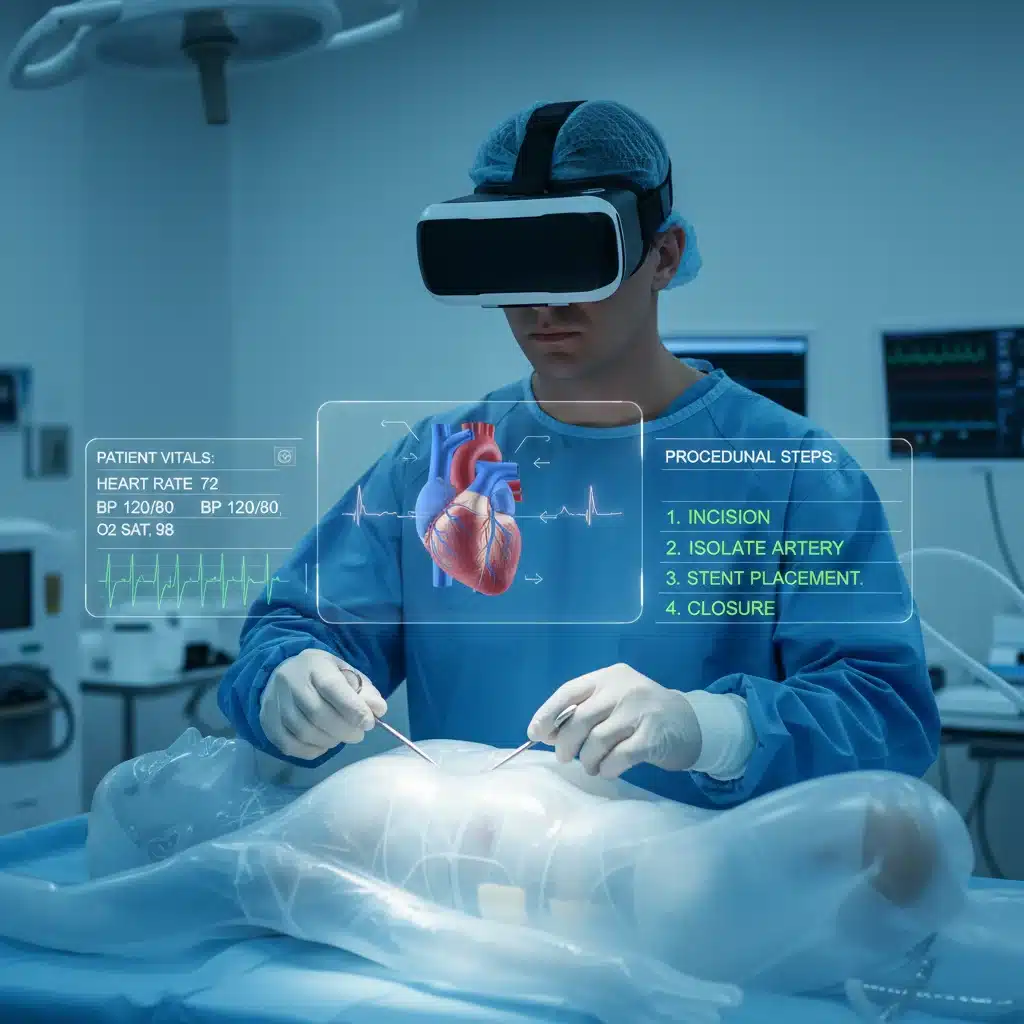
In healthcare, AR overlays offer revolutionary possibilities. Surgeons can view patient data, 3D anatomical models, or even guidance systems directly within their field of vision during procedures, enhancing precision and safety. Medical students and trainees can practice complex surgeries or diagnoses with realistic AR simulations, accelerating their learning curve without risk. For hospitals and medical device companies in the US, AR overlays can lead to improved patient outcomes and more efficient training programs, boosting overall operational productivity.
Logistics and Warehousing
Optimizing warehouse operations is crucial for efficiency. AR overlays can guide workers through complex picking routes, highlight the exact location of items, and provide real-time inventory updates. This reduces pick errors, speeds up order fulfillment, and minimizes the time spent searching for items. For US logistics companies facing increasing demands for speed and accuracy, AR overlays offer a powerful solution to enhance worker productivity and throughput.
Retail and Customer Experience
While often associated with consumer engagement, AR overlays can also boost productivity on the retail floor. Employees can use AR to quickly locate inventory, access product information for customer queries, or even assist with shelf stocking and planogram compliance. For US retailers, this means more efficient operations, better-informed staff, and ultimately, an improved customer experience, which indirectly contributes to business productivity.
Strategic Implementation of AR Overlays for US Businesses
To fully realize the projected 15% productivity boost, US businesses must adopt a strategic approach to implementing AR overlays. It’s not merely about buying hardware; it’s about integrating the technology into existing workflows and fostering a culture of innovation.
Pilot Programs and Scalability
Start with well-defined pilot programs in specific departments or for particular tasks where the benefits of AR overlays are most evident. This allows for testing, refinement, and demonstrating tangible ROI before a broader rollout. Focus on measurable metrics – reduced error rates, faster task completion, decreased training time – to build a clear business case for scalability. US businesses should look for AR solutions that are inherently scalable and can adapt to evolving needs.
Data Integration and Backend Systems
The true power of AR overlays lies in their ability to draw data from existing backend systems – ERP, CRM, IoT platforms, CAD files. Seamless integration is crucial for providing real-time, accurate, and contextual information. Businesses must ensure their data infrastructure can support the demands of AR applications and that data privacy and security protocols are robust. This interconnectedness fuels the intelligence of AR overlays, driving significant productivity gains.
User Experience and Training
The success of AR overlays hinges on user acceptance. The hardware must be comfortable, intuitive, and robust enough for the intended environment. Software interfaces should be user-friendly, and comprehensive training programs are essential to ensure employees can effectively leverage the technology. Resistance to change can be overcome by highlighting the direct benefits to the worker – making tasks easier, safer, and more efficient. Investing in good UX design and worker training is paramount for US businesses to maximize the impact of AR overlays on productivity.
Infrastructure and Connectivity
AR applications often require significant processing power and reliable, low-latency connectivity. US businesses need to assess their existing network infrastructure (Wi-Fi, 5G) and computing capabilities to ensure they can support the demands of AR overlays. Edge computing solutions may also play a crucial role in processing data closer to the source, reducing latency and enhancing performance, which is vital for real-time productivity applications.
Challenges and Considerations for Widespread AR Overlay Adoption
While the prospects are exciting, US businesses must also be aware of potential challenges in the widespread adoption of AR overlays.
Cost of Hardware and Software Development
Initial investment in AR hardware (smart glasses, devices) and custom software development can be substantial. Businesses need to conduct thorough cost-benefit analyses and identify clear ROI pathways to justify these expenditures. However, as the technology matures, hardware costs are expected to decrease, and off-the-shelf AR solutions will become more prevalent, making AR overlays more accessible to a broader range of US businesses.
Data Privacy and Security
AR overlays often process and display sensitive operational data, and in some cases, personal information. Ensuring robust data privacy and cybersecurity measures is critical to prevent breaches and maintain trust. US businesses must adhere to relevant regulations and implement best practices for data handling within AR environments.
Integration with Legacy Systems
Many US businesses operate with complex legacy IT systems. Integrating AR platforms with these older systems can be challenging and may require significant development effort. Planning for this integration early in the adoption process is crucial to avoid roadblocks and ensure seamless data flow for AR overlays.
Workplace Culture and Acceptance
Introducing new technology can sometimes face resistance from employees. Addressing concerns about job displacement, privacy, or the learning curve associated with AR overlays is essential. Open communication, comprehensive training, and demonstrating the benefits to the workforce are key to fostering acceptance and maximizing the positive impact on productivity.
The Future of Work: AR Overlays as a Cornerstone of Productivity
By 2026, AR overlays are set to become an indispensable tool for US businesses striving for peak productivity. The projected 15% boost is not just an arbitrary number; it represents the cumulative effect of reduced errors, faster task completion, enhanced training, and improved collaboration across countless operational touchpoints. From the factory floor to the operating room, and from remote field services to bustling warehouses, AR overlays will empower workers with intelligence, precision, and efficiency previously unimagined.
The competitive advantage for US businesses that strategically embrace AR overlays will be significant. Those that invest early in understanding the technology, piloting solutions, and integrating them thoughtfully into their operations will be best positioned to reap these substantial productivity rewards. The future of work is augmented, and AR overlays are leading the charge in creating a more efficient, intelligent, and productive business landscape across the United States.
Conclusion: Embracing the Augmented Future for US Business Growth
The journey towards a 15% productivity boost through AR overlays by 2026 is an exciting one for US businesses. It demands foresight, strategic investment, and a willingness to innovate. The benefits—ranging from optimized operational efficiency and reduced costs to accelerated training and superior quality—are too compelling to ignore. As the technology matures and becomes more accessible, AR overlays will transition from a niche innovation to a mainstream tool, fundamentally reshaping how work gets done.
Businesses that proactively explore and implement AR solutions will not only gain a competitive edge but will also empower their workforce with tools that make their jobs easier, safer, and more engaging. The integration of digital intelligence directly into our physical world through AR overlays represents a profound leap forward in the evolution of business productivity. The time to prepare for this augmented future is now, ensuring that US enterprises are at the forefront of this technological revolution and ready to unlock unprecedented levels of efficiency and growth.