
Navigating US AR Regulations 2026: A Developer’s Compliance Guide
The dawn of augmented reality (AR) has ushered in an era of unprecedented technological innovation, blending digital information with our physical world. From immersive gaming to sophisticated industrial applications, AR is reshaping how we interact with technology and our environment. However, as with any transformative technology, its rapid growth necessitates a robust regulatory framework. For developers in the United States, 2026 marks a pivotal year, as new and evolving regulations are set to significantly impact the design, deployment, and operation of AR experiences. Understanding and proactively addressing these impending AR Regulations US 2026 is not just about avoiding legal pitfalls; it’s about building trust, fostering innovation, and ensuring the responsible development of this powerful medium.
This comprehensive guide aims to equip AR developers with the knowledge and strategies needed to navigate the complex regulatory landscape of 2026. We will delve into the key areas of concern, including data privacy, consumer protection, accessibility, and ethical considerations, offering actionable insights to ensure your AR applications are not only cutting-edge but also fully compliant.
The stakes are high. Non-compliance can lead to substantial fines, reputational damage, and a loss of user trust. Conversely, a proactive approach to regulatory adherence can differentiate your products, enhance user confidence, and position your organization as a leader in responsible AR innovation. Let’s embark on this journey to decode the future of AR Regulations US 2026.
The Evolving Landscape of AR Regulation: Why 2026 Matters
The regulatory environment for emerging technologies is often a game of catch-up. Governments and legislative bodies strive to keep pace with rapid advancements, often reacting to challenges and concerns as they arise. Augmented reality, with its unique ability to collect and interpret real-world data, presents novel regulatory challenges that traditional internet or software laws may not fully address. The year 2026 is emerging as a critical juncture, with several proposed legislative changes and increased enforcement efforts expected to solidify the framework for AR operations in the US.
Key Drivers Behind the 2026 Regulatory Push:
- Increased Adoption: As AR hardware becomes more accessible and sophisticated, and applications proliferate across various sectors (retail, healthcare, education, entertainment), the user base is expanding dramatically. This wider adoption brings greater scrutiny from consumer advocacy groups and policymakers.
- Data Proliferation: AR systems are inherently data-rich. They collect information about physical environments, user movements, gaze direction, biometric data, and personal preferences. The sheer volume and sensitivity of this data necessitate clearer guidelines for its collection, storage, processing, and sharing.
- Ethical Concerns: Beyond data, AR raises ethical questions regarding manipulation, digital deception, privacy in public spaces, and the potential blurring of lines between reality and digital overlays. Regulators are increasingly looking to address these societal impacts.
- Global Precedents: International regulations, such as the GDPR in Europe, have set a high bar for data protection and privacy. The US is likely to draw inspiration from these frameworks while adapting them to its unique legal and cultural context.
For AR developers, understanding these underlying drivers is crucial. It helps in anticipating the direction of future regulations and designing applications that are resilient to legislative changes. Proactive engagement with these issues now will save significant time and resources down the line, ensuring your AR solutions remain viable and compliant under the new AR Regulations US 2026.
Data Privacy at the Forefront: Navigating the New Norms
Data privacy is arguably the most significant area of focus for the impending AR Regulations US 2026. AR applications, by their nature, interact intimately with users’ personal spaces and behaviors. This requires a heightened level of responsibility from developers regarding how personal data is handled. While a single, overarching federal privacy law akin to GDPR is still under debate in the US, various state-level laws (like CCPA/CPRA in California, VCDPA in Virginia, CPA in Colorado, etc.) provide a patchwork of regulations that AR developers must navigate.
Key Data Privacy Considerations for AR Developers:
- Explicit Consent and Transparency:
- Granular Consent: Users must be given clear, explicit, and granular options regarding what data is collected, how it’s used, and with whom it’s shared. Generic consent forms will likely be insufficient.
- Just-in-Time Notifications: For sensitive data collection (e.g., facial recognition, biometric data, location tracking), consider ‘just-in-time’ notifications that explain the data being collected at the moment of collection and why it’s necessary.
- Clear Privacy Policies: Your privacy policy must be easily accessible, written in plain language, and comprehensively detail all data practices, including third-party data sharing.
- Data Minimization:
- Collect only the data strictly necessary for the AR application to function as intended. Avoid collecting ancillary data that isn’t directly relevant.
- Anonymize or pseudonymize data whenever possible, especially for analytical or research purposes.
- Data Security:
- Implement robust security measures (encryption, access controls, regular audits) to protect collected data from breaches and unauthorized access.
- Be prepared for potential data breach notification requirements, which vary by state.
- User Rights:
- Right to Access: Users should have the ability to access the data collected about them.
- Right to Deletion: Users should be able to request the deletion of their personal data.
- Right to Opt-Out: Provide clear mechanisms for users to opt-out of data collection or specific data uses, particularly for targeted advertising.
- Biometric Data:
- AR applications often involve facial recognition, eye-tracking, and gesture recognition, which can fall under biometric data. Laws like Illinois’ BIPA are very strict regarding the collection and storage of biometric identifiers. Developers must understand and comply with these specific regulations.
- Location Data:
- Precise location data collected by AR apps is highly sensitive. Ensure explicit consent and clear communication about its use, especially if it’s shared with third parties.
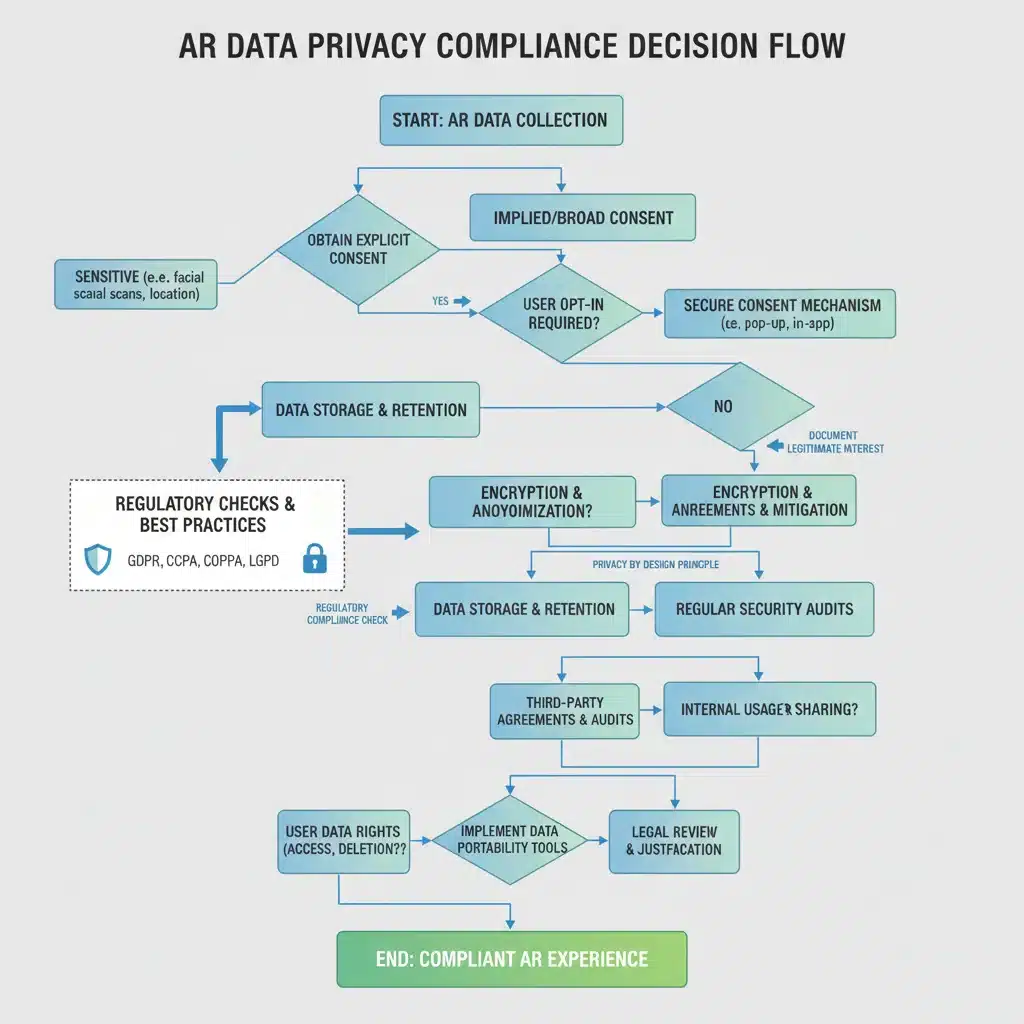
Best Practices for Data Privacy Compliance:
- Privacy-by-Design: Integrate privacy considerations into the very architecture and design of your AR application from its inception, rather than treating it as an afterthought.
- Regular Audits: Conduct regular internal and external audits of your data collection and processing practices to identify and mitigate risks.
- Stay Informed: The US privacy landscape is dynamic. Continuously monitor changes in state and federal privacy laws that could impact your AR applications.
- Legal Counsel: Engage with legal experts specializing in data privacy and emerging technologies to ensure comprehensive compliance with AR Regulations US 2026.
Consumer Protection and Ethical AR Development
Beyond data privacy, AR Regulations US 2026 will increasingly focus on broader consumer protection and ethical considerations. AR’s ability to overlay digital content onto the real world creates unique challenges related to misinformation, digital safety, and fair commercial practices.
Key Areas of Focus:
- Misinformation and Deepfakes:
- AR can be used to create highly convincing but fabricated digital content. Developers must consider mechanisms to prevent the spread of harmful misinformation or misleading ‘deepfake’ AR experiences.
- Transparency about the digital nature of AR content is crucial, especially in news, education, or sensitive contexts.
- Digital Safety and Harassment:
- As AR social applications grow, so does the potential for digital harassment or abuse within shared AR spaces. Developers should implement robust moderation tools and reporting mechanisms.
- Consider safeguards to prevent AR from being used for stalking, unauthorized surveillance, or invasion of privacy in public spaces.
- Children’s Online Privacy Protection Act (COPPA) and AR:
- If your AR application targets children under 13 or is likely to be used by them, strict COPPA compliance is mandatory. This includes parental consent for data collection and specific limitations on advertising and data sharing.
- AR experiences for children need to be designed with their developmental stage in mind, avoiding manipulative or overly persuasive elements.
- Fair Commercial Practices:
- In-App Purchases and Advertising: Ensure transparency in AR advertisements and in-app purchases. Users should clearly understand what they are purchasing and the value proposition. Avoid deceptive practices.
- Virtual Goods and Ownership: As virtual economies grow within AR, clear terms of service regarding ownership, transfer, and value of virtual goods will be essential.
- Accessibility and Inclusivity:
- The digital world should be accessible to everyone, and AR is no exception. Future regulations will likely emphasize making AR experiences usable by individuals with disabilities.
- Consider visual, auditory, cognitive, and motor impairments in your design.
Building Ethical AR by Design:
- Ethical Impact Assessments: Conduct regular ethical impact assessments during the development lifecycle to identify and mitigate potential societal harms of your AR application.
- User Empowerment: Design AR experiences that empower users with control over their data, their interactions, and their digital environment.
- Transparency and Explainability: Be transparent about how AR algorithms work, especially if they influence user decisions or perceptions.
Accessibility: Ensuring Inclusive AR Experiences
Accessibility is not just a moral imperative; it’s increasingly becoming a legal requirement. As AR becomes more integrated into daily life, regulations under the Americans with Disabilities Act (ADA) and similar state laws are likely to extend to AR applications. Ensuring your AR solutions are accessible will be a critical component of AR Regulations US 2026 compliance.
Key Accessibility Considerations:
- Visual Impairments:
- Color Contrast: Ensure sufficient color contrast for AR overlays and text to be legible for users with low vision or color blindness.
- Text-to-Speech: Provide audio descriptions or text-to-speech options for visual AR elements.
- Scalable UI: Allow users to scale text and UI elements for better readability.
- Auditory Impairments:
- Captions and Transcripts: Provide captions or transcripts for any audio content within the AR experience.
- Visual Cues: Offer visual alternatives for auditory cues or notifications.
- Motor Impairments:
- Alternative Input Methods: Support various input methods beyond gesture control, such as voice commands, head tracking, or external input devices.
- Reduced Dexterity Options: Design interactions that require minimal fine motor control.
- Cognitive Impairments:
- Clear and Simple Language: Use straightforward language and avoid jargon in instructions and UI.
- Predictable Navigation: Design intuitive and consistent navigation patterns.
- Reduced Cognitive Load: Avoid overwhelming users with too much information or complex interactions.
- Hardware Compatibility:
- Ensure your AR applications are compatible with assistive technologies and different AR hardware platforms, where feasible.

Implementing Accessible AR:
- WCAG Guidelines: While primarily for web content, the Web Content Accessibility Guidelines (WCAG) provide a strong foundation for designing accessible digital experiences, many principles of which can be adapted for AR.
- User Testing with Diverse Groups: Involve users with disabilities in your testing phases to gain valuable insights and identify accessibility barriers.
- Accessibility by Design: Like privacy, accessibility should be a core consideration from the outset of the development process, not an add-on.
Sector-Specific Regulations and Industry Standards
While general regulations will form the backbone of AR Regulations US 2026, developers must also be aware of sector-specific rules that apply to their particular industry. AR’s pervasive nature means it will touch upon highly regulated fields, each with its own set of compliance requirements.
Examples of Sector-Specific Regulations:
- Healthcare (HIPAA): If your AR application handles protected health information (PHI), strict adherence to HIPAA is non-negotiable. This includes secure data transmission, storage, and access controls. AR in surgery, therapy, or patient education will face rigorous scrutiny.
- Finance: AR applications dealing with financial data, transactions, or identity verification will need to comply with financial regulations, anti-money laundering (AML) laws, and data security standards specific to the financial sector.
- Education (FERPA): AR tools used in educational settings, especially with student data, must comply with the Family Educational Rights and Privacy Act (FERPA), which protects the privacy of student education records.
- Defense and Government: AR applications developed for military or government use will be subject to stringent security clearances, data handling protocols, and export controls.
- Retail and Advertising: While covered by general consumer protection, AR advertising may face specific rules regarding disclosure of sponsored content, accurate representation of products, and fair marketing practices.
Developers working in these sectors must not only understand the general AR Regulations US 2026 but also integrate industry-specific compliance into their development lifecycle. This often requires specialized legal and compliance expertise.
Preparing for 2026: A Developer’s Action Plan
The impending AR Regulations US 2026 might seem daunting, but proactive preparation can transform potential challenges into opportunities for leadership and innovation. Here’s an actionable plan for AR developers:
- Conduct a Regulatory Audit:
- Assess your current AR applications and development practices against existing and anticipated regulations (state privacy laws, COPPA, HIPAA if applicable, etc.).
- Identify areas of non-compliance or high risk.
- Implement Privacy-by-Design and Security-by-Design Principles:
- Embed data privacy and security considerations into every stage of your development process, from conception to deployment.
- Train your development team on privacy engineering and secure coding practices.
- Review and Update Privacy Policies and Terms of Service:
- Ensure these documents are clear, comprehensive, and reflect all data collection, usage, and sharing practices.
- Make them easily accessible and understandable to the average user.
- Enhance User Consent Mechanisms:
- Move beyond simple ‘agree to all’ buttons. Implement granular consent options for different types of data and processing activities.
- Consider ‘just-in-time’ consent for sensitive data.
- Prioritize Accessibility:
- Integrate accessibility guidelines (e.g., WCAG adaptable principles) into your AR UI/UX design.
- Conduct accessibility testing with diverse user groups.
- Stay Informed and Engage:
- Actively monitor legislative developments at both federal and state levels.
- Participate in industry forums, conferences, and working groups focused on AR ethics and regulation.
- Seek Expert Legal Counsel:
- Consult with legal professionals specializing in technology law, data privacy, and AR to interpret complex regulations and ensure robust compliance strategies.
- Foster an Ethical Development Culture:
- Encourage discussions about the ethical implications of AR within your team.
- Develop internal guidelines and codes of conduct for responsible AR development.
The Future is Compliant and Ethical: Seizing the Opportunity
The impending AR Regulations US 2026 are not merely hurdles to overcome; they represent a maturation of the augmented reality industry. By embracing these regulations, developers have the opportunity to build a more trustworthy, inclusive, and sustainable AR ecosystem. Compliance will become a hallmark of quality and reliability, setting compliant applications apart in a competitive market.
Responsible AR development, guided by robust privacy, security, and ethical principles, will foster greater user adoption and continued innovation. As developers, your role in shaping this future is paramount. By understanding and proactively addressing the regulatory landscape, you can ensure that your AR creations not only push the boundaries of technology but also uphold the highest standards of user protection and societal well-being.
The journey to 2026 will undoubtedly bring further clarifications and perhaps new challenges. However, by laying a strong foundation now, AR developers can confidently navigate this evolving environment, building the next generation of augmented reality experiences that are both groundbreaking and compliant. Start your compliance journey today, and be a leader in the responsible future of AR.