Cut Training Costs 20% with AR: A 2026 Guide for US Enterprises

Achieving a 20% Reduction in Training Costs with AR: A Practical Guide for US Enterprises in 2026
In the rapidly evolving landscape of modern business, continuous workforce training is not just a benefit—it’s a necessity. US enterprises, in particular, face the dual challenge of upskilling and reskilling their employees to keep pace with technological advancements and market demands, all while managing ever-tightening budgets. The traditional models of training, often characterized by expensive travel, lengthy classroom sessions, and high instructor fees, are proving increasingly unsustainable. This is where Augmented Reality (AR) emerges not just as a futuristic gadget, but as a strategic imperative for achieving significant AR training cost reduction.
By 2026, the enterprises that successfully integrate AR into their training methodologies stand to gain a substantial competitive edge. Our projections indicate that a well-executed AR training strategy can lead to a demonstrable 20% reduction in overall training costs. This isn’t merely about saving money; it’s about enhancing the effectiveness and efficiency of learning, leading to a more competent, adaptable, and productive workforce. This comprehensive guide will delve into the practical steps, strategic considerations, and anticipated ROI for US enterprises looking to harness AR for unparalleled training cost optimization.
The Mounting Pressure on Enterprise Training Budgets
Before we explore the solutions, it’s crucial to understand the problem. US enterprises spend billions annually on employee training. According to recent reports, the average training expenditure per employee continues to rise, driven by factors such as:
- Rapid Technological Change: Industries from manufacturing to healthcare are undergoing digital transformations, requiring constant updates to employee skill sets.
- Talent Shortages: A competitive job market necessitates robust internal development programs to nurture existing talent and fill critical skill gaps.
- Compliance and Regulation: Many sectors require mandatory, recurring training to meet stringent regulatory standards, adding to the cost burden.
- Geographic Dispersion: Large enterprises often have employees spread across multiple locations, making centralized, in-person training logistically complex and expensive.
- Ineffective Traditional Methods: Classroom-based training can suffer from low engagement, poor knowledge retention, and a disconnect from real-world application, leading to repeated training needs.
These challenges collectively push training budgets to their limits, forcing enterprises to seek innovative solutions. The goal is not just to cut costs, but to invest smarter, ensuring that every training dollar yields maximum impact. This is precisely where the power of AR training cost reduction comes into play, offering a compelling alternative to conventional approaches.
What is Augmented Reality (AR) Training?
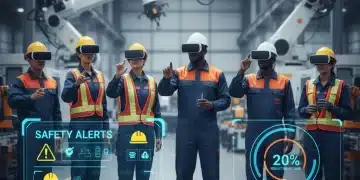
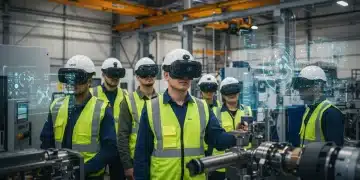
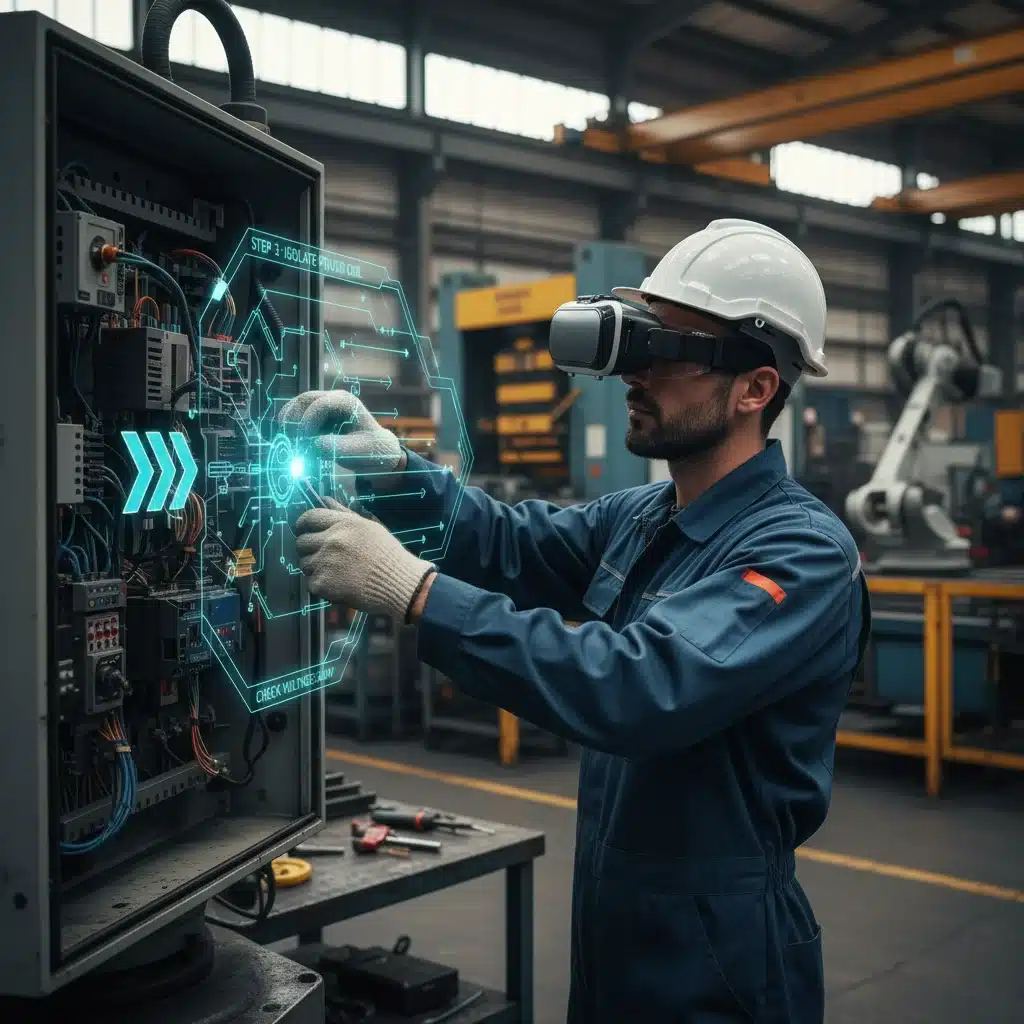
Augmented Reality enhances the real world with digital information. Unlike Virtual Reality (VR), which creates entirely immersive digital environments, AR overlays virtual content onto a user’s view of the real world. In the context of training, this means employees can interact with digital instructions, 3D models, and simulations while still being physically present in their work environment. Imagine a technician repairing a complex machine, with AR glasses displaying step-by-step instructions, schematics, and even real-time performance data directly on the equipment. This is the essence of AR training.
The applications are vast and varied, spanning industries:
- Manufacturing: Assembly instructions, quality control checks, maintenance procedures.
- Healthcare: Surgical planning, anatomy lessons, patient care simulations.
- Logistics: Warehouse navigation, package identification, inventory management.
- Retail: Product knowledge, visual merchandising, customer service scenarios.
- Field Service: Remote assistance, diagnostic guidance, repair protocols.
The immersive and interactive nature of AR training not only makes learning more engaging but also significantly more effective, paving the way for substantial AR training cost reduction.
The Core Mechanisms of AR for Cost Reduction
How does AR translate into a 20% reduction in training costs? The benefits are multifaceted, impacting various aspects of the training lifecycle:
1. Reduced Travel and Logistics Costs
Traditional training often requires employees to travel to central locations, incurring expenses for flights, accommodation, and per diems. AR eliminates much of this need. Training can be delivered on-site, at the employee’s workstation, or even remotely. This directly contributes to AR training cost reduction by slashing travel budgets.
2. Faster Time-to-Competency
AR’s hands-on, contextual learning approach accelerates skill acquisition. Employees learn by doing, guided by digital overlays that provide immediate feedback and instructions. This reduces the time needed for employees to become proficient, meaning less time spent in training and more time contributing to productivity. A quicker ramp-up time for new hires or new procedures directly translates to cost savings.
3. Enhanced Knowledge Retention and Reduced Rework
Learning in context, especially for complex tasks, significantly improves knowledge retention. When employees can see and interact with digital information directly on the equipment they are working with, the learning is deeper and more memorable. This reduces the need for refresher courses and minimizes errors and rework, which are often hidden but significant costs in any operation. Better retention means long-term AR training cost reduction.
4. Scalability and Consistency
Once an AR training module is developed, it can be deployed to an unlimited number of employees across various locations with consistent quality. This contrasts sharply with instructor-led training, where quality can vary and scaling requires more instructors, facilities, and travel. AR ensures a standardized, high-quality learning experience for everyone, maximizing the return on initial development investment.
5. Reduced Need for Physical Prototypes and Materials
For industries that rely on expensive equipment or prototypes for training, AR offers a virtual alternative. Employees can practice on digital twins or simulated versions of machinery, reducing wear and tear on physical assets, minimizing material waste, and eliminating the need for multiple training units. This is a significant factor in AR training cost reduction, especially in manufacturing and engineering sectors.
6. Remote Expert Assistance
AR allows experienced personnel to provide remote guidance to trainees or less experienced technicians in the field. An expert can see what the field worker sees through their AR headset and provide real-time annotations, instructions, or even draw directly on the worker’s view. This reduces the need for experts to travel, saving time and money, and ensures that critical tasks are completed correctly the first time.
A Practical Roadmap for US Enterprises by 2026
Achieving a 20% reduction in training costs by 2026 requires a structured approach. Here’s a practical roadmap for US enterprises:
Phase 1: Assessment and Strategy (Q1-Q2 2024)
- Identify High-Cost Training Areas: Pinpoint departments or processes with the highest training expenditures, longest ramp-up times, or highest error rates. These are prime candidates for AR training cost reduction.
- Define Learning Objectives: Clearly articulate what employees need to learn and how AR can best facilitate that learning. Focus on practical, hands-on skills.
- Pilot Program Design: Select a specific, contained training module for an initial AR pilot. This could be a new equipment onboarding, a complex maintenance procedure, or a safety protocol.
- Vendor Evaluation: Research AR hardware (headsets, smart glasses) and software platforms. Consider ease of content creation, scalability, and integration with existing systems.
- Budget Allocation: Secure initial funding for pilot projects and begin to build a long-term budget plan for broader AR adoption.
Phase 2: Pilot Implementation and Content Creation (Q3-Q4 2024)
- Content Development: Work with instructional designers and AR developers to create engaging and effective AR training modules for your pilot. This involves 3D modeling, animation, interactive elements, and guided workflows.
- Hardware Procurement: Acquire the necessary AR devices for the pilot group.
- Trainer Training: Educate a core group of trainers on how to utilize and troubleshoot AR training programs.
- Pilot Rollout: Deploy the AR training to a small, controlled group of employees. Gather qualitative and quantitative data on their experience, performance, and feedback.
Phase 3: Evaluation and Iteration (Q1-Q2 2025)
- Performance Metrics: Measure key indicators such as time-to-competency, error rates, knowledge retention, and direct training costs (travel, instructor fees, materials) for the AR pilot compared to traditional methods.
- Employee Feedback: Conduct surveys and interviews to understand user experience, challenges, and perceived benefits.
- ROI Calculation: Begin to quantify the return on investment from the pilot. This initial data is crucial for securing further investment and demonstrating the value of AR training cost reduction.
- Refinement: Based on feedback and data, iterate on the AR content and delivery methods. Optimize for user experience and learning outcomes.
Phase 4: Scaled Deployment and Integration (Q3 2025 – Q4 2026)
- Expand Scope: Gradually roll out AR training to more departments and a wider employee base. Target areas identified in Phase 1 as high-impact for AR training cost reduction.
- Integrate with Learning Management Systems (LMS): Ensure AR training modules are seamlessly integrated with existing LMS platforms for tracking progress, certifications, and performance data.
- Develop Internal Expertise: Invest in training internal teams to create and maintain AR content, reducing reliance on external vendors over time.
- Continuous Improvement: Monitor industry trends and new AR capabilities.
- Long-term Cost Tracking: Continuously monitor and report on the overall reduction in training costs, highlighting how AR is contributing to the 20% target.
Quantifying the 20% Reduction: A Realistic Outlook
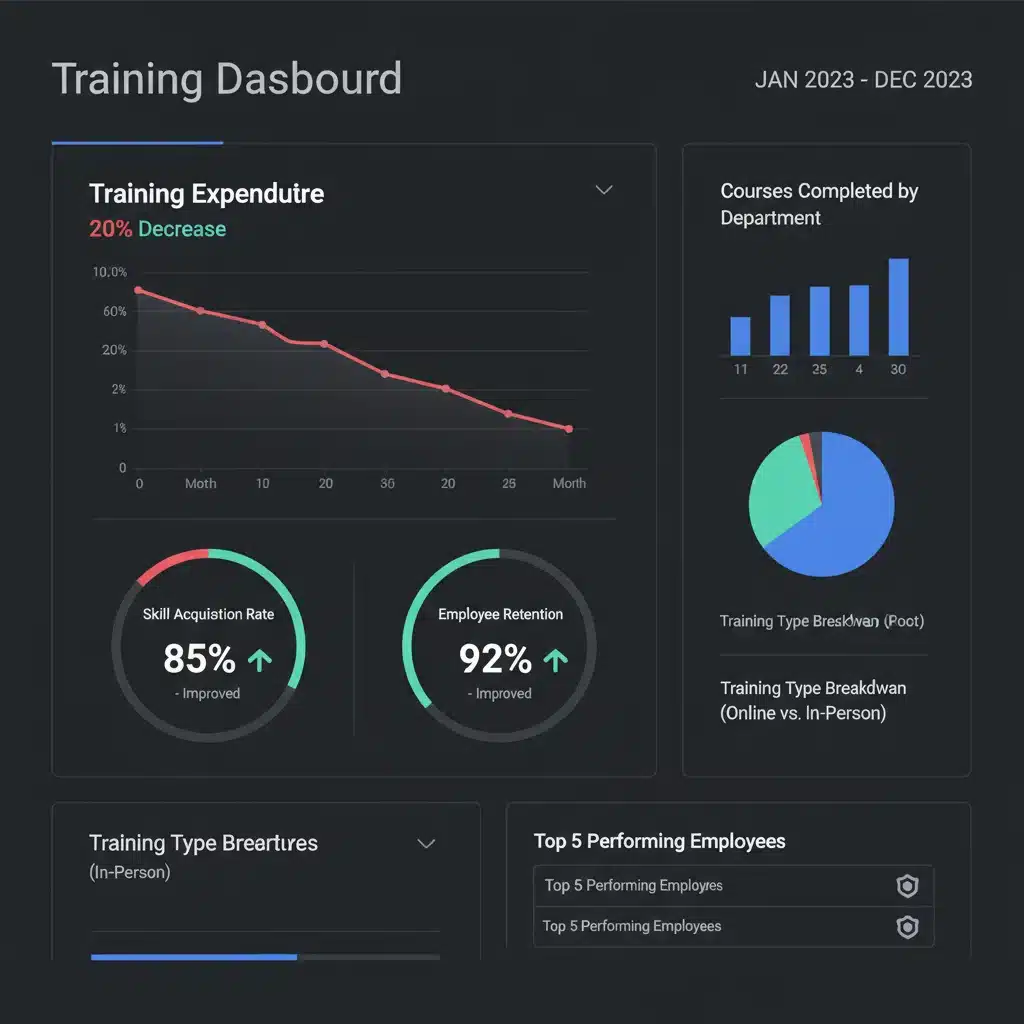
The 20% AR training cost reduction target by 2026 is ambitious but achievable for US enterprises that commit to a strategic AR adoption. Let’s break down where these savings come from:
- Direct Cost Savings (10-15%): This category includes reductions in travel, accommodation, venue rentals, instructor fees (especially for repetitive training), physical materials, and equipment wear-and-tear. For large enterprises with thousands of employees requiring regular training, these savings alone can be substantial.
- Indirect Cost Savings & Efficiency Gains (5-10%):
- Increased Productivity: Faster time-to-competency means employees spend less time in training and more time performing their jobs effectively.
- Reduced Errors & Rework: Better-trained employees make fewer mistakes, leading to less scrap, fewer warranty claims, and higher quality output.
- Improved Safety: AR can simulate dangerous scenarios or guide employees through hazardous procedures safely, reducing accidents and associated costs (medical, legal, lost productivity).
- Higher Employee Retention: Engaging and effective training can lead to higher job satisfaction and lower turnover, reducing recruitment and onboarding costs.
- Enhanced Agility: The ability to quickly update and deploy new training modules allows enterprises to adapt faster to market changes or new product introductions.
While the initial investment in AR hardware and content development can be significant, the long-term operational savings and productivity gains often lead to a rapid return on investment. Many early adopters report ROI within 12-24 months, making the 20% AR training cost reduction target a very realistic goal for 2026.
Challenges and Mitigation Strategies
Implementing AR training is not without its hurdles. US enterprises should be prepared to address:
- Initial Investment: Hardware (AR headsets), software licenses, and content development can require a substantial upfront capital outlay.
- Mitigation: Start with pilot programs to demonstrate ROI, secure executive buy-in, and scale gradually. Explore ‘as-a-service’ models for hardware and software.
- Content Creation Expertise: Developing high-quality AR content requires specialized skills in 3D modeling, animation, and instructional design.
- Mitigation: Partner with experienced AR development firms initially, while simultaneously investing in upskilling internal teams or hiring dedicated AR content creators.
- User Adoption: Some employees may be resistant to new technology or find AR devices cumbersome.
- Mitigation: Focus on user-friendly designs, provide comprehensive training on device usage, highlight the benefits to employees (e.g., easier learning, better job performance), and involve end-users in the design process.
- Integration with Existing Systems: Ensuring AR platforms communicate effectively with current LMS, HR, and operational systems can be complex.
- Mitigation: Prioritize platforms with open APIs and strong integration capabilities. Plan for integration early in the project lifecycle.
- Data Security and Privacy: AR systems may collect sensitive operational or performance data.
- Mitigation: Implement robust data encryption, access controls, and adhere to all relevant data privacy regulations (e.g., GDPR, CCPA).
The Future of Training: Beyond Cost Reduction
While AR training cost reduction is a compelling driver for adoption, the benefits extend far beyond financial savings. AR is fundamentally transforming the learning experience, making it:
- More Engaging: Interactive 3D content and gamified elements can significantly boost learner engagement and motivation.
- More Effective: Learning in context and with immediate feedback leads to deeper understanding and better skill mastery.
- More Accessible: AR can democratize access to high-quality training, regardless of geographic location or access to physical equipment.
- Safer: Practicing hazardous tasks in a simulated AR environment reduces risks to employees and equipment.
- Personalized: AR training can adapt to individual learning paces and styles, providing tailored experiences.
By 2026, US enterprises leveraging AR will not only have leaner training budgets but also a more highly skilled, confident, and adaptable workforce ready to tackle the challenges of the future. The investment today is an investment in future readiness and competitive advantage.
Conclusion: Embrace AR for a Smarter, Leaner Training Future
The imperative for US enterprises to optimize their training programs is clear. The traditional methods are no longer sufficient to meet the demands of a dynamic global economy. Augmented Reality offers a powerful, proven pathway to achieve significant efficiencies and cost savings. By strategically implementing AR training solutions, enterprises can realistically target and achieve a 20% reduction in their training costs by 2026, while simultaneously enhancing the quality and impact of their workforce development initiatives.
The journey requires careful planning, a willingness to innovate, and a commitment to leveraging technology for strategic advantage. But the rewards—a more skilled workforce, reduced operational expenses, and a stronger competitive position—are well worth the effort. It’s time for US enterprises to move beyond theoretical discussions and embrace the practical reality of AR training cost reduction as a cornerstone of their 2026 strategic objectives. The future of training is augmented, and the time to act is now.