Recent Updates: The Latest Features in 3 Enterprise VR Apps That Matter for Q3 2026
The landscape of enterprise virtual reality (VR) is evolving at an unprecedented pace, with new functionalities and enhancements continuously pushing the boundaries of what’s possible in business. As we delve into Q3 2026, a trio of leading enterprise VR applications has rolled out significant updates that promise to redefine workflows, boost productivity, and unlock innovative solutions across various industries. For businesses striving to maintain a competitive edge, understanding these crucial developments in Enterprise VR Updates is not just beneficial—it’s essential. This comprehensive guide will explore the most impactful features, providing a deep dive into how these advancements are shaping the future of work.
The Ascendancy of Enterprise VR: Why Q3 2026 Matters
Virtual reality, once considered a niche technology for gaming, has firmly established its foothold in the enterprise sector. Its ability to create immersive, interactive, and scalable environments offers unparalleled advantages for training, collaboration, design, and simulation. Q3 2026 marks a pivotal moment, as the maturity of hardware and software platforms allows for increasingly sophisticated applications tailored to complex business needs. The focus has shifted from mere novelty to tangible ROI, with companies leveraging VR to reduce costs, accelerate development cycles, and improve employee engagement. These Enterprise VR Updates are not merely incremental; they represent significant leaps forward in usability, integration, and performance, directly addressing the demands of a dynamic global economy.
The strategic importance of keeping abreast of these advancements cannot be overstated. Businesses that adopt and integrate these cutting-edge VR solutions early often gain a significant competitive advantage. From enhancing remote collaboration to revolutionizing product design and employee training, the implications are vast. This quarter’s updates underscore a clear trend: VR is becoming more accessible, more powerful, and more integral to daily business operations. Our exploration into these three key applications will reveal how these changes are setting new benchmarks for what enterprises can achieve with virtual reality.
App 1: “ImmersiveWorkspace Pro” – Redefining Collaborative Efficiency
Key Updates for Q3 2026
ImmersiveWorkspace Pro has long been a frontrunner in providing virtual environments for collaborative meetings and project management. Its Q3 2026 update, codenamed “Synergy Nexus,” introduces a suite of features designed to dramatically enhance remote team collaboration and productivity. These Enterprise VR Updates focus heavily on seamless integration with existing enterprise tools and advanced spatial computing capabilities.
1. Real-Time Spatial Document Co-Editing
Perhaps the most groundbreaking feature is the introduction of real-time spatial document co-editing. Previously, users could view and annotate documents within the VR space. Now, multiple users can simultaneously edit 2D and 3D documents, spreadsheets, and presentations directly within the shared virtual environment. This goes beyond simple screen sharing; it allows for interactive manipulation of content, with changes reflected instantly for all participants. Imagine a team of architects collaboratively adjusting a 3D building model while simultaneously editing the associated specifications document, all within the same virtual meeting room. This feature is powered by a new low-latency rendering engine and a robust backend synchronization protocol, ensuring a smooth and responsive experience even with numerous collaborators.
2. AI-Powered Meeting Summarization and Action Item Generation
Leveraging advanced natural language processing (NLP) and machine learning, “Synergy Nexus” now includes AI-powered meeting summarization. Throughout a VR meeting, the AI assistant listens to discussions, identifies key decisions, action items, and participants responsible. Post-meeting, it generates a concise summary and a list of actionable tasks, which can then be automatically integrated into project management platforms like Jira or Asana. This significantly reduces the administrative overhead associated with meeting minutes and ensures that crucial outcomes are captured and acted upon efficiently. This intelligent augmentation is a prime example of how Enterprise VR Updates are moving beyond mere visualization to smart, productivity-enhancing tools.
3. Enhanced Cross-Platform Interoperability
Recognizing the diverse hardware landscape, ImmersiveWorkspace Pro has significantly improved its cross-platform interoperability. The new update provides optimized experiences for a wider range of VR headsets, including standalone devices and PC-tethered systems, as well as a more robust desktop client for non-VR participants. This ensures that teams can collaborate effectively regardless of their hardware setup, broadening accessibility and reducing barriers to adoption. Furthermore, new APIs allow for deeper integration with enterprise communication tools like Microsoft Teams and Slack, enabling users to launch VR sessions directly from these platforms and share content seamlessly.
Impact on Businesses
These updates position ImmersiveWorkspace Pro as an indispensable tool for distributed teams. The ability to truly co-create in a shared virtual space, coupled with intelligent automation, will lead to faster decision-making, reduced travel costs, and a more engaged remote workforce. Companies in sectors such as product design, engineering, and consulting stand to gain immensely from these advancements, streamlining their collaborative processes and fostering innovation.
App 2: “SkillForge VR” – Revolutionizing Industrial Training
Key Updates for Q3 2026
SkillForge VR has been a leader in creating realistic and effective VR training simulations for high-stakes industries. Its Q3 2026 update, dubbed “Mastery Engine,” introduces features that enhance the realism, personalization, and analytical capabilities of its training modules. These Enterprise VR Updates are crucial for industries where practical skills and safety are paramount.
1. Dynamic Haptic Feedback Integration
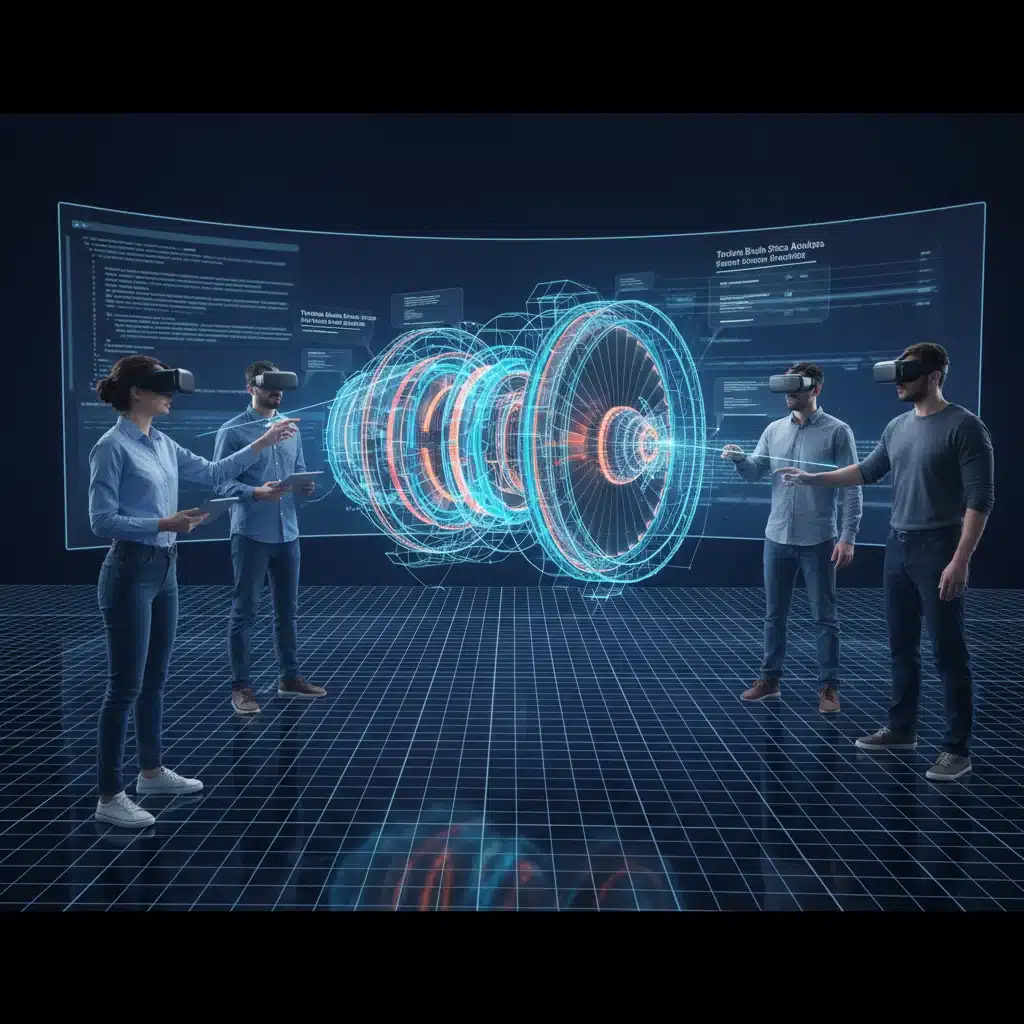
The “Mastery Engine” update brings a new level of physical realism through dynamic haptic feedback integration. Utilizing advanced haptic gloves and suits, trainees can now experience nuanced tactile sensations that closely mimic real-world interactions. For instance, in a medical simulation, a surgeon can feel the resistance of tissue during an incision, or an automotive technician can feel the torque of tightening a bolt. This significantly improves muscle memory development and the transfer of learned skills to real-world scenarios, making VR training more effective than ever before. This advanced haptic feedback is configurable for various industrial tools and materials, providing unparalleled realism.
2. Adaptive Learning Paths with AI Tutors
SkillForge VR now incorporates AI-powered adaptive learning paths. The system continuously assesses a trainee’s performance, identifies areas of weakness, and dynamically adjusts the training module difficulty and content to provide personalized instruction. An AI tutor provides real-time feedback, offers hints, and can even demonstrate correct procedures within the VR environment. This personalized approach ensures that each trainee receives optimal instruction, accelerating skill acquisition and improving retention. For complex procedures, the AI can break down tasks into smaller, manageable steps, guiding the user through each stage until proficiency is achieved. This intelligent tailoring of content is a monumental step in Enterprise VR Updates for training.
3. Comprehensive Performance Analytics and Biometric Tracking
The updated analytics suite in “Mastery Engine” offers unprecedented insights into trainee performance. Beyond tracking task completion and error rates, the system now integrates biometric data (e.g., eye-tracking, heart rate variability, galvanic skin response via wearable sensors) to assess cognitive load, stress levels, and attention during simulations. This data helps trainers understand not just what a trainee did, but how they felt and reacted, providing a holistic view of their readiness. Detailed reports can highlight specific areas for improvement, allowing for targeted interventions and more effective training programs. This level of data granularity is a game-changer for optimizing training efficacy.
Impact on Businesses
Industries such as manufacturing, healthcare, aviation, and energy will benefit immensely from SkillForge VR’s updates. The enhanced realism and personalized instruction will lead to faster, safer, and more cost-effective training programs, reducing the need for expensive physical prototypes or hazardous real-world practice. This translates to higher skilled employees, fewer errors, and improved safety records, directly impacting a company’s bottom line and operational efficiency.
App 3: “DesignVerse Studio” – Empowering Creative and Engineering Workflows
Key Updates for Q3 2026
DesignVerse Studio has established itself as a premier platform for 3D design, prototyping, and visualization in VR. Its Q3 2026 update, named “Infinity Canvas,” focuses on expanding creative possibilities, streamlining design iterations, and fostering cross-disciplinary collaboration. These Enterprise VR Updates are particularly impactful for product development and architectural visualization.
1. Generative Design Integration with AI Assist
A standout feature in “Infinity Canvas” is its new generative design capabilities, powered by integrated AI. Designers can now input design parameters, constraints, and performance objectives directly within the VR environment, and the AI will rapidly generate multiple optimized design variations. Users can then intuitively explore, manipulate, and refine these AI-generated models in real-time, drastically accelerating the ideation and prototyping phases. This allows for the exploration of design spaces previously unimaginable, leading to more innovative and efficient products. The AI assist learns from user preferences, continually improving its suggestions and tailoring them to individual design styles.
2. Advanced Material Physics Simulation
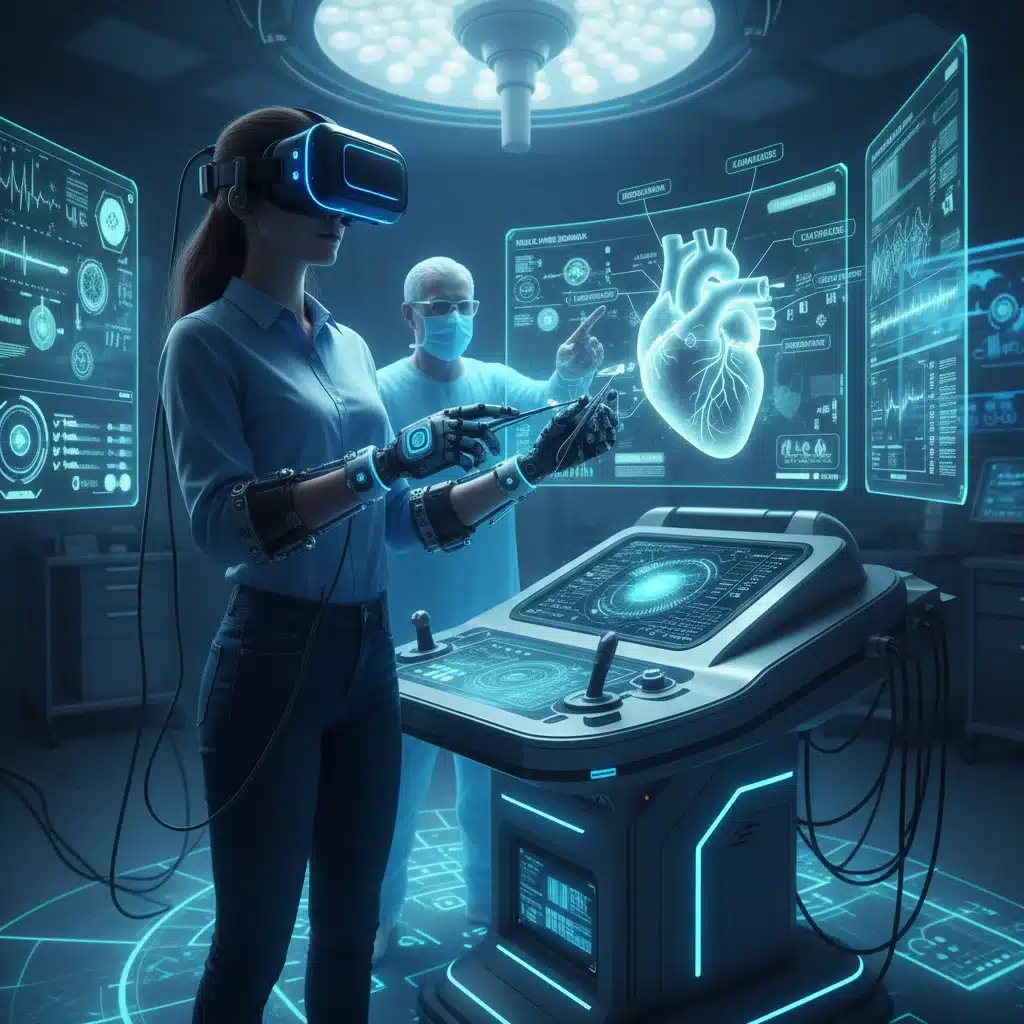
DesignVerse Studio now boasts an advanced material physics simulation engine. This allows designers to apply hyper-realistic material properties to their 3D models and see how they behave under various conditions within the VR space. For example, an automotive designer can simulate how different car body materials deform in a crash, or an architect can visualize the light refraction through various types of glass. This level of physical accuracy enables more informed design decisions earlier in the development cycle, reducing the need for expensive physical prototypes and extensive real-world testing. The fidelity of these simulations makes these Enterprise VR Updates invaluable for critical design decisions.
3. Multi-User Co-Creation and Review Workflows
Building on its existing collaborative features, “Infinity Canvas” introduces enhanced multi-user co-creation and review workflows. Multiple designers, engineers, and stakeholders can now simultaneously work on the same 3D model, each with their own set of tools and permissions. Real-time annotation, version control, and conflict resolution mechanisms are seamlessly integrated. Furthermore, a dedicated ‘review mode’ allows clients or non-technical stakeholders to effortlessly navigate and provide feedback on designs in a highly intuitive VR environment, breaking down communication barriers and accelerating approval processes. This fosters a truly collaborative design ecosystem.
Impact on Businesses
For industries focused on product development, architecture, and manufacturing, DesignVerse Studio’s updates will be transformative. The integration of generative AI, advanced physics simulations, and robust co-creation tools will empower design teams to innovate faster, optimize performance, and bring products to market more efficiently. This leads to reduced development costs, improved product quality, and a significant competitive advantage in rapidly evolving markets.
The Broader Implications of These Enterprise VR Updates
The Enterprise VR Updates for Q3 2026 across ImmersiveWorkspace Pro, SkillForge VR, and DesignVerse Studio paint a clear picture of a maturing and increasingly sophisticated VR ecosystem. These aren’t just minor tweaks; they are foundational enhancements that address core business challenges and open up new avenues for growth and efficiency. The common threads running through these updates include a strong emphasis on AI integration, enhanced realism, improved collaboration, and deeper analytical capabilities.
AI as a Catalyst for VR Innovation
Artificial intelligence is no longer a separate technology but an intrinsic component of advanced VR applications. From AI-powered meeting summarization in ImmersiveWorkspace Pro to adaptive learning paths in SkillForge VR and generative design in DesignVerse Studio, AI is acting as a powerful catalyst. It’s making VR tools smarter, more intuitive, and more capable of handling complex tasks autonomously or semi-autonomously. This synergy between AI and VR is accelerating development cycles and making VR accessible to a broader range of users, regardless of their technical expertise.
The Drive for Hyper-Realism and Immersion
The push for hyper-realism, evident in SkillForge VR’s dynamic haptic feedback and DesignVerse Studio’s advanced material physics, is paramount. The more accurately VR can simulate the real world, the more effective it becomes as a training, design, and collaboration tool. This enhanced immersion translates directly into better skill transfer, more accurate design decisions, and a stronger sense of presence during virtual meetings. As hardware continues to improve, we can expect this trend towards photorealism and tactile feedback to intensify, further blurring the lines between the virtual and physical.
Seamless Integration and Interoperability
Another crucial takeaway from these Enterprise VR Updates is the growing importance of seamless integration with existing enterprise software ecosystems. VR applications are no longer standalone islands; they are becoming integral parts of broader digital workflows. Improved APIs, cross-platform compatibility, and direct links to project management and communication tools are making VR a more natural and efficient extension of traditional business operations. This reduces friction in adoption and maximizes the ROI for companies investing in VR technology.
Data-Driven Insights for Better Decisions
The emphasis on comprehensive analytics, particularly in SkillForge VR with its biometric tracking, highlights a move towards data-driven decision-making in VR. Understanding user behavior, performance metrics, and even cognitive states within VR environments provides invaluable insights that can be used to optimize processes, personalize experiences, and ultimately achieve better outcomes. This analytical depth transforms VR from a mere experiential tool into a powerful platform for data collection and strategic insight.
Looking Ahead: What’s Next for Enterprise VR?
The Q3 2026 updates are a strong indicator of the future trajectory of enterprise VR. We can anticipate continued advancements in several key areas:
- Further AI Convergence: Expect even deeper integration of AI for predictive analytics, automated content generation, and hyper-personalized user experiences.
- Haptic and Olfactory Feedback: As haptic technology matures, expect more sophisticated and nuanced tactile feedback. We might also see nascent integration of olfactory feedback for truly multi-sensory simulations, particularly in training and design.
- Pervasive Mixed Reality: The lines between VR and augmented reality (AR) will continue to blur, leading to more pervasive mixed reality solutions that blend digital content seamlessly with the physical world. This will open up new possibilities for on-site assistance and real-time data overlay.
- Ethical AI and Data Privacy: As VR applications become more intelligent and collect more data, there will be an increased focus on ethical AI development, data privacy, and security protocols to ensure responsible use of these powerful technologies.
- Standardization: Efforts towards industry-wide standards for VR content creation, interoperability, and data formats will likely gain momentum, making it easier for businesses to adopt and integrate diverse VR solutions.
These Enterprise VR Updates are not just about new features; they are about building a more intelligent, intuitive, and integrated virtual ecosystem that empowers businesses to achieve more. Staying informed and strategically adopting these technologies will be crucial for any organization looking to thrive in the digital age.