Top 4 Medical VR Simulators Revolutionizing Surgical Training by 2026
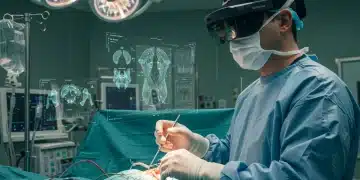
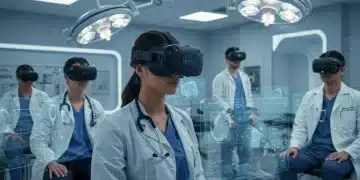
The landscape of medical education and surgical training is undergoing a profound transformation, driven by the relentless march of technological innovation. At the forefront of this revolution are Medical VR Simulators, sophisticated virtual reality applications designed to provide immersive, realistic, and risk-free environments for surgeons and medical students to hone their skills. By early 2026, these simulators are not just enhancing traditional training methods; they are fundamentally redefining them, promising a new era of precision, efficiency, and safety in surgical practice. This comprehensive review delves into the four leading Medical VR Simulators that are poised to make the most significant impact on surgical training in the coming years.
The integration of virtual reality into medicine is more than a fleeting trend; it’s a strategic imperative. Traditional surgical training, while invaluable, often relies on cadaveric dissection, animal models, or supervised operating room experience. While these methods offer critical hands-on learning, they come with inherent limitations, including ethical considerations, high costs, limited availability, and the inability to perfectly replicate rare or complex scenarios. Medical VR Simulators address these challenges head-on, offering scalable, repeatable, and customizable training modules that can be accessed anytime, anywhere. This accessibility not only democratizes high-quality surgical education but also allows for deliberate practice, performance tracking, and immediate feedback, elements crucial for accelerated skill acquisition and mastery.
The Dawn of a New Era: Why Medical VR Simulators Matter
The surgical field demands unparalleled precision, quick decision-making, and extensive practical experience. Historically, obtaining this experience has been a lengthy and resource-intensive process. Junior surgeons often spend years observing, assisting, and then gradually performing procedures under strict supervision. The ‘see one, do one, teach one’ model, while foundational, has inherent limitations regarding patient safety and the ability to practice complex or rare cases repeatedly without consequence. This is where Medical VR Simulators emerge as game-changers.
These advanced platforms allow trainees to immerse themselves in hyper-realistic surgical environments, complete with anatomical accuracy, physiological responses, and even haptic feedback that simulates the feel of tissue and instruments. The benefits are multifold: reduced learning curves, improved surgical outcomes, enhanced patient safety, and a significant reduction in training costs over the long term. Moreover, VR allows for standardized training modules, ensuring that every trainee receives consistent, high-quality instruction regardless of their geographical location or the specific institution they attend. The ability to record and analyze every movement, decision, and outcome within the simulation provides invaluable data for performance assessment and personalized feedback, accelerating the journey from novice to expert.
By early 2026, the adoption of Medical VR Simulators is projected to be widespread across medical schools, residency programs, and continuing medical education initiatives globally. The initial investment, while substantial for some institutions, is quickly offset by the long-term gains in efficiency, safety, and the superior competency of trained surgeons. We are moving towards a future where a significant portion of foundational and advanced surgical training will occur in the virtual realm, perfectly complementing real-world operating room experience rather than replacing it. This hybrid approach promises to produce a generation of surgeons who are not only highly skilled but also more confident and adaptable in the face of diverse clinical challenges.
1. Precision Pro-Surg VR: The Gold Standard in Microsurgery Training
Leading the charge in advanced surgical simulation is Precision Pro-Surg VR, a platform specifically designed to master the intricate demands of microsurgery. This simulator has garnered significant attention for its unparalleled haptic feedback system, which provides an exceptionally realistic tactile experience, crucial for procedures requiring extreme delicacy and precision. Microsurgery, involving the manipulation of tiny structures like blood vessels and nerves, leaves no room for error, and traditional training often struggles to replicate the necessary sensory input.
Precision Pro-Surg VR addresses this by incorporating state-of-the-art haptic devices that allow trainees to feel the resistance of tissue, the tension of sutures, and the subtle vibrations of instruments as if they were operating on a real patient. The visual fidelity is equally impressive, with high-resolution 3D anatomical models that can be magnified to an astonishing degree, revealing minute details that are critical for successful outcomes. The platform offers a wide array of modules, from basic suturing and knot-tying exercises under magnification to complex revascularization and nerve repair procedures.
What sets Precision Pro-Surg VR apart is its adaptive learning algorithm. It tracks every movement, tremor, and decision made by the trainee, providing immediate, objective feedback and identifying areas for improvement. It can even dynamically adjust the difficulty level based on performance, ensuring a personalized learning pathway. Institutions utilizing Precision Pro-Surg VR have reported a significant reduction in training time for microsurgical procedures and a marked improvement in the dexterity and precision of their residents. By early 2026, this simulator is expected to be a mandatory component of all leading microsurgical training programs, fundamentally reshaping how surgeons acquire these highly specialized skills.
2. Trauma & Emergency VR Suite: Rapid Response in a Virtual Crisis
In high-stakes environments like emergency rooms and trauma centers, every second counts, and the ability to make rapid, accurate decisions under pressure is paramount. The Trauma & Emergency VR Suite is engineered precisely for this purpose, providing an immersive training ground for managing critical patient scenarios. Unlike other simulators that focus on elective procedures, this suite plunges trainees into chaotic, time-sensitive situations, simulating everything from severe car accident injuries to gunshot wounds and internal hemorrhages.
The core strength of the Trauma & Emergency VR Suite lies in its dynamic scenario generation. Instructors can create an infinite number of patient cases, each with evolving physiological parameters, unexpected complications, and multiple decision points. Trainees must quickly assess the patient, prioritize interventions, perform diagnostic procedures, and execute life-saving surgeries, all while managing a virtual medical team and communicating effectively. The simulator emphasizes not just technical skills but also critical non-technical skills such as leadership, teamwork, communication, and stress management – all vital for success in emergency medicine.
Realism is key, with detailed injury models, accurate blood loss simulations, and physiological responses that mirror real-world patient dynamics. Performance is meticulously recorded and analyzed, offering insights into decision-making processes, procedural efficiency, and adherence to protocols. The ability to debrief and replay scenarios from multiple perspectives allows trainees to learn from mistakes in a safe environment, fostering a culture of continuous improvement. By early 2026, the Trauma & Emergency VR Suite is anticipated to become an indispensable tool for emergency medicine residencies and military medical training, preparing professionals for the unpredictable challenges of trauma care.
3. Endo-Skill VR: Navigating the Complexities of Endoscopic Surgery
Endoscopic surgery has revolutionized many medical fields, offering minimally invasive alternatives to traditional open surgeries. However, mastering endoscopic techniques requires a unique set of hand-eye coordination skills and the ability to navigate complex internal anatomies using a limited field of view. Endo-Skill VR is a specialized simulator designed to address these specific challenges, providing comprehensive training for various endoscopic procedures, including gastroscopy, colonoscopy, laparoscopy, and arthroscopy.
This simulator excels in replicating the visual and tactile experience of endoscopic surgery. Trainees learn to manipulate flexible endoscopes or rigid laparoscopic instruments, navigating through virtual organs, identifying pathologies, and performing interventions such as biopsies, polyp removals, and tissue resections. The visual environment is rendered with high anatomical accuracy, allowing for realistic identification of landmarks and pathological conditions. The haptic feedback system simulates the resistance of tissue, the feel of passing instruments through narrow lumens, and the force required for various endoscopic maneuvers.
Endo-Skill VR offers a progressive curriculum, starting with basic scope manipulation and navigation, advancing to complex diagnostic procedures, and culminating in therapeutic interventions. It features a rich library of patient cases, including variations in anatomy and pathology, which ensures trainees are exposed to a wide spectrum of clinical scenarios. Performance metrics include scope insertion depth, navigation efficiency, lesion identification accuracy, and procedural completion time, all contributing to a holistic assessment of skill. The simulator’s modular design allows institutions to customize their training programs based on their specific needs, from gastroenterology to general surgery. By early 2026, Endo-Skill VR is expected to be a cornerstone of training for all specialties involving endoscopic procedures, significantly reducing the learning curve and improving patient outcomes in minimally invasive surgery.
4. Ortho-Motion VR: Mastering Musculoskeletal Interventions
Orthopedic surgery, dealing with the musculoskeletal system, often involves complex biomechanical principles, precise anatomical understanding, and the skilled use of specialized tools. Ortho-Motion VR is a groundbreaking simulator tailored to meet these demands, offering an immersive environment for training in a wide range of orthopedic procedures, from fracture repair and joint replacement to spinal fusion and arthroscopic interventions. This platform stands out for its focus on biomechanical realism and the accurate simulation of bone and tissue properties.
The simulator features highly detailed 3D anatomical models of bones, joints, ligaments, and muscles, allowing trainees to visualize and interact with the musculoskeletal system in an unprecedented way. Trainees can practice drilling, reaming, cutting, and implanting hardware with haptic feedback that realistically mimics the feel of bone and the forces involved. For instance, in a total knee replacement module, trainees can feel the resistance of bone as they resect it, the stability of an implant as it’s seated, and the tension of ligaments during range-of-motion testing.
Ortho-Motion VR provides a comprehensive curriculum that covers both common and rare orthopedic conditions. It allows for repeated practice of critical steps in complex surgeries, such as precise screw placement in fracture fixation or accurate alignment of prosthetic components in joint arthroplasty. The system offers detailed performance analytics, tracking parameters like drilling depth, angle accuracy, force application, and efficiency of tool usage. This data-driven feedback is invaluable for refining motor skills and surgical judgment. Furthermore, the collaborative mode allows multiple trainees or an instructor and trainee to operate together in the same virtual space, fostering teamwork and peer learning. By early 2026, Ortho-Motion VR is set to become an essential training tool for orthopedic residents and practicing surgeons seeking to master new techniques or refresh existing skills, leading to improved surgical precision and patient mobility outcomes.
The Future Impact of Medical VR Simulators on Healthcare
The pervasive integration of Medical VR Simulators into surgical training by early 2026 will herald a new era of healthcare delivery. The benefits extend far beyond individual skill acquisition, impacting patient safety, healthcare economics, and the very structure of medical education.
Enhanced Patient Safety and Outcomes
One of the most significant advantages of VR simulation is the ability for surgeons to practice complex procedures repeatedly without any risk to real patients. This ‘deliberate practice’ leads to higher proficiency before entering the operating room, reducing the likelihood of errors and complications. As surgeons become more adept and confident through VR training, patient outcomes are expected to improve dramatically, with fewer adverse events, shorter recovery times, and higher success rates for intricate surgeries. The ability to simulate rare or emergency scenarios also prepares surgeons for unexpected challenges, making them more resilient and effective under pressure.
Cost-Effectiveness and Accessibility
While the initial investment in high-fidelity Medical VR Simulators can be substantial, the long-term cost benefits are compelling. VR training can significantly reduce the reliance on expensive cadaver labs, animal models, and valuable operating room time for basic skill acquisition. It also allows for training to be conducted in more accessible and flexible settings, potentially reducing travel and accommodation costs for trainees. Furthermore, the improved efficiency in training can shorten the learning curve for new procedures, bringing skilled surgeons into practice faster and more cost-effectively. The scalability of VR platforms means that high-quality training can be delivered to a larger number of individuals, including those in remote or underserved areas, democratizing access to cutting-edge surgical education.
Standardization and Assessment
Medical VR Simulators offer an unprecedented ability to standardize surgical training. Every trainee can undergo the exact same modules, ensuring a consistent baseline of knowledge and skill. This standardization is crucial for maintaining high quality across different institutions and ensuring that all certified surgeons meet rigorous proficiency standards. Moreover, the objective performance data collected by these simulators provides a robust framework for assessing competency. Instructors can move beyond subjective evaluations, using data on precision, efficiency, decision-making, and error rates to provide targeted feedback and objectively determine when a trainee is ready for real-world surgical practice. This data-driven assessment not only enhances accountability but also allows for personalized learning pathways, catering to individual strengths and weaknesses.
Accelerated Innovation and Research
The data generated by Medical VR Simulators also serves as a rich resource for research and innovation. By analyzing performance trends across a large cohort of trainees, researchers can identify optimal training methodologies, pinpoint common errors, and even contribute to the development of new surgical techniques. VR platforms can also be used to prototype new instruments or surgical approaches in a virtual environment before costly physical development. This iterative process of simulation, analysis, and refinement can significantly accelerate medical innovation, bringing safer and more effective treatments to patients faster.
Challenges and Future Directions
Despite the immense promise, the widespread adoption of Medical VR Simulators faces certain challenges. The initial cost of hardware and software, the need for specialized technical support, and the integration into existing medical curricula are all factors that institutions must consider. Furthermore, while haptic feedback is improving rapidly, perfectly replicating the nuances of human tissue interaction remains an ongoing area of development. There is also a need for robust validation studies to definitively link VR simulation performance to improved real-world surgical outcomes, although early data is highly encouraging.
Looking ahead, the evolution of Medical VR Simulators will likely involve even greater realism through advanced haptics, more sophisticated AI-driven adaptive learning systems, and the integration of augmented reality (AR) for mixed-reality training environments. The convergence of VR with other emerging technologies like artificial intelligence and machine learning will create even more intelligent and personalized training experiences. Imagine simulators that can predict a trainee’s weaknesses and automatically generate custom exercises, or AR overlays in the operating room that provide real-time guidance based on pre-operative VR planning. The potential is limitless.
Conclusion
By early 2026, the four Medical VR Simulators highlighted – Precision Pro-Surg VR, Trauma & Emergency VR Suite, Endo-Skill VR, and Ortho-Motion VR – will collectively transform surgical training. They represent the vanguard of a technological revolution that promises to make surgical education more accessible, efficient, and ultimately, safer for patients. These platforms are not just tools; they are foundational elements of a new paradigm in medical learning, empowering a generation of surgeons with unparalleled skills and confidence. The future of surgery is increasingly virtual, and the positive impact on global healthcare will be profound and lasting.