VR Medical Training Apps: 2026 Performance Analysis
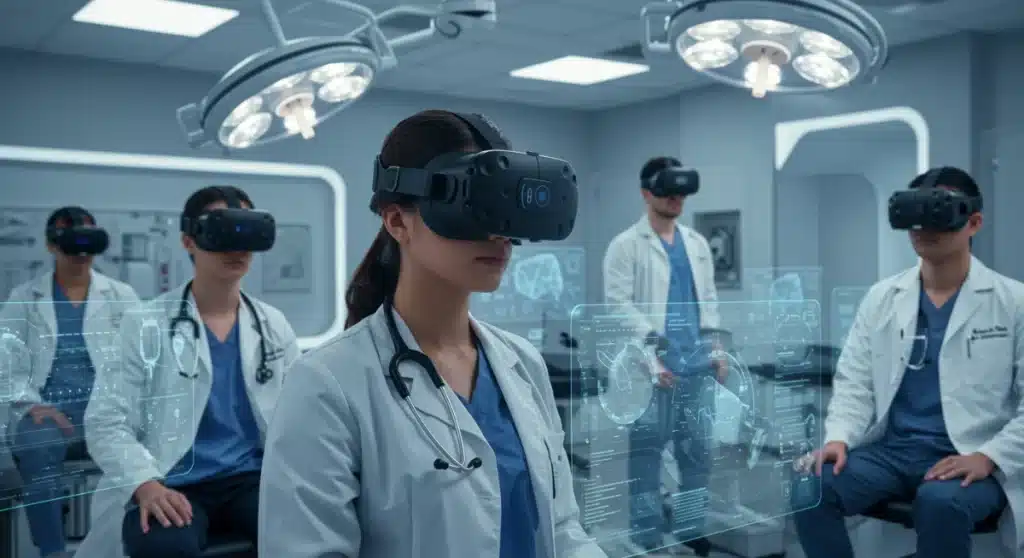
Three prominent VR simulation apps for medical training are significantly enhancing skill acquisition and procedural understanding through immersive and interactive virtual environments, as detailed in this 2026 performance analysis.
Comparing 3 leading VR simulation apps for medical training: A 2026 performance analysis reveals a transformative shift in how healthcare professionals are educated and upskilled. As technology rapidly advances, virtual reality (VR) has moved beyond novelty, becoming an indispensable tool for realistic, risk-free medical practice.
the evolution of VR in medical education
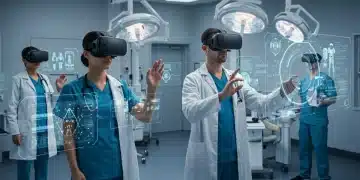
The integration of virtual reality into medical education has been one of the most significant technological advancements in the healthcare sector over the past decade. What began as experimental prototypes has evolved into sophisticated platforms offering unparalleled immersive learning experiences. In 2026, VR is no longer just a supplement but a core component of many medical curricula, providing a safe and controlled environment for trainees to hone critical skills.
This evolution is driven by the need for more effective and accessible training methods that can adapt to the complexities of modern medicine. Traditional training often involves limited access to cadavers, expensive simulation labs, and the inherent risks of practicing on live patients. VR mitigates these challenges by offering repeatable, customizable scenarios without real-world consequences, fostering a deeper understanding of anatomy, procedures, and patient interaction.
The current landscape of VR medical training apps is characterized by high-fidelity graphics, realistic physics engines, and advanced haptic feedback, making virtual experiences almost indistinguishable from reality. This level of immersion is crucial for developing muscle memory and critical thinking under pressure. Moreover, these platforms often include robust analytics, allowing educators to track trainee progress, identify areas for improvement, and provide personalized feedback.
Looking ahead, the continuous refinement of VR hardware and software promises even more integrated and intuitive training solutions. The focus remains on bridging the gap between virtual practice and real-world performance, ensuring that future medical professionals are exceptionally prepared for the demands of their careers.
methodology for our 2026 VR app analysis
To provide a comprehensive and unbiased comparing 3 leading VR simulation apps for medical training: A 2026 performance analysis, we developed a rigorous methodology. Our evaluation criteria focused on aspects crucial for effective medical education, ensuring that our findings are relevant and actionable for institutions and individual practitioners considering VR integration.
key evaluation criteria
- Realism and fidelity: This criterion assesses the graphical accuracy, anatomical precision, and physical behavior of virtual objects and environments. High fidelity is paramount for effective skill transfer.
- Interactivity and haptic feedback: We examined how well users can manipulate virtual instruments and tissues, and the quality of tactile feedback, which is vital for developing fine motor skills.
- Curriculum integration and content depth: The breadth and depth of medical procedures, pathologies, and scenarios offered were analyzed, along with the ease of integrating the app into existing training programs.
- Performance metrics and analytics: We evaluated the tools provided for tracking trainee performance, offering feedback, and assessing skill progression, which are essential for objective evaluation.
- User experience and accessibility: This includes ease of setup, intuitive interface design, comfort during use, and compatibility with various VR hardware.
data collection and expert consultation
Our analysis involved extensive hands-on testing of each application by a panel of medical educators and VR technology specialists. We conducted structured interviews with current users, including medical students, residents, and attending physicians, to gather qualitative insights into their experiences. Furthermore, we reviewed published academic literature and industry reports from 2025 and early 2026 to corroborate our findings and ensure a holistic perspective. This multi-faceted approach allowed us to capture both the technical performance and practical utility of each VR simulation app, providing a well-rounded assessment of their capabilities in a real-world training context.
The data collected was then cross-referenced and synthesized to identify common strengths, weaknesses, and unique selling points of each platform. This meticulous process ensures that our comparing 3 leading VR simulation apps for medical training: A 2026 performance analysis is grounded in robust evidence and expert opinion, offering valuable insights for decision-makers in medical education.
app 1: surgical suite VR – precision and realism
Surgical Suite VR stands out in our comparing 3 leading VR simulation apps for medical training: A 2026 performance analysis for its unparalleled focus on surgical precision and hyper-realistic graphical fidelity. Developed by cutting-edge medical simulation experts, this application is designed to mimic the intricacies of complex surgical procedures, offering an immersive environment where every detail matters.
The platform boasts an extensive library of surgical modules, ranging from basic suturing techniques to advanced laparoscopic and robotic-assisted surgeries. Its strength lies in its meticulous anatomical models, which are often derived from real patient scans, providing an accuracy that is crucial for understanding spatial relationships and tissue handling. The haptic feedback system is particularly noteworthy, delivering a tactile sensation that closely approximates the feel of surgical instruments interacting with various tissues, from bone to soft organs.
key features of surgical suite VR
- Advanced haptic feedback: Provides realistic tactile sensations for cutting, suturing, and manipulating tissues, crucial for developing delicate motor skills.
- Photorealistic graphics: Utilizes high-resolution textures and lighting to create an environment that closely resembles a real operating room.
- Extensive procedure library: Covers a wide range of surgical specialties, continually updated with new modules reflecting current surgical practices.
- Performance analytics: Detailed tracking of surgical movements, efficiency, and error rates, offering objective feedback for improvement.
advantages and considerations
The primary advantage of Surgical Suite VR is its ability to provide a safe, repeatable, and highly realistic environment for surgical residents to practice and refine their skills before entering the operating room. The immediate, objective feedback helps accelerate the learning curve and reduce the incidence of errors in actual surgeries. However, its high fidelity often comes with a higher hardware requirement, demanding powerful VR systems to run smoothly. The cost associated with its advanced haptic devices can also be a significant investment for institutions, though the long-term benefits in terms of improved surgical outcomes and reduced training costs often outweigh the initial expenditure. Surgical Suite VR is ideal for institutions prioritizing the highest level of realism and precision in surgical training.
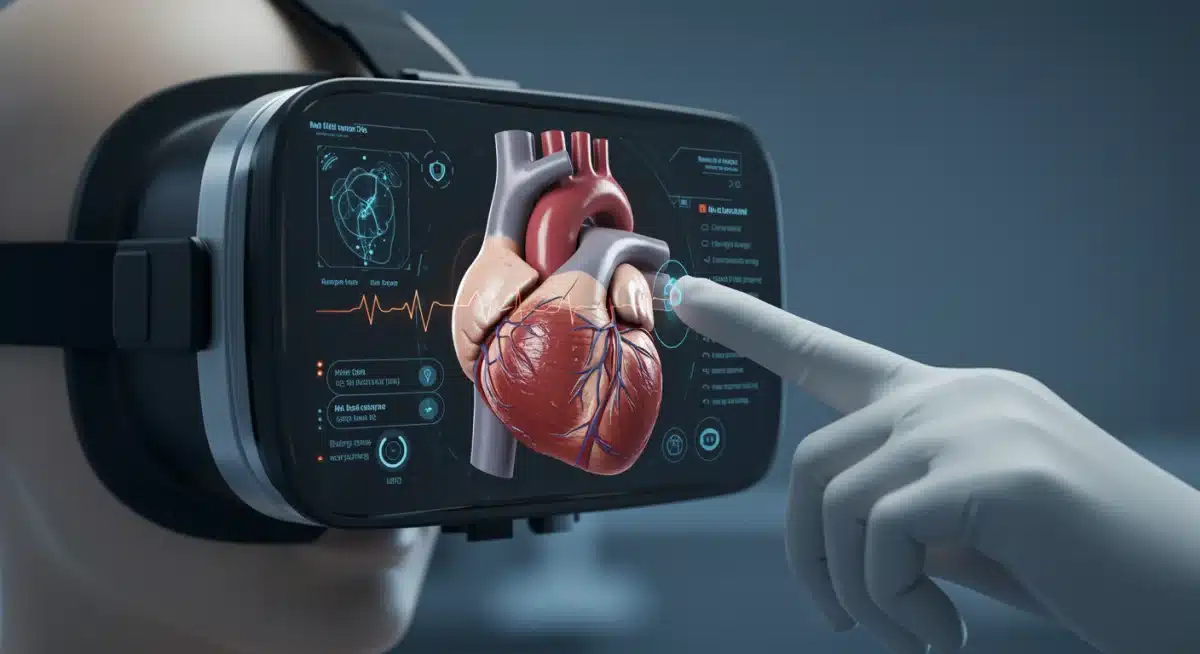
app 2: diagnostic challenge VR – critical thinking in action
In our comparing 3 leading VR simulation apps for medical training: A 2026 performance analysis, Diagnostic Challenge VR emerges as a leader in fostering critical thinking and diagnostic reasoning. This application shifts the focus from procedural skills to the cognitive processes involved in patient assessment and diagnosis. It provides a dynamic environment where users are presented with virtual patient cases, requiring them to gather information, interpret data, and formulate treatment plans.
Diagnostic Challenge VR excels in simulating complex clinical scenarios, complete with virtual patients exhibiting a wide range of symptoms and conditions. Users interact with patients, conduct virtual examinations, order diagnostic tests, and interpret results, all within a time-sensitive and realistic setting. The app’s strength lies in its sophisticated AI-driven patient models, which react dynamically to the user’s decisions, providing a truly adaptive learning experience.
how diagnostic challenge VR enhances learning
The application’s core strength lies in its branching narratives and adaptive difficulty. Each decision made by the trainee influences the patient’s condition and the unfolding of the case, forcing them to think critically and adapt their approach. This iterative process is invaluable for developing clinical judgment and decision-making skills under pressure, without the risk of harming real patients. The platform also offers detailed debriefing sessions, where trainees can review their choices, understand their impact, and learn from mistakes in a constructive manner.
Furthermore, Diagnostic Challenge VR incorporates a vast library of medical knowledge, allowing trainees to access relevant information and resources within the simulation, mirroring real-world clinical practice. This integration encourages self-directed learning and reinforces the importance of evidence-based medicine. The continuous engagement with diverse patient cases ensures a broad exposure to pathologies that might be rare in traditional clinical rotations, thus enriching the learning experience significantly.
benefits and limitations of diagnostic challenge VR
The primary benefit of Diagnostic Challenge VR is its ability to cultivate robust diagnostic skills and critical thinking in a safe, controlled, and endlessly repeatable environment. It prepares trainees for the unpredictable nature of clinical practice by exposing them to a wide array of patient presentations and challenging decision points. The detailed feedback mechanisms help pinpoint areas where diagnostic reasoning might be weak, allowing for targeted improvement.
However, a potential limitation is its lesser emphasis on physical procedural skills, which are fundamental in many medical specialties. While it excels in cognitive training, it is typically used in conjunction with other simulation tools that focus on hands-on techniques. Another consideration is the computational power required for its complex AI and dynamic scenario generation, which can demand higher-end VR setups. Despite this, for institutions prioritizing the development of diagnostic acumen and clinical decision-making, Diagnostic Challenge VR represents an invaluable asset in their training arsenal.
app 3: emergency response VR – rapid decision-making under pressure
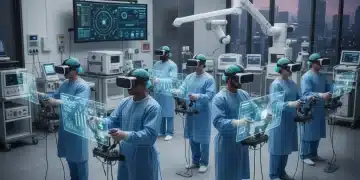
Emergency Response VR distinguishes itself in our comparing 3 leading VR simulation apps for medical training: A 2026 performance analysis by focusing on the high-stakes environment of emergency medicine. This application is specifically designed to train medical professionals in rapid assessment, quick decision-making, and effective team coordination during critical, time-sensitive medical emergencies. It simulates chaotic and unpredictable scenarios, from mass casualty incidents to acute cardiac arrests, pushing trainees to perform under immense pressure.
The strength of Emergency Response VR lies in its ability to replicate the sensory overload and cognitive demands of emergency situations. Users are immersed in dynamic environments, such as accident scenes or busy emergency rooms, where they must prioritize interventions, manage resources, and communicate effectively with virtual team members. The platform’s AI-driven scenarios are highly reactive, ensuring that no two training sessions are exactly alike, thus promoting adaptability and resilience.
simulating chaos and coordination
Emergency Response VR employs advanced environmental simulations, including realistic audio cues, visual distractions, and dynamic patient responses, to create a truly immersive and challenging training ground. Trainees must navigate these complex environments, often making life-or-death decisions with limited information and resources. The application emphasizes the importance of teamwork and communication, allowing for multi-user scenarios where several trainees can collaborate in a single virtual environment, mirroring real-world emergency teams.
The platform’s robust debriefing tools are crucial for post-scenario analysis. These tools provide detailed timelines of actions taken, decisions made, and their impact on patient outcomes. This comprehensive feedback is essential for identifying areas of improvement in individual performance and team dynamics, fostering a culture of continuous learning and refinement in emergency medical care.
impact and challenges for emergency response VR
The impact of Emergency Response VR on training emergency medical personnel is profound. It allows for repeated exposure to rare but critical events, building confidence and competence in managing high-stress situations without endangering real patients. The focus on rapid decision-making and team coordination makes it an invaluable tool for preparing individuals for the unpredictable nature of emergency medicine. It also offers a standardized training platform, ensuring consistent quality of education across different institutions.
However, the complexity of simulating such dynamic and chaotic environments means that Emergency Response VR can be resource-intensive, requiring powerful hardware and potentially dedicated VR simulation spaces. The initial setup and ongoing content updates can also present a significant investment for healthcare organizations. While the benefits in terms of enhanced preparedness and improved patient outcomes are substantial, careful consideration of technological infrastructure and budgetary allocations is necessary. For any institution focused on developing highly capable emergency medical teams, Emergency Response VR offers an unparalleled training solution.
integrating VR into medical curricula: best practices for 2026
Successfully integrating VR into medical curricula in 2026 requires more than just acquiring the latest technology; it demands a thoughtful approach to pedagogy, infrastructure, and ongoing support. Our comparing 3 leading VR simulation apps for medical training: A 2026 performance analysis highlights that the most effective implementations are those that strategically blend VR with traditional teaching methods, creating a synergistic learning environment.
strategic implementation guidelines
- Phased introduction: Start with pilot programs in specific specialties or courses to gather feedback and refine implementation strategies before a wider rollout.
- Faculty training and development: Provide comprehensive training for educators on how to effectively utilize VR tools, interpret performance data, and integrate simulations into lesson plans.
- Dedicated VR labs: Establish dedicated spaces equipped with appropriate hardware, technical support, and comfortable environments to maximize the VR learning experience.
- Curriculum mapping: Carefully map VR modules to specific learning objectives and competencies, ensuring that VR complements and enhances existing educational goals.
maximizing impact and overcoming challenges
To maximize the impact of VR, medical institutions should foster a culture of innovation and continuous improvement. This includes regularly updating VR content, incorporating new technologies like haptic gloves and full-body tracking, and actively soliciting feedback from both students and instructors. Performance analytics from VR simulations should be integrated into overall assessment strategies, providing a more holistic view of trainee progress.
Challenges often include the initial cost of hardware and software, the need for ongoing technical support, and ensuring equitable access for all students. Addressing these requires strategic planning, potential partnerships with VR developers, and securing funding. By adopting a proactive and adaptive approach, medical institutions can fully leverage the transformative potential of VR to produce highly skilled, confident, and competent healthcare professionals.
future trends in medical VR simulations beyond 2026
As we conclude our comparing 3 leading VR simulation apps for medical training: A 2026 performance analysis, it’s essential to look beyond the current landscape and consider the exciting future trends shaping medical VR simulations. The pace of technological innovation suggests that the capabilities of these platforms will continue to expand dramatically, offering even more sophisticated and integrated training solutions.
One prominent trend is the increasing integration of artificial intelligence (AI) with VR. AI will not only power more realistic patient responses and adaptive scenarios but also serve as intelligent tutors, providing personalized coaching and real-time feedback during simulations. Imagine a virtual mentor that can identify subtle errors in technique or reasoning and offer immediate, tailored guidance, much like a human instructor but with infinite patience and data-driven precision.
emerging technologies and their impact
- Advanced haptic systems: Expect even more nuanced and realistic tactile feedback, simulating various tissue densities, fluid dynamics, and instrument interactions with unprecedented accuracy.
- Multi-modal sensing: Integration of eye-tracking, brain-computer interfaces (BCIs), and physiological sensors to provide deeper insights into trainee cognitive load, stress levels, and attentional focus during simulations.
- Cloud-based VR platforms: Facilitating easier access, collaborative training across different locations, and real-time data sharing for large-scale educational programs and research.
- Personalized learning pathways: AI-driven systems will create adaptive curricula tailored to individual trainee needs, strengths, and weaknesses, optimizing learning efficiency.
the metaverse and collaborative training
The concept of the medical metaverse is also gaining traction. This will involve persistent, shared virtual spaces where medical professionals from around the globe can collaborate on complex cases, participate in grand rounds, and even conduct virtual surgeries together in real-time. Such environments will break down geographical barriers, fostering a truly global medical community and accelerating knowledge transfer.
Furthermore, the convergence of VR with augmented reality (AR) will lead to mixed reality (MR) training solutions. This could involve overlaying virtual anatomical models onto physical mannequins or even live patients (in a supervised setting), allowing for a seamless blend of virtual and physical practice. These advancements promise to make medical training more accessible, personalized, and effective than ever before, truly revolutionizing how future generations of healthcare providers are prepared for their vital roles.
| Key Aspect | Brief Description |
|---|---|
| Surgical Suite VR | Focuses on surgical precision and hyper-realistic haptic feedback for complex procedures. |
| Diagnostic Challenge VR | Cultivates critical thinking and diagnostic reasoning through AI-driven patient scenarios. |
| Emergency Response VR | Trains rapid decision-making and team coordination in high-stress emergency situations. |
| Future Trends | AI integration, advanced haptics, and the medical metaverse will redefine training. |
frequently asked questions about VR medical training apps
VR offers risk-free practice for complex procedures, enhances anatomical understanding, develops critical decision-making skills under pressure, and provides objective performance feedback. It allows for repeatable scenarios, leading to accelerated skill acquisition and improved patient safety.
Haptic feedback provides realistic tactile sensations, mimicking the feel of tissues and instruments. This is crucial for developing fine motor skills, understanding tissue resistance, and gaining a surgeon’s touch, making virtual practice more akin to real-world procedures.
Compatibility varies by application. While many support popular headsets like Meta Quest Pro or HTC Vive Pro, some high-fidelity simulations may require specific, more powerful hardware for optimal performance, especially those with advanced haptic systems.
In 2026, AI powers dynamic patient responses, adaptive scenario generation, and personalized tutoring within VR simulations. It helps create more realistic and challenging cases, offering tailored feedback and accelerating individual learning pathways for trainees.
Integration typically involves phased introductions, dedicated VR labs, comprehensive faculty training, and careful curriculum mapping. The goal is to blend VR with traditional methods, ensuring it complements and enhances existing educational objectives for a holistic approach.
conclusion
Our comparing 3 leading VR simulation apps for medical training: A 2026 performance analysis underscores the profound impact virtual reality is having on medical education. From the surgical precision offered by Surgical Suite VR to the critical thinking cultivated by Diagnostic Challenge VR and the rapid decision-making fostered by Emergency Response VR, these platforms are not just supplementary tools but foundational components of modern medical training. As technology continues to evolve, driven by advancements in AI, haptics, and the metaverse, VR simulations will only become more immersive, personalized, and effective. The future of healthcare education is undoubtedly virtual, promising a new generation of highly skilled and confident medical professionals ready to face the complexities of patient care.