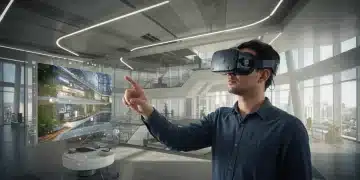
VR Controller Innovations 2026: Haptic Feedback & Precision for US Industry
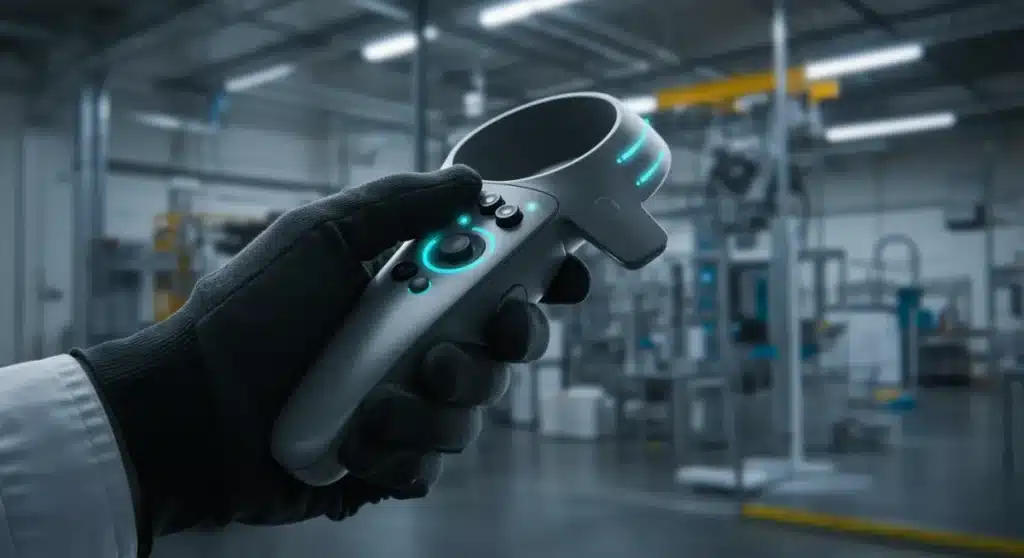
The latest VR controller innovations in 2026 are revolutionizing U.S. industrial applications through advanced haptic feedback and unparalleled precision tracking, enhancing immersive training, remote operation, and design workflows.
In 2026, the landscape of virtual reality has profoundly transformed, especially concerning its application within U.S. industries. At the heart of this evolution lies a critical component: the VR controller. This guide delves into the most significant advancements in VR controller innovations 2026, focusing on how cutting-edge haptic feedback and precision tracking are not just enhancing, but fundamentally redefining industrial applications.
The Dawn of Next-Generation Haptic Feedback in Industrial VR
Haptic feedback, the technology that simulates the sense of touch, has long been a cornerstone of immersive experiences. However, in 2026, industrial VR applications are witnessing a dramatic leap forward in haptic capabilities, moving beyond simple vibrations to nuanced, realistic tactile sensations. This evolution is critical for tasks requiring fine motor skills and accurate material interaction in virtual environments.
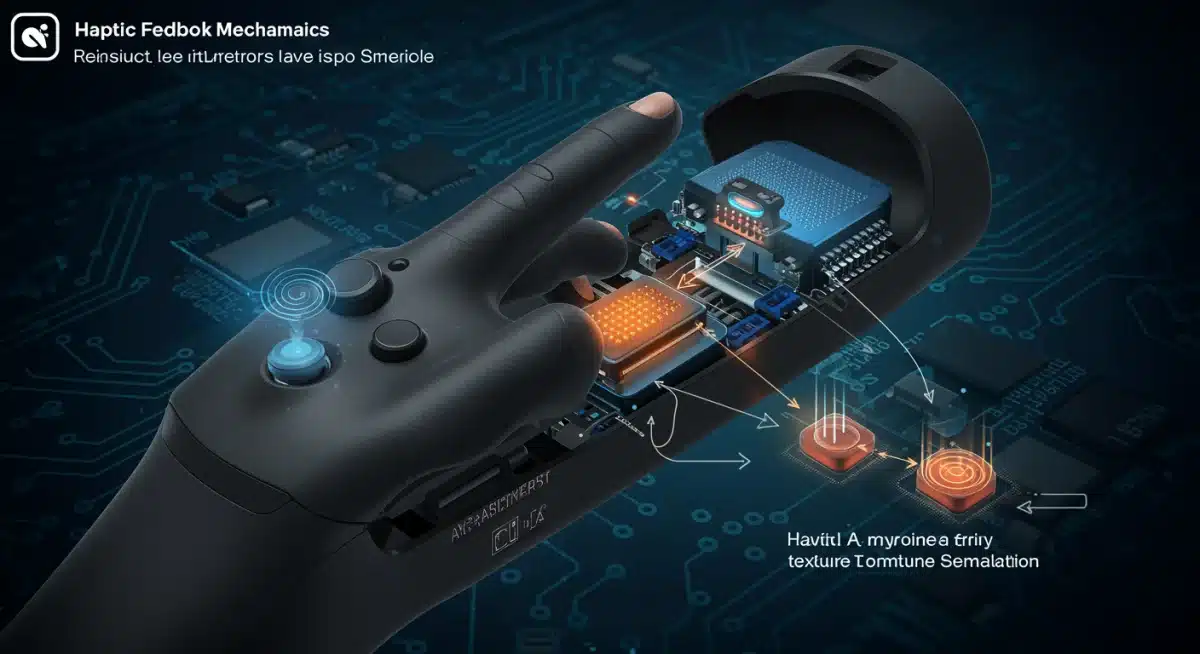
The new generation of haptic systems integrates micro-actuators and advanced algorithms to mimic textures, resistance, and even temperature changes. This allows engineers to ‘feel’ the integrity of a virtual component, surgeons to ‘sense’ tissue density during simulated procedures, and assembly line workers to ‘grasp’ virtual tools with unprecedented realism. The implications for training and prototyping are immense, reducing the gap between virtual practice and real-world performance.
Beyond Basic Vibrations: The Spectrum of Tactile Response
Traditional VR controllers offered rudimentary haptics, primarily limited to generalized vibrations. Today’s industrial controllers provide a far richer sensory palette, enabling users to distinguish between various materials and forces within the virtual space.
- Texture Simulation: Advanced haptic arrays can replicate the feel of different surfaces, from smooth metal to rough composites, crucial for design review and quality control.
- Force Feedback: Controllers now offer resistance, simulating the effort required to manipulate virtual objects or operate machinery, enhancing muscle memory in training scenarios.
- Thermal Haptics: Some high-end controllers can even simulate changes in temperature, adding another layer of realism for tasks involving heat-sensitive materials or environments.
The sophistication of these haptic systems is not merely about realism; it’s about improving decision-making and operational safety. By providing accurate tactile cues, industrial professionals can perform complex virtual tasks with greater confidence and efficiency, translating directly to improved real-world outcomes.
Precision Tracking: The Unseen Force Behind Industrial Accuracy
While haptic feedback provides the ‘feel,’ precision tracking ensures that every movement, no matter how subtle, is accurately translated into the virtual environment. In 2026, tracking technologies have reached a level of fidelity that was once considered science fiction, enabling industrial applications that demand sub-millimeter accuracy and fluid, natural interaction.
This heightened precision is achieved through a combination of advanced optical sensors, inertial measurement units (IMUs), and sophisticated predictive algorithms. The result is a seamless, low-latency experience where the virtual hand mirrors the physical hand with perfect fidelity, eliminating motion sickness and enhancing user confidence during intricate tasks. For industries like manufacturing, aerospace, and healthcare, this level of accuracy is non-negotiable.
The Convergence of Optical and Inertial Systems
Modern industrial VR controllers often combine multiple tracking methods to achieve optimal performance. Optical tracking, which uses cameras to monitor external markers or internal patterns, provides absolute positional data, while IMUs within the controller offer high-frequency rotational data and handle quick, dynamic movements.
- Inside-Out Tracking Enhancements: Integrated cameras on VR headsets now offer superior inside-out tracking, requiring no external base stations for many applications, simplifying setup and deployment in industrial settings.
- Electromagnetic Tracking: For specific use cases requiring extreme precision in complex environments, electromagnetic tracking systems are seeing renewed interest, offering consistent accuracy even when line-of-sight is obstructed.
- AI-Powered Predictive Algorithms: Artificial intelligence is playing a crucial role in predicting user movements, minimizing latency, and further refining tracking accuracy, making interactions feel instantaneous and natural.
The synergy between these tracking technologies ensures that industrial users can perform delicate operations, manipulate complex CAD models, and navigate intricate virtual spaces with the same dexterity they would in the physical world. This precision is a cornerstone of effective virtual prototyping and training.
U.S. Industrial Applications: Where VR Controllers Make a Difference
The advancements in haptic feedback and precision tracking are not merely technological marvels; they are practical tools driving tangible benefits across various U.S. industrial sectors. From enhancing training methodologies to streamlining design processes, the impact is widespread and transformative.
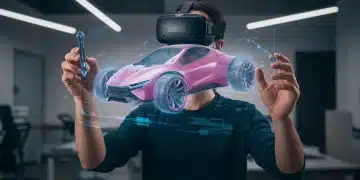
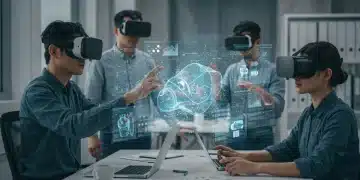
In manufacturing, VR controllers are used for virtual assembly line training, allowing workers to practice complex procedures without risk or material waste. In architecture and engineering, designers can interact with 3D models with unprecedented realism, making real-time adjustments and collaborative reviews. The healthcare sector leverages VR for surgical training and rehabilitation, where tactile feedback and precise movements are paramount for patient safety and recovery. These applications demonstrate the immense value proposition of these advanced controllers.
Transforming Manufacturing and Assembly
The manufacturing industry has embraced advanced VR controllers to revolutionize training and operational efficiency. Complex assembly tasks, which traditionally required expensive physical mock-ups and extensive one-on-one instruction, can now be replicated in VR.
- Virtual Assembly Training: Workers learn intricate assembly sequences, component handling, and tool usage in a risk-free, immersive environment with realistic haptic feedback.
- Quality Control and Inspection: Engineers can virtually inspect products, feeling for defects or inconsistencies that might be missed with visual inspection alone.
- Ergonomics and Workflow Optimization: VR simulations allow companies to test different workstation layouts and assembly processes to identify ergonomic issues and optimize workflows before physical implementation.
By integrating haptic and precision tracking, manufacturing companies are significantly reducing training costs, accelerating skill acquisition, and improving overall product quality and worker safety.
Challenges and Solutions in Industrial VR Controller Adoption
Despite the revolutionary potential, the widespread adoption of advanced VR controllers in U.S. industries faces several challenges. These include the initial cost of high-fidelity hardware, the complexity of integration with existing industrial systems, and the need for specialized software development. However, innovative solutions are emerging to address these hurdles, paving the way for broader implementation.
Manufacturers are developing more modular and scalable VR systems, allowing businesses to start with foundational setups and expand as their needs evolve. Additionally, open-source development frameworks and industry-specific VR platforms are simplifying software creation and integration, making these powerful tools more accessible to a wider range of industrial users. The focus is shifting towards user-friendly interfaces and robust, durable hardware designed for demanding industrial environments.
Overcoming Implementation Barriers
The path to full VR integration in industrial settings involves careful planning and strategic investment. Addressing these challenges is crucial for realizing the full potential of these advanced technologies.
- Cost-Effectiveness: While initial investment can be high, the long-term savings in training, prototyping, and error reduction often justify the expense. Lease programs and scalable solutions are making it more approachable.
- Interoperability: Developing standardized protocols for VR hardware and software allows for easier integration with diverse industrial platforms and existing digital twins.
- User Training and Acceptance: Proper training for both operators and developers is essential to maximize the utility and acceptance of new VR tools. Intuitive design is key.
As the technology matures and becomes more standardized, the barriers to adoption will continue to diminish, making industrial VR controllers an indispensable tool for competitiveness and innovation.
The Future Landscape: What’s Next for VR Controllers in Industry?
Looking ahead to the late 2020s and beyond, the evolution of VR controllers for industrial applications promises even more groundbreaking innovations. Research and development are focusing on enhancing natural interaction, reducing form factors, and integrating artificial intelligence more deeply into the control mechanisms. The goal is to make the interaction with virtual environments as intuitive and effortless as interacting with the real world.
Expect to see further miniaturization of haptic components, allowing for more discreet and even wearable feedback systems. Neural interfaces, while still nascent, are on the horizon, potentially enabling direct brain-computer interaction for control. Furthermore, the convergence of VR, AR, and mixed reality (MR) will likely lead to hybrid controllers that seamlessly switch between physical and virtual interactions, offering unparalleled flexibility for industrial users.
Emerging Technologies and Their Impact
The pace of innovation in VR hardware shows no signs of slowing down, with several key areas poised for significant breakthroughs.
- Neural Interfaces: Early-stage research is exploring brain-computer interfaces (BCI) that could allow for direct thought control of virtual objects, eliminating the need for physical controllers in some contexts.
- Wearable Haptics: Beyond handheld devices, haptic gloves and full-body suits are becoming more sophisticated, allowing for a broader range of tactile experiences and immersive training scenarios.
- Adaptive AI: AI will increasingly personalize controller responses and tracking sensitivity based on user preferences and task requirements, optimizing performance and comfort.
These future developments underscore a vision where VR controllers become virtually invisible, allowing industrial professionals to focus entirely on the task at hand, enhancing productivity and fostering innovation.
Selecting the Right VR Controller for Your U.S. Industrial Needs
Choosing the appropriate VR controller is a critical decision for any U.S. industrial enterprise looking to leverage virtual reality effectively. The selection process involves evaluating specific application requirements, considering factors such as the level of precision needed, the type of haptic feedback desired, and compatibility with existing VR ecosystems and software. A one-size-fits-all approach is rarely effective, given the diverse demands of different industrial sectors.
Consider the environment in which the controllers will be used; durability and ease of maintenance are paramount in demanding industrial settings. Furthermore, evaluate the support and ecosystem provided by the manufacturer, including software development kits (SDKs) and integration tools. Investing in the right controller ensures that the VR solution delivers maximum value and return on investment for the specific industrial application.
Key Considerations for Industrial Controller Procurement
Making an informed decision requires a thorough assessment of several key factors to ensure the chosen controller aligns with operational goals.
- Application Specificity: Identify whether the primary use is for intricate design, heavy machinery operation, or delicate assembly, as this dictates the required precision and haptic fidelity.
- Ergonomics and Comfort: For prolonged use in training or design, the controller must be comfortable, lightweight, and intuitive to reduce user fatigue and enhance productivity.
- Durability and Industrial Design: Controllers for industrial use must withstand rigorous daily handling, potential impacts, and exposure to various environmental conditions.
- Integration and Compatibility: Ensure the controller seamlessly integrates with your chosen VR headset, software platforms, and any existing industrial systems to avoid compatibility issues.
By carefully weighing these factors, U.S. industrial companies can select VR controllers that not only meet their current needs but also support future growth and innovation in their virtual reality initiatives.
| Key Innovation | Brief Description |
|---|---|
| Advanced Haptic Feedback | Goes beyond vibrations to simulate textures, resistance, and temperature, crucial for realistic industrial interaction and training. |
| Sub-Millimeter Precision Tracking | Achieved through combined optical, IMU, and AI systems, ensuring accurate movement translation for intricate industrial tasks. |
| Industrial Application Focus | Revolutionizing manufacturing, design, and healthcare through enhanced training, prototyping, and operational efficiency. |
| Future Trends | Anticipates neural interfaces, wearable haptics, and adaptive AI for even more natural and intuitive VR interactions. |
Frequently Asked Questions About VR Controller Innovations
The most significant advancement lies in the integration of highly realistic haptic feedback, moving beyond simple vibrations to simulate complex textures, forces, and even temperature. This enhances the sense of touch, crucial for precise industrial tasks like virtual assembly and material inspection.
Precision tracking, now offering sub-millimeter accuracy, allows for incredibly detailed and accurate interaction with virtual environments. This is vital for industries such as manufacturing and healthcare, where precise movements in training and design directly impact real-world outcomes and safety.
Yes, advanced haptic feedback systems in 2026 are capable of simulating a wide range of material textures. This technology uses sophisticated micro-actuators and algorithms to replicate the tactile qualities of surfaces, providing a more immersive and informative experience for design and quality control tasks.
Key challenges include the initial investment cost, complex integration with existing industrial systems, and the need for specialized software. However, modular systems, open-source frameworks, and industry-specific platforms are helping to mitigate these barriers, making adoption more feasible.
Future innovations are expected to include further miniaturization, more advanced wearable haptics, and the integration of neural interfaces for direct thought control. Adaptive AI will also personalize controller responses, making interactions even more intuitive and seamless for industrial users.
Conclusion
The year 2026 marks a pivotal era for VR technology, particularly concerning controller innovations and their profound impact on U.S. industrial applications. The fusion of sophisticated haptic feedback with unparalleled precision tracking is not just an incremental upgrade; it represents a fundamental shift in how professionals interact with virtual environments. These advancements are empowering industries to achieve new levels of efficiency, safety, and innovation, transforming everything from complex manufacturing processes to critical surgical training. As the technology continues to evolve, the distinction between the virtual and physical realms will increasingly blur, paving the way for a future where immersive interaction is as natural and intuitive as reality itself, driving unprecedented progress across the industrial landscape.