The Evolution of VR Tracking Systems: A 2026 Comparison of 3 Advanced Hardware Options for Precision
Virtual Reality (VR) has transcended its nascent stages, evolving from a niche technology into a powerful platform with applications spanning gaming, education, healthcare, and industrial design. At the heart of this transformation lies the relentless pursuit of precision in VR tracking systems. The ability to accurately translate real-world movements into the virtual realm is paramount for achieving true immersion and effective interaction. Without robust and reliable VR tracking hardware, even the most visually stunning virtual worlds fall flat, leading to motion sickness, frustration, and a general disconnect from the experience. As we step into 2026, the landscape of VR tracking has matured considerably, offering a diverse array of sophisticated solutions designed to meet the ever-increasing demands for accuracy, low latency, and seamless integration.
The journey of VR tracking has been one of continuous innovation. Early systems often relied on external sensors, requiring complex setups and offering limited tracking volumes. While effective for their time, these limitations hindered widespread adoption and restricted the types of experiences that could be created. Today, advancements in sensor technology, computational power, and algorithmic refinement have paved the way for systems that are not only more precise but also more user-friendly, robust, and capable of operating in a wider range of environments. The focus has shifted from simply detecting movement to capturing nuanced gestures, subtle shifts in posture, and even micro-expressions, all contributing to a more believable and responsive virtual presence.
This article delves into the cutting-edge of VR tracking systems in 2026, offering a comprehensive comparison of three advanced hardware options that are setting new benchmarks for precision. We will explore the underlying technologies, evaluate their strengths and weaknesses, and discuss their suitability for various applications. Our goal is to provide a clear understanding of what defines excellence in modern VR tracking hardware and to help you navigate the choices available to achieve unparalleled immersion and interaction in your virtual endeavors.
Understanding the Core Principles of VR Tracking Hardware
Before diving into specific hardware options, it’s crucial to grasp the fundamental principles that underpin VR tracking hardware. At its core, VR tracking is about determining the position and orientation of objects in 3D space, typically the user’s head (via the headset) and hands (via controllers or gloves). The accuracy and responsiveness of this process directly impact the user’s sense of presence and the overall quality of the VR experience. Several key metrics are used to evaluate the performance of tracking systems:
- Positional Tracking: This refers to the ability to accurately determine the X, Y, and Z coordinates of an object in space. High-fidelity positional tracking is essential for preventing drift and ensuring that virtual objects remain stable relative to the user’s movements.
- Rotational Tracking: This measures the orientation of an object, typically expressed as pitch, yaw, and roll. Accurate rotational tracking is vital for smooth head movements and precise aiming or manipulation in VR.
- Latency: The time delay between a real-world movement and its corresponding virtual representation. Low latency is critical for preventing motion sickness and ensuring a responsive, natural interaction.
- Precision/Accuracy: How close the tracked position and orientation are to the actual physical position and orientation. High precision is crucial for tasks requiring fine motor skills or detailed interaction.
- Tracking Volume: The physical space within which the tracking system can operate effectively. Larger tracking volumes offer greater freedom of movement.
- Robustness: The system’s ability to maintain tracking accuracy despite environmental challenges such as lighting variations, occlusions, or reflective surfaces.
Modern VR tracking hardware employs a variety of technologies to achieve these goals, often combining multiple approaches for enhanced performance. These include optical tracking (using cameras and markers), electromagnetic tracking (measuring distortions in magnetic fields), inertial measurement units (IMUs – accelerometers and gyroscopes), and even haptic feedback systems that provide tactile sensations to enhance immersion and interaction fidelity. The choice of technology, or combination thereof, significantly impacts the system’s cost, complexity, and overall performance profile.
Advanced VR Tracking Hardware Option 1: Lighthouse 3.0 (SteamVR Tracking)
The Lighthouse system, originally developed by Valve for the HTC Vive, has undergone significant iterations, with Lighthouse 3.0 representing the pinnacle of optical-inertial VR tracking hardware. This system is renowned for its unparalleled precision and large-scale tracking capabilities, making it a favorite among professional users, arcade operators, and serious VR enthusiasts. Lighthouse 3.0 operates on the principle of ‘outside-in’ tracking, where external base stations emit infrared lasers that are detected by photosensors on the VR headset and controllers.
Technology and Mechanics:
Lighthouse 3.0 base stations sweep the tracking volume with two planes of infrared light – one horizontal and one vertical. The photosensors on the tracked devices (headset, controllers, and even full-body trackers) detect these sweeps. By precisely timing when each sensor is hit by the laser, the system can triangulate the exact position and orientation of the device in 3D space. This optical data is then fused with data from onboard IMUs (accelerometers and gyroscopes) on the tracked devices. The IMUs provide high-frequency, low-latency rotational data, which helps to smooth out movements and compensate for any brief optical occlusions, leading to incredibly stable and precise tracking.
Strengths:
- Exceptional Precision and Accuracy: Lighthouse 3.0 is widely regarded as one of the most accurate and precise VR tracking hardware systems available. Its sub-millimeter accuracy is critical for applications requiring fine motor control and detailed interaction.
- Large Tracking Volume: With multiple base stations, Lighthouse 3.0 can cover expansive physical spaces, allowing for room-scale and even warehouse-scale VR experiences without significant loss of accuracy.
- Robustness to Occlusion: While optical systems can suffer from occlusion, the distributed nature of the base stations and the fusion with IMU data make Lighthouse 3.0 remarkably resilient to temporary blockages.
- Scalability: The system is highly scalable, supporting multiple tracked objects simultaneously, including full-body tracking solutions, which is invaluable for professional training, simulation, and social VR experiences.
- Low Latency: The combination of high-speed laser sweeps and IMU data ensures very low latency, contributing to a fluid and comfortable VR experience.
Weaknesses:
- Setup Complexity: Requires external base stations to be mounted in the tracking space, which can be more complex to set up than ‘inside-out’ systems.
- Cost: The base stations and compatible hardware can be more expensive than alternative tracking solutions.
- Line of Sight: Although robust, prolonged or complete occlusion of sensors can still lead to tracking loss.
- Environmental Sensitivity: While improved, highly reflective surfaces or direct sunlight can still interfere with infrared laser detection.
Lighthouse 3.0 continues to be the gold standard for applications where absolute precision and a large, unrestricted tracking volume are paramount. Its iterative improvements solidify its position as a leading VR tracking hardware solution for 2026.
Advanced VR Tracking Hardware Option 2: Meta Quest Pro’s Advanced Inside-Out Tracking
Meta Quest Pro, released in late 2022, showcased a significant leap forward in ‘inside-out’ VR tracking hardware. Unlike Lighthouse, inside-out tracking eliminates the need for external base stations by using cameras mounted on the VR headset itself to track the surrounding environment and the position of the controllers. This approach prioritizes ease of setup and portability, making it highly attractive for consumers and businesses seeking a more streamlined VR experience.
Technology and Mechanics:
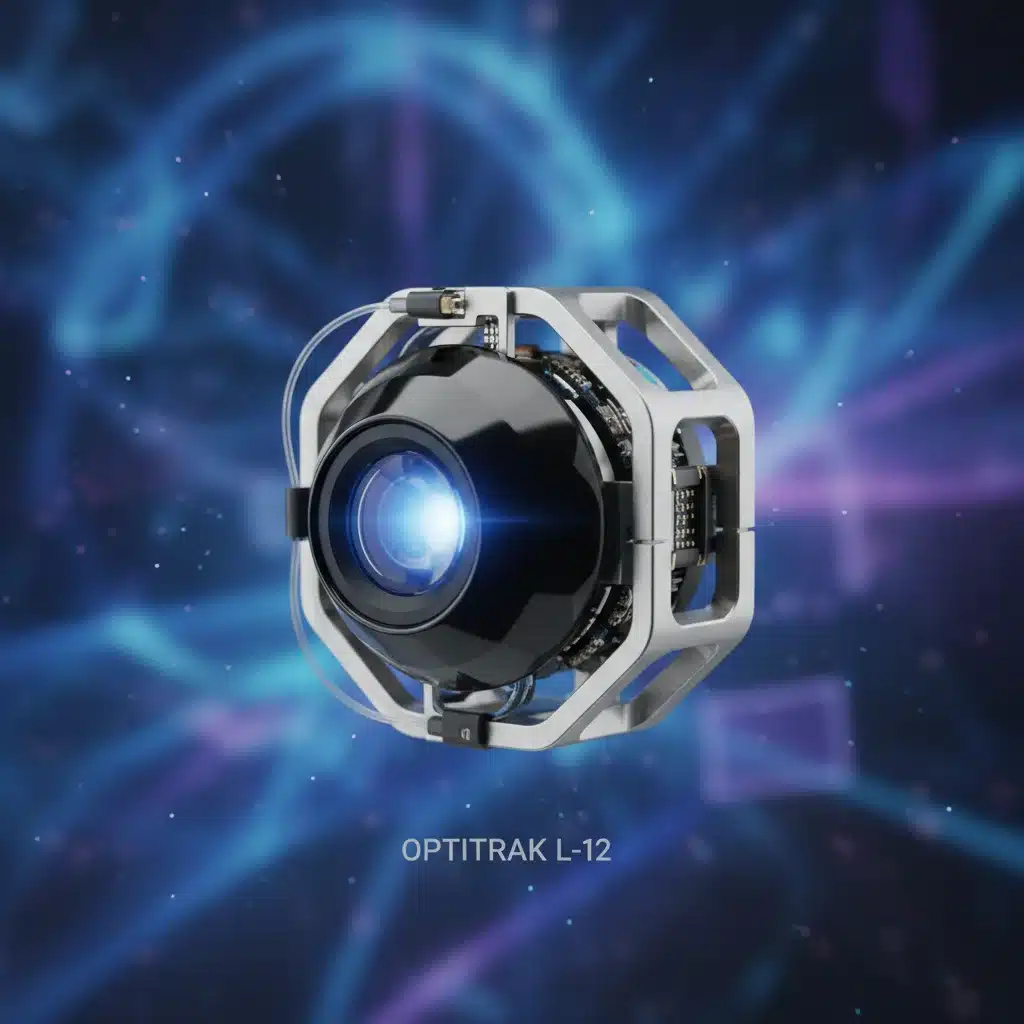
The Quest Pro employs a sophisticated array of high-resolution cameras on the headset that simultaneously map the environment and track infrared LEDs embedded in the controllers. These cameras perform a process called Simultaneous Localization and Mapping (SLAM) to build a 3D understanding of the room. By continuously comparing live camera feeds with this internal map, the system can determine the headset’s position and orientation. For controller tracking, dedicated cameras on the headset observe the infrared patterns emitted by the controllers. Advanced computer vision algorithms process this visual data in real-time, fusing it with IMU data from both the headset and controllers to provide a highly accurate and low-latency tracking solution.
Strengths:
- Exceptional Ease of Setup: No external sensors or complex calibration required; simply put on the headset and play. This is a massive advantage for portability and quick deployment.
- High Portability: The self-contained nature of the tracking system makes Quest Pro highly portable, allowing users to set up VR experiences almost anywhere.
- Good Positional and Rotational Accuracy: While perhaps not reaching the absolute peak of Lighthouse 3.0 in all scenarios, Quest Pro’s tracking is remarkably accurate for an inside-out system, offering excellent precision for most VR applications.
- Robust Controller Tracking: The self-tracked controllers (each with their own cameras and IMUs) offer independent tracking, even when occluded from the headset’s view, greatly enhancing reliability.
- Lower Cost Barrier: Typically, inside-out systems like Quest Pro offer a more accessible entry point into high-quality VR compared to external base station setups.
Weaknesses:
- Environmental Sensitivity: Performance can be affected by challenging lighting conditions (too dark, too bright, or monochromatic environments) or lack of distinct visual features in the room.
- Potential for Drift in Featureless Environments: While significantly improved, very large, featureless rooms might still experience slight drift over extended periods compared to Lighthouse.
- Limited Expansion for Full-Body Tracking: While controller tracking is excellent, integrating robust, precise full-body tracking solutions can be more challenging and often requires third-party accessories or alternative tracking methods.
- Processing Overhead: The complex computer vision algorithms require significant onboard processing power, which can impact battery life and heat generation.
Meta Quest Pro’s advanced inside-out VR tracking hardware sets a new standard for accessibility and convenience without significantly compromising on performance. It represents a powerful solution for a wide range of consumer and enterprise VR applications where quick deployment and portability are key.
Advanced VR Tracking Hardware Option 3: Tundra Labs’ SteamVR Tracking HD (Electromagnetic-Optical Hybrid)
Tundra Labs has emerged as a significant player in the VR tracking hardware space, particularly with its innovative approach to extending and enhancing the SteamVR Tracking ecosystem. While building upon the Lighthouse foundation, Tundra Labs’ advancements, especially with their proposed ‘SteamVR Tracking HD’ concepts and specialized trackers, hint at a future where optical tracking is augmented with other technologies for even greater resilience and precision. For the purpose of this 2026 comparison, we’ll consider Tundra Labs’ contributions as representing an advanced electromagnetic-optical hybrid approach, focusing on their potential for highly robust and versatile tracking.
Technology and Mechanics:
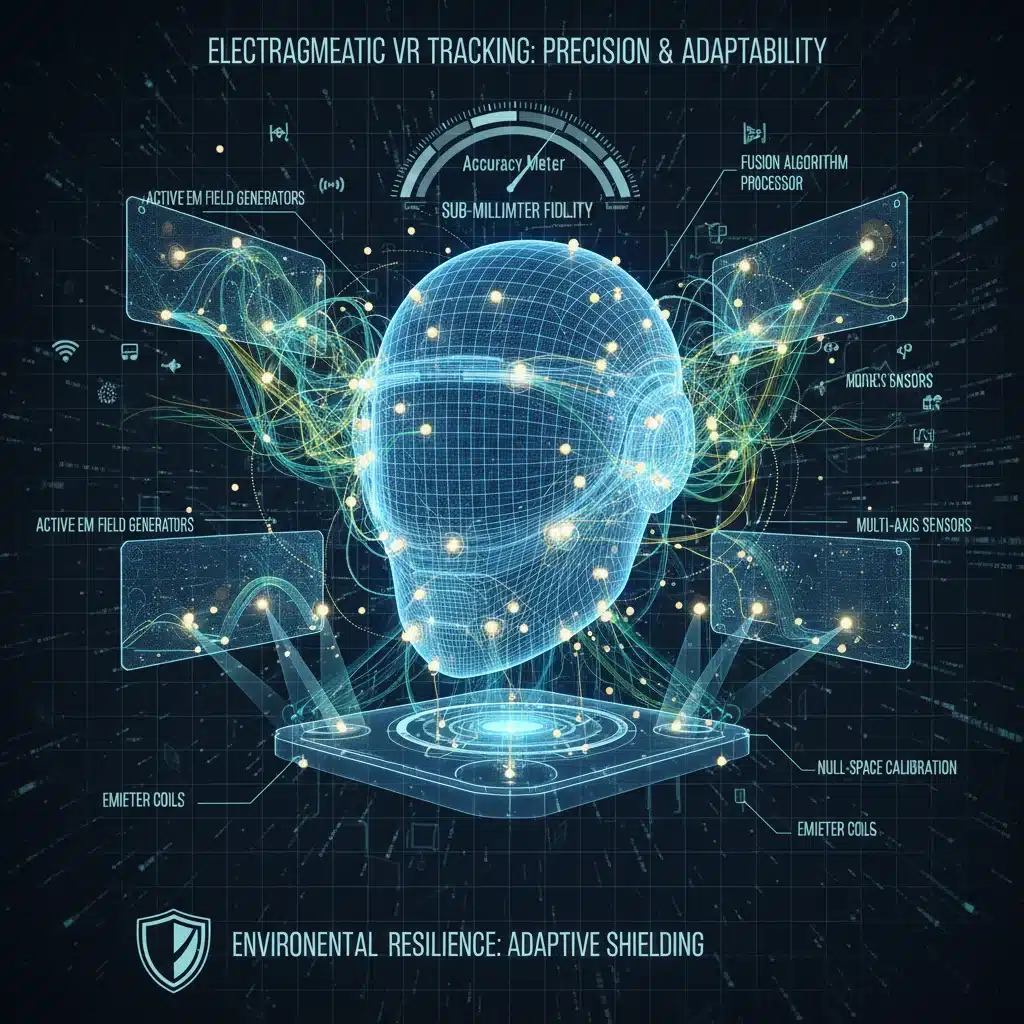
While Tundra Labs’ primary contribution has been in developing smaller, more efficient, and more numerous SteamVR tracking pucks (often referred to as ‘dongles’ or ‘trackers’), their conceptual work and the industry’s direction point towards integrating electromagnetic principles. Imagine a system where the core optical tracking of Lighthouse 3.0 is augmented by small, localized electromagnetic fields. These fields, generated by compact emitters, could provide highly accurate positional data for specific tracked objects, especially in scenarios where optical line-of-sight is temporarily lost or in environments where optical tracking struggles (e.g., highly reflective surfaces, dense objects). The electromagnetic component would act as a highly precise, short-range ‘fill-in’ or ‘anchor’ for optical tracking, providing an additional layer of data fusion. This hybrid approach leverages the strengths of both optical (large volume, high precision) and electromagnetic (occlusion resilience, localized accuracy) tracking.
Strengths:
- Unparalleled Occlusion Resilience: The electromagnetic component would dramatically improve tracking stability in scenarios where optical sensors are blocked, such as when a user’s hands are close together or behind their back.
- Enhanced Precision in Challenging Environments: Electromagnetic tracking is less susceptible to lighting conditions or reflective surfaces, making the overall hybrid system more robust across various environments.
- Localized High-Fidelity Tracking: Could offer extremely precise tracking for specific body parts or tools within a smaller, localized electromagnetic field, even if the optical system provides broader coverage.
- Versatility for Specific Applications: Ideal for industrial applications, medical simulations, or scenarios where consistent tracking of tools or specific body parts is critical, regardless of visual line-of-sight.
- Seamless Integration with Existing SteamVR Ecosystem: Leveraging the established Lighthouse infrastructure means compatibility with a vast array of existing VR tracking hardware and software.
Weaknesses:
- Potential for Electromagnetic Interference: Electromagnetic systems can be susceptible to interference from other electronic devices or large metallic objects in the environment, requiring careful calibration.
- Increased Hardware Complexity: Integrating two distinct tracking technologies (optical and electromagnetic) adds complexity to the hardware design and data fusion algorithms.
- Limited Range for Electromagnetic Component: While optical tracking provides large volume, the electromagnetic component typically has a more limited range, serving as a localized augmentation rather than a primary large-scale tracker.
- Cost Implications: The added complexity and specialized components could lead to a higher overall system cost.
Tundra Labs’ forward-thinking approach, especially in the context of a potential electromagnetic-optical hybrid, represents a compelling direction for VR tracking hardware. It promises a level of robustness and precision that addresses some of the inherent limitations of purely optical or inside-out systems, particularly for demanding professional applications.
Comparative Analysis and Future Outlook for VR Tracking Hardware
When comparing these three advanced VR tracking hardware options in 2026, it becomes clear that each excels in different areas, catering to distinct user needs and application scenarios. The choice of the ‘best’ system largely depends on the specific requirements of the VR experience.
Precision and Accuracy:
For sheer, unadulterated precision, Lighthouse 3.0 remains the reigning champion. Its sub-millimeter accuracy and robust large-scale tracking are unmatched, making it the preferred choice for professional simulations, engineering design, and any application where the slightest inaccuracy can have significant consequences. The proposed Tundra Labs Electromagnetic-Optical Hybrid would likely challenge Lighthouse 3.0, potentially even surpassing it in localized precision and occlusion resilience, offering a new pinnacle for demanding industrial and medical VR.
Meta Quest Pro’s Advanced Inside-Out Tracking, while incredibly impressive for its convenience, might not achieve the absolute peak precision of external-sensor-based systems in all edge cases. However, for the vast majority of consumer and many enterprise applications, its accuracy is more than sufficient and often indistinguishable from higher-end systems to the average user.
Ease of Use and Portability:
Meta Quest Pro undeniably leads in ease of use and portability. Its ‘put on and play’ nature, coupled with no external setup, makes it ideal for dynamic environments, quick demonstrations, and users who prioritize convenience. Lighthouse 3.0, while offering superior tracking, requires careful setup of base stations, limiting its portability. The Tundra Labs Hybrid, depending on the implementation of its electromagnetic component, might fall somewhere in between, potentially requiring some initial calibration for the electromagnetic field but offering greater flexibility than a pure Lighthouse setup.
Cost and Scalability:
Generally, Meta Quest Pro offers a more accessible price point, especially considering its integrated nature. Lighthouse 3.0 systems, with their external base stations and specialized trackers, tend to be more expensive but offer unparalleled scalability for large-scale, multi-user environments. The Tundra Labs Hybrid would likely represent a premium option, given the integration of multiple advanced technologies, but its scalability would be high, especially within the SteamVR ecosystem.
Future Trends in VR Tracking Hardware:
Looking ahead, the evolution of VR tracking hardware will likely focus on several key areas:
- Sensor Fusion Mastery: The trend towards combining multiple tracking technologies (optical, inertial, electromagnetic, acoustic) will intensify to create systems that are robust, precise, and adaptable to any environment.
- Miniaturization and Efficiency: Trackers and sensors will become even smaller, lighter, and more power-efficient, enabling integration into more everyday objects and clothing for pervasive VR/AR experiences.
- AI and Machine Learning: Advanced AI algorithms will play an increasingly crucial role in data processing, predictive tracking, and compensating for tracking errors, leading to even smoother and more natural interactions.
- Haptic Integration: Tracking will extend beyond just position and orientation to include the nuanced feedback of haptic systems, providing tactile sensations that further blur the line between the virtual and physical.
- Inside-Out Dominance for Mainstream: For the general consumer market, inside-out tracking will continue to improve, eventually reaching a level of precision and robustness that rivals external systems for most applications, driven by advances in computer vision and dedicated processing units.
- Full-Body and Fine-Motor Tracking: The demand for accurate full-body tracking, including individual finger articulation and even facial expressions, will drive innovation in specialized trackers and advanced skeletal inverse kinematics.
The year 2026 marks a pivotal moment in the development of VR tracking hardware. We are witnessing a convergence of technologies that are pushing the boundaries of what’s possible, moving beyond mere head and hand tracking to encompass a holistic understanding of the user’s physical presence in the virtual world. The competition between robust external systems, highly convenient inside-out solutions, and innovative hybrid approaches ensures a vibrant future for VR, where precision and immersion will continue to reach unprecedented levels.
Conclusion: Choosing Your Precision VR Tracking Hardware
The choice of VR tracking hardware in 2026 is no longer a matter of simply finding a system that ‘works,’ but rather selecting the optimal solution that aligns with specific needs for precision, tracking volume, ease of use, and budget. For those demanding the highest possible accuracy and large-scale, multi-user environments, Lighthouse 3.0 (SteamVR Tracking) remains an exceptional choice, offering a proven track record of sub-millimeter precision and robust performance. Its maturity and extensive ecosystem make it a go-to for professional applications, VR arcades, and developers who cannot compromise on tracking fidelity.
Conversely, if portability, quick setup, and an integrated, standalone experience are paramount, Meta Quest Pro’s Advanced Inside-Out Tracking stands out as a formidable contender. It delivers a level of precision and responsiveness that far exceeds previous inside-out systems, making high-quality VR accessible and convenient for a broader audience, from enterprise training to advanced consumer gaming. Its continued improvements in environmental resilience and controller tracking make it a highly versatile option.
Finally, the conceptual yet highly promising Tundra Labs Electromagnetic-Optical Hybrid represents the bleeding edge, hinting at a future where the strengths of multiple tracking modalities are combined to overcome their individual limitations. Such a system would offer unparalleled occlusion resilience and localized precision, potentially revolutionizing niche applications in industrial inspection, medical procedures, and highly interactive simulations where even temporary tracking loss is unacceptable. While perhaps more complex and costly, its potential for ultimate robustness makes it a compelling direction for advanced VR tracking hardware.
As VR continues its rapid ascent, the underlying tracking technology will remain the bedrock of immersive experiences. The innovations highlighted in this 2026 comparison underscore the industry’s commitment to pushing the boundaries of precision, ensuring that virtual worlds feel as real and responsive as the physical one. Whether you are a developer, an enterprise solution provider, or an enthusiast, understanding these advanced VR tracking hardware options is crucial for making informed decisions and unlocking the full potential of virtual reality.