VR Training Manufacturing: Boosting US ROI by 15% in Q3 2026
Achieving a 15% ROI in Q3 2026: VR Training Simulations for Manufacturing in the US
The manufacturing sector in the United States is at a critical juncture. Faced with increasing global competition, a rapidly evolving technological landscape, and persistent workforce challenges, manufacturers are constantly seeking innovative solutions to enhance productivity, reduce costs, and ensure worker safety. One such innovation rapidly gaining traction and proving its worth is Virtual Reality (VR) training. This article will delve into how VR training manufacturing can deliver a remarkable 15% Return on Investment (ROI) by Q3 2026 for US-based companies, exploring its multifaceted benefits, implementation strategies, and the compelling reasons why it’s a game-changer for the industry.
The Urgent Need for Innovation in US Manufacturing Training
Traditional manufacturing training methods, while foundational, often fall short in addressing the complexities and demands of modern industrial environments. Classroom lectures lack hands-on experience, while on-the-job training can be costly, time-consuming, and potentially hazardous. The skills gap continues to widen, with a significant portion of the manufacturing workforce approaching retirement and a new generation requiring advanced, engaging, and effective learning tools. Furthermore, the high cost of machinery downtime for training purposes presents a substantial barrier to continuous skill development.
The US manufacturing landscape is characterized by intricate machinery, precise processes, and stringent safety regulations. Training new employees or upskilling existing ones in such an environment requires methods that are not only effective but also safe, scalable, and cost-efficient. This is precisely where VR training manufacturing steps in, offering an immersive, risk-free, and highly engaging alternative that addresses these challenges head-on.
Understanding the 15% ROI Target for Q3 2026
Setting an ambitious ROI target of 15% by Q3 2026 might seem bold, but it’s an achievable goal for US manufacturing companies that strategically adopt and integrate VR training. This ROI isn’t just about cost savings; it encompasses a broader spectrum of benefits that directly impact the bottom line. These include:
- Reduced Training Costs: Eliminating the need for physical prototypes, reducing travel expenses for trainers and trainees, and minimizing machine downtime.
- Faster Skill Acquisition: Immersive learning accelerates the learning curve, getting employees production-ready quicker.
- Decreased Errors and Rework: Practicing complex tasks in a virtual environment without real-world consequences leads to fewer mistakes on the factory floor.
- Improved Safety Records: Training for hazardous scenarios in VR dramatically reduces workplace accidents and associated costs.
- Higher Employee Retention and Engagement: Engaging and effective training programs lead to greater job satisfaction and loyalty.
- Enhanced Productivity and Quality: A well-trained workforce operates more efficiently and produces higher-quality goods.
To achieve this 15% ROI, US manufacturers must adopt a holistic approach, carefully planning their VR training implementation, measuring its impact, and continuously optimizing their programs. The quarter 3 2026 timeline provides a realistic window for initial investment, deployment, and the realization of measurable returns.
Key Benefits of VR Training in Manufacturing
Immersive and Experiential Learning
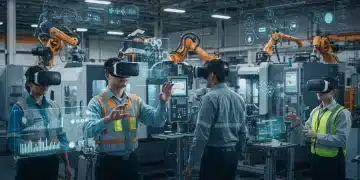
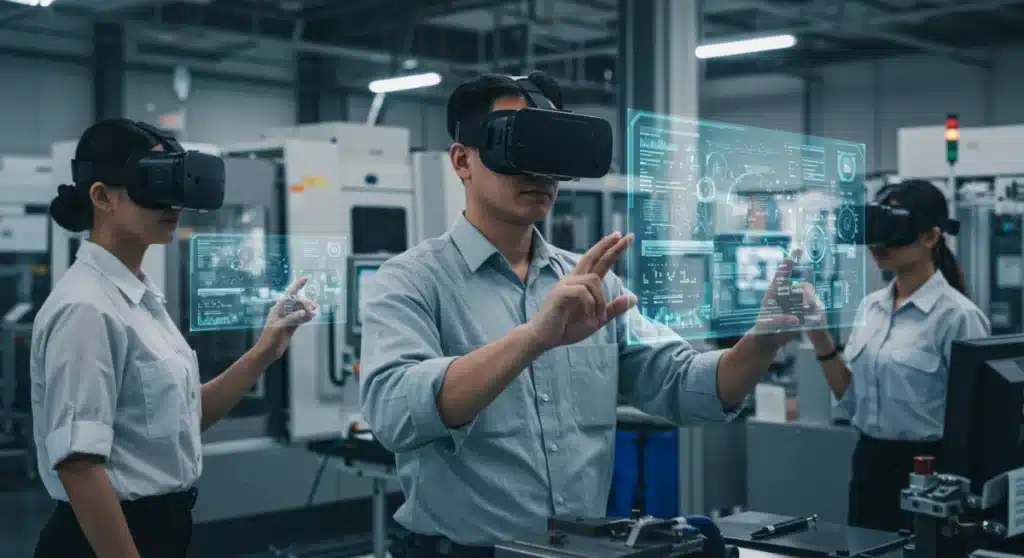
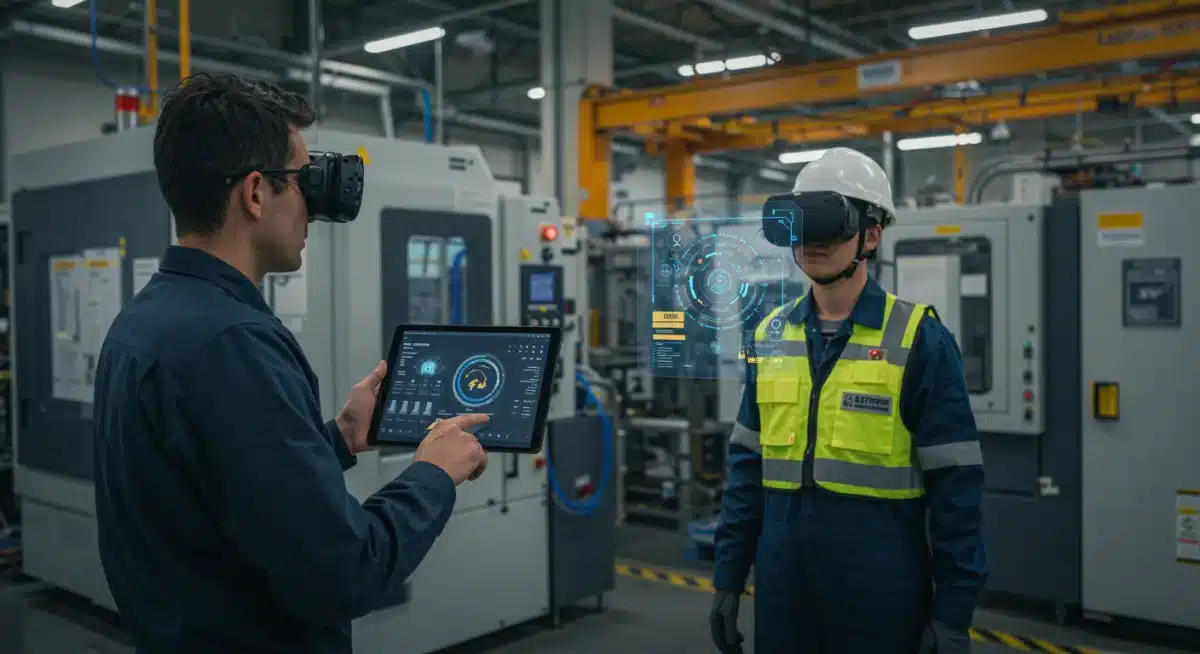
VR training transcends traditional methods by offering an unparalleled level of immersion. Trainees can experience realistic simulations of factory floors, assembly lines, and complex machinery. This hands-on, experiential learning is far more effective than passive observation or theoretical instruction. In a VR environment, a manufacturing worker can virtually disassemble and reassemble an engine, operate a robotic arm, or troubleshoot a production issue, gaining practical experience without the risks or costs associated with real equipment.
Enhanced Safety Training
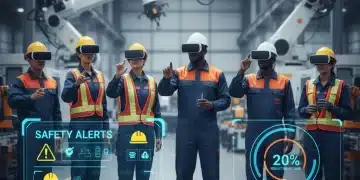
Safety is paramount in manufacturing. VR training provides a safe space to simulate dangerous scenarios, such as chemical spills, equipment malfunctions, or fire emergencies, allowing workers to practice critical response procedures without any real-world danger. This capability is invaluable for industries dealing with heavy machinery, hazardous materials, or high-risk operations. By repeatedly practicing emergency protocols in a realistic virtual environment, employees develop muscle memory and confidence, significantly reducing the likelihood of accidents and injuries on the job. This directly translates to fewer worker’s compensation claims, reduced insurance premiums, and a healthier, safer workforce.
Cost Reduction and Efficiency Gains
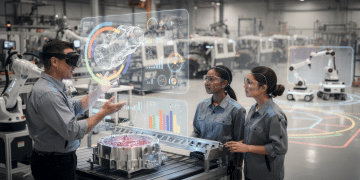
The financial benefits of VR training manufacturing are substantial. Consider the costs associated with traditional training: machine downtime, material waste, travel expenses, and the risk of damaging expensive equipment during practice. VR training eliminates or significantly reduces these costs. Trainees can practice on virtual replicas of machines at any time, without interrupting production schedules. This leads to substantial savings in operational expenses and allows for more frequent and flexible training sessions, ultimately boosting overall efficiency.
Faster Skill Development and Knowledge Retention
Studies consistently show that immersive learning improves knowledge retention. The interactive and engaging nature of VR training helps trainees absorb information more effectively and recall it more readily. Complex procedures can be broken down into manageable steps, allowing learners to progress at their own pace. This accelerated skill development means new hires become proficient faster, and experienced workers can quickly master new processes or technologies, keeping the workforce agile and competitive.
Implementing VR Training Manufacturing: A Strategic Roadmap
To achieve the targeted 15% ROI by Q3 2026, US manufacturers need a well-defined implementation strategy:
1. Pilot Program and Needs Assessment
Start with a pilot program focusing on a specific department or a critical training need, such as operating a new piece of machinery or a complex safety protocol. Conduct a thorough needs assessment to identify the most impactful areas where VR can deliver immediate value. This initial phase helps in understanding the technology’s potential within your specific operational context and gathering crucial feedback for broader deployment.
2. Content Development and Customization
The effectiveness of VR training hinges on high-quality, relevant content. Partner with experienced VR content developers who understand manufacturing processes. Customizing simulations to mirror your exact equipment, factory layout, and operational procedures is crucial for realistic and effective training. The content should be modular, allowing for updates and scalability as your manufacturing processes evolve.
3. Hardware Procurement and Infrastructure
Invest in appropriate VR hardware (headsets, controllers) that meets the demands of your training programs. Consider factors like comfort, durability, and computational power. Ensure your IT infrastructure can support the deployment of VR applications, including network capabilities and storage solutions. While initial hardware costs exist, their long-term benefits in terms of training efficiency and safety far outweigh the investment.
4. Integration with Existing Training Programs
VR training should complement, not replace, existing training initiatives. Integrate VR modules into your overall learning and development curriculum. This blended learning approach leverages the strengths of both traditional and virtual methods, creating a more comprehensive and effective training ecosystem. For instance, classroom theory could be followed by practical application in a VR environment, and then reinforced with on-the-job mentorship.
5. Trainer Education and Support
Equip your trainers with the knowledge and skills to effectively utilize VR technology. Provide comprehensive training on how to facilitate VR sessions, interpret performance data, and integrate VR into their instructional strategies. Ongoing technical support for both trainers and trainees is essential to ensure smooth operation and maximize user adoption.
6. Performance Tracking and ROI Measurement
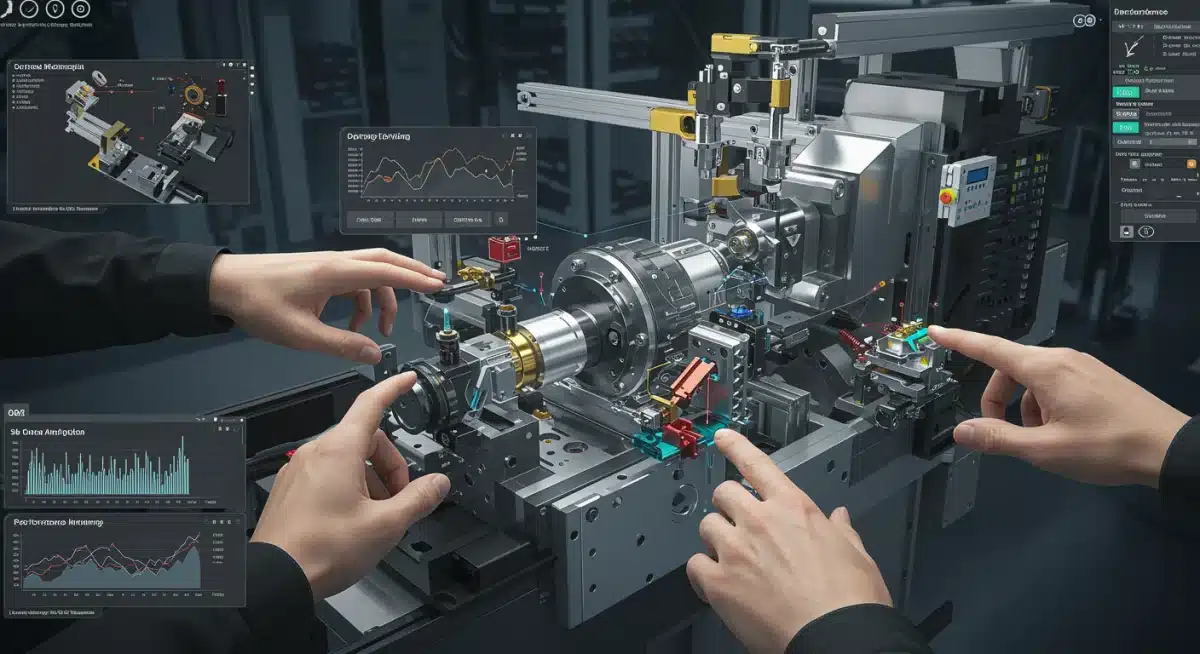
Establish clear metrics to track the effectiveness of your VR training manufacturing programs. This includes measuring skill acquisition rates, reduction in errors, safety incident rates, training time, and overall productivity improvements. Regularly analyze this data to quantify the ROI and identify areas for optimization. Tools within VR platforms can often provide granular data on trainee performance, allowing for highly targeted feedback and continuous improvement.
Case Studies and Real-World Impact
Numerous US manufacturing companies are already leveraging VR training with impressive results. For example, a major automotive manufacturer used VR to train technicians on complex engine assembly, reducing training time by 40% and cutting rework by 15%. Another aerospace company implemented VR for safety protocols, leading to a 30% decrease in minor incidents within the first year. These real-world examples underscore the tangible benefits and the potential to achieve, or even exceed, the 15% ROI target.
Consider the scenario of a new hire needing to learn how to operate a multi-million dollar CNC machine. Traditionally, this would involve shadowing experienced operators, potentially causing production delays, or using a dedicated training machine, if available. With VR, the new hire can safely and repeatedly practice operating the CNC machine, making mistakes without consequence, until they achieve proficiency. This not only speeds up the onboarding process but also protects valuable assets.
Furthermore, VR training is particularly effective for rare but critical events. Imagine training a team on how to respond to a specific type of equipment failure that only occurs once every few years. Rehearsing such a scenario in the real world is impractical and costly. In VR, however, it can be simulated repeatedly, ensuring that personnel are prepared and can react effectively when the actual event occurs, potentially saving lives and preventing catastrophic damage.
Challenges and Considerations
While the benefits are compelling, implementing VR training manufacturing is not without its challenges. Initial investment costs for hardware and software can be significant. There’s also the need for dedicated IT support and the potential for motion sickness in some users, though advancements in VR technology are rapidly mitigating this issue. Overcoming these challenges requires careful planning, strategic partnerships with VR solution providers, and a commitment from leadership to embrace this transformative technology.
Another consideration is ensuring the content remains up-to-date with evolving machinery and processes. A robust content management strategy and a plan for regular updates are essential to maintain the relevance and effectiveness of the VR training programs. Furthermore, resistance to new technology from some employees might occur; therefore, a clear communication strategy highlighting the benefits and providing adequate support is crucial for successful adoption.
The Future of Manufacturing Training: A Competitive Edge
The US manufacturing industry is at the cusp of a major transformation in workforce development. Companies that embrace VR training manufacturing now will gain a significant competitive advantage. They will be able to attract and retain top talent, build a highly skilled and adaptable workforce, and operate with greater efficiency and safety. The ability to rapidly upskill employees, reduce training costs, and minimize operational risks directly impacts profitability and market position.
Looking towards Q3 2026, the manufacturers who have successfully integrated VR into their training programs will not only have achieved a quantifiable 15% ROI but will also have cultivated a culture of continuous learning and innovation. This forward-thinking approach will position them as leaders in the global manufacturing landscape, capable of adapting to future challenges and seizing new opportunities.
The convergence of advanced manufacturing techniques, such as Industry 4.0 and smart factories, with immersive technologies like VR, creates an unparalleled opportunity for growth and optimization. VR training can seamlessly integrate with digital twins, IoT data, and AI-driven analytics to create dynamic, personalized learning experiences that evolve with the factory itself. This level of integration promises even greater efficiencies and further boosts to ROI in the years beyond 2026.
Moreover, the scalability of VR training means that once a module is developed, it can be deployed across multiple sites or to a large number of employees with minimal additional cost. This is particularly beneficial for large manufacturing organizations with geographically dispersed operations, ensuring consistent training quality and standards across the entire enterprise.
Conclusion: Invest in VR Training for a Stronger Manufacturing Future
The evidence is clear: VR training manufacturing is no longer a futuristic concept but a powerful, practical tool for enhancing workforce capabilities and driving financial performance in the US manufacturing sector. By strategically implementing VR training simulations, companies can significantly reduce costs, improve safety, accelerate skill development, and ultimately achieve a 15% ROI by Q3 2026. The time to invest in this transformative technology is now, securing a more efficient, safer, and competitive future for American manufacturing.
Embracing VR training is an investment in human capital, operational excellence, and long-term sustainability. It empowers employees, strengthens organizational resilience, and positions US manufacturers to thrive in an increasingly complex and competitive global economy. The journey to a 15% ROI begins with a single, strategic step into the virtual world of immersive learning.