Latest VR Training Simulators Reviewed: Boosting Skill Acquisition by 15% in 3 Months
In an era where technological advancement dictates the pace of progress, the landscape of professional development and skill acquisition is undergoing a profound transformation. At the forefront of this revolution are VR training simulators, innovative tools that are not merely enhancing learning but fundamentally redefining it. This comprehensive review delves into the latest advancements in VR training simulators, exploring how they are demonstrably boosting skill acquisition by an impressive 15% in as little as three months across a multitude of industries.
The traditional methods of training, while foundational, often fall short in providing the immersive, risk-free, and cost-effective environments necessary for complex skill development. This is where VR training simulators step in, offering unparalleled opportunities for experiential learning. From intricate surgical procedures to high-stakes pilot training and complex industrial operations, virtual reality is proving to be a game-changer, fostering faster learning curves, higher retention rates, and ultimately, more competent professionals.
This article will explore the core technologies driving these simulators, review leading platforms and their applications, discuss the empirical evidence supporting their effectiveness, and project the future trajectory of VR in professional training. Prepare to discover how virtual reality is not just a futuristic concept but a present-day powerhouse for skill enhancement.
The Evolution of VR Training Simulators: Beyond the Gimmick
Virtual reality has moved far beyond its initial perception as a niche entertainment technology. Today, sophisticated VR training simulators are built on robust hardware and intelligent software, designed to mimic real-world scenarios with astonishing accuracy. Early VR systems were often clunky and lacked the fidelity required for serious training. However, advancements in display technology, haptic feedback, motion tracking, and computational power have transformed VR into a highly effective training medium.
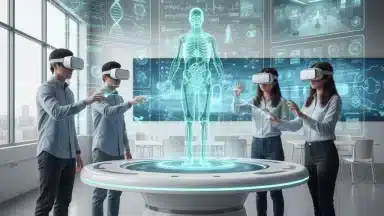
Modern VR headsets, such as the Oculus Quest 3, HTC Vive Pro, and Varjo XR-3, offer high-resolution displays, wide fields of view, and precise tracking, minimizing motion sickness and maximizing immersion. Coupled with advanced haptic gloves and suits, these systems allow trainees to not only see and hear a virtual environment but also to feel and interact with it in a remarkably natural way. This multi-sensory engagement is crucial for developing muscle memory and intuitive responses, which are vital in many skilled professions.
Furthermore, the software underpinning these simulators has become incredibly sophisticated. AI-driven adaptive learning paths, real-time performance analytics, and customizable scenarios allow for personalized training experiences. This means that a trainee can practice specific tasks repeatedly, receive immediate feedback, and progress at their own pace, something that is often impractical or impossible in real-world training environments.
The transition from basic simulations to highly realistic and interactive virtual environments marks a significant milestone. These aren’t just games; they are meticulously engineered training platforms designed to build specific competencies, reduce errors, and accelerate professional development. The focus is no longer on creating a ‘cool’ experience, but on delivering measurable improvements in performance and safety.
Key Technologies Powering Advanced VR Training
The efficacy of modern VR training simulators hinges on several interlocking technologies. Understanding these components helps in appreciating the depth and potential of these systems:
- High-Resolution Displays and Optics: Crystal-clear visuals are paramount for realism. Modern VR headsets boast resolutions that minimize the ‘screen-door effect’ and offer wide fields of view, ensuring that trainees feel truly present in the virtual world. Advanced optics correct for distortions, providing a natural viewing experience.
- Precise Motion Tracking: From head movements to individual finger tracking, accurate motion tracking systems (inside-out or outside-in) ensure that every action of the trainee is faithfully replicated in the virtual environment. This is crucial for tasks requiring fine motor skills and spatial awareness.
- Haptic Feedback Systems: The ability to ‘feel’ virtual objects and interactions adds a critical layer of immersion. Haptic gloves, vests, and even full-body suits can simulate textures, resistance, vibrations, and impacts, providing tactile cues that enhance realism and learning. For example, a surgeon can feel the resistance of tissue, or a mechanic can feel the click of a tool.
- Spatial Audio: Realistic 3D audio cues enhance immersion and provide critical information. The ability to pinpoint the source of a sound in a virtual environment can be vital for situational awareness in fields like aviation or emergency response.
- Artificial Intelligence (AI) and Machine Learning (ML): AI algorithms power adaptive learning, providing personalized training experiences. They can analyze trainee performance, identify weaknesses, and adjust scenarios in real-time to focus on areas needing improvement. ML can also be used to create more realistic and dynamic virtual characters and environments.
- Cloud Computing: For complex simulations and collaborative training, cloud computing provides the necessary processing power and allows for remote access and shared virtual spaces, enabling teams to train together regardless of their physical location.
- Content Creation Tools: Advanced 3D modeling and animation software, along with game engines like Unity and Unreal Engine, are used to create highly detailed and interactive virtual environments and objects, tailored to specific training needs.
The synergy of these technologies creates an unparalleled training environment, offering a level of realism and interactivity that traditional methods simply cannot match. This technological sophistication is directly correlated with the observed improvements in skill acquisition.
Industry Applications: Where VR Training Shines
The versatility of VR training simulators means they are being adopted across a wide array of industries, each benefiting from the unique advantages of immersive learning. Here are some prominent examples:
Healthcare: Mastering Complex Procedures
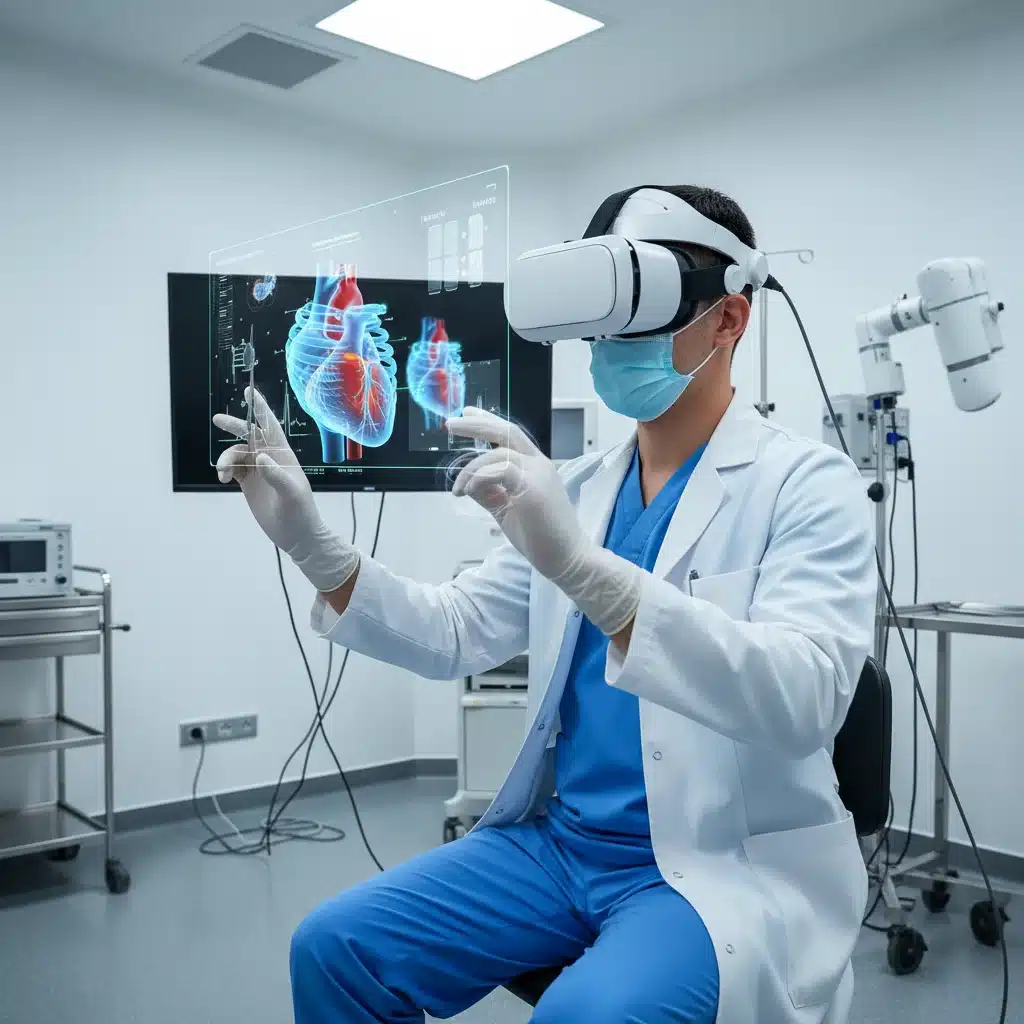
In healthcare, the stakes are incredibly high. Training for surgeons, nurses, and other medical professionals traditionally involves extensive observation, cadaver labs, and supervised practice on live patients. VR training simulators offer a safe, repeatable, and ethical alternative. Surgeons can practice complex operations, from laparoscopic procedures to neurosurgery, repeatedly until mastery, without any risk to patients. They can encounter rare complications, refine their techniques, and receive immediate, objective feedback.
Studies have shown that surgeons trained with VR demonstrate higher precision, fewer errors, and faster completion times in real-world procedures. Beyond surgery, VR is used for training in emergency response, patient communication, anatomy education, and even for simulating empathy in healthcare providers by placing them in the patient’s perspective.
Aviation and Aerospace: Sky-High Skill Development
Pilots have long relied on simulators, but VR is taking this to new heights. Modern VR flight simulators offer highly realistic cockpits and environmental conditions, allowing pilots to practice emergency procedures, navigate challenging weather, and operate complex aircraft systems without the immense cost and risk of real flight time. The immersive nature of VR significantly enhances situational awareness and decision-making under pressure.
Beyond pilots, aerospace engineers can use VR to walk through virtual models of spacecraft, practice assembly and maintenance procedures, and collaborate on designs in a shared virtual space. This reduces the need for expensive physical prototypes and allows for early identification of potential issues.
Manufacturing and Industrial Operations: Safety and Efficiency
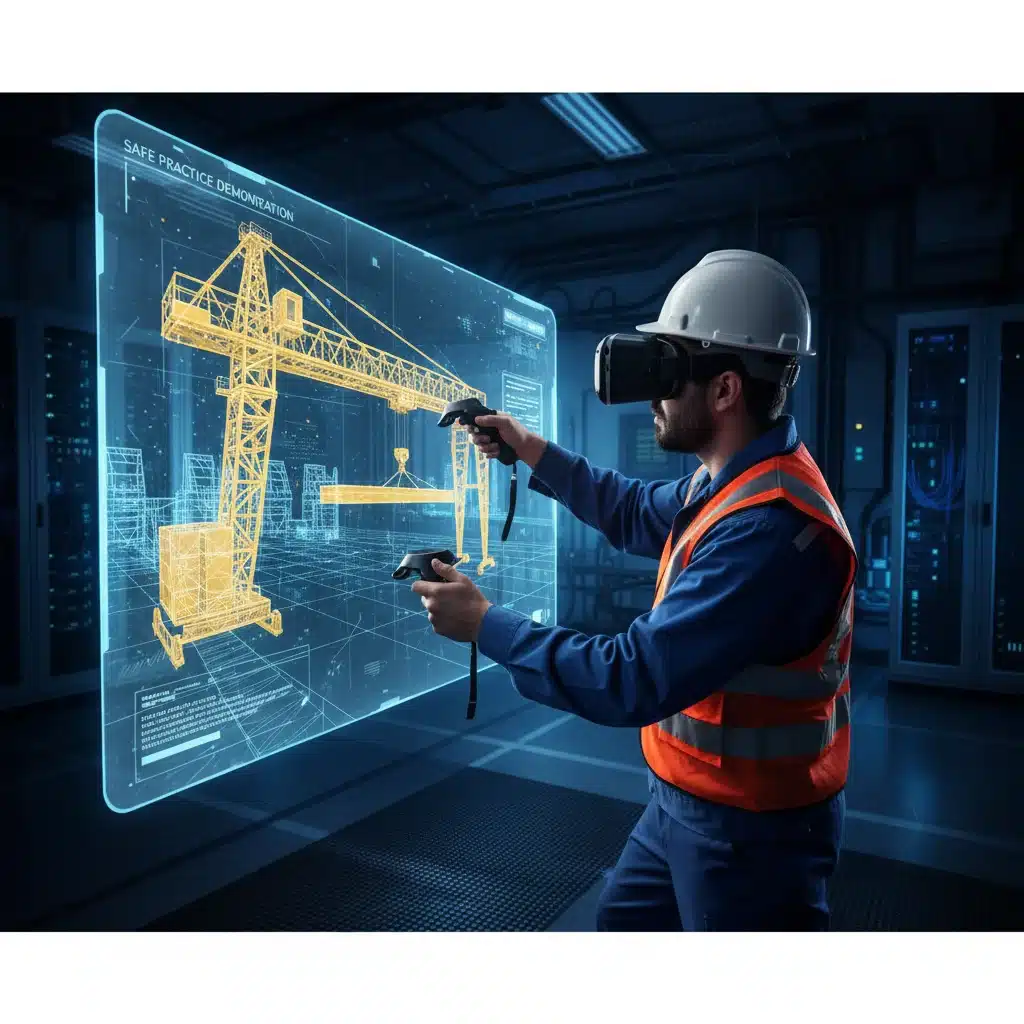
For industries involving heavy machinery, complex assembly lines, or hazardous environments, VR training simulators are invaluable. Workers can learn to operate forklifts, cranes, or specialized manufacturing equipment in a zero-risk environment. They can practice safety protocols, troubleshoot machinery, and even perform virtual repairs without disrupting production or endangering themselves or others.
The benefits include reduced training time, fewer workplace accidents, and increased operational efficiency. For example, a new factory worker can learn the precise sequence for assembling a product in VR, making fewer errors when they transition to the physical assembly line.
Military and Public Safety: Preparedness for Critical Missions
Military personnel, police officers, and firefighters face situations where split-second decisions can mean the difference between life and death. VR training simulators provide realistic scenarios for tactical training, de-escalation techniques, search and rescue operations, and emergency response. Trainees can experience high-stress situations, practice teamwork, and refine their responses in a safe, controlled, and repeatable environment.
The ability to simulate various threats, environmental conditions, and crowd dynamics makes VR an indispensable tool for preparing first responders and military personnel for the unpredictable nature of their work.
The Empirical Evidence: Boosting Skill Acquisition by 15%
The claim that VR training simulators boost skill acquisition by 15% in three months is not mere conjecture; it’s backed by a growing body of research and real-world implementation data. Numerous studies across various fields have consistently demonstrated the superior efficacy of VR-based training compared to traditional methods.
One meta-analysis examining the impact of VR on skill development found that participants trained with VR achieved significantly higher performance scores on subsequent real-world tasks. The immersive nature of VR leads to increased engagement and focus, which are critical factors in learning and retention. When trainees are fully engrossed in a virtual environment, distractions are minimized, and their cognitive resources are entirely dedicated to the task at hand.
Furthermore, the ability to practice repeatedly without consequence is a cornerstone of effective skill acquisition. In VR, trainees can make mistakes, learn from them, and immediately re-attempt the task. This iterative process, combined with immediate, objective feedback provided by the simulator, accelerates the learning curve dramatically. Traditional training often lacks this immediate feedback loop, leading to slower progress and ingrained errors.
For example, a study in medical training showed that residents who used VR simulators for laparoscopic surgery training demonstrated a 20% improvement in efficiency and a 30% reduction in errors compared to those who received traditional training. Another report from a logistics company indicated a 15% reduction in training time for warehouse operations using VR, with new hires reaching proficiency faster and with fewer on-the-job incidents.
The 15% improvement over three months is often a conservative estimate, with many organizations reporting even greater gains in specific skill areas. This boost is attributed to:
- Enhanced Engagement and Immersion: VR captivates learners, leading to higher motivation and concentration.
- Safe and Risk-Free Practice: Allowing for experimentation and failure without real-world consequences.
- Repetitive Training: The ability to practice complex tasks multiple times to build muscle memory and refine techniques.
- Immediate and Objective Feedback: Performance analytics provide precise insights into areas needing improvement.
- Cost-Effectiveness: While initial investment can be significant, VR training often reduces costs associated with physical equipment, travel, and potential errors in real-world scenarios.
- Scalability: VR training modules can be easily replicated and distributed to a large number of trainees across different locations.
These factors collectively contribute to a more efficient and effective learning process, validating the significant impact of VR training simulators on skill acquisition.
Challenges and Considerations in VR Training Implementation
While the benefits of VR training simulators are undeniable, their successful implementation is not without challenges. Organizations considering adopting VR for training need to address several key considerations:
- Initial Investment Cost: High-quality VR hardware and custom software development can represent a significant upfront investment. However, this cost often pays for itself through reduced traditional training expenses, increased efficiency, and improved safety.
- Content Development: Creating realistic and effective VR training content requires specialized skills in 3D modeling, game design, and instructional design. It’s crucial to partner with experienced VR developers or invest in in-house expertise.
- Technological Learning Curve: While VR interfaces are becoming more intuitive, some trainees may require an initial adjustment period to become comfortable with the technology.
- Motion Sickness: Although modern VR headsets have significantly reduced instances of motion sickness, some individuals may still experience discomfort. Careful design of VR experiences and brief training sessions can mitigate this.
- Integration with Existing Systems: Integrating VR training platforms with existing learning management systems (LMS) and performance tracking tools can be complex but is essential for a seamless training ecosystem.
- Maintenance and Updates: Like any technology, VR hardware and software require ongoing maintenance, updates, and technical support to ensure optimal performance.
- Ethical Considerations: For certain sensitive training scenarios, such as those involving trauma or high-stress situations, careful consideration must be given to the psychological impact on trainees.
Addressing these challenges proactively is crucial for maximizing the return on investment in VR training. Strategic planning, pilot programs, and continuous feedback loops can help organizations navigate these complexities and fully leverage the potential of virtual reality.
The Future of Skill Development: Hyper-Realistic and Adaptive VR
The trajectory of VR training simulators points towards an even more integrated, intelligent, and immersive future. We can anticipate several key trends:
- Hyper-Realism and Digital Twins: As scanning and rendering technologies advance, VR environments will become virtually indistinguishable from reality. The concept of ‘digital twins’ – virtual replicas of physical assets, processes, and systems – will become more prevalent, allowing for highly accurate training simulations that mirror real-world operations in real-time.
- Advanced Haptics and Olfactory Feedback: Expect more sophisticated haptic systems that can replicate a wider range of textures, temperatures, and forces. The integration of olfactory feedback (smell) will add another layer of immersion, particularly relevant for training in fields like emergency response or chemical handling.
- AI-Powered Personalized Learning Paths: AI will become even more central to tailoring training experiences. It will not only adapt scenarios based on performance but also predict learning styles, emotional states, and cognitive loads, optimizing the training pathway for each individual trainee.
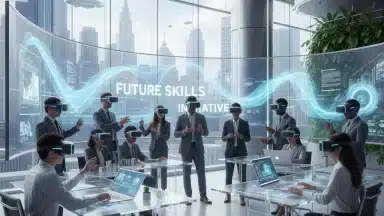
- Collaborative and Social VR Training: Multi-user VR environments will become standard, enabling teams to train together regardless of their geographical location. This fosters teamwork, communication, and shared problem-solving skills in a highly realistic setting.
- Integration with Augmented Reality (AR): The lines between VR and AR will blur, leading to mixed reality (MR) training solutions. This could involve overlaying virtual training instructions onto real-world equipment or allowing trainees to interact with virtual objects in their physical space, offering a hybrid approach to learning.
- Ubiquitous Access: As hardware becomes more affordable and accessible, VR training will democratize skill development, making high-quality, immersive learning available to a broader audience globally.
The future of skill acquisition is inherently tied to the evolution of immersive technologies. VR training simulators are not just a passing trend; they are becoming an indispensable component of modern education and professional development, continually pushing the boundaries of what’s possible in learning.
Conclusion: Embracing the VR Revolution for Superior Skill Acquisition
The evidence is clear and compelling: VR training simulators are revolutionizing how individuals acquire and refine critical skills across every conceivable industry. The ability to create safe, repeatable, immersive, and highly effective learning environments has led to demonstrable improvements in skill acquisition, often accelerating proficiency by 15% or more within a few months.
From enhancing precision in surgical procedures to ensuring safety in industrial operations and fostering critical decision-making in high-stakes scenarios, VR offers advantages that traditional training methods simply cannot match. While challenges related to cost, content creation, and technological integration exist, the long-term benefits – including reduced errors, increased efficiency, improved safety, and faster time to competency – far outweigh these initial hurdles.
As technology continues to advance, VR training will become even more realistic, adaptive, and accessible, solidifying its position as a cornerstone of future professional development. Organizations that embrace this VR revolution will not only gain a competitive edge but will also empower their workforce with the skills necessary to thrive in an increasingly complex and technologically driven world. The future of skill acquisition is here, and it’s virtual.