VR Skills Training: Future-Proofing Your Workforce for 2026 Labor Shortage
Future-Proofing Your Workforce: How VR Skills Training Addresses the 2026 US Labor Shortage
The year 2026 looms on the horizon, bringing with it not just new technologies and market shifts, but also a significant challenge for businesses across the United States: a projected and increasingly acute labor shortage. This isn’t merely a cyclical downturn; it’s a structural shift driven by demographics, evolving skill requirements, and a rapidly changing global economy. Companies are already feeling the pinch, struggling to find qualified talent, fill critical roles, and maintain productivity. The traditional methods of recruitment and training are proving insufficient against the tide of this impending crisis. This is where innovation becomes not just an advantage, but a necessity. Enter VR skills training, a groundbreaking solution poised to revolutionize how we prepare our workforce for the future.
Virtual Reality (VR) is no longer a futuristic concept confined to gaming; it has matured into a powerful, practical tool for education and professional development. For businesses grappling with the 2026 labor shortage, VR skills training offers a compelling pathway to not only mitigate the immediate impact but also to build a resilient, adaptable, and highly skilled workforce for the long term. By providing immersive, hands-on, and repeatable learning experiences, VR addresses the core challenges of traditional training methods, offering a scalable and cost-effective alternative. This article will delve deep into how VR skills training can be your strategic imperative, transforming your approach to talent development and ensuring your business thrives amidst the coming labor market disruptions.
The Looming Crisis: Understanding the 2026 US Labor Shortage
Before we explore the solutions, it’s crucial to fully grasp the magnitude of the problem. The US labor market is facing a perfect storm of factors converging to create a significant shortage by 2026. Demographic shifts, primarily an aging workforce and declining birth rates, mean fewer new entrants are replacing retiring workers. This demographic challenge is exacerbated by a widening skills gap, where the skills possessed by job seekers often don’t align with the demands of modern industries. Automation and artificial intelligence are transforming job roles, requiring new competencies in areas like data analytics, advanced robotics operation, and digital literacy.
Furthermore, the COVID-19 pandemic accelerated many of these trends, pushing more workers into early retirement and prompting a re-evaluation of career paths for others. Supply chain disruptions, geopolitical tensions, and rapid technological advancements are also creating new demands and exacerbating existing shortages in critical sectors such as manufacturing, healthcare, logistics, and technology. Businesses are finding it increasingly difficult to recruit for specialized roles, leading to increased recruitment costs, project delays, and a potential loss of competitive edge. The traditional model of hiring externally in a tight labor market is becoming unsustainable, making internal upskilling and reskilling initiatives paramount. This is where the strategic implementation of VR skills training becomes not just beneficial, but absolutely essential for survival and growth.
The Power of Immersive Learning: Why VR Skills Training Stands Out
Traditional training methods, while foundational, often fall short in preparing employees for the complexities of modern job roles. Lectures can be passive, textbooks lack practical application, and on-the-job training can be costly, risky, and inconsistent. This is where virtual reality steps in, offering an unparalleled learning experience. VR skills training immerses learners in realistic, interactive, and safe environments where they can practice complex procedures, make mistakes without real-world consequences, and receive immediate feedback.
Realistic Simulations for Practical Mastery
Imagine training a new technician to operate a multi-million dollar piece of machinery without ever touching the physical equipment. With VR skills training, this is not only possible but highly effective. Learners can navigate virtual environments that meticulously replicate real-world scenarios, from operating heavy machinery to performing intricate surgical procedures or managing emergency responses. This realism allows for the development of muscle memory, critical thinking, and problem-solving skills in a way that no other training method can. The fidelity of VR simulations means that the transfer of learned skills to real-world tasks is significantly higher, leading to faster proficiency and fewer errors in actual operations.
Safe Environment for High-Stakes Training
Many industries involve tasks that are inherently dangerous or costly to perform incorrectly. Training in these environments often requires significant safety protocols, specialized equipment, and constant supervision. VR eliminates these barriers. Trainees can practice hazardous procedures, such as working with high-voltage electricity, handling volatile chemicals, or performing maintenance at extreme heights, all within a completely safe virtual space. This not only protects the trainees but also prevents damage to expensive equipment or disruption to operations. The ability to fail safely and learn from mistakes repeatedly is a cornerstone of effective learning, and VR provides this without real-world repercussions.
Personalized and Adaptive Learning Paths
One of the significant advantages of VR skills training is its capacity for personalization. Unlike a standardized classroom setting, VR platforms can adapt to individual learning paces and styles. Trainees can repeat modules as many times as needed, focus on areas where they struggle, and progress at their own speed. Advanced VR systems can even track performance data, identifying areas of weakness and tailoring subsequent training modules to address those specific needs. This adaptive approach ensures that every learner achieves competency, maximizing the return on investment in training and accelerating skill acquisition across the workforce.
Cost-Effectiveness and Scalability
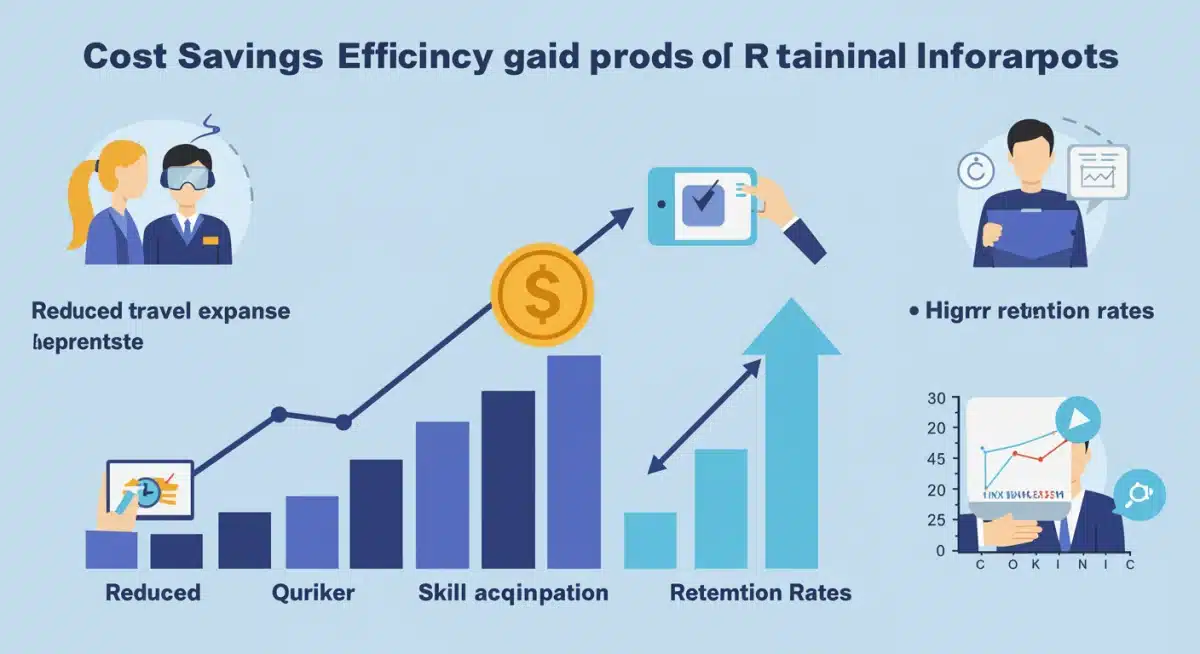
While the initial investment in VR hardware and software might seem substantial, the long-term cost benefits are compelling. VR training significantly reduces expenses associated with travel, accommodation, physical equipment, materials, and instructor time. Once a VR training module is developed, it can be deployed to an unlimited number of trainees across different locations, making it incredibly scalable. This is particularly crucial for large organizations with distributed workforces or those needing to rapidly onboard a high volume of new employees. The efficiency of VR also means less downtime for employees and faster integration into productive roles, further contributing to cost savings. As businesses face the challenges of the 2026 labor shortage, finding scalable and cost-effective training solutions is paramount, and VR delivers on both fronts.
Key Industries Benefiting from VR Skills Training in the Face of Shortages
The versatility of VR skills training means it can be applied across a vast array of sectors, each facing its own unique set of challenges in the current and future labor market. As the 2026 labor shortage intensifies, these industries are increasingly turning to VR to build and maintain a skilled workforce.
Manufacturing and Industrial Operations
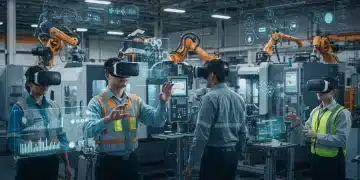
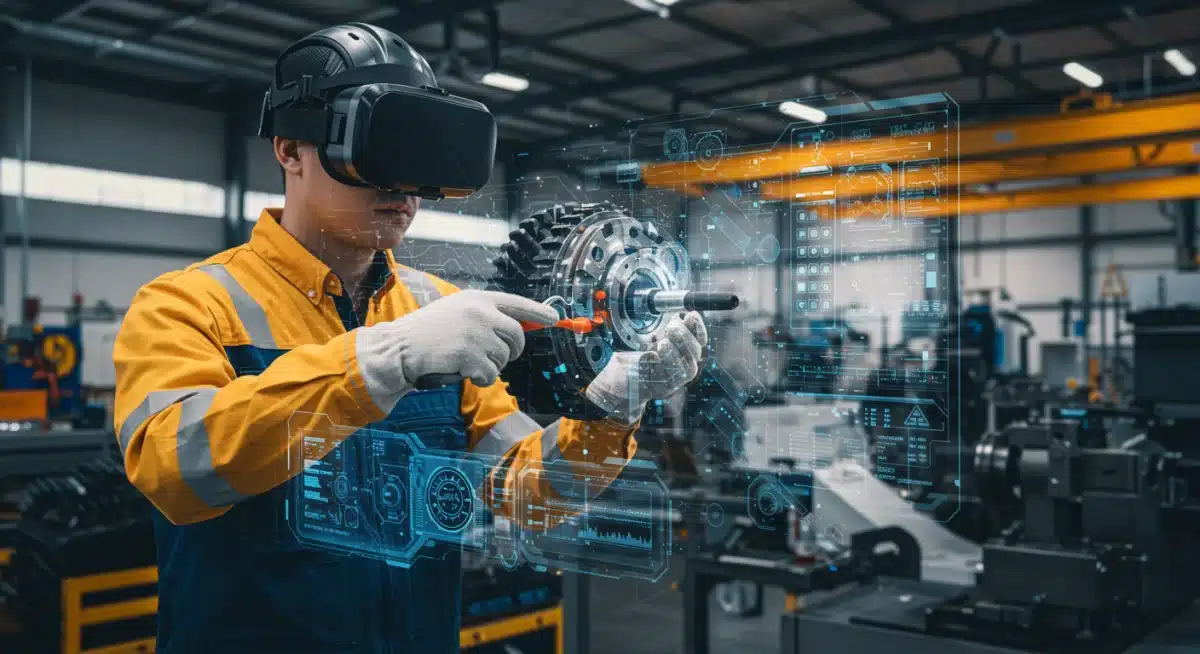
The manufacturing sector is grappling with an aging workforce and a severe shortage of skilled tradespeople, including welders, machinists, and maintenance technicians. VR offers an ideal solution for training in complex assembly, equipment operation, and maintenance procedures. Trainees can practice intricate tasks, troubleshoot virtual machinery, and learn safety protocols in a controlled environment, reducing errors and increasing efficiency on the factory floor. This can significantly shorten the learning curve for new hires and upskill existing employees for advanced roles, directly combating the skilled labor deficit.
Healthcare and Medical Training
Healthcare faces chronic shortages of nurses, doctors, and specialized technicians. VR is transforming medical education by providing realistic simulations for surgical procedures, patient care scenarios, diagnostic training, and even empathetic communication skills. Medical professionals can practice high-stakes interventions, refine their techniques, and prepare for rare or complex cases without risk to actual patients. This accelerates the development of highly competent healthcare providers, a critical need as the population ages and demand for services grows.
Logistics and Supply Chain Management
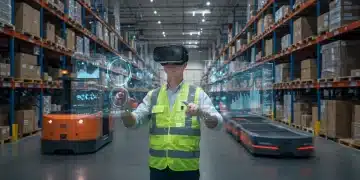
The rapid growth of e-commerce has placed immense pressure on the logistics and supply chain sectors, leading to shortages of truck drivers, warehouse operators, and logistics planners. VR can simulate driving conditions, warehouse layouts, inventory management systems, and even complex route optimization. Trainees can practice operating forklifts, picking and packing orders, and navigating distribution centers, improving efficiency and safety. This technology is vital for quickly onboarding new employees and optimizing existing operations to meet ever-increasing demands.
Retail and Customer Service
Even in customer-facing roles, VR proves invaluable. Retail employees can be trained to handle difficult customer interactions, manage store layouts, operate point-of-sale systems, and understand product knowledge in a simulated environment. This allows them to develop confidence and refine their interpersonal skills before encountering real customers, leading to improved customer satisfaction and reduced employee turnover.
Construction and Engineering
The construction industry consistently faces skilled labor shortages. VR can train workers on operating heavy equipment, understanding architectural blueprints, practicing safety procedures on virtual construction sites, and even collaborating on complex engineering projects. This reduces safety incidents, improves project efficiency, and helps bridge the gap in skilled labor for critical infrastructure development.
Implementing VR Skills Training: Best Practices for Businesses
To successfully leverage VR skills training in addressing the 2026 labor shortage, businesses need a strategic approach. Simply acquiring VR headsets isn’t enough; effective implementation requires careful planning and execution.
1. Identify Key Skill Gaps and Training Needs
The first step is to conduct a thorough analysis of your current and future workforce needs. Where are your most significant skill gaps? Which roles are most affected by the impending labor shortage? Prioritize the skills that are critical for your business operations and future growth. This analysis will inform which VR training modules you need to develop or acquire.
2. Partner with Experienced VR Solution Providers
Developing high-quality VR training content requires specialized expertise in 3D modeling, game development, instructional design, and VR hardware. Unless you have an in-house team with these capabilities, partnering with a reputable VR solution provider is crucial. They can help you design realistic simulations, integrate learning objectives, and ensure the training is engaging and effective.
3. Start Small and Scale Up
Don’t try to implement VR training across your entire organization all at once. Begin with a pilot program in a specific department or for a particular skill set. Gather feedback from trainees and instructors, measure the effectiveness of the training, and refine your approach. Once you demonstrate success, you can gradually scale up your VR training initiatives across more departments and for a wider range of skills.
4. Integrate VR with Blended Learning Approaches
VR skills training is incredibly powerful, but it’s often most effective when integrated into a broader blended learning strategy. Combine VR simulations with traditional classroom instruction, e-learning modules, and mentorship programs. This holistic approach ensures that learners receive comprehensive training that addresses both theoretical knowledge and practical application. VR should complement, not entirely replace, other valuable training methods.
5. Focus on Metrics and ROI
To justify the investment in VR training, it’s essential to track its effectiveness. Measure key performance indicators (KPIs) such as time to proficiency, reduction in errors, improved safety records, employee retention rates, and cost savings compared to traditional methods. Demonstrating a clear return on investment (ROI) will secure continued support and funding for your VR initiatives. This data-driven approach is vital for showcasing how VR skills training directly contributes to solving the labor shortage challenge.
Overcoming Challenges and Maximizing Adoption
While the benefits of VR skills training are clear, implementing new technology always comes with its own set of challenges. Addressing these proactively will maximize adoption and ensure the success of your training programs.
Initial Investment and Hardware Costs
The upfront cost of VR headsets and software development can be a barrier for some organizations. However, as previously discussed, the long-term cost savings often outweigh this initial outlay. Moreover, the price of VR hardware is steadily decreasing, and subscription-based VR training platforms are making the technology more accessible for businesses of all sizes. Focus on the ROI and the critical need to address the labor shortage when making purchasing decisions.
Content Development and Customization
Creating high-quality, industry-specific VR content can be complex and time-consuming. Generic off-the-shelf solutions may not always meet unique organizational needs. This is where partnering with specialized VR content creators becomes vital. They can custom-build simulations that perfectly align with your operational procedures, safety protocols, and learning objectives, ensuring maximum relevance and effectiveness for your VR skills training.
Technological Integration and IT Support
Integrating VR systems into existing IT infrastructure and providing adequate technical support can be a concern. Ensure your IT department is involved early in the planning stages. Proper network infrastructure, device management, and troubleshooting capabilities are essential for a smooth rollout and ongoing operation. Cloud-based VR solutions can also simplify deployment and management, reducing the burden on internal IT teams.
Employee Acceptance and Training
Some employees, particularly those less familiar with technology, might be hesitant to adopt VR training. It’s crucial to introduce the technology effectively, highlighting its benefits and addressing any concerns about motion sickness or discomfort. Provide clear instructions, offer introductory sessions, and gather feedback to refine the user experience. Demonstrating how VR training directly enhances their skills and career prospects can significantly boost adoption rates. Emphasize that VR skills training is designed to empower them, not replace them.
The Future of Workforce Development: Beyond 2026
The impact of VR skills training extends far beyond merely addressing the immediate 2026 labor shortage. It represents a fundamental shift in how organizations approach workforce development, paving the way for a more agile, skilled, and resilient future.
Continuous Learning and Upskilling
In a world of constant technological change, continuous learning is no longer a luxury but a necessity. VR platforms can facilitate ongoing upskilling and reskilling initiatives, allowing employees to acquire new competencies as job roles evolve. This proactive approach ensures that your workforce remains relevant and competitive, adapting to new technologies and market demands without significant disruption.
Enhanced Employee Engagement and Retention
Engaging and effective training programs are a key factor in employee satisfaction and retention. VR training, with its immersive and interactive nature, can make learning more enjoyable and memorable. Employees who feel invested in and supported in their professional development are more likely to remain with an organization, reducing turnover costs and preserving valuable institutional knowledge. By offering cutting-edge VR skills training, companies can position themselves as forward-thinking employers of choice.
Global Standardization of Training
For multinational corporations, VR offers the ability to standardize training across different geographical locations, ensuring consistent quality and compliance. Regardless of where employees are located, they can access the same high-fidelity training simulations, fostering a unified culture of excellence and operational consistency. This is particularly valuable in industries with strict regulatory requirements or complex global supply chains.
Data-Driven Insights into Performance
VR training platforms generate rich data on learner performance, including completion rates, error patterns, time taken for tasks, and areas of difficulty. This data provides invaluable insights into the effectiveness of the training content and individual learner progress. Organizations can use this information to continuously refine their training programs, identify areas for improvement, and tailor future learning paths, ensuring maximum impact and efficiency from their VR skills training investments.
Conclusion: Embrace VR for a Resilient Future
The projected 2026 US labor shortage is a clear call to action for businesses across all sectors. Traditional approaches to workforce development are no longer sufficient to meet the demands of a rapidly evolving economic landscape. VR skills training offers a powerful, transformative solution, providing an immersive, safe, personalized, and cost-effective way to upskill and reskill your workforce.
By embracing virtual reality, businesses can not only mitigate the immediate challenges of talent scarcity but also build a future-proof workforce that is adaptable, highly skilled, and ready to navigate the complexities of tomorrow’s economy. The time to invest in this revolutionary training technology is now. Those who proactively adopt VR skills training will be the ones best positioned to thrive, innovate, and lead in the face of the impending labor market shifts, securing a competitive advantage and ensuring long-term success. Don’t just react to the future; shape it with VR.