VR Remote Collaboration: Cut Costs 10% for US Enterprises by 2026
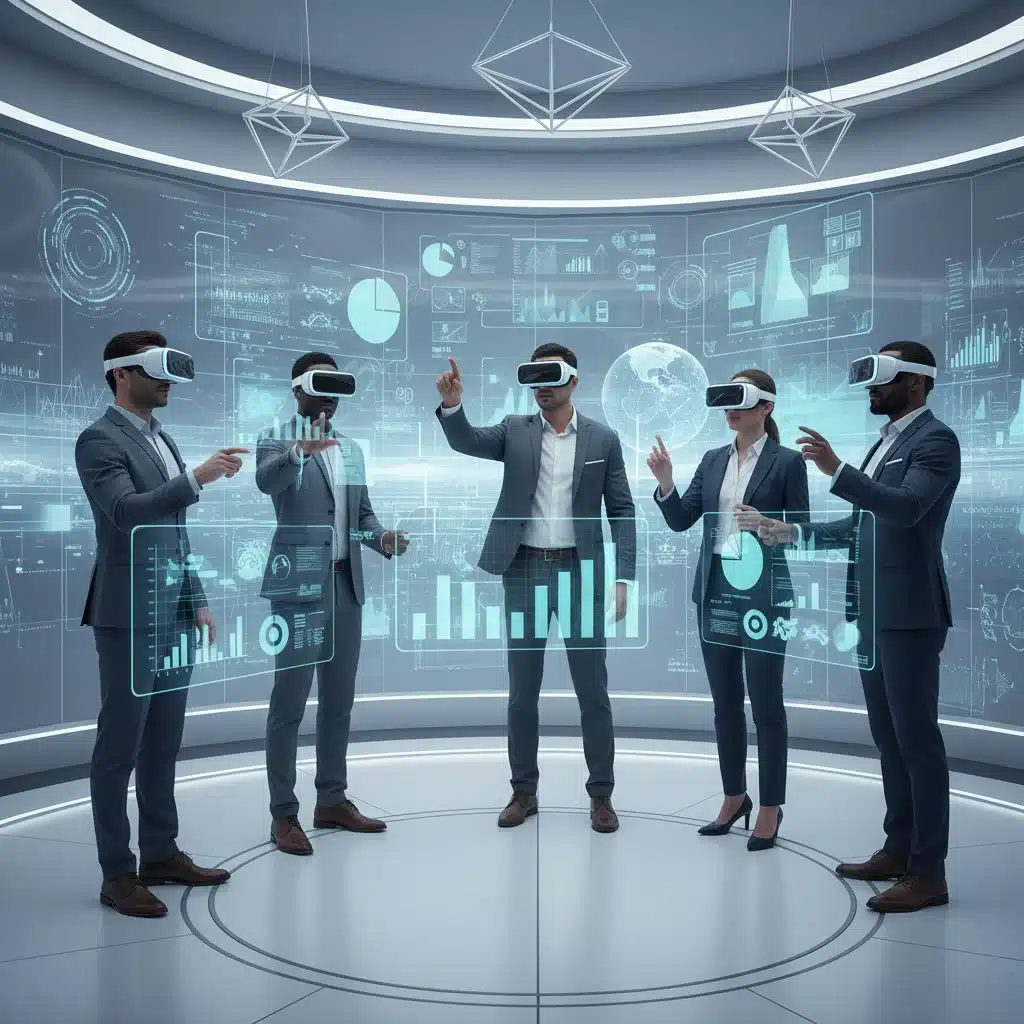
In an increasingly interconnected yet physically dispersed world, US enterprises are constantly seeking innovative strategies to optimize operations and enhance profitability. The year 2026 is poised to mark a significant turning point, with virtual reality (VR)-powered remote collaboration emerging as a leading force in achieving substantial operational cost reductions. This comprehensive guide explores how businesses can realistically target and achieve a 10% cut in operational expenses through the strategic adoption of VR remote collaboration, detailing the benefits, challenges, and a clear roadmap for success.
The Imperative for Cost Reduction in US Enterprises
For decades, operational costs have been a relentless pressure point for businesses across the United States. From real estate and travel to training and equipment, the expenses associated with traditional business models can be staggering. In a competitive global landscape, even marginal improvements in efficiency can translate into significant financial gains. The COVID-19 pandemic accelerated the shift towards remote work, proving its viability and challenging long-held assumptions about office-centric operations. However, traditional remote work, while cost-effective in some areas, often introduces new challenges related to engagement, communication, and the sense of shared presence.
Enter VR remote collaboration – a transformative technology that promises to bridge the gaps left by conventional remote work while unlocking unprecedented levels of operational efficiency and cost savings. By immersing employees in shared virtual environments, VR fosters a sense of co-presence that traditional video conferencing simply cannot replicate. This enhanced collaboration environment is not just about making remote work more engaging; it’s about fundamentally rethinking how teams interact, innovate, and execute, ultimately leading to a leaner, more agile enterprise.
Understanding VR Remote Collaboration: More Than Just a Meeting
At its core, VR remote collaboration involves using virtual reality technologies to enable geographically dispersed individuals to interact, work together, and share experiences in a simulated 3D environment. This goes far beyond typical video calls. Imagine:
- Virtual Meeting Rooms: Instead of a flat screen, teams gather around a virtual conference table, sharing whiteboards, 3D models, and presentations as if they were physically present.
- Immersive Training Simulations: Employees can undergo hands-on training for complex machinery, medical procedures, or customer service scenarios in a safe, cost-effective virtual space, eliminating the need for expensive physical prototypes or travel to training facilities.
- Design and Prototyping: Engineers and designers can collaboratively inspect, manipulate, and refine 3D designs in real-time, drastically reducing the need for physical prototypes and accelerating product development cycles.
- Remote Field Operations: Experts can guide on-site technicians through complex repairs or installations by viewing the environment through the technician’s VR headset, providing real-time instructions and annotations.
The key differentiator of VR remote collaboration is its ability to create a sense of ‘presence’ – the feeling of being truly there with others, which significantly boosts engagement, understanding, and team cohesion. This psychological benefit has profound implications for productivity and innovation, directly impacting the bottom line.
The Pathway to 10% Operational Cost Reduction by 2026
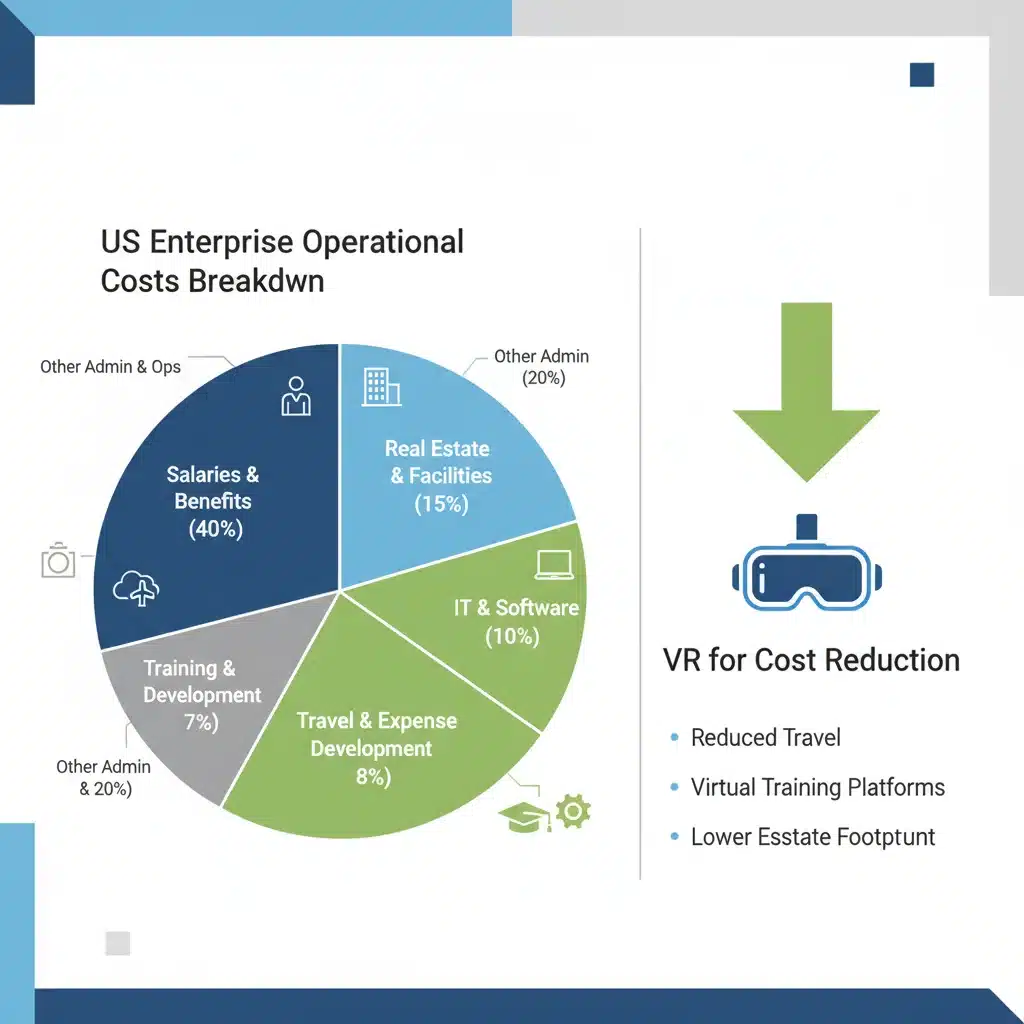
Achieving a 10% reduction in operational costs through VR remote collaboration is an ambitious yet attainable goal for US enterprises. This saving is not a single-point reduction but a cumulative effect across various operational segments. Let’s break down the primary areas where VR can deliver significant savings:
1. Reduced Business Travel Expenses
One of the most immediate and significant areas for cost reduction is business travel. Conferences, client meetings, site visits, and inter-office collaborations often incur substantial expenses related to flights, accommodation, per diems, and lost productivity during transit. VR remote collaboration can dramatically reduce the necessity for such travel. Instead of flying across the country for a quarterly review, executives can ‘meet’ in a high-fidelity virtual boardroom. Engineers can conduct virtual site inspections, and sales teams can deliver immersive product demonstrations to clients worldwide without ever leaving their offices.
- Average Savings Potential: 3-5% of total operational costs.
- Mechanism: Replacing physical meetings, training sessions, and site visits with high-fidelity VR equivalents.
- Example: A large consulting firm could reduce its annual travel budget by millions by hosting client pitches and internal strategy sessions in VR.
2. Optimized Real Estate and Facilities Costs
The traditional corporate office model is expensive. Rent, utilities, maintenance, and facility management represent a substantial fixed cost for many enterprises. While a complete abandonment of physical offices may not be realistic for all, VR remote collaboration enables a significant reduction in required office space. Companies can downsize their physical footprint, transition to smaller hub-and-spoke models, or even embrace fully remote structures supported by VR. Flexible workspaces and hot-desking become more viable when employees can access immersive virtual environments from anywhere.
- Average Savings Potential: 2-4% of total operational costs.
- Mechanism: Reducing office space, shifting to flexible work models, decreasing utility consumption.
- Example: A tech company moving from a large central office to smaller, collaborative VR-enabled hubs could cut real estate expenses by 30-50% for that specific cost category.
3. Enhanced Training and Development Efficiency
Employee training is a critical but often costly operational component. Traditional methods involve physical classrooms, travel for trainers and trainees, and expensive equipment or simulations. VR offers an unparalleled platform for immersive, hands-on training that is both scalable and cost-effective. Trainees can practice complex tasks in a risk-free virtual environment until proficiency is achieved, without damaging real equipment or endangering personnel. This reduces material waste, equipment wear-and-tear, and the need for dedicated physical training facilities.
- Average Savings Potential: 1-2% of total operational costs.
- Mechanism: Lowering costs associated with physical training facilities, equipment, instructors’ travel, and material waste.
- Example: A manufacturing enterprise using VR for equipment maintenance training could drastically reduce the cost of physical mock-ups and the risk of errors on actual production lines.
4. Streamlined Product Development and Prototyping
For industries involved in product design and manufacturing, the costs associated with physical prototyping can be immense. VR remote collaboration allows design teams, engineers, and even clients to review, iterate, and refine 3D models in a shared virtual space. This accelerates the design cycle, reduces the number of physical prototypes required, and catches errors earlier in the process, preventing costly rework down the line.
- Average Savings Potential: 1-2% of total operational costs.
- Mechanism: Reducing the number of physical prototypes, accelerating design cycles, minimizing errors and rework.
- Example: An automotive company using VR to collaboratively design and test vehicle interiors could save millions on physical mock-ups and reduce time-to-market.
5. Improved Employee Retention and Productivity
While not a direct cost reduction, improved employee retention and productivity have significant indirect financial benefits. VR remote collaboration can lead to higher job satisfaction, as it offers more engaging and effective ways to work remotely, reducing feelings of isolation and enhancing team cohesion. A more engaged and productive workforce translates into lower recruitment costs, reduced turnover, and higher output per employee.
- Average Savings Potential: Indirect, but potentially significant (e.g., reduced recruitment costs, increased output).
- Mechanism: Enhancing employee engagement, fostering better collaboration, reducing turnover.
- Example: A company with high employee retention due to engaging VR remote work environments saves on average $15,000-$20,000 per employee in rehiring and training costs annually.
Key Considerations for Successful VR Remote Collaboration Implementation
Adopting VR remote collaboration is not without its challenges. US enterprises must strategically plan their implementation to maximize benefits and mitigate potential pitfalls.
1. Hardware and Software Investment
The initial outlay for VR headsets and collaboration software can be substantial. However, as VR technology matures, hardware costs are decreasing, and enterprise-grade software solutions are becoming more robust and user-friendly. Companies must conduct a thorough cost-benefit analysis, considering the long-term savings against the upfront investment.
2. Network Infrastructure
High-quality VR experiences demand robust internet connectivity. Enterprises need to ensure their employees, whether working from home or a satellite office, have access to stable, high-bandwidth connections to prevent latency and ensure smooth virtual interactions.
3. User Adoption and Training
Resistance to new technology is common. Comprehensive training programs are essential to familiarize employees with VR hardware and software, ensuring they feel comfortable and confident using the new tools. Highlighting the benefits and providing clear use cases will drive adoption.
4. Data Security and Privacy
As with any digital collaboration platform, data security and privacy are paramount. Enterprises must choose VR solutions that offer robust encryption, secure data handling, and compliance with relevant industry regulations. Establishing clear policies for virtual environment conduct and data sharing is crucial.
5. Integration with Existing Workflows
For VR remote collaboration to be truly effective, it must integrate seamlessly with existing enterprise tools and workflows. Compatibility with project management software, CAD programs, communication platforms, and other business-critical applications will ensure a smooth transition and maximize utility.
Roadmap for US Enterprises to Implement VR Remote Collaboration by 2026
To achieve the 10% operational cost reduction target, US enterprises should follow a structured implementation roadmap:
Phase 1: Pilot Program (6-12 months)
- Identify Key Use Cases: Begin with departments or projects where VR offers the clearest and most immediate benefits (e.g., design teams, remote training, executive meetings).
- Select VR Hardware and Software: Research and choose appropriate enterprise-grade VR headsets (e.g., Meta Quest Pro, HTC Vive Focus 3) and collaboration platforms (e.g., Spatial, Engage, Immersed).
- Small-Scale Deployment: Equip a pilot group of 20-50 employees with VR gear and provide comprehensive training.
- Measure and Evaluate: Track key performance indicators (KPIs) such as travel cost reduction, training efficiency, project completion times, and user satisfaction. Gather extensive feedback.
Phase 2: Scaled Expansion (12-24 months)
- Refine Strategy: Based on pilot program learnings, refine the VR strategy, addressing pain points and optimizing successful approaches.
- Expand Deployment: Roll out VR to additional departments or teams, focusing on areas identified for high impact.
- Integrate Workflows: Work with IT and software vendors to integrate VR platforms with existing enterprise systems.
- Develop Internal Expertise: Train internal VR champions and support staff to ensure ongoing success and troubleshoot issues.
Phase 3: Enterprise-Wide Adoption and Optimization (24-36 months)
- Full-Scale Deployment: Make VR remote collaboration a standard tool across the enterprise where applicable.
- Continuous Optimization: Regularly update hardware and software, explore new VR applications, and refine usage policies.
- Monitor ROI: Continuously track operational cost savings against investment, ensuring the 10% reduction target remains on track.
- Innovate: Explore advanced VR applications like digital twins, remote assistance, and virtual showrooms to unlock further value.

The Future is Immersive: Beyond Cost Savings
While the 10% operational cost reduction by 2026 is a powerful motivator, the benefits of VR remote collaboration extend far beyond mere savings. It represents a fundamental shift in how businesses operate, fostering a more connected, innovative, and resilient workforce.
- Enhanced Innovation: Immersive environments can spark creativity and facilitate more dynamic brainstorming sessions.
- Global Talent Pool: Companies can tap into a worldwide talent pool without geographical limitations, hiring the best individuals regardless of their location.
- Improved Employee Well-being: By reducing commuting and offering flexible work options, VR collaboration can contribute to a better work-life balance for employees.
- Competitive Advantage: Early adopters will gain a significant competitive edge, positioning themselves as leaders in digital transformation and attracting top talent.
The journey to embracing VR remote collaboration requires foresight, investment, and a willingness to adapt. However, for US enterprises looking to thrive in the coming years, the strategic advantages and financial returns, particularly the tangible goal of a 10% operational cost reduction, make it an undeniable imperative.
Conclusion: A Vision for 2026 and Beyond
The vision of US enterprises operating with 10% lower costs by 2026, powered by VR remote collaboration, is not a distant dream but a rapidly approaching reality. By strategically investing in VR technology, fostering user adoption, and integrating these tools into core business processes, companies can unlock significant efficiencies across travel, real estate, training, and product development.
The transition will require careful planning, robust infrastructure, and a commitment to innovation, but the rewards are clear: a more agile, cost-effective, and future-ready enterprise. As VR technology continues to advance and become more accessible, its role in shaping the operational landscape of US businesses will only grow, making VR remote collaboration an indispensable tool for sustained success in the years to come.