VR Language Learning Apps: 2026 Progress Tracking & Immersion
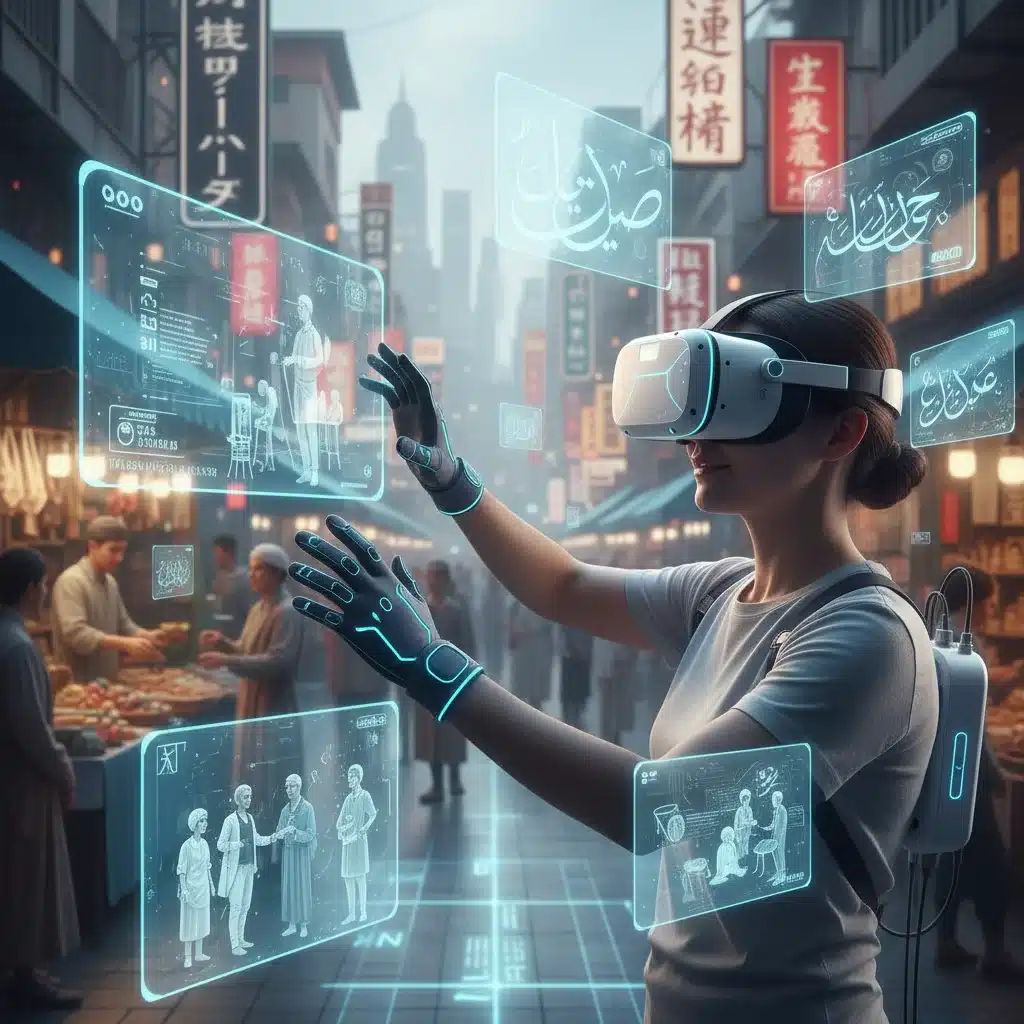
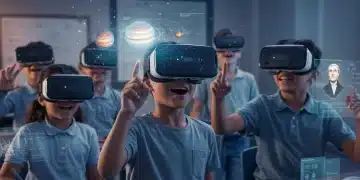
In the rapidly evolving landscape of educational technology, Virtual Reality (VR) has emerged as a groundbreaking tool, particularly in the realm of language acquisition. The year 2026 marks a significant milestone in the development and adoption of VR language learning apps, showcasing remarkable advancements in immersion, progress tracking, and overall effectiveness. Gone are the days of rote memorization and static textbooks; today’s learners are stepping into dynamic, interactive virtual worlds that bring languages to life.
The promise of VR in education has always been its ability to transport users to new environments, creating experiences that mimic real-world scenarios. For language learning, this means more than just seeing foreign words; it means living them. Imagine ordering coffee in a Parisian café, negotiating a deal in a Tokyo boardroom, or navigating a bustling market in Mexico City, all from the comfort of your home. These are not distant dreams but current realities powered by sophisticated VR language learning platforms.
This comprehensive review delves into the state of VR language learning apps in 2026, examining how they have evolved to offer unparalleled immersion, robust progress tracking, and truly transformative learning experiences. We will explore the technologies driving these innovations, the pedagogical approaches they employ, and the tangible benefits they offer to language learners worldwide. As we navigate this exciting frontier, it becomes clear that VR is not just a supplement to traditional methods but a paradigm shift in how we approach global communication.
The Dawn of True Immersion in VR Language Learning
Immersion has long been recognized as the most effective method for language acquisition. Traditional immersion involves living in a foreign country, constantly exposed to the target language and culture. While highly effective, it’s not feasible for everyone. This is where VR language learning steps in, offering a compelling alternative that simulates real-world immersion with remarkable fidelity.
By 2026, VR headsets have become more affordable, lighter, and more powerful, offering high-resolution displays and wider fields of view that significantly reduce motion sickness and enhance the sense of presence. This technological leap has allowed developers to create incredibly detailed and realistic virtual environments that are indistinguishable from real life for many users. The visual and auditory fidelity is such that learners genuinely feel “there,” fostering a deep connection with the simulated environment.
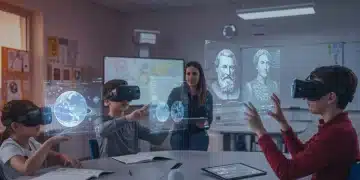
Modern VR language learning apps leverage this technology to create diverse scenarios. Learners can participate in guided conversations with AI-powered avatars, each programmed with advanced natural language processing (NLP) and speech recognition capabilities. These avatars can understand nuanced speech, respond appropriately, and even adapt their communication style based on the learner’s proficiency. This dynamic interaction provides immediate feedback, allowing learners to correct mistakes in real-time and build confidence.
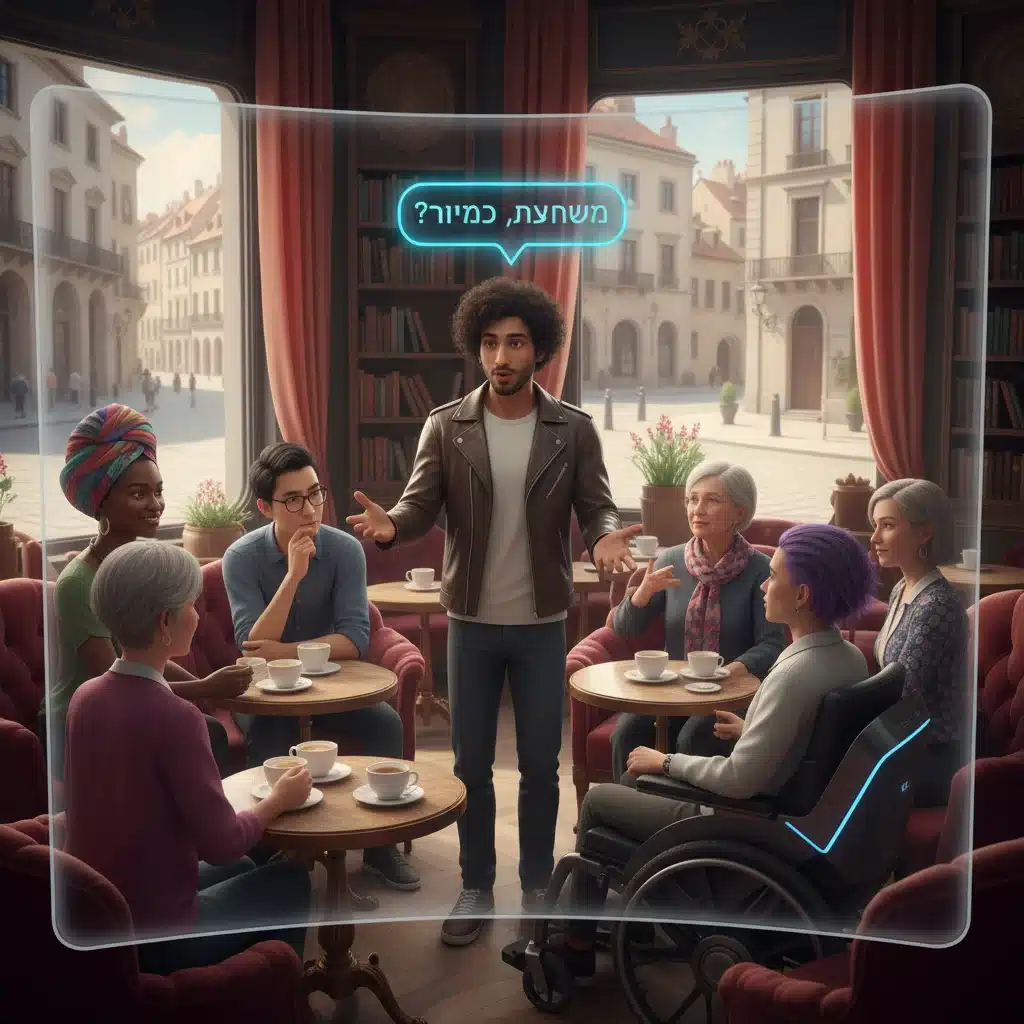
Beyond one-on-one interactions, many platforms now offer multiplayer VR environments where learners can interact with other human learners and native speakers from around the globe. These social VR spaces replicate real-world social gatherings, cultural events, and professional settings, providing authentic opportunities for conversation and cultural exchange. Imagine joining a virtual book club discussing a novel in Spanish, or collaborating on a project in Japanese with peers from different continents.
The psychological impact of VR immersion is profound. When learners feel truly present in a virtual environment, their brains process the language more organically, similar to how they would in a real-world setting. This reduces anxiety often associated with speaking a new language and encourages more spontaneous and natural communication. The contextual learning inherent in these immersive experiences also aids in memory retention, as words and phrases are associated with specific actions, objects, and emotions within the virtual world.
Furthermore, cultural immersion is a core component of effective language learning. VR language learning apps in 2026 go beyond mere linguistic practice by integrating rich cultural elements. Users can explore virtual museums showcasing art from different periods, attend virtual concerts of foreign artists, or even participate in traditional ceremonies, all while practicing the target language. This holistic approach ensures learners don’t just speak the language but also understand the cultural nuances that shape its usage.
Revolutionizing Progress Tracking and Personalized Learning
One of the most significant advancements in VR language learning apps by 2026 is the sophistication of their progress tracking and personalized learning algorithms. Traditional language learning often struggles with providing accurate, real-time feedback and tailoring content to individual needs. VR platforms, however, are uniquely positioned to collect vast amounts of data on a learner’s performance and use it to create highly customized learning paths.
Granular Data Collection
Modern VR language apps utilize an array of sensors within the headset and controllers to monitor various aspects of a learner’s interaction. This includes not only what they say and how accurately they say it, but also their gaze direction, body language, response times, and even emotional responses. For instance, eye-tracking technology can identify which words or objects a learner struggles with, while voice analysis goes beyond simple pronunciation correction to assess intonation, rhythm, and accent.
This granular data allows the system to build a comprehensive profile of each learner’s strengths and weaknesses. It can pinpoint specific grammatical errors, vocabulary gaps, and areas where pronunciation needs improvement. The data is then fed into advanced AI algorithms that generate personalized feedback and recommend targeted exercises.
AI-Powered Adaptive Learning Paths
The days of one-size-fits-all curricula are over. In 2026, VR language learning apps employ sophisticated AI to create dynamic, adaptive learning paths for each user. Based on their performance data, the AI intelligently adjusts the difficulty of scenarios, introduces new vocabulary at optimal times, and revisits challenging concepts until mastery is achieved.
For example, if a learner consistently struggles with verb conjugations in a particular tense, the AI might generate additional VR scenarios specifically designed to practice that tense in various contexts. If another learner demonstrates a strong grasp of grammar but lacks conversational fluency, the system might prioritize more free-form dialogue practice with AI tutors or other human learners.
Real-time Feedback and Performance Analytics
Immediate and constructive feedback is crucial for effective learning. VR language learning apps provide real-time feedback during interactions. If a learner mispronounces a word, the AI avatar might gently correct them, offering phonetic guidance or visual cues. If a grammatical error is made, the system can highlight the mistake and provide an explanation or an alternative phrasing.
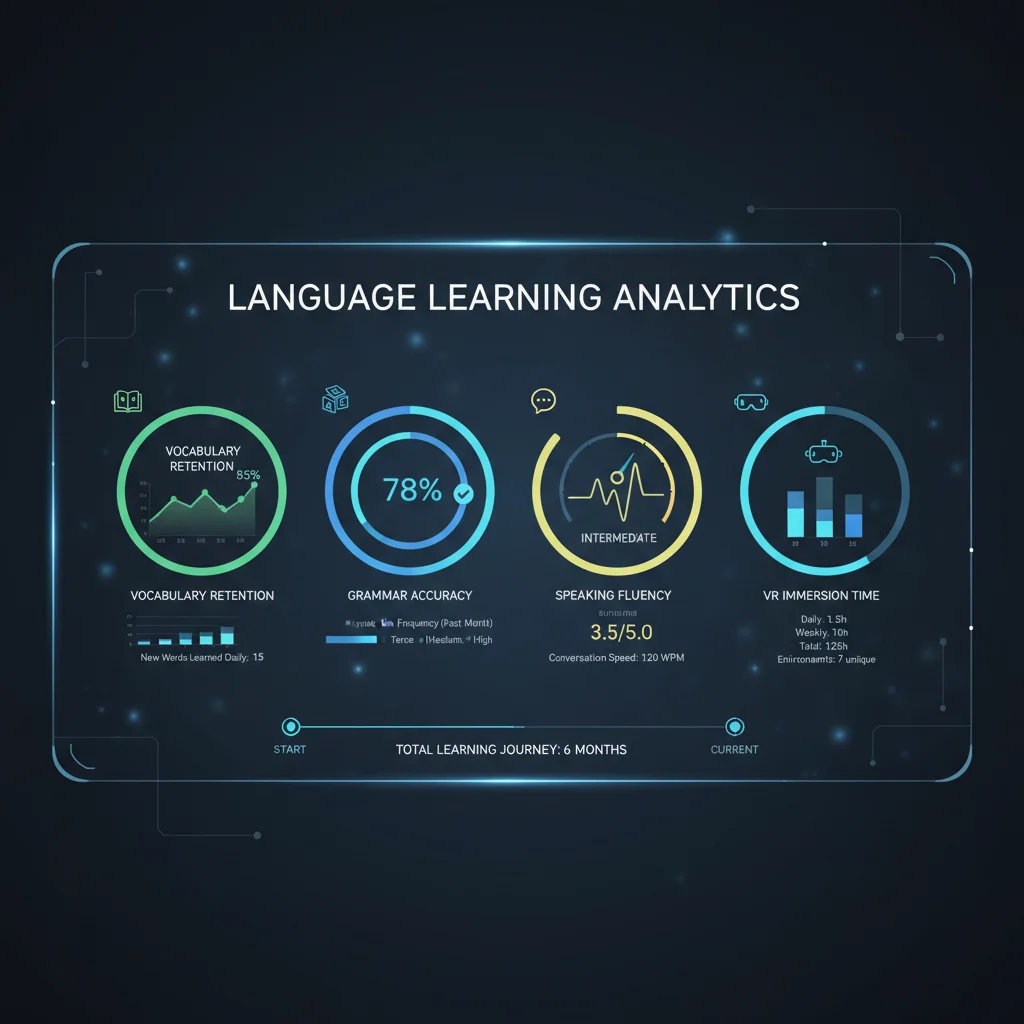
Beyond real-time corrections, learners have access to detailed performance dashboards. These dashboards present a visual representation of their progress over time, including metrics such as:
- Vocabulary Acquisition: Number of new words learned, retention rate, and usage frequency.
- Grammar Accuracy: Error rates in different grammatical structures and improvement trends.
- Pronunciation Scores: Detailed analysis of phonetic accuracy, intonation, and rhythm.
- Speaking Fluency: Speech rate, pause frequency, and naturalness of conversational flow.
- Time Spent: Breakdown of time spent in different types of VR activities (e.g., conversational practice, cultural exploration, vocabulary games).
- Confidence Levels: Self-reported or inferred confidence levels during various interactions.
These analytics empower learners to understand their progress, identify areas needing more attention, and celebrate their achievements. They also provide valuable insights for educators and tutors who might be overseeing the learning process, allowing them to intervene with targeted support when necessary.
The Role of AI and Natural Language Processing (NLP)
The backbone of advanced VR language learning in 2026 is sophisticated AI and Natural Language Processing (NLP). These technologies enable the highly realistic and responsive interactions that define the immersive experience.
Advanced Conversational AI
AI-powered conversational partners are no longer limited to simple scripts. They are capable of understanding complex sentences, recognizing idiomatic expressions, and even detecting sarcasm or emotional tone. This is made possible by breakthroughs in large language models (LLMs) and deep learning algorithms that have been trained on vast datasets of human conversation.
These AI tutors can adapt their responses based on the learner’s proficiency, conversational context, and even their perceived emotional state. They can initiate conversations, ask probing questions, correct mistakes subtly, and provide explanations in a clear and concise manner. This creates a highly engaging and effective practice environment where learners can experiment with language without fear of judgment.
Speech Recognition and Synthesis
Accuracy in speech recognition has reached unprecedented levels. Modern VR language learning apps can accurately transcribe spoken language in various accents and speeds, making it possible to give precise feedback on pronunciation and fluency. Coupled with highly natural-sounding speech synthesis, these apps create seamless and believable conversational experiences.
Learners can hear native-like pronunciation and intonation from AI avatars, providing excellent models for imitation. The ability to speak naturally and be understood by the AI is a huge confidence booster and a critical component of developing fluency.
Contextual Language Generation
Another powerful application of AI is contextual language generation. In immersive VR scenarios, the AI can dynamically generate dialogue and environmental text (e.g., signs, menus, newspapers) that is relevant to the specific situation and the learner’s current level. This ensures that the language presented is always appropriate and challenging enough to promote learning without overwhelming the user.
For instance, if a learner indicates they are in a virtual restaurant, the AI will generate menu items, waiter dialogue, and customer conversations relevant to that setting, providing authentic language exposure.
Benefits of VR Language Learning in 2026
The convergence of immersive VR technology, advanced AI, and sophisticated progress tracking offers a multitude of benefits for language learners:
-
Enhanced Motivation and Engagement:
The gamified and interactive nature of VR makes learning enjoyable and captivating. Learners are more likely to stay motivated and consistent with their studies when they are actively participating in engaging virtual experiences rather than passively consuming content.
-
Reduced Language Anxiety:
Practicing in a safe, judgment-free virtual environment significantly reduces the fear of making mistakes, which is a major barrier for many language learners. This fosters a more confident and experimental approach to speaking.
-
Accelerated Acquisition:
The high degree of immersion and contextual learning, combined with personalized feedback, leads to faster acquisition of vocabulary, grammar, and conversational fluency. Learners are exposed to the language in a way that promotes natural assimilation.
-
Real-World Skill Transfer:
By simulating real-world scenarios, VR language learning helps learners develop practical communication skills that are directly transferable to actual interactions. They learn not just words, but how to use them effectively in various social and professional contexts.
-
Cultural Competence:
Beyond language, VR offers an unparalleled opportunity for cultural immersion. Learners gain a deeper understanding of customs, social norms, and cultural nuances, which are essential for true fluency and effective cross-cultural communication.
-
Accessibility and Flexibility:
VR language learning removes geographical barriers, making high-quality immersion experiences accessible to anyone with a VR headset and an internet connection. Learners can practice anytime, anywhere, fitting language study around their schedules.
-
Personalized Learning Pace:
The adaptive nature of VR platforms ensures that each learner progresses at their own optimal pace, receiving content and challenges that are perfectly matched to their current abilities and learning style.
Challenges and Future Outlook
Despite the remarkable progress, VR language learning still faces some challenges. The initial cost of VR hardware, while decreasing, can still be a barrier for some. Ensuring equitable access to these technologies remains an important consideration. Furthermore, while AI is highly advanced, it cannot fully replicate the spontaneity and unpredictability of human interaction, though it comes remarkably close.
Looking ahead, the future of VR language learning is incredibly bright. We can anticipate even more sophisticated AI, capable of understanding and generating language with near-human proficiency. Haptic feedback will likely become more integrated, adding another layer of sensory immersion. The integration of augmented reality (AR) with VR (mixed reality) could create even more fluid transitions between virtual and real-world language practice.
Imagine wearing AR glasses that overlay foreign language translations or cultural information onto your real-world view, or seamlessly transitioning from a VR lesson to an AR-enhanced conversation with a native speaker in your living room.
The development of more accessible and user-friendly content creation tools will also empower educators and even learners to create their own custom VR language learning scenarios, further expanding the diversity and relevance of available content.
Conclusion
In 2026, VR language learning apps have transcended their nascent stages to become powerful, sophisticated, and highly effective tools for language acquisition. By offering unparalleled immersion, cutting-edge progress tracking, and personalized learning experiences powered by advanced AI, these platforms are fundamentally reshaping how we learn and master new languages.
The ability to practice in realistic virtual environments, receive instant, intelligent feedback, and track every nuance of progress empowers learners to achieve fluency faster and more confidently than ever before. As VR technology continues to evolve and become more integrated into our daily lives, its role in language education will only grow, promising a future where global communication is not just a skill, but an accessible and engaging adventure for everyone.
Whether you’re a seasoned polyglot looking to refine your skills or a complete beginner taking your first steps into a new language, the immersive and intelligent world of VR language learning offers a truly transformative path to linguistic mastery. The future of language acquisition is here, and it’s virtually limitless.