VR CAD Software Updates: 2026 Engineer Efficiency Boost

The landscape of engineering and product design is undergoing a profound transformation, driven by the relentless advancement of technology. At the forefront of this revolution are Virtual Reality (VR) and Computer-Aided Design (CAD) software. For years, engineers have leveraged CAD tools to conceptualize, design, and analyze products. However, the integration of VR into CAD platforms is elevating this process to unprecedented levels of immersion, collaboration, and efficiency. As we look towards 2026, the latest updates to top VR CAD software are not just incremental improvements; they represent a paradigm shift, promising to boost engineer efficiency by an astounding 20%.
The convergence of VR and CAD addresses several long-standing challenges in traditional design workflows. Flat-screen interfaces, while powerful, inherently limit our ability to truly grasp the spatial complexities of 3D models. VR shatters these limitations, placing engineers directly inside their designs. This immersive experience fosters a deeper understanding of scale, proportion, and interdependencies, leading to more intuitive design decisions and fewer errors. The promise of a 20% efficiency boost isn’t merely aspirational; it’s a measurable outcome derived from streamlined iteration cycles, enhanced communication, and a more natural interaction with digital prototypes. This article delves into the specifics of these groundbreaking updates, exploring the technologies, features, and real-world impacts that are redefining the future of engineering.
The Evolution of VR CAD Efficiency: A 2026 Perspective
From the early days of 2D drafting to the sophisticated 3D modeling tools of today, CAD software has always aimed at improving design accuracy and speed. However, the leap to VR CAD introduces a fundamentally different way of interacting with digital models. Instead of manipulating a 3D object on a 2D screen, VR allows engineers to literally step into their designs, walk around them, and interact with them as if they were physical objects. This shift is critical for understanding complex assemblies, identifying potential design flaws early, and communicating design intent more effectively. The 2026 updates build upon this foundation, pushing the boundaries of what’s possible and significantly enhancing VR CAD Efficiency.
The primary driver behind the projected 20% efficiency gain is the holistic improvement across several key areas: intuitive interaction, real-time collaboration, advanced simulation, and seamless integration with existing engineering workflows. These advancements are not isolated; they are interconnected components of a larger ecosystem designed to empower engineers with unparalleled control and insight. Imagine being able to assemble virtual prototypes with your hands, detect clashes before a single physical part is manufactured, or collaborate with colleagues across continents in a shared virtual space, all while experiencing a near-perfect sense of presence. This is the reality that the latest VR CAD software aims to deliver, making the design process more engaging, less error-prone, and dramatically faster.
Furthermore, the focus on user experience has been paramount in these updates. Developers are increasingly recognizing that powerful tools are only effective if they are intuitive and comfortable to use. Ergonomics of VR hardware, natural language processing for voice commands, and highly responsive haptic feedback systems are all contributing to a more seamless and less fatiguing VR CAD experience. This attention to detail ensures that engineers can spend more time designing and less time struggling with complex interfaces, directly contributing to improved VR CAD Efficiency.
Immersive Design and Prototyping: A New Dimension of VR CAD Efficiency
One of the most significant contributions of VR to CAD is the ability to conduct immersive design and prototyping. Traditional prototyping can be time-consuming and expensive, often requiring multiple physical iterations to perfect a design. VR CAD, on the other hand, allows for rapid virtual prototyping, where design changes can be implemented and visualized in real-time. The 2026 updates bring even more sophisticated tools to this domain, making virtual prototyping almost indistinguishable from interacting with a physical model, thereby boosting VR CAD Efficiency.
New features include enhanced haptic feedback systems that simulate the feel of different materials, textures, and even the resistance of moving parts. This means an engineer can not only see a virtual button but also feel its click, or experience the resistance of a virtual gear mechanism. Such granular feedback is invaluable for ergonomic design, assembly planning, and functional testing. Imagine designing a complex mechanical system and being able to virtually assemble it, identifying any potential interferences or fit issues before any manufacturing begins. This level of fidelity drastically reduces the need for physical prototypes, saving both time and resources, and contributing significantly to VR CAD Efficiency.
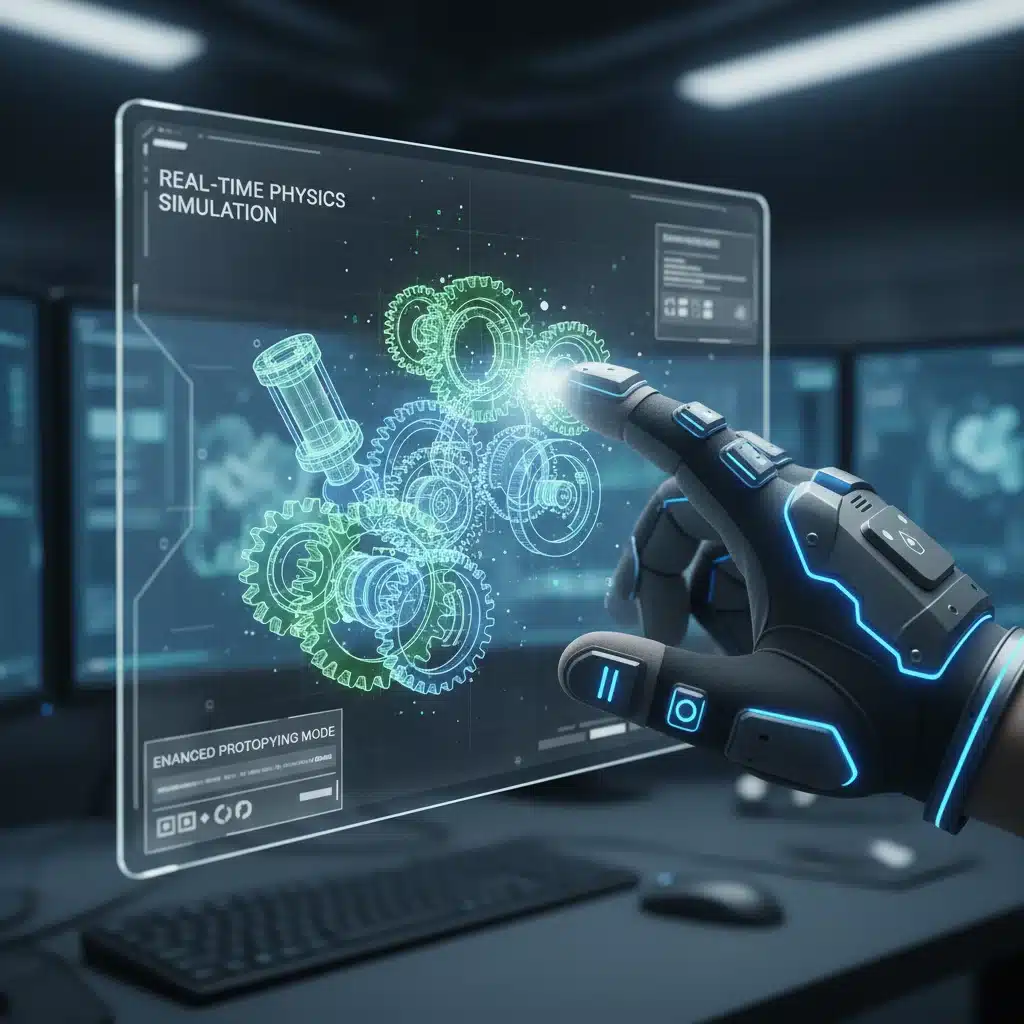
Moreover, advanced physics engines integrated into VR CAD software now allow for real-time simulation of material properties, stress points, and environmental factors. Engineers can apply virtual forces, analyze structural integrity, and observe how their designs perform under various conditions, all within the immersive VR environment. This immediate feedback loop accelerates the design-test-iterate cycle, allowing engineers to refine their designs with unprecedented speed and accuracy. The ability to perform these simulations in a fully immersive 3D space provides a level of insight that is simply unattainable on a 2D screen, cementing the role of VR in boosting VR CAD Efficiency.
The improvements extend to the ability to manipulate and modify designs directly within VR. Gone are the days of switching between a VR viewer and a desktop CAD application for edits. The latest software allows for a comprehensive suite of modeling tools to be accessible within the VR environment itself. This means an engineer can make precise adjustments, add or remove components, and even sculpt complex geometries using intuitive hand gestures and voice commands. This direct manipulation capability streamlines the design process, making it more fluid and natural, and thus greatly enhancing VR CAD Efficiency.
Real-time Collaborative Engineering: The Power of Shared Virtual Spaces
Collaboration is the cornerstone of successful engineering projects, and the 2026 VR CAD updates are set to revolutionize how teams work together. Traditional collaboration often involves sharing files, conducting video conferences, and reviewing designs on separate screens. While effective, these methods lack the immediate, shared understanding that comes from co-locating in a physical space. VR CAD bridges this gap by creating shared virtual environments where engineers, designers, and stakeholders can interact with the same 3D model in real-time, regardless of their physical location, profoundly impacting VR CAD Efficiency.

These virtual collaboration spaces are more than just shared screens; they are fully interactive environments where each participant has a virtual avatar and can manipulate the 3D model, point out specific features, and even sketch annotations directly onto the design. Integrated voice communication ensures clear and immediate feedback, fostering a dynamic and productive discussion. This level of shared presence and interaction is crucial for complex projects where multiple disciplines need to converge on a single design solution. The ability to instantly convey ideas and receive feedback in a truly spatial context eliminates misunderstandings and accelerates decision-making, leading to significant gains in VR CAD Efficiency.
New features also include advanced version control systems integrated directly into the VR collaborative platform. Teams can track changes, revert to previous iterations, and merge different design proposals seamlessly. This ensures that all collaborators are always working on the most up-to-date version of the design, preventing errors and rework. Furthermore, permission-based access controls allow project managers to define who can view, edit, or comment on specific parts of the design, ensuring data security and project integrity. These robust collaborative tools are instrumental in reducing project timelines and improving overall VR CAD Efficiency.
The impact of real-time collaborative engineering extends beyond internal teams. External stakeholders, clients, and suppliers can also be brought into these virtual review sessions, allowing for immediate feedback and alignment. This not only strengthens client relationships but also ensures that the final product meets all requirements and expectations from the outset. By bringing everyone onto the same virtual page, VR CAD minimizes communication delays and misinterpretations, directly contributing to a substantial boost in VR CAD Efficiency across the entire product development lifecycle.
Advanced Simulation and Analysis in VR: Enhancing Engineering Insight
Beyond design and collaboration, the 2026 VR CAD updates are making significant strides in integrating advanced simulation and analysis capabilities directly into the immersive environment. Traditionally, engineers would export CAD models to separate simulation software, run analyses, and then interpret the results back in the CAD environment. This often cumbersome process is being streamlined, allowing for more immediate and intuitive insights, thereby accelerating VR CAD Efficiency.
Engineers can now perform complex simulations, such as Finite Element Analysis (FEA), Computational Fluid Dynamics (CFD), and kinematic analysis, within the VR environment. The results are not just presented as abstract data points or color maps on a screen; they are visualized directly on the 3D model in a spatial and interactive manner. Imagine seeing stress concentrations highlighted in real-time on a virtual component as you apply virtual loads, or visualizing fluid flow patterns around a virtual aircraft wing. This direct visualization of simulation data in 3D provides a much deeper and more intuitive understanding of product performance and behavior.
The ability to interact with these simulations in VR is a game-changer. Engineers can adjust parameters, modify design geometries, and immediately observe the impact on simulation results. This iterative process, performed entirely within the immersive environment, significantly shortens the analysis cycle and allows for rapid optimization of designs. For example, an engineer designing a heat sink can dynamically change fin geometry and instantly see the effect on thermal dissipation, leading to quicker and more effective design solutions, and boosting VR CAD Efficiency.
Furthermore, the integration of AI and machine learning algorithms into VR CAD simulation tools is enabling predictive analysis and generative design. These intelligent systems can suggest optimal design variations based on performance criteria, material constraints, and manufacturing processes, guiding engineers towards more efficient and innovative solutions. By leveraging the power of AI within the immersive VR context, engineers can explore a wider range of design possibilities and arrive at superior outcomes with greater speed, further enhancing VR CAD Efficiency.
Seamless Integration and Workflow Optimization for VR CAD Efficiency
The true power of the 2026 VR CAD updates lies not just in their individual features but in their seamless integration into existing engineering workflows. Software developers are keenly aware that new tools must complement, rather than disrupt, established processes. Therefore, a major focus has been on ensuring compatibility, interoperability, and ease of adoption, all contributing to improved VR CAD Efficiency.
The latest VR CAD platforms offer robust import and export capabilities, supporting a wide range of industry-standard file formats. This ensures that engineers can easily bring their existing CAD models into the VR environment and export their VR-modified designs back into traditional CAD systems or manufacturing software. This flexibility minimizes data conversion issues and allows for a smooth transition between different stages of the product development lifecycle. The goal is to make VR an integral, rather than an isolated, part of the engineering toolkit, thereby maximizing VR CAD Efficiency.
Moreover, many VR CAD solutions are now cloud-native, offering enhanced accessibility and scalability. This means engineers can access their designs from anywhere, collaborate with teams across the globe, and leverage the power of cloud computing for demanding simulations. Cloud integration also simplifies software updates and maintenance, ensuring that engineers always have access to the latest features and security patches without significant IT overhead. This distributed access and simplified management contribute directly to operational VR CAD Efficiency.
User training and support are also evolving to facilitate adoption. With more intuitive interfaces and comprehensive tutorials, engineers can quickly get up to speed with VR CAD tools. Furthermore, the growing community of VR CAD users and online resources provides a rich ecosystem for learning and problem-solving. As the technology matures and becomes more accessible, the barrier to entry for engineers wishing to leverage VR CAD for improved efficiency continues to lower, fostering widespread adoption and boosting overall VR CAD Efficiency across the industry.
Challenges and Future Outlook for VR CAD Efficiency
While the prospects for VR CAD are incredibly promising, there are still challenges to address. Hardware costs, though decreasing, can still be a barrier for smaller firms. The computational demands of high-fidelity VR experiences require powerful workstations, and the comfort and ergonomics of VR headsets are continually being refined. Data security in cloud-based VR environments is another critical consideration that developers are actively addressing with advanced encryption and access control protocols.
However, the trajectory is clear: VR CAD is not just a niche tool; it is rapidly becoming an indispensable component of modern engineering. The projected 20% efficiency boost by 2026 is merely the beginning. As VR hardware becomes lighter, more powerful, and more affordable, and as software continues to integrate AI, haptics, and advanced simulation, the potential for VR CAD Efficiency will only continue to grow. We can anticipate even more intuitive interaction methods, even higher fidelity simulations, and even more seamless integration with manufacturing and supply chain processes.
The future of engineering is immersive, collaborative, and highly efficient. Engineers who embrace VR CAD will find themselves at a distinct advantage, capable of designing more innovative products, bringing them to market faster, and collaborating more effectively than ever before. The 2026 updates represent a significant milestone on this journey, solidifying VR CAD’s role as a transformative technology for the engineering world.
The impact of VR CAD extends beyond mere efficiency gains; it redefines the very nature of design. By allowing engineers to truly inhabit their creations, it fosters a deeper sense of empathy with the end-user and a more holistic understanding of the product’s lifecycle. This human-centric approach, combined with cutting-edge technology, is what will drive the next wave of innovation in engineering. The 20% efficiency boost is a tangible metric, but the intangible benefits of enhanced creativity, reduced stress, and increased job satisfaction for engineers are equally, if not more, significant. The journey towards fully integrated, highly efficient VR CAD is ongoing, but 2026 marks a pivotal moment where its transformative power becomes undeniable.
Furthermore, the educational implications of advanced VR CAD are profound. Training the next generation of engineers in an immersive, interactive environment will equip them with skills that are directly transferable to real-world design challenges. Universities and technical institutions are increasingly incorporating VR CAD into their curricula, recognizing its importance in preparing students for the demands of modern industry. This educational pipeline will ensure a continuous supply of talent proficient in leveraging these powerful tools, further solidifying the long-term impact on VR CAD Efficiency.
Conclusion: Embracing the Future of VR CAD Efficiency
The 2026 updates to top VR CAD software are ushering in a new era for engineering, characterized by unprecedented levels of immersion, collaboration, and analytical power. The promise of boosting engineer efficiency by 20% is not an exaggeration but a conservative estimate of the profound impact these advancements will have on design workflows, prototyping cycles, and project outcomes. From intuitive immersive design and real-time global collaboration to advanced in-VR simulation and seamless workflow integration, every facet of the engineering process is being enhanced.
As the technology continues to mature and become more accessible, the adoption of VR CAD will only accelerate. Engineers and organizations that embrace these tools will gain a significant competitive advantage, enabling them to innovate faster, reduce costs, and deliver higher-quality products. The future of engineering is here, and it is undeniably virtual, collaborative, and supremely efficient. The focus on VR CAD Efficiency is not just about saving time; it’s about unlocking new possibilities for creativity and problem-solving that were once confined to the realm of science fiction. Prepare to step into your designs and experience engineering like never before.