VR Medical Training 2026: Revolutionizing Healthcare Education

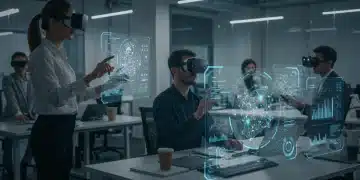
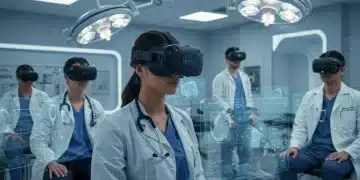
The landscape of medical education is undergoing a seismic shift, and at the epicenter of this revolution is Virtual Reality (VR). For decades, medical training relied on textbooks, cadaver labs, and apprenticeships, methods that, while foundational, often lacked the scalability, repeatability, and immediate feedback crucial for mastering complex procedures. Fast forward to 2026, and VR medical training has emerged not just as a supplementary tool, but as a transformative core component of healthcare education worldwide. This insider review delves into three groundbreaking VR applications that are setting new benchmarks for realism, accessibility, and effectiveness in preparing the next generation of medical professionals.
The promise of VR in healthcare has long been discussed, but it’s only now, with advanced hardware capabilities, sophisticated software development, and a deeper understanding of pedagogical needs, that its true potential is being realized. These new VR apps aren’t just simulations; they are fully immersive, interactive learning environments designed to replicate real-world medical scenarios with unprecedented fidelity. From intricate surgical procedures to high-pressure emergency responses, VR medical training is providing a safe, controlled, and infinitely repeatable space for practitioners to hone their skills without risk to patients.
Why is this so critical? The stakes in healthcare are incredibly high. Errors can have devastating consequences. Traditional training methods, while valuable, often face limitations in terms of cost, availability of resources (like cadavers or specialized equipment), and the ethical challenges of learning on live patients. VR sidesteps these hurdles, offering a cost-effective, accessible, and ethical alternative that accelerates learning curves and builds confidence. Let’s explore the pioneers in this exciting new era.
The Dawn of Hyper-Realistic Surgical Simulations: ‘SurgiVerse Pro’
One of the most anticipated and impactful developments in VR medical training for 2026 is ‘SurgiVerse Pro’. Developed by a consortium of leading surgeons and VR engineers, SurgiVerse Pro is not merely a surgical simulator; it’s a complete virtual operating theater designed to mirror real-world surgical environments down to the minutest detail. This application targets advanced surgical residents and seasoned surgeons looking to practice new techniques or refresh their skills.
Unparalleled Realism and Haptic Feedback
What sets SurgiVerse Pro apart is its hyper-realistic visual and haptic feedback. Users wear advanced haptic gloves and vests that simulate the precise resistance and texture of tissues, organs, and bones. Imagine feeling the delicate tension of suturing a blood vessel, the granular crunch of drilling into bone, or the slippery sensation of handling internal organs – all within a virtual environment. This level of sensory immersion is critical for developing the muscle memory and tactile sensitivity essential for surgical excellence.
The visual fidelity is equally astonishing. Powered by next-generation graphics engines, SurgiVerse Pro renders anatomical structures with photorealistic detail, allowing users to identify subtle variations in tissue pathology, vascular networks, and nerve pathways. The lighting, shadows, and even the reflections off surgical instruments are meticulously reproduced, creating an environment indistinguishable from a real operating room.
Customizable Scenarios and AI-Driven Mentorship
SurgiVerse Pro boasts an extensive library of customizable surgical scenarios, ranging from routine appendectomies to complex neurosurgeries and minimally invasive procedures. Trainees can select patient profiles with varying anatomies, pathologies, and complications, allowing them to prepare for a wide spectrum of surgical challenges. The AI-driven mentorship system provides real-time feedback, highlighting errors, suggesting optimal approaches, and even predicting potential complications based on the user’s performance.
For instance, if a trainee applies too much pressure during a dissection, the AI will immediately flag it, explaining the potential damage and offering corrective guidance. Post-simulation, a detailed performance analysis report is generated, covering everything from incision accuracy and blood loss management to efficiency and decision-making under pressure. This personalized feedback loop is invaluable for rapid skill acquisition and refinement, significantly reducing the learning curve for complex surgical procedures.
Collaborative Training and Remote Learning
Another revolutionary feature of SurgiVerse Pro is its collaborative multiplayer mode. Multiple surgeons, located anywhere in the world, can join the same virtual operating theater, practicing team-based surgeries. This facilitates invaluable communication, coordination, and role-playing exercises, crucial for effective surgical teams. Senior surgeons can remotely mentor junior colleagues, observing their performance in real-time and providing guidance through an integrated voice communication system.
The implications for global surgical training are profound. Surgeons in remote areas or developing countries can now access world-class training and mentorship without the need for extensive travel or expensive physical facilities. This democratizes access to high-quality surgical education, ultimately leading to improved patient outcomes worldwide. The impact of SurgiVerse Pro on VR medical training is truly transformative, setting a new gold standard for surgical preparation.
Demystifying Anatomy with ‘Anatomy Master XR’: Beyond Cadaver Labs
While cadaver dissection remains a cornerstone of anatomical education, it has inherent limitations: cost, availability, ethical considerations, and the irreversible nature of dissection. Enter ‘Anatomy Master XR’, a mixed reality (MR) application that is fundamentally changing how medical students learn human anatomy in 2026. This app, leveraging both VR and Augmented Reality (AR), provides an unparalleled, interactive, and infinitely repeatable exploration of the human body.
Interactive 3D Anatomical Models
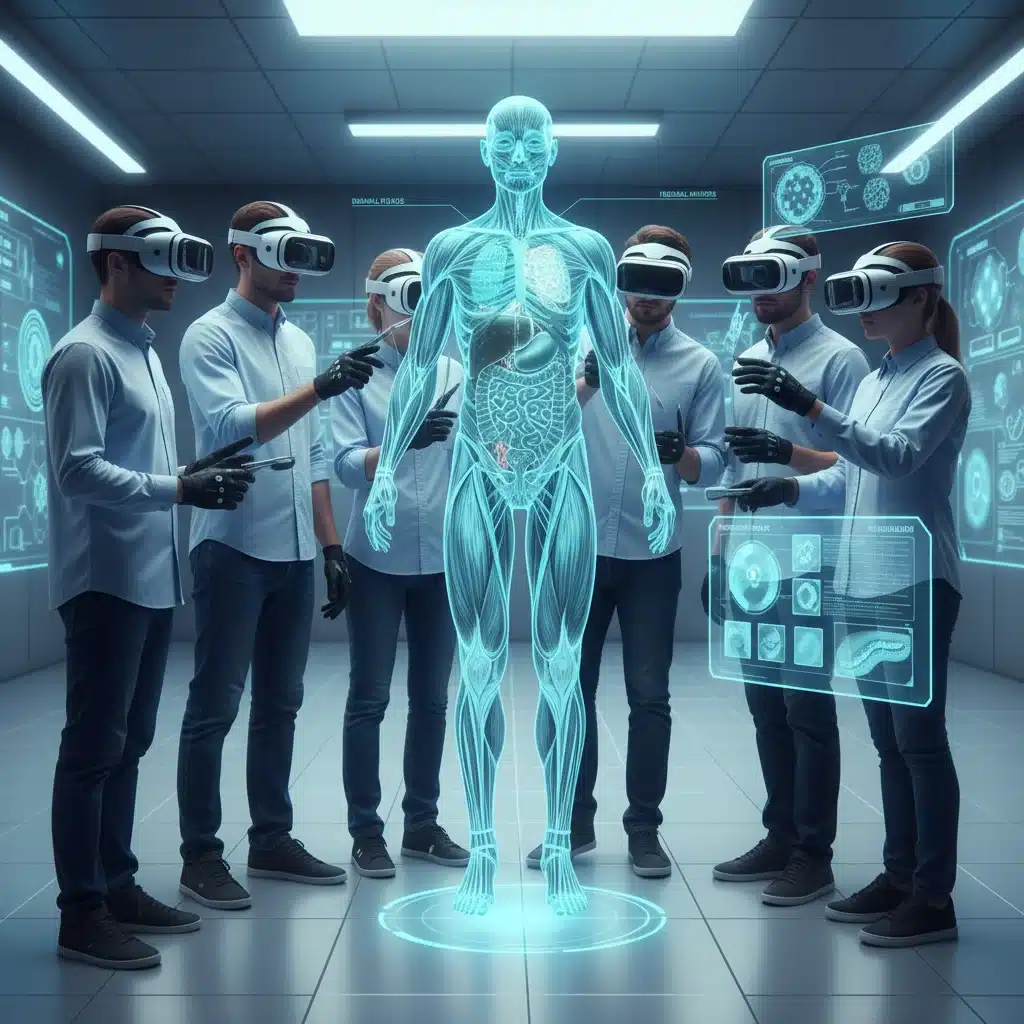
Anatomy Master XR allows students to explore incredibly detailed, true-to-scale 3D anatomical models of every system, organ, and tissue in the human body. Unlike static 2D images or even physical models, these virtual structures can be rotated, scaled, and dissected layer by layer with intuitive hand gestures. Students can virtually ‘peel back’ skin, muscle, and fascia to reveal underlying structures, or isolate specific organs to study their intricate details. The precision and clarity offered by this app far exceed what is possible in a traditional cadaver lab, especially for visualizing delicate structures or complex relationships between organs.
The app also includes dynamic physiological simulations. Students can observe blood flow through the cardiovascular system, nerve impulses traveling through neural pathways, or the mechanics of muscle contraction, all in real-time 3D. This brings anatomy to life, moving beyond static memorization to a dynamic understanding of function.
Augmented Reality for Enhanced Learning
Where Anatomy Master XR truly shines is its integration of augmented reality. Using AR-enabled devices, students can project holographic anatomical models directly onto their physical environment. Imagine projecting a beating heart onto a desk, or overlaying the skeletal system onto a fellow student’s body to understand surface anatomy and palpation points. This blend of virtual and physical reality creates a powerful learning experience, bridging the gap between theoretical knowledge and practical application.
For example, during a lecture on cardiology, an instructor can project a 3D model of the heart onto a screen, manipulate it in real-time, and highlight specific structures for the entire class. Students with AR devices can then interact with the same model individually, exploring it at their own pace. This capability makes learning highly engaging and personalized, catering to different learning styles.
Collaborative Study and Assessment Tools
Similar to SurgiVerse Pro, Anatomy Master XR supports collaborative learning. Students can join virtual study groups, exploring anatomical models together, quizzing each other, and discussing complex concepts. Instructors can create custom dissection challenges and quizzes within the app, assessing students’ understanding of anatomical relationships and structures. The gamified elements make learning anatomy more enjoyable and less intimidating, a significant improvement for a subject often perceived as daunting.
The ability to repeatedly ‘dissect’ and reconstruct anatomical models without limitations means students can practice until they achieve mastery. This iterative learning process, combined with immediate feedback, solidifies understanding in a way that traditional methods often cannot. Anatomy Master XR is proving to be an indispensable tool for foundational VR medical training, ensuring a deeper, more intuitive grasp of the human body.
Mastering Crisis Management: ‘EmergiSim VR’
Emergency medicine demands quick thinking, decisive action, and effective teamwork under immense pressure. Traditional simulations, while useful, often struggle to replicate the chaotic and unpredictable nature of real-world emergencies. ‘EmergiSim VR’, launched in early 2026, is changing this by immersing medical professionals in highly realistic, high-stakes emergency scenarios, offering a safe space to practice crisis management.
Dynamic and Unpredictable Scenarios
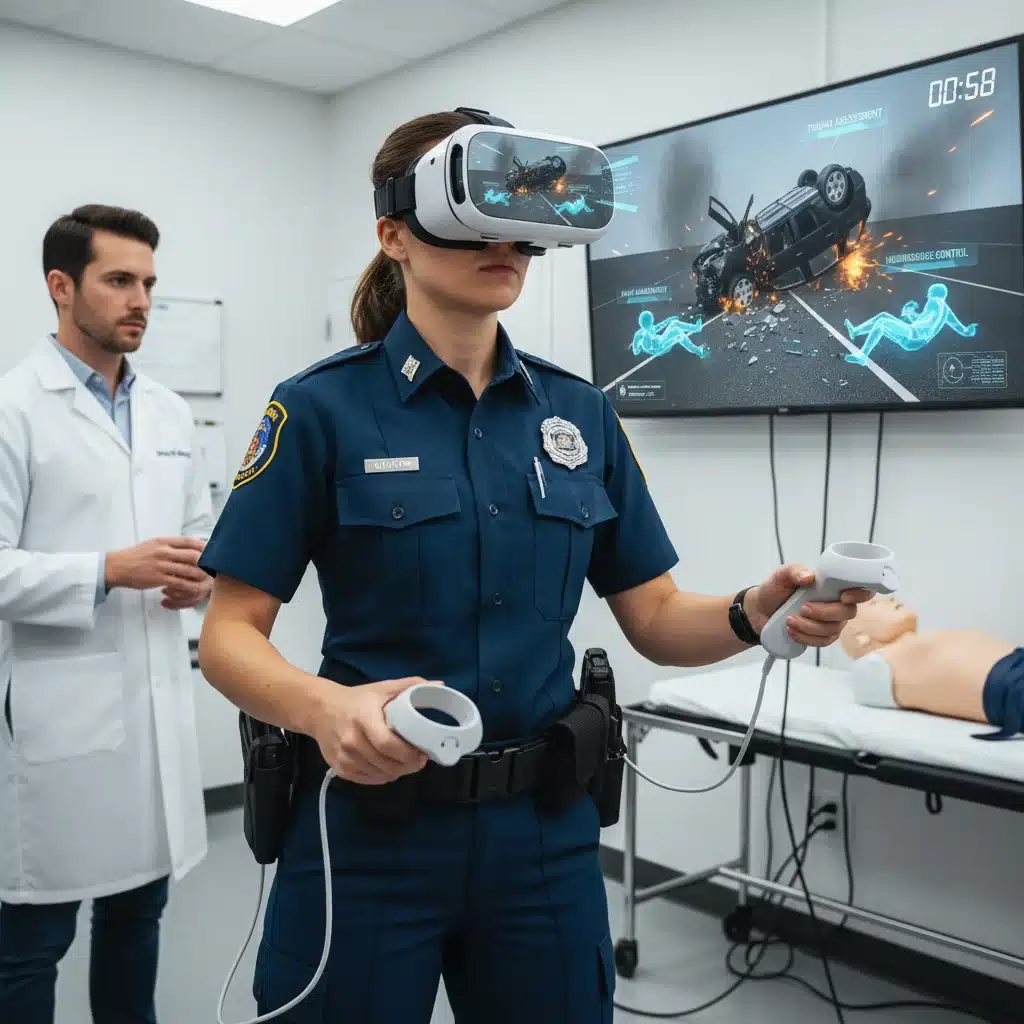
EmergiSim VR specializes in creating dynamic and unpredictable emergency scenarios, ranging from multi-car accidents and mass casualty incidents to in-hospital code blues and complex pediatric emergencies. The scenarios are designed to evolve based on the trainee’s actions, introducing unexpected complications and requiring adaptability and critical thinking. For instance, a seemingly stable patient might suddenly deteriorate, or a new casualty might arrive mid-scenario, forcing trainees to reprioritize and manage multiple tasks simultaneously.
The virtual patients in EmergiSim VR are incredibly sophisticated. They exhibit realistic physiological responses, verbalize symptoms, and react to interventions in real-time. This level of interactivity creates a powerful sense of presence and urgency, making the training feel incredibly real. The emotional intensity of these simulations helps prepare medical professionals for the psychological demands of emergency situations, building resilience and composure under pressure.
Team-Based Training and Communication Drills
Emergency response is inherently a team effort, and EmergiSim VR excels in facilitating team-based training. Multiple users can enter the same virtual emergency scene, taking on roles such as lead physician, nurse, paramedic, or even incident commander. The platform emphasizes clear communication, role delegation, and coordinated action. Trainees must verbally communicate their observations, decisions, and orders, just as they would in a real emergency. The system can even track communication patterns and identify bottlenecks or misunderstandings.
Post-scenario debriefings are a critical component of EmergiSim VR. The system records every action, decision, and communication made by the team, providing a comprehensive playback and analysis. Instructors can use this data to facilitate detailed debriefs, highlighting areas of excellence and identifying opportunities for improvement in both individual performance and team dynamics. This objective feedback is invaluable for refining crisis management protocols and fostering effective teamwork.
Ethical Decision-Making and Resource Management
Beyond clinical skills, EmergiSim VR also incorporates scenarios that challenge trainees on ethical decision-making and resource management. In mass casualty incidents, for example, trainees might need to make difficult triage decisions with limited resources, forcing them to confront the ethical dilemmas inherent in emergency medicine. This aspect of VR medical training is crucial for developing well-rounded, ethical practitioners who can navigate the complexities of real-world emergencies.
The ability to repeatedly practice these high-stakes scenarios in a safe environment is revolutionary. It allows medical professionals to make mistakes, learn from them, and refine their approach without any risk to patient safety. EmergiSim VR is rapidly becoming a cornerstone for emergency medicine training, significantly improving preparedness and ultimately saving lives.
The Broader Impact of VR Medical Training in 2026
The emergence of apps like SurgiVerse Pro, Anatomy Master XR, and EmergiSim VR signifies a paradigm shift in how medical professionals are educated and trained. The benefits extend far beyond individual skill acquisition:
- Increased Accessibility: VR removes geographical barriers, allowing students and professionals in underserved areas to access world-class training resources.
- Reduced Costs: While initial VR hardware investments exist, the long-term cost savings compared to maintaining cadaver labs, specialized equipment, and travel for training are substantial.
- Enhanced Patient Safety: By allowing practitioners to make mistakes and learn in a risk-free environment, VR significantly reduces the likelihood of errors in real-world patient care.
- Standardized Training: VR platforms ensure a consistent and standardized training experience, regardless of location or instructor, leading to more uniform competency across the medical field.
- Personalized Learning: AI-driven feedback and customizable scenarios cater to individual learning paces and styles, optimizing the educational experience for each trainee.
- Faster Skill Acquisition: The immersive and interactive nature of VR training accelerates the development of complex cognitive and psychomotor skills.
- Improved Retention: Studies consistently show that experiential learning, especially in immersive environments, leads to higher knowledge retention rates compared to traditional methods.
- Mental Preparedness: Realistic simulations prepare professionals for the psychological pressures of high-stakes medical situations, building resilience and emotional fortitude.
The integration of VR into medical curricula is no longer a futuristic concept; it is a present reality in 2026. Medical schools, hospitals, and continuing education programs are rapidly adopting these technologies, recognizing their unparalleled potential to elevate the quality of healthcare education.
Challenges and Future Outlook
While the advancements are impressive, challenges remain. The initial investment in high-quality VR hardware can still be significant for smaller institutions. Furthermore, the development of complex, medically accurate VR content requires specialized expertise, blending medical knowledge with advanced software engineering. Data privacy and security within these virtual environments also remain paramount concerns that developers are continuously addressing.
Looking ahead, the future of VR medical training is even more promising. We can anticipate:
- Even Greater Haptic Realism: Further advancements in haptic technology will make virtual interactions virtually indistinguishable from physical ones.
- Brain-Computer Interfaces (BCI): Integration with BCIs could allow for even more intuitive control and real-time monitoring of cognitive load during simulations.
- Personalized AI Tutors: AI will become even more sophisticated, acting as personalized virtual tutors that adapt to each student’s unique learning style and needs.
- Cross-Reality Integration: Seamless blending of VR, AR, and real-world data streams will create ‘mixed reality’ training environments that are truly transformative.
- Predictive Analytics for Performance: Advanced AI will be able to predict future performance based on simulation data, identifying areas where a trainee might struggle before they even enter a real clinical setting.
The journey of medical education is one of continuous evolution, driven by the relentless pursuit of better patient outcomes. In 2026, VR medical training is not just a tool; it’s a testament to human ingenuity, offering a powerful, ethical, and effective pathway to a healthier future. The revolution is here, and it’s happening in virtual reality.
Conclusion
The year 2026 marks a pivotal moment in medical education, largely thanks to the transformative power of virtual reality. Apps like ‘SurgiVerse Pro’, ‘Anatomy Master XR’, and ‘EmergiSim VR’ are not just simulating medical procedures; they are fundamentally redefining how medical professionals learn, practice, and excel. By offering hyper-realistic, interactive, and safe environments for training, these platforms are addressing long-standing challenges in healthcare education. The ability to practice complex surgeries, explore intricate anatomy, and manage high-stakes emergencies without risk to patients is invaluable. As VR technology continues to advance, its integration into medical curricula will only deepen, leading to a future where healthcare providers are more skilled, more confident, and ultimately, better equipped to save lives. The era of truly immersive and effective VR medical training has arrived, promising a brighter, healthier future for all.