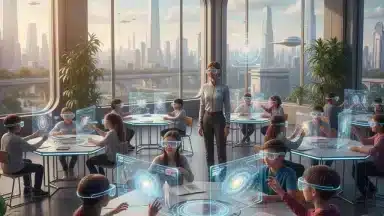

Beyond the Hype: Real-World AR Applications Driving US Business Growth in 2026
The promise of Augmented Reality (AR) has long been a subject of futuristic speculation, often confined to science fiction or niche gaming experiences. However, as we stand in 2026, the landscape has dramatically shifted. AR is no longer a distant dream but a tangible, transformative force actively driving US business growth across a multitude of sectors. This isn’t just about flashy demonstrations; it’s about practical, real-world applications delivering measurable value, enhancing operational efficiency, enriching customer experiences, and opening entirely new revenue streams.
From the bustling corridors of corporate offices to the intricate assembly lines of manufacturing plants, and from the sophisticated diagnostics in healthcare to the personalized touch in retail, AR is embedding itself as an indispensable tool. Businesses that once viewed AR as an experimental luxury are now recognizing its strategic imperative. The initial investment, once a barrier, is increasingly justified by significant returns on investment (ROI) through reduced errors, accelerated training, improved decision-making, and unparalleled customer engagement. This article delves deep into the specific, impactful AR applications that are propelling US businesses forward in 2026, illustrating how this technology is moving beyond the hype to deliver concrete, bottom-line results.
Manufacturing and Industrial Operations: Precision and Productivity Amplified
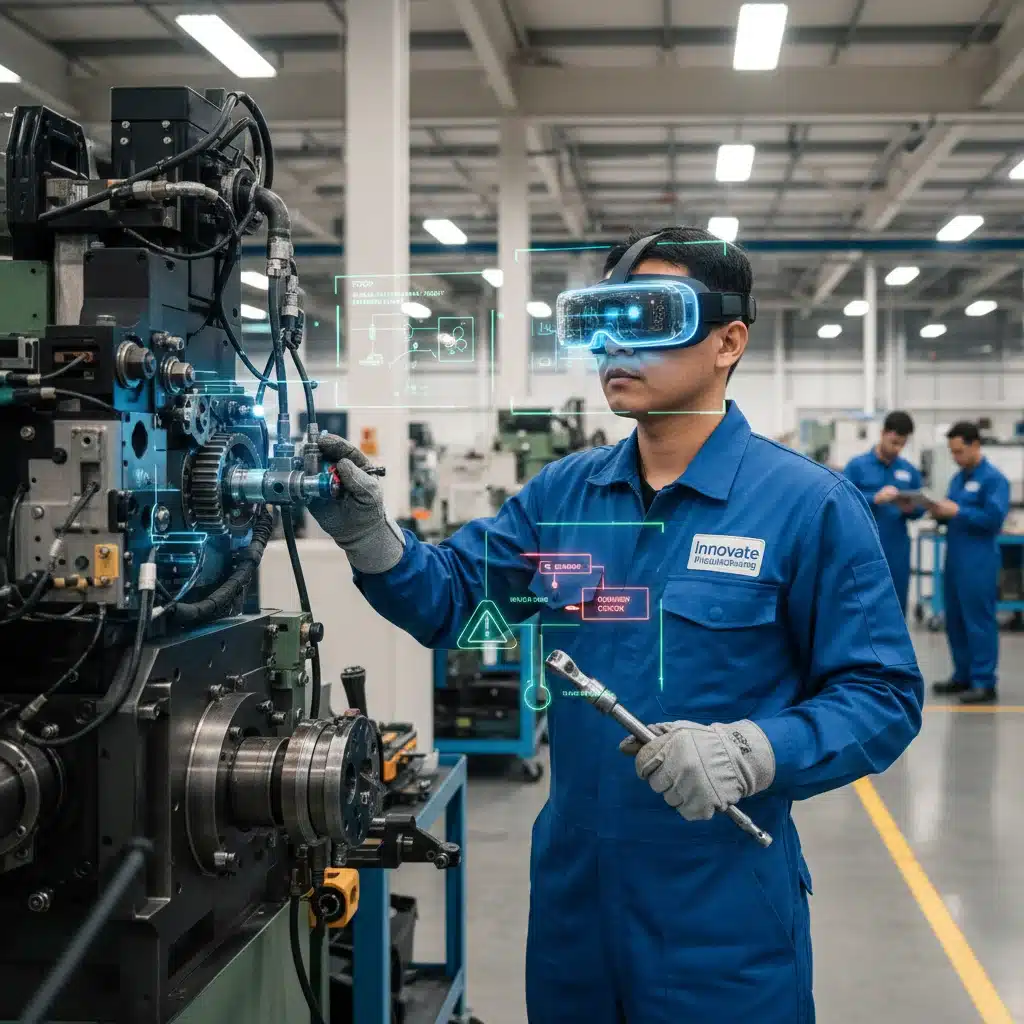
In the realm of manufacturing and industrial operations, AR is revolutionizing how tasks are performed, from assembly and maintenance to quality control and training. The ability to overlay digital information onto physical objects in real-time provides workers with unprecedented levels of precision and contextual data, directly impacting AR business growth in these sectors.
Guided Assembly and Maintenance
One of the most significant applications lies in guided assembly and maintenance. Technicians, equipped with AR headsets or tablets, can see step-by-step instructions, schematics, and even 3D models directly superimposed onto the machinery they are working on. This eliminates the need for cumbersome manuals, reduces errors, and significantly speeds up complex tasks. For instance, a worker assembling an intricate engine part can receive visual cues on where each component fits, ensuring correct placement and torque specifications. This not only enhances productivity but also drastically reduces the learning curve for new employees, making onboarding more efficient and effective.
Remote Assistance and Collaboration
The power of AR extends to remote assistance. When a complex issue arises in a factory, an on-site technician can connect with an expert located anywhere in the world. The expert can then annotate the technician’s real-world view, drawing circles, arrows, or pointing to specific components through the AR interface. This real-time, visual guidance allows for rapid problem-solving without the need for costly and time-consuming travel. This capability is particularly crucial for companies with geographically dispersed operations, ensuring consistent quality and minimizing downtime, directly contributing to AR business growth.
Quality Control and Inspection
AR is also transforming quality control. Inspectors can use AR devices to compare manufactured parts against digital blueprints or 3D models, immediately highlighting any discrepancies or defects. This proactive approach to quality assurance catches issues early in the production cycle, preventing costly recalls and rework. Furthermore, AR can provide historical data about a component, allowing inspectors to understand its journey through the manufacturing process and identify potential points of failure. The precision offered by AR in these processes is unparalleled, leading to higher product quality and greater customer satisfaction.
Retail and E-commerce: Elevating the Customer Experience
The retail sector, always at the forefront of innovation to capture consumer attention, is leveraging AR to create immersive and personalized shopping experiences. These applications are not just novelties; they are demonstrably increasing engagement, reducing returns, and boosting sales, proving AR’s vital role in AR business growth within the consumer market.
Virtual Try-On and Product Visualization
One of the most popular and impactful AR applications in retail is virtual try-on. Customers can virtually try on clothing, accessories, or even makeup using their smartphone cameras. This eliminates the uncertainty of online shopping, allowing consumers to see how products look on them before making a purchase. Similarly, furniture retailers are using AR to let customers place virtual furniture pieces in their own homes, visualizing how a sofa or a table would fit and look in their living space. This significantly reduces buyer’s remorse and product returns, a major cost for e-commerce businesses.
In-Store Navigation and Enhanced Shopping
In physical retail stores, AR provides enhanced navigation and information. Shoppers can use their phones to locate specific products, see reviews, or access special offers overlaid directly onto the store environment. Imagine walking through a supermarket and seeing nutritional information or allergen warnings pop up as you point your phone at a product shelf. This level of personalized, on-demand information empowers shoppers, making their experience more efficient and enjoyable. It also allows retailers to subtly guide customers towards promotions or new arrivals, contributing to AR business growth through increased sales.
Interactive Advertising and Marketing
AR is also transforming advertising and marketing. Brands are creating interactive AR experiences that allow consumers to engage with products in novel ways. For example, scanning a magazine ad might bring a car to life in 3D, allowing users to explore its features, change colors, or even take a virtual test drive from their living room. These engaging experiences create memorable brand interactions, fostering loyalty and driving purchase intent. The novelty and interactivity of AR marketing campaigns often lead to higher conversion rates compared to traditional methods.
Healthcare and Medicine: Precision, Training, and Patient Care
The healthcare industry is adopting AR with enthusiasm, recognizing its potential to enhance surgical precision, improve medical training, and revolutionize patient care. These advancements are not only saving lives but also optimizing resource allocation, a significant factor in AR business growth within this critical sector.
Surgical Enhancement and Visualization
Surgeons are now using AR to overlay patient data, such as MRI or CT scans, directly onto the patient’s body during operations. This provides an ‘X-ray vision’ capability, allowing surgeons to visualize internal organs, blood vessels, and tumors with unparalleled accuracy. This enhanced visualization leads to more precise incisions, reduced operative time, and improved patient outcomes. For complex procedures, AR can also project 3D anatomical models, helping surgeons plan and execute with greater confidence and minimizing risks.
Medical Training and Education
AR is transforming medical education by providing immersive and realistic training environments. Medical students can practice complex procedures on virtual patients, seeing anatomical structures and physiological responses in real-time. This hands-on experience, without the risks associated with real patients, accelerates learning and builds confidence. From practicing injections to simulating intricate surgeries, AR offers a scalable and cost-effective solution for high-quality medical training, ensuring a more skilled future workforce.
Remote Patient Monitoring and Telemedicine
In telemedicine, AR is enabling more comprehensive remote consultations. Doctors can guide patients through self-examinations, pointing to specific areas on the patient’s body via an AR overlay on a video call. This allows for more accurate remote diagnostics and reduces the need for in-person visits, particularly beneficial for patients in remote areas or those with mobility issues. For home care, AR applications can guide patients through physical therapy exercises, ensuring correct form and providing real-time feedback, thereby improving recovery rates and patient independence.

Logistics and Supply Chain Management: Efficiency on the Move
Optimizing logistics and supply chain management is crucial for any business, and AR is proving to be a game-changer in this domain. By streamlining processes and reducing errors, AR is significantly contributing to AR business growth by enhancing efficiency and cost-effectiveness.
Warehouse Picking and Inventory Management
In warehouses, AR smart glasses are guiding workers through picking routes, highlighting the exact shelves and items to retrieve. This visual guidance reduces picking errors, speeds up the fulfillment process, and optimizes warehouse layouts. Workers can also receive real-time inventory updates, reducing stockouts and improving overall inventory accuracy. The hands-free nature of AR glasses allows workers to maintain focus on their tasks, leading to fewer mistakes and higher productivity.
Fleet Maintenance and Route Optimization
For fleet maintenance, AR can assist technicians in diagnosing issues and performing repairs on vehicles. By overlaying digital information onto engine components, technicians can quickly identify problems and access repair instructions. In terms of route optimization, while not a direct AR application, the data collected and visualized through AR in warehouses can feed into more efficient loading and dispatching processes, indirectly impacting route planning and delivery times. AR can also be used during loading to ensure correct package placement and weight distribution, preventing damage and optimizing cargo space.
Education and Training: Immersive Learning Experiences
Beyond traditional corporate training, AR is revolutionizing education across various sectors, creating more engaging and effective learning environments. This shift is crucial for developing a skilled workforce, which in turn fuels AR business growth.
Vocational Training and Skill Development
AR provides immersive vocational training for complex machinery operation, welding, electrical work, and more. Trainees can practice dangerous or expensive procedures in a safe, virtual environment, gaining hands-on experience without risk. This reduces the need for costly physical equipment and materials, making training more accessible and scalable. The ability to repeat simulations and receive immediate feedback accelerates skill acquisition, preparing individuals for real-world challenges more effectively.
Corporate Onboarding and Upskilling
For corporate environments, AR is transforming onboarding processes. New employees can take virtual tours of facilities, learn about company culture, and even receive guided training on software or equipment through interactive AR experiences. For upskilling existing employees, AR can provide on-demand tutorials and performance support, allowing workers to learn new skills or refresh existing ones without interrupting their workflow. This continuous learning approach ensures that workforces remain agile and competitive, directly contributing to AR business growth through a highly capable team.
Architecture, Engineering, and Construction (AEC): Design and Project Management
The AEC industry, known for its complex projects and intricate designs, is finding immense value in AR for visualization, collaboration, and project management. AR is streamlining workflows and reducing errors, leading to substantial AR business growth and efficiency gains.
Design Visualization and Client Presentations
Architects and engineers are using AR to bring their 2D plans and 3D models to life. Clients can walk through a virtual building superimposed onto a physical space, experiencing the design in a truly immersive way before construction even begins. This allows for clearer communication, faster feedback, and a better understanding of the final product, leading to more satisfied clients and fewer costly changes during construction. Imagine standing on an empty plot of land and seeing a fully rendered building appear before your eyes through an AR headset.
On-Site Project Management and Collaboration
On construction sites, AR devices can overlay BIM (Building Information Modeling) data onto the physical structure. Workers can see where pipes, electrical conduits, or structural elements are supposed to go, ensuring accurate placement and identifying potential clashes before they become major problems. Project managers can use AR to monitor progress, compare actual construction against planned models, and conduct virtual inspections. This real-time, on-site access to critical information improves coordination among teams, reduces rework, and keeps projects on schedule and within budget, significantly boosting AR business growth in the AEC sector.
The Future Outlook: Sustained AR Business Growth in the US
The trajectory of AR adoption in US businesses points towards sustained and accelerated growth. As the technology matures, becomes more accessible, and hardware becomes more comfortable and powerful, its integration into daily business operations will only deepen. We are moving beyond the early adopter phase into a period where AR is becoming a mainstream enterprise solution.
Challenges and Opportunities
While the benefits are clear, challenges remain. These include the initial cost of implementation, the need for robust IT infrastructure, data security concerns, and the development of intuitive user interfaces. However, these challenges are being actively addressed by developers and hardware manufacturers, leading to more sophisticated, secure, and user-friendly AR solutions. The opportunities for businesses that embrace AR are vast, offering competitive advantages in efficiency, innovation, and customer loyalty.
Beyond 2026: The Blended Reality Ecosystem
Looking beyond 2026, the lines between augmented reality and virtual reality (VR) will continue to blur, leading to a more comprehensive ‘blended reality’ or ‘mixed reality’ ecosystem. This will enable even more dynamic and interactive experiences, further integrating digital information with our physical world. The long-term impact on US business growth will be profound, fundamentally reshaping how we work, learn, shop, and interact with our environment.
Conclusion: AR as a Strategic Imperative for US Businesses
In conclusion, Augmented Reality has firmly established itself as a critical driver of AR business growth in the United States by 2026. Its real-world applications are not just incremental improvements but foundational shifts in how industries operate. From empowering frontline workers with precision tools in manufacturing to captivating consumers with immersive retail experiences, and from enhancing surgical accuracy in healthcare to streamlining complex logistics, AR is delivering tangible and significant value.
Businesses that recognize and strategically invest in AR are positioning themselves at the forefront of innovation, gaining substantial competitive advantages. The transition from hype to practical application underscores AR’s maturity and its undeniable role as a strategic imperative for any US enterprise aiming for efficiency, innovation, and sustained growth in the dynamic economic landscape of the mid-2020s and beyond. The future of business is increasingly augmented, and those embracing this reality today will be the leaders of tomorrow.