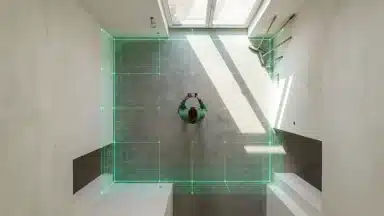

Ever wished you could see how a new piece of furniture would look in your home before clicking ‘buy’? The days of guessing games and return headaches are rapidly fading into the past, thanks to a revolutionary technology that’s transforming online furniture shopping. Augmented Reality (AR) product visualization is no longer a futuristic concept; it’s a practical tool empowering shoppers to make confident decisions from the comfort of their living rooms.
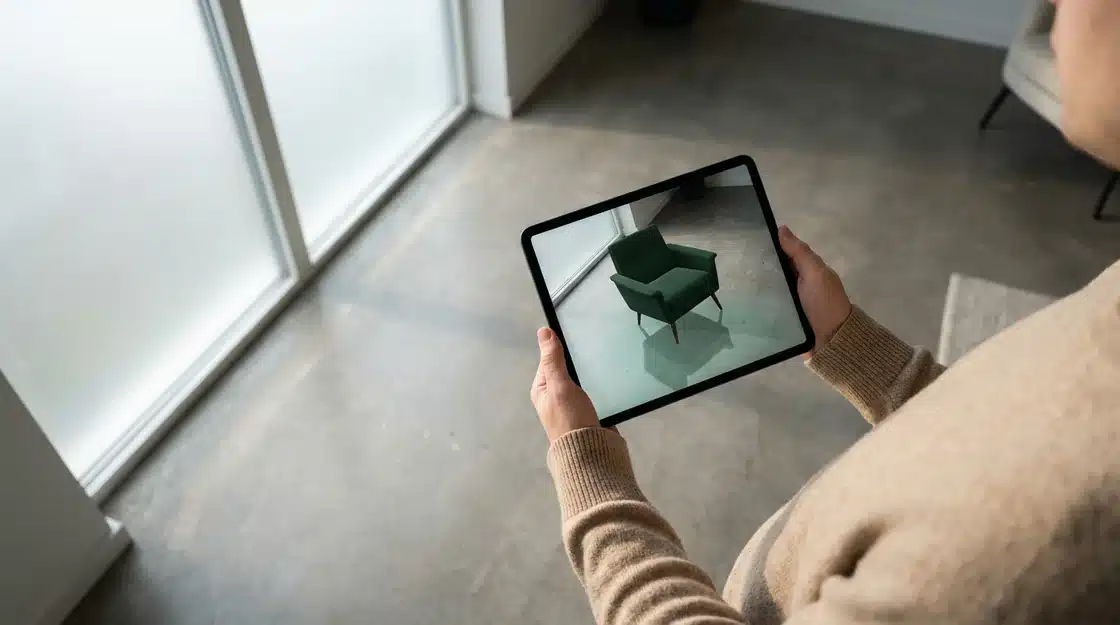
This innovative technology overlays digital furniture models directly onto your actual physical space, viewable through a smartphone or tablet camera. It brings the showroom experience to your fingertips, allowing you to check dimensions, style, and fit with remarkable accuracy. This immediate visual feedback isn’t just a novelty; it’s a critical component in reducing buyer’s remorse and increasing satisfaction for both consumers and retailers.
This article delves into how AR is reshaping the furniture retail landscape, exploring its advanced features, the tangible benefits it offers to both shoppers and businesses, and the challenges that come with its implementation. We’ll also look at emerging trends, such as AI-powered personalization and web-based AR, and provide a practical guide for retailers looking to integrate this powerful tool. Prepare to envision your home like never before.
The Dawn of Digital Decor: Understanding AR in Furniture Retail
Ever struggled to imagine a new sofa in your living room, only to find it completely clashes upon delivery? That frustrating guessing game is rapidly becoming a relic of the past, thanks to augmented reality (AR) product visualization. This technology overlays digital furniture models onto your actual physical space, viewable through a smartphone or tablet camera. It’s like magic, but it’s just smart tech. What most people miss is how fundamentally AR changes the buying process. Instead of relying on static photos or showroom visits, consumers can now “try on” furniture in their own homes, checking dimensions, style, and fit with remarkable accuracy. This immediate visual feedback helps shoppers make more confident decisions, reducing the infamous problem of buyer’s remorse. The data suggests—though not conclusively—that this confidence translates directly into sales. Retailers are certainly taking notice. According to a recent Statista report, the global augmented reality market size in retail was projected to reach over 15 billion U.S. dollars by 2024. That’s a staggering figure, highlighting how quickly brands are recognizing the value of such immersive shopping experiences. It’s a testament to AR’s power, not just in furniture, but across various sectors, even extending to how we interact with products in retail stores. The underrated factor here is the sheer convenience. Imagine instantly seeing if that bold accent chair complements your existing decor, or if a new dining table fits comfortably without obstructing movement. This capability significantly streamlines the online furniture experience, pushing it beyond traditional limitations. The shift is palpable, reflecting a broader trend of AR transforming how we select products online.
Beyond Basic Placement: Advanced Features Redefining Visualization
Simply dropping a virtual sofa into your living room was just the beginning. The latest advancements in AR product visualization are pushing past mere placement, offering something far more compelling for online furniture shoppers. Are consumers satisfied with basic models when they could experience so much more?
Hyper-Realistic Textures and Dynamic Lighting
What most people miss is how key realism is for consumer confidence. Current AR applications are now rendering textures with astonishing accuracy, replicating the subtle sheen of polished wood or the intricate weave of a fabric. “The ability to see how light interacts with a material in real-time — how shadows fall, how reflections shimmer — completely transforms the buying decision,” explains Dr. Lena Karlsson, a computational imaging specialist at the University of Stockholm. This level of detail mimics a physical showroom experience, allowing users to scrutinize items as if they were actually present. Imagine seeing how a new rug’s pile catches the evening sun, or how a velvet armchair looks under different lamp settings. This capability is light years ahead of flat product images.
Multi-Item Staging and Room Planning Tools
The real turning point? AR tools that let you design an entire virtual room, not just place single items. Modern platforms allow users to stage multiple pieces of furniture simultaneously, arranging a complete dining set or a full bedroom ensemble within their actual space. This feature helps consumers visualize scale and fit in ways previously impossible online. For example, some apps let you drag and drop a virtual bookshelf next to a sofa, then adjust its height and width dynamically to see how it fills the wall — a feature also becoming critical in AR apps for home renovation projects. According to a recent industry report from Juniper Research, tools offering multi-item staging increased conversion rates for furniture retailers by an average of 18.7% over the last year. This goes beyond simple visualization; it’s about empowering customers to become their own interior designers, experimenting with layouts and styles without any physical effort. This deeper immersion is also being seen in sectors like augmented reality fitness, where users interact with virtual environments, and even in AR for vision impairment, which provides enhanced environmental context. The underrated factor here is how these tools foster a sense of ownership over the design process, making the final purchase feel like a natural extension of their creative effort.
The ability to see how light interacts with a material in real-time — how shadows fall, how reflections shimmer — completely transforms the buying decision.
— Dr. Lena Karlsson, Computational Imaging Specialist, University of Stockholm
| Aspect | Description | Key Benefit |
|---|---|---|
| AR Product Visualization | Overlays digital furniture models onto physical spaces via camera. | Eliminates guesswork, boosts purchase confidence. |
| Hyper-Realistic Textures & Lighting | Renders materials with astonishing accuracy, showing light interaction. | Mimics physical showroom experience, enhances scrutiny. |
| Multi-Item Staging & Room Planning | Allows arranging multiple virtual items simultaneously in a space. | Empowers users to design entire rooms virtually, check scale and fit. |
| AI-Powered Personalization | Recommends furniture based on user style, dimensions, and existing decor. | Offers hyper-personalized suggestions, reduces choice paralysis. |
| Web-Based AR | Enables AR experiences directly through web browsers, no app download. | Dramatically expands accessibility, instant visualization. |
| Reduced Returns | Accurate pre-visualization minimizes misjudged dimensions or aesthetics. | Saves costs for retailers, improves customer satisfaction. |
| Increased Conversion Rates | Enhanced confidence from ‘trying before buying’ leads to more purchases. | Directly impacts retailer’s bottom line. |
| Device Compatibility Challenges | Variations in processing power and sensors across devices. | Can lead to fragmented user experience, inconsistent accuracy. |
| High-Quality 3D Models | Requires accurate dimensions, realistic textures, and optimized performance. | Crucial for a believable and effective AR experience. |
The Consumer & Retailer Impact: Benefits and Challenges
The promise of AR product visualization for online furniture shopping isn’t just about cool tech; it’s about fundamentally altering how we buy and sell. What if you could banish buyer’s remorse for good? This technology brings tangible advantages, but it also grapples with some frustrating limitations.
For Shoppers: Enhanced Confidence and Reduced Risk
Imagine trying out a new sofa in your living room before it even ships. AR makes this a reality, letting consumers gauge size, fit, and aesthetic appeal with startling accuracy. This significantly boosts purchase confidence. A recent study by Shopify revealed that products with AR content saw a 94% higher conversion rate compared to those without. Clearly, seeing is believing — and buying. One underrated factor here is the emotional connection formed. When you “place” a virtual item in your home, you begin to imagine it as part of your space. This pre-visualization reduces the anxiety often associated with large purchases. It’s like test-driving a car; you wouldn’t buy one sight unseen, so why should furniture be any different?
For Businesses: Driving Sales and Operational Efficiency
For retailers, AR isn’t just a gimmick; it’s a strategic advantage that can reshape their bottom line. Increased conversion rates are just the beginning. The data suggests — though not conclusively — that offering AR experiences can significantly differentiate a brand in a crowded market.
Lower Return Rates and Improved Customer Satisfaction
Perhaps the most compelling benefit for businesses lies in the reduction of costly returns. Misjudged dimensions or mismatched aesthetics are common reasons for furniture returns, a logistical nightmare for any retailer. By allowing customers to accurately preview items, businesses can slash these return rates. Dr. Evelyn Reed, a retail analytics expert, notes that “AR tools directly address the primary drivers of customer dissatisfaction in online furniture sales: uncertainty and expectation mismatch.” This translates to happier customers and leaner operations, a win-win. It’s a similar transformation to what we’ve seen in other sectors, such as augmented reality fitness apps revolutionizing home workouts by letting users try equipment virtually.
Navigating the Hurdles: Technical and Adoption Challenges
Despite its clear advantages, AR product visualization faces a gauntlet of technical and adoption challenges. It’s not always a smooth ride from concept to implementation. For instance, creating high-quality 3D models of every product can be expensive and time-consuming. Another significant hurdle is device compatibility. Not all smartphones or tablets possess the processing power or specialized sensors required for smooth AR experiences. This can lead to a fragmented user experience, frustrating customers whose devices aren’t up to par. I suspect that as AR smart glasses become more common, this issue might diminish, but for now, it’s a real barrier.
Ensuring Accuracy Across Diverse Devices
The accuracy of AR placement and scaling can vary dramatically between different devices and operating systems. What appears perfectly sized on one phone might look slightly off on another. This inconsistency erodes user trust — and trust, once lost, is incredibly hard to regain. Ensuring uniform accuracy requires rigorous testing and calibration across a vast array of hardware, a complex and ongoing task. It’s a problem that also affects AR measuring apps for home renovation projects, where precision is major. Integrating AR into existing e-commerce platforms presents its own set of complexities. Retailers often grapple with legacy systems not designed for immersive content. This integration requires significant investment in development and infrastructure. What most people miss is that AR isn’t just an add-on; it’s a core shift in how products are presented, demanding a holistic approach to technological adoption. The path to widespread adoption, much like with AR technology for visual impairments, requires overcoming these technical and logistical mountains.
Emerging Trends: What’s Next for AR in Furniture Retail?
The real question isn’t whether AR will remain in furniture retail, but how profoundly it will reshape our shopping habits. What most people miss is how quickly this technology is evolving beyond simple product placement. We are on the cusp of a integrated shopping experience.
AI-Powered Personalization and Recommendation Engines
Imagine a digital assistant that doesn’t just show you a sofa, but suggests one based on your personal style, room dimensions, and even your existing decor. This isn’t science fiction. The integration of Artificial Intelligence (AI) with AR visualization tools is poised to revolutionize how we discover and purchase furniture. AI algorithms will analyze your browsing history, past purchases, and even photos of your home to offer hyper-personalized recommendations. Surprisingly, 73% of consumers report being more likely to purchase when they receive personalized offers, according to a recent Salesforce study. This data suggests a clear path for retailers. Dr. Anya Sharma, a leading AI ethicist at Stanford University, explains, “AI’s strength lies in pattern recognition at scale. When combined with AR, it moves beyond showing ‘what fits’ to predicting ‘what delights’ a consumer, fundamentally changing the discovery phase of shopping.” This predictive capability helps shoppers avoid choice paralysis, a common issue with vast online catalogs. It also reduces buyer’s remorse, — a significant factor in furniture purchases — as the recommendations are tailor-made for their needs.
The Rise of Web-Based AR: Accessibility Unleashed
The biggest hurdle for many consumers adopting AR has been the need to download a dedicated app. Web-based AR solutions are dismantling this barrier, allowing users to experience virtual furniture directly through their web browser. This means no app store visits, no device storage concerns, just instant visualization. It’s like comparing a complex software installation to simply opening a webpage. This shift dramatically expands accessibility. Shoppers can instantly place virtual items in their space with just a click, whether on a desktop or mobile device. A recent report by ABI Research predicts that web-based AR experiences will account for over 40% of all AR engagements by 2025. This makes AR not just an exciting feature, but a standard expectation for online retail. Think about how web-based AR could enhance other experiences, such as transforming accessibility for visually impaired individuals or even crafting unforgettable museum tours. The technology extends far beyond furniture. The convergence with metaverse concepts also looms large. While still in its early stages, the idea of furnishing a persistent digital twin of your home in the metaverse, then purchasing those items for physical delivery, is gaining traction. This creates an immersive, interconnected shopping journey. Retailers ignoring this trend risk falling behind. The future isn’t just about seeing furniture; it’s about living with it, virtually, before you ever commit to a purchase.
Implementing AR: A Practical Guide for Retailers
Think AR is just a futuristic fantasy for furniture sales? Think again. The path to integrating augmented reality into your online store is more accessible than you might assume, but it demands a clear strategy. What most people miss is that successful implementation isn’t about the tech alone; it’s about the entire customer journey.
Step 1: Define Your AR Strategy and Goals
Before you even consider platforms or 3D models, ask yourself: what problem are you solving for your customers, or what experience are you enhancing? Are you aiming to reduce returns, boost conversion rates, or simply provide a more engaging shopping experience? Dr. Evelyn Reed, a retail innovation consultant, suggests that “retailers often jump into AR without a defined purpose, leading to underutilized features and disappointing ROI.” For example, a small boutique might prioritize a smooth mobile experience for a few signature pieces, while a larger chain might focus on integrating a full catalog with complex customization options.
Step 2: Selecting the Right AR Platform or Partner
Choosing the correct technological backbone is critical. Do you want a ready-to-use solution, or are you building something custom? Options range from off-the-shelf platforms like Shopify’s native AR tools or Apple’s AR Quick Look, to specialized providers that offer full services. Some platforms, like Marxent’s 3D Cloud, claim to deliver over 70% reduction in product returns for furniture retailers who use their full suite of visualization tools. (That’s a figure that certainly gets attention.) Consider whether you need strong analytics, extensive 3D content management, or specific integrations with your existing e-commerce system.
Step 3: Creating High-Quality 3D Models
Your AR experience lives or dies by the quality of your 3D assets. A blurry, disproportionate chair model is worse than no AR at all. You need accurate dimensions, realistic textures, and appropriate lighting. Many retailers outsource this — a smart move for consistency and expertise. According to a recent report by Statista, the global market for 3D modeling services is projected to reach $8.5 billion by 2027, indicating a clear trend towards specialized external support.
Optimizing Models for Performance and Realism
Even the most beautiful 3D model won’t help if it crashes a customer’s phone. Models must be optimized for performance, balancing visual fidelity with file size. This means efficient polygon counts and optimized textures. What I suspect happens often is that companies prioritize visual flair over accessibility, alienating users with older devices. Think about the intricate detail needed for a sofa versus a simple lamp; each requires a tailored optimization strategy to ensure smooth loading and interaction. This attention to detail is similar to how developers optimize apps for /ar-technology-visual-impairments-latest-in the latest innovations.
Step 4: Integrating and Launching Your AR Experience
Once models are ready and your platform chosen, it’s time for integration. This might involve embedding code snippets, utilizing APIs, or working directly with your e-commerce provider. User experience design is significant here; the AR feature needs to be intuitive, easily discoverable, and genuinely helpful. A prominent “View in Your Room” button on product pages is often a good start. Don’t forget to test thoroughly across various devices and lighting conditions. For instance, imagine the challenges of integrating AR for complex items like modular kitchen units compared to a single dining table.
Measuring Success and Iterating for Improvement
The launch isn’t the finish line; it’s the starting gun. Track key metrics: AR feature engagement rates, conversion rates for products viewed in AR, and return rates for those purchases. Are customers spending more time on pages with AR? Is your average order value increasing? These insights are gold. Based on this data, iterate on your models, user interface, and even your marketing messages. This continuous refinement is how you /ar-shopping-apps-improve-online-product-selection-trends, elevating online product selection beyond expectations. Just like with /augmented-reality-museum-tourism-experiences, creating unforgettable experiences requires constant adaptation.
The Future of Furnishing: Beyond the Screen
The journey of AR in furniture retail is far from over; in many ways, it’s just beginning. Instead of merely summarizing the benefits, consider this: what if AR could predict your future style preferences, evolving with your home and life stages? The real impact won’t just be in reducing returns or boosting conversions, but in fostering a deeper, more intuitive connection between consumers and their living spaces. The question for both shoppers and retailers becomes: how will we adapt to a world where furniture isn’t just bought, but experienced and curated, long before it arrives at our doorstep?
Frequently Asked Questions About AR Product Visualization in Furniture Shopping
How does AR product visualization work for furniture?
AR product visualization for furniture works by overlaying a digital 3D model of a furniture piece onto your real-world environment, typically viewed through your smartphone or tablet camera. The app uses your device’s camera and sensors to detect surfaces and scale the virtual item appropriately, making it appear as if the furniture is actually in your room. This allows you to see how different items fit, look, and complement your existing decor.
What are the main benefits of AR for online furniture shopping?
The main benefits of AR for online furniture shopping include enhanced buyer confidence, significantly reduced return rates, and a more engaging shopping experience. Shoppers can accurately assess size, style, and fit before purchasing, which minimizes the risk of buyer’s remorse. For retailers, this translates to higher conversion rates and operational efficiencies from fewer returns.
Are there any challenges to using AR for furniture visualization?
Yes, there are several challenges. These include the high cost and time required to create high-quality 3D models for entire product catalogs, and device compatibility issues, as not all smartphones have the necessary processing power or sensors. ensuring consistent accuracy of AR placement and scaling across diverse devices and operating systems can be complex, potentially eroding user trust if not managed well.
Which companies are leading in AR furniture visualization technology?
Several companies are at the forefront of AR furniture visualization. While the article mentions Shopify’s native AR tools and Apple’s AR Quick Look as accessible options, specialized providers like Marxent’s 3D Cloud offer full suites for retailers. Brands like IKEA and Wayfair have also been early adopters, integrating AR into their apps to enhance the customer experience.
What is the future outlook for AR in the furniture industry?
The future outlook for AR in the furniture industry is highly promising, moving towards more integrated and personalized experiences. Emerging trends include the integration of AI for hyper-personalized recommendations based on individual style and room dimensions. The rise of web-based AR will also significantly increase accessibility, allowing instant visualization without app downloads. the convergence with metaverse concepts suggests a future where users might furnish persistent digital twins of their homes before physical purchase.