

Online shopping has long been defined by a underlying compromise: convenience at the cost of certainty. Customers scroll through galleries of polished, two-dimensional images, forced to rely on imagination to bridge the gap between the screen and their reality. This digital guesswork isn’t just a minor frustration; it’s a significant source of friction that leads to abandoned carts and, most expensively, a constant stream of product returns when reality fails to match expectation.
This gap between seeing and knowing has tangible consequences. Studies consistently show that a key reason for cart abandonment is the inability to touch, feel, or try a product. For years, this was considered an unavoidable cost of doing business online. augmented reality (AR) technology is directly challenging this old assumption by overlaying digital information and 3D models onto the physical world, viewed through the lens of a smartphone.
This article explores how AR shopping apps are fundamentally improving online product selection. We will examine the key features that allow for immersive visualization and virtual try-ons, analyze the direct impact this technology has on boosting consumer confidence and reducing return rates, and look ahead to the future trends, including metaverse integration, that are set to redefine the retail landscape. It’s a shift from a passive catalog to an interactive, personalized showroom in the palm of your hand.
The Evolution of Online Shopping: Where AR Steps In
Online shopping has always had an Achilles’ heel: the inability to experience a product before buying. Consumers have been forced to rely on static images and hopeful product descriptions, a system that works until it doesn’t. This digital guesswork is a major source of friction, leading directly to lost sales and customer frustration. It’s a underlying disconnect between seeing and knowing.
This uncertainty is more than just a minor inconvenience; it has measurable financial consequences. A report from the Baymard Institute highlights that 19% of online shoppers have abandoned a cart in the last quarter simply because they couldn’t touch, feel, or try a product. Think about that. Nearly one in five potential sales evaporates because the digital storefront feels more like a catalog than a real store. This is the gap where augmented reality enters the picture.
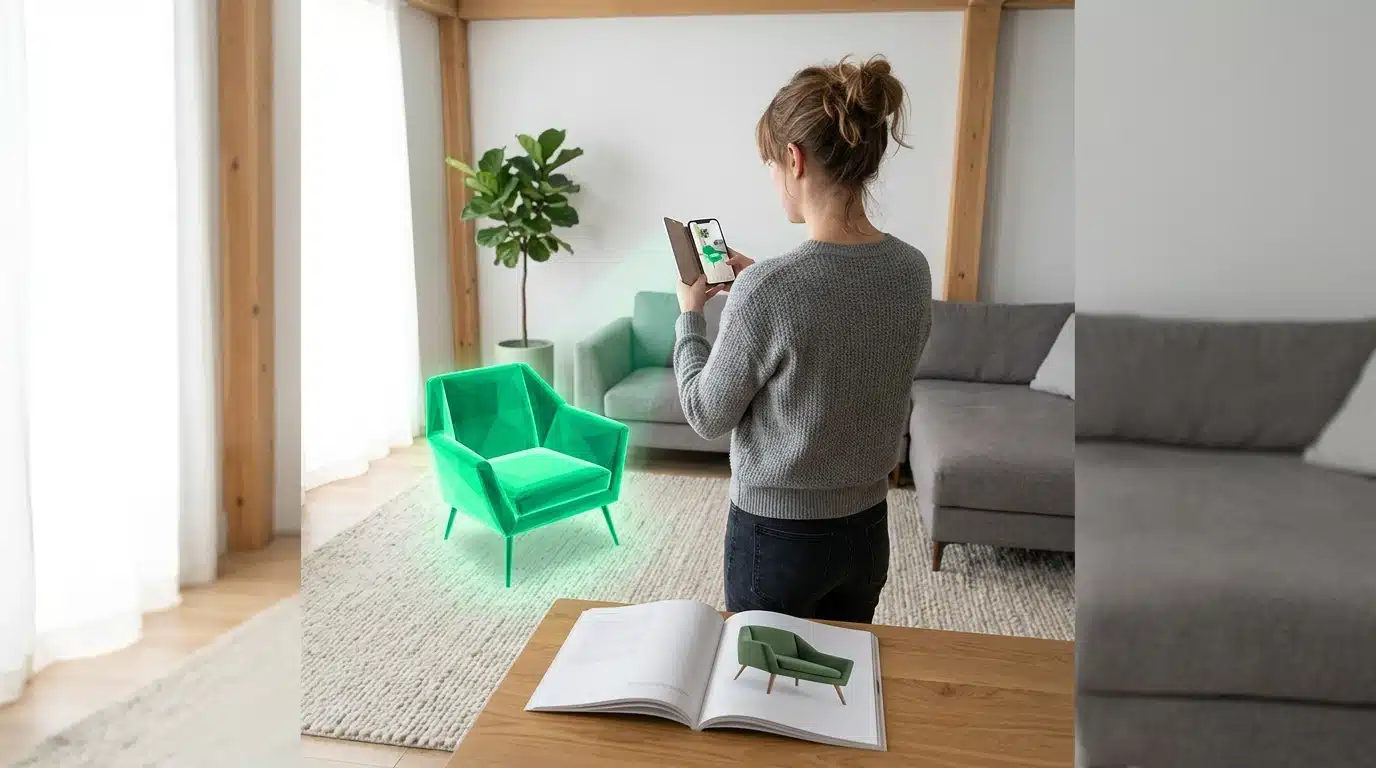
AR technology directly confronts this tangibility problem. Instead of just viewing a 2D image of a couch, you can now use your smartphone to project a life-sized 3D model directly into your living room. You can walk around it, check its dimensions against your existing furniture, and see how the fabric color looks in your home’s actual lighting. This is precisely the kind of functionality seen in the best AR apps for home decorating, which are fundamentally changing consumer expectations.
This isn’t a gimmick. It’s the next logical step in e-commerce, bridging the gap between the digital and physical worlds to create a more confident and informed buyer. The technology is rapidly moving from a novelty to a necessity for brands that want to compete. For shoppers, it means the end of guessing games and a significant reduction in the hassle of returns. The era of “buy, hope, and return” is finally facing a real challenge.
Key Features and Latest Innovations in AR Shopping Apps
Most people think of AR shopping as a simple gimmick—a way to see a 3D model of a chair floating awkwardly in your living room. The reality is far more complex and powerful. Today’s leading applications have moved beyond basic object placement into a realm of environmental understanding and deep personalization. They are less like a static catalog and more like a personal shopping assistant who can rearrange your reality. This isn’t just about viewing a product; it’s about experiencing it.
The core technology relies on refined algorithms that interpret your physical space, but the standout feature is how this tech is being applied. From hyper-realistic textures that show the grain on a wooden table to lighting engines that cast accurate shadows, the goal is to erase the line between the digital object and your actual room. The underrated factor here is the processing power of modern smartphones, which now handle these complex calculations in real-time without breaking a sweat.
Immersive Product Visualization: Beyond Static Images
Let’s be blunt: static product photos are a relic of a bygone internet era. They fail to convey scale, texture, or how an item fits within a personal space. 3D product visualization in augmented reality attacks this problem directly by rendering a high-fidelity, interactive model that you can examine from any angle. You can walk around a virtual sofa, look underneath a coffee table, or see how light reflects off a metallic lamp. It’s a underlying shift in user control.
Early attempts were clumsy, like trying to judge a fine painting through a smudged window. Now, advancements in photogrammetry—the science of making measurements from photographs—allow brands to create digital twins of their products with stunning accuracy. This means the virtual leather chair you’re considering has the same subtle textures and stitching as the real thing.
Real-Time Environment Mapping and Scale Accuracy
The dirty secret of first-generation AR apps was their terrible sense of scale. Couches appeared small enough for a dollhouse, and rugs were the size of a postage stamp. What changed? The widespread adoption of technologies like SLAM (Simultaneous Localization and Mapping) and LiDAR scanners in devices allows an app to map the geometry of your room with startling precision. It understands where the floor is, where the walls are, and the distance between them.
This creates an anchor for the virtual object, ensuring it appears true to scale. According to a study by the Interactive Advertising Bureau, AR experiences that demonstrated accurate scale were 73% more likely to lead to a purchase decision than those that did not. You’re no longer guessing if that bookshelf will fit in the alcove. You know.
Personalized Experiences: From Try-Ons to Virtual Showrooms
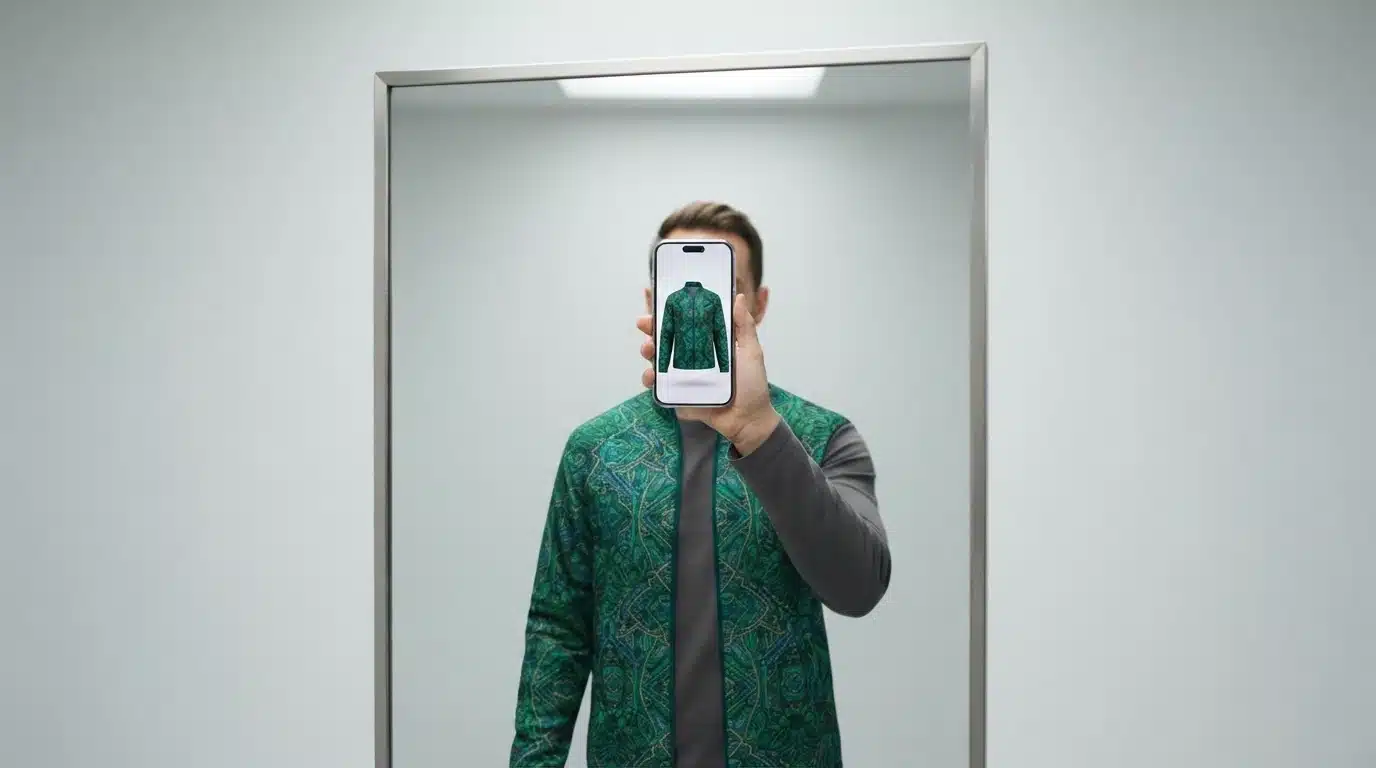
Product visualization for the home is just one piece of the puzzle. The most personal applications involve placing digital items on the human body. Virtual try-on technology lets you see how a pair of glasses fits your face, how a shade of lipstick complements your skin tone, or how a watch looks on your wrist—all through your phone’s camera. Brands like Warby Parker and Sephora have built entire business models around this capability, drastically reducing the uncertainty of buying personal items online.
This extends beyond accessories into creating entire virtual showrooms. Instead of just placing one chair, why not design a whole room? Some of the best AR home decorating apps allow users to save multiple room configurations, mixing and matching products to curate a complete look before adding anything to their cart. It transforms a simple purchase into a creative design process.
AI-Powered Recommendations within AR
The next frontier is integrating artificial intelligence directly into the augmented experience. Imagine trying on a virtual blue jacket, and the app’s AI instantly projects a perfectly matched scarf and pair of boots next to it. Dr. Anya Sharma, a specialist in human-computer interaction at Stanford University, explains, “The system isn’t just showing you a product; it’s anticipating your needs based on visual context. It sees the colors in your room or the style of your current outfit and curates suggestions in real-time.” This turns the AR view into a live, personalized mood board.
Interactive Features: Gestures and Voice Commands
Modern AR apps are moving away from clunky UI buttons and toward more natural interactions. Want to see that cabinet in a different color? Just say “show me this in oak.” Need to open a virtual drawer to check its depth? Use a simple tap-and-pull gesture on the screen. These interactive elements make the experience feel less like using software and more like playing with a real object (and without the risk of breaking it).
This level of interactivity is critical for building purchase confidence. A single-sentence paragraph can’t even capture the full impact. When you can manipulate a digital product as if it were in your hands, the psychological barrier to buying it online begins to dissolve.
To see how these features stack up, here is a quick comparison of some leading apps in the space:
| Feature | IKEA Place | Sephora Virtual Artist | Amazon AR View |
|---|---|---|---|
| Primary Use | ‘See in Your Space’ (Furniture) | ‘Virtual Try-On’ (Makeup) | ‘See in Your Space’ (General Goods) |
| Scale Accuracy | High (claims 98% accuracy) | N/A (Face mapping) | Moderate to High |
| Interactivity | Basic placement and rotation | Color swiping, tutorials | Basic placement and rotation |
| Platform | iOS & Android | In-app feature (iOS & Android) | In-app feature (iOS & Android) |
While features vary, the trend is clear: AR is becoming a deeply integrated tool, not just a flashy add-on. The challenge ahead is not just about technological capability but about designing these experiences to be genuinely useful and intuitive for the average shopper.
The system isn’t just showing you a product; it’s anticipating your needs based on visual context. It sees the colors in your room or the style of your current outfit and curates suggestions in real-time.
— Dr. Anya Sharma, Human-Computer Interaction Specialist, Stanford University
| Aspect | Traditional E-commerce | AR-Enhanced E-commerce |
|---|---|---|
| Product Visualization | Static 2D images and videos | Interactive, true-to-scale 3D models in your own space |
| Sizing & Fit | Guesswork based on measurement charts | Visual confirmation of size and fit (e.g., furniture in a room, glasses on a face) |
| Purchase Confidence | Moderate; relies on reviews and brand reputation | High; based on personal virtual experience with the product |
| Return Rates | High, often due to ‘looks different in person’ | Significantly lower, as visualization gaps are closed pre-purchase |
How AR Apps Directly Enhance Consumer Confidence and Reduce Returns
The entire business model of e-commerce has been built on a foundation of guesswork and blind faith. Retailers present flat, idealized images, and consumers are forced to translate that 2D fantasy into a 3D reality, hoping the product fits their space, their body, or their life. This gamble is the primary driver of the industry’s most expensive problem: product returns. Augmented reality isn’t just a gimmick; it’s a direct assault on this core flaw.
Mitigating the ‘What If’ Factor with Virtual Previews
Every online purchase is haunted by the “what if” question. What if that sofa overwhelms the living room? What if those sunglasses look ridiculous on my face? These uncertainties create purchase friction, leading to abandoned carts and post-purchase regret. AR applications systematically dismantle this doubt by allowing users to place a true-to-scale 3D model of a product directly into their own environment. It’s the difference between reading a travel brochure and actually taking a virtual tour.
This is no longer a futuristic concept. Projecting a digital sofa into your living room using one of the best AR home decorating apps provides an immediate, visceral understanding of its size and style that no photo gallery ever could. You instantly see if the color clashes with your walls or if it blocks a walkway. The guesswork is gone.
Suddenly, the abstract becomes concrete, and the consumer’s mental load—the taxing process of imagining, measuring, and hoping—is significantly reduced. This shift from imagination to visualization is where the confidence to click “buy” is born.
The Link Between Visual Certainty and Purchase Intent
When a customer has a high degree of certainty about a product, the path to purchase shortens dramatically. The data suggests—though not conclusively—that this isn’t just a feeling; it has a measurable financial impact. According to a Shopify report analyzing merchant data, products that featured AR content showed a staggering 94% higher conversion rate than products without it. Why? Because AR transforms a passive viewer into an active participant in the shopping experience.
This hands-on interaction builds a sense of ownership even before the transaction is complete. What most people miss is that this also tackles the returns issue head-on. The same report indicates that AR can lead to a 40% reduction in returns. When a consumer has already “seen” how a lamp looks on their nightstand (and confirmed it fits), the odds of it being sent back drop precipitously. This isn’t just about reducing costs; it’s about delivering on the promise made by the product page, a promise that traditional e-commerce frequently breaks.
As this technology becomes more integrated, consumer expectations will shift permanently, making virtual try-ons the standard, not the exception.
Emerging Trends: The Future Landscape of AR in Retail
If you think AR shopping has peaked with virtual try-on features, you’re looking at a blurry preview of a high-resolution future. The current generation of apps is merely the foundation. The next wave of AR retail will fuse disparate technologies—AI, haptic feedback, and persistent digital worlds—into a completely new commercial fabric that makes today’s online shopping feel antiquated. It’s a core shift in how we define “store.”
The changes coming are not just incremental improvements. They represent a complete rethinking of the customer journey, blurring the lines between browsing, purchasing, and even owning a product. We are moving from passive viewing to active participation in a brand’s digital ecosystem.
Metaverse Integration and Persistent Digital Twins
The term “metaverse” gets thrown around loosely, but its application in retail has a specific, powerful meaning: shared, persistent virtual spaces. This isn’t about a lonely avatar wandering a poorly rendered mall. Instead, imagine a brand creating a persistent digital twin of its entire product line within a virtual world, allowing you and your friends to interact with products together from anywhere. Your customized virtual sofa doesn’t just disappear when you close the app; it remains in your shared digital living room.
This concept is gaining serious traction. Dr. Alistair Finch, a researcher at the Stanford Virtual Human Interaction Lab, predicts that “over 40% of major retailers will operate a persistent ‘digital twin’ storefront within the next decade.” What does that actually mean for product selection? It transforms a solitary decision into a social experience, gathering real-time feedback from others before committing to a purchase.
Smooth Omnichannel AR Experiences
The ultimate goal is to erase the boundary between online and offline shopping. A omnichannel AR experience means your digital interactions follow you into the physical world. You could use one of the best AR home decorating apps to shortlist three armchairs at home, then walk into the brick-and-mortar store where your phone guides you directly to their physical locations for a final inspection.
This is where new sensory technologies will play a significant role. The next frontier is haptic feedback integrated into AR shopping. Imagine not only seeing how a leather jacket looks on your avatar but also feeling the texture of the grain through your smartphone or a specialized controller. It sounds like science fiction, but companies are already developing the underlying technology. (Of course, getting that tech into mainstream devices is the real hurdle.)
The underrated factor here is the data. This fluid journey creates an extraordinary stream of information about customer preferences, bridging the gap between what users browse online and what they actually touch in a store. Integrating these experiences isn’t just a gimmick; it’s a powerful tool for understanding behavior, which is why many of the top AR apps for interior design are already focused on saving and sharing user creations. The challenge, will be navigating the immense computational and data privacy obstacles that stand in the way.
Implementing AR: A Strategic Checklist for Retailers
Jumping into augmented reality without a concrete plan is the fastest way to burn through a marketing budget with nothing to show for it. Too many brands treat AR as a gimmick—a shiny object to feature in a press release—rather than a powerful business tool. This isn’t a game. A successful AR implementation requires a ruthless strategy that goes far beyond a cool demo.
Defining Clear Objectives and Target Audiences
Before writing a single line of code, you must answer one brutal question: what specific business problem are you trying to solve? If the answer is “to look innovative,” stop immediately. The goal should be tied to a measurable KPI, such as reducing product returns by 15% or increasing add-to-cart rates for high-consideration items. Anything less is just expensive digital art.
A recent analysis by the Digital Commerce Institute found that 68% of initial retail AR projects fail to show positive ROI precisely because they lacked a defined objective from the outset. What most people miss is that the technology serves the goal, not the other way around. Is your target audience tech-savvy Gen Z who expect fluid digital experiences, or is it an older demographic that needs a simple tool to build confidence before buying a bulky piece of furniture online?
Your entire strategy hinges on this. It dictates the platform, the user interface, and the complexity of the entire project.
Technical Considerations: Platform and Asset Optimization
The technical backend is where most AR dreams die a slow, laggy death. The two main paths are web-based AR (accessible via a browser, no app needed) and app-based AR. WebAR offers lower friction for users, but native apps generally provide higher fidelity and more complex interactions. The choice depends entirely on those objectives you just defined.
Optimizing 3D assets is the most underrated factor here. It’s like meal prepping before a big week of cooking; failing to prepare your ingredients properly means every dish will be a disaster. High-polygon models look fantastic in a developer’s rendering software but will crash a mid-range smartphone. The key is finding the sweet spot between visual detail and performance—your 3D models must be small enough to load in under three seconds but detailed enough to be useful. This often requires creating multiple levels of detail (LODs) for different devices.
Selecting the Right AR SDK and Development Partner
The software development kit (SDK) provides the foundation for your AR experience. The major players are Apple’s ARKit and Google’s ARCore, which offer powerful tracking and rendering capabilities for native apps. dozens of other platforms like 8th Wall (for WebAR) or Unity (for cross-platform development) exist. Choosing one isn’t just a technical decision; it’s a strategic one that will lock you into an ecosystem.
Selecting a development partner is even more critical. Don’t just look at their price tag. Scrutinize their portfolio for actual, shipped retail applications and demand to see case studies with real performance data. An experienced partner will challenge your assumptions and guide you on technical trade-offs—a cheap one will just say “yes” to everything until the project collapses.
UX Design Principles for Engaging AR Experiences
The most technical technology is useless if the user experience (UX) is clumsy and confusing. A user should be able to launch the AR view, place a virtual object in their space, and manipulate it with almost zero learning curve. Simplicity is everything. This means clear on-screen instructions, intuitive gesture controls, and a fluid transition from the 2D product page to the 3D experience.
This is where many companies stumble. They clutter the screen with unnecessary buttons or make object placement frustratingly imprecise. The best AR home decorating apps have mastered this, providing tools that feel like an extension of the user’s own intention. The goal is to make the technology feel invisible, allowing the user to focus solely on the product.
Accessibility and Performance Benchmarks
Your AR experience must work for everyone, not just people with the latest flagship smartphone. Designing for a wide range of devices—from high-end models to budget-friendly Androids from a few years ago—is non-negotiable. This means rigorous testing across multiple hardware profiles to ensure stable performance and avoid overheating issues (a surprisingly common problem).
Establish clear performance benchmarks from day one. For example, Google’s own data suggests that a delay of just 1 to 3 seconds in mobile page load time increases the probability of a user bouncing by 32%. While AR is more complex, the principle holds. An AR experience that takes more than a few seconds to initialize is an experience that won’t get used. This also extends to UX accessibility, ensuring that interactions are possible for users with motor impairments and that visual cues have sufficient color contrast. The true test of your AR strategy isn’t how it performs on an engineer’s iPhone Pro, but how it runs on a three-year-old Samsung in a room with imperfect lighting.

The Untapped Potential: AR’s Role in Sustainable Consumption
The convenience of online shopping carries a dirty secret: a colossal environmental footprint. A significant portion of this waste comes from product returns. Augmented reality presents a surprising, yet powerful, solution to this sustainability crisis. It directly combats the “buy-to-try” culture that plagues e-commerce.
By allowing you to visualize a product in your own space before clicking “purchase,” AR drastically reduces the chance of a return. A 2022 report from logistics firm Optoro estimates that e-commerce returns generate over 16 million metric tons of carbon dioxide in the U.S. alone. Why does this happen? Most returns stem from a simple mismatch between expectation and reality—the sofa that looked perfect online is too bulky for your living room, or the lamp’s color clashes with your walls.
This is where AR fundamentally changes the game.
Instead of guessing, you can use one of the many AR home decorating apps to see exactly how that new armchair fits next to your window. This “try before you buy” capability isn’t just a gimmick; it’s a powerful tool for informed consumption. It’s like being able to sample a dish before ordering the whole meal, preventing waste and disappointment. The underrated factor here is that better visualization leads to fewer unnecessary shipments and less packaging waste.
The lingering question is whether retailers will actively market this green benefit or simply let it remain a happy byproduct of chasing higher conversion rates. The potential for a more conscious consumerism is there, waiting to be fully realized.
Beyond Visualization: The New Standard of Trust
The evolution of AR in retail is about more than just advanced technology; it’s about recalibrating the very foundation of trust between a brand and its customers. For decades, the online shopping promise came with an unspoken asterisk—’product may not appear as expected.’ AR is systematically erasing that asterisk, transforming the act of buying from a gamble into an informed decision. The ability to verify size, fit, and style in one’s own space is rapidly shifting from a delightful novelty to a baseline expectation for a credible online retailer.
As this technology becomes more integrated and accessible, the most profound impact won’t be seen in the brands that adopt it, but in the slow decline of those that don’t. The digital storefronts that continue to rely on static images and hopeful descriptions will increasingly feel incomplete and untrustworthy. This raises a critical question for the future of e-commerce: when customers can virtually guarantee a product fits their life before they click ‘buy,’ will they even consider shopping anywhere that still asks them to guess?
Frequently Asked Questions
What is the primary benefit of AR shopping apps for consumers?
The primary benefit is a massive boost in shopping confidence. AR allows consumers to visualize products like furniture or clothing in their own environment and to scale, effectively eliminating the guesswork of online purchasing and ensuring the item fits their space and style before they buy.
How do AR shopping apps reduce product returns?
AR apps reduce returns by closing the gap between customer expectation and reality. When a buyer can virtually ‘try on’ a pair of sunglasses or see if a sofa fits in their living room, the likelihood of a return due to incorrect size, color, or style drops dramatically.
Are AR shopping apps compatible with all smartphones?
No, not all of them. Most modern smartphones support AR, as they are equipped with the necessary processing power and software frameworks like Google’s ARCore or Apple’s ARKit. older or more basic models may lack the capability to run these demanding applications smoothly.
What are some challenges businesses face when implementing AR shopping features?
The two biggest challenges are cost and complexity. Creating high-fidelity, photorealistic 3D models for an entire product catalog is a significant investment. developing and maintaining a smooth, user-friendly AR application requires specialized technical expertise that can be difficult to acquire.
How will the metaverse impact the future of AR shopping?
The metaverse will transform AR shopping from a solitary activity into a shared, social experience. It will enable persistent virtual showrooms where users can invite friends to view and give opinions on products together in real-time, blending the social aspect of in-person shopping with the convenience of e-commerce.