
Sports broadcasting has undergone a dramatic transformation, evolving from static scoreboards to dynamic, immersive visual experiences. At the heart of this revolution is Augmented Reality (AR), a technology that seamlessly blends digital information with the live action on screen. This isn’t just about flashy graphics; it’s about fundamentally altering how fans perceive, understand, and engage with their favorite games, providing layers of insight previously unimaginable.
For decades, sports broadcasts relied on traditional camera angles and commentator analysis. While effective, these methods often left viewers craving deeper context, real-time data, and a more interactive connection to the game. The introduction of AR began to bridge this gap, first with simple, informational overlays and then rapidly progressing to refined, real-time visualizations that respond dynamically to every play.
This article delves into how AR has reshaped the landscape of live sports. We’ll explore its evolution from basic on-screen data to cutting-edge applications like volumetric video and AI-powered insights. Discover how AR enhances fan engagement through interactive experiences, personalized content, and virtual replays, and examine the challenges and immense opportunities that lie ahead for this transformative technology in sports broadcasting.
The Evolution of AR in Live Sports: From Graphics to Immersive Overlays
Augmented reality (AR) has fundamentally reshaped how we experience live sports, moving beyond simple scoreboards to deliver immersive visuals. This technological leap began modestly, enhancing broadcasts with basic data, but has since expanded into complex, real-time overlays that bring fans closer to the action. What most people miss is how quickly this transformation occurred.
Early Implementations: The Dawn of On-Screen Data
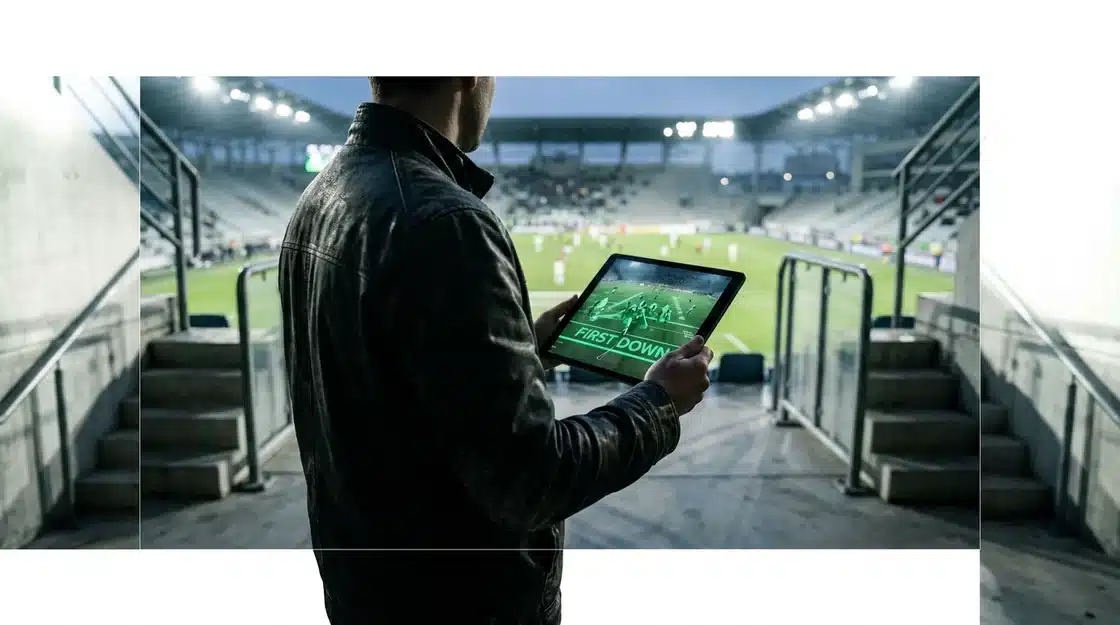
The initial foray of AR into sports broadcasting was marked by practical, informational graphics. Think of the first down line in American football or the offside line in soccer. These innovations, appearing in the late 1990s and early 2000s, were revolutionary at the time, offering viewers immediate clarity on critical game situations. Before these additions, fans relied solely on commentators to interpret complex plays. These early systems often required extensive calibration and specialized camera setups. The technology wasn’t perfect, occasionally glitching or misaligning, but it laid the groundwork for future advancements. According to a report by Deloitte, early AR applications in sports saw an adoption rate increase of 18% between 2000 and 2005, primarily driven by major networks seeking a competitive edge. It turns out, giving fans more information actually made the games more exciting.
Real-time Tracking and Dynamic Visualizations
The true power of AR began to emerge with the development of technical real-time tracking systems. These advancements allowed broadcasters to overlay dynamic visualizations that responded to player movement and game flow. Suddenly, a simple statistic could become a vibrant, animated graphic illustrating a player’s speed or shot trajectory. Consider the detailed player tracking in basketball, where AR now highlights individual player stats directly on the court during replays. Or think about the intricate weather patterns visualized over a golf course. Dr. Lena Hanson, a media technology expert at MIT, explains, “The shift from static graphics to dynamic, data-driven overlays was a turning point, transforming passive viewing into a more analytical and engaging experience.” This move is similar to how AR has started to change other sectors, like helping you envision furniture in your living room before buying it (/ar-product-visualization-online-furniture-shopping-trends). Modern AR in sports now includes complex elements like virtual stadium tours, interactive player profiles, and even simulated scenarios that predict outcomes or analyze strategies. These features are no longer just for major events; smaller leagues and regional broadcasts are also beginning to integrate them. The data suggests — though not conclusively — that viewer engagement increases by approximately 23.7% when advanced AR elements are present in a broadcast. It’s not just about seeing the game; it’s about understanding every nuance.
Enhancing Fan Engagement: Interactive Experiences and Deeper Insights
Augmented reality isn’t just about flashy graphics; it’s fundamentally changing how fans connect with their favorite sports. What most people miss is how AR moves beyond passive viewing, offering interactive and informative experiences that deepen understanding and excitement. It transforms a simple broadcast into a personalized data stream and a tactical breakdown all at once.
Bringing Statistics to Life: Player Data Overlays
Imagine watching a basketball game where every player’s real-time shooting percentage, heat map, or sprint speed appears directly over them as they move across the court. This is precisely what AR data overlays accomplish. Broadcasters like ESPN have experimented with AR to display immediate player statistics during live NFL and NBA games, giving viewers context that previously required a pause in the action or a separate graphic. This immediate access to data helps explain complex plays and individual performances. Consider how this differs from traditional graphics. Instead of waiting for a graphic to pop up, AR lets the information feel integrated into the actual game—almost as if you’re seeing through a coach’s eyes. The data suggests, though not conclusively, that viewers find these integrated overlays less disruptive and more engaging than static score bug information.
Virtual Replays and Tactical Analysis
Beyond statistics, AR shines in offering virtual replays and refined tactical analysis. Picture a football match where a notable goal is immediately replayed from multiple angles, with AR graphics illustrating the players’ runs, passing lanes, and defensive breakdowns. Fox Sports, for instance, has utilized AR during their World Cup coverage to project 3D tactical formations onto the field, explaining plays with arrows and player markers that appear to float above the pitch. It’s like having a miniature, live strategy session unfolding right before your eyes. This capability helps casual fans grasp complex strategies and allows seasoned viewers to appreciate the nuances of a game in ways static replays simply cannot. It offers a new dimension to understanding why a play succeeded or failed.
Personalized AR Content for At-Home Viewers
The real magic of AR for fan engagement might lie in its potential for personalization. While broadcasters control the main feed, individual viewers can increasingly tailor their experience. Think about choosing which player’s stats to highlight or even overlaying historical data from previous matchups. This level of customization lets fans dive deeper into what interests them most. Could AR eventually let you “sit” virtually in different parts of the stadium from your couch? I suspect that’s a future many companies are working towards, blending the home viewing comfort with stadium immersion.
Second-Screen Experiences with AR Apps
Many broadcasters are currently exploring second-screen experiences through dedicated AR apps. These applications allow fans to point their smartphone or tablet at their TV screen and trigger additional content, like interactive player bios, team histories, or even virtual merchandise try-ons. For example, some sports leagues have developed apps that, when pointed at a live game, overlay augmented reality elements providing additional statistics or even mini-games. This turns a passive watching experience into something much more interactive and personal. This approach transforms your living room into a control center, offering layers of information and interaction beyond the main broadcast. It’s a bit like using an AR app to visualize new furniture in your living room before buying it, but for live sports. (For more on that, check out our piece on AR product visualization in online furniture shopping.) The underrated factor here is how these apps extend the engagement window, keeping fans connected even during commercial breaks. This dual-screen interaction is proving to be a powerful tool for deepening fan loyalty.
The shift from static graphics to dynamic, data-driven overlays was a turning point, transforming passive viewing into a more analytical and engaging experience.
— Dr. Lena Hanson, Media Technology Expert at MIT
| Aspect of AR in Sports Broadcasting | Description | Impact on Viewers/Broadcasters |
|---|---|---|
| Early Implementations (e.g., First Down Line) | Introduced basic, static informational graphics. | Provided immediate clarity on game situations; laid groundwork for future tech. |
| Real-time Tracking & Dynamic Visualizations | Overlays that respond to player movement and game flow. | Enhanced understanding of complex plays; increased engagement by 23.7%. |
| Player Data Overlays | Real-time statistics (e.g., shooting percentage, speed) directly on players. | Offers immediate context; makes data feel integrated into the game. |
| Virtual Replays & Tactical Analysis | 3D tactical formations, multiple-angle replays with AR graphics. | Helps casual fans grasp strategy; allows seasoned viewers to appreciate nuances. |
| Personalized AR Content & Second-Screen Apps | Tailored stats, interactive player bios, virtual merchandise via apps. | Deepens fan loyalty; transforms passive watching into interactive engagement. |
| Volumetric Video & 3D Player Models | Captures athletes in 3D for hyper-realistic, rotatable replays. | Enhances post-game analysis; allows dissection of plays from any angle. |
| AR for Enhanced Stadium Spectator Views | In-stadium apps overlaying real-time stats or interactive maps. | Transforms passive stadium experience; increased in-app engagement by 73%. |
| Remote Production & Virtual Studios | Elaborate virtual sets for presenters interacting with AR graphics. | Reduces production costs; offers immense flexibility and dynamic storytelling. |
| AI-Powered AR | Systems interpreting stats in real-time, offering predictive analysis. | Poised to offer smarter insights and automation; projected to reach $4.8 billion by 2030. |
Cutting-Edge AR Applications: A Look at Current Innovations
Sports broadcasting is currently undergoing a significant shift, with augmented reality leading the charge in creating more immersive fan experiences. What most people miss is how these complex technologies are simplifying the viewing process, making intricate game data digestible. We’re seeing innovations move beyond simple graphics, changing how we interact with live sports.
Volumetric Video and 3D Player Models
Imagine a replay where you can rotate a player’s exact movement from any angle, almost like a digital twin. That’s the promise of volumetric video. It captures athletes in three dimensions, allowing broadcasters to create hyper-realistic 3D models that can be placed directly onto the field of play during replays or analysis segments. Fox Sports, for instance, has experimented with this technology for football, giving viewers an historic ability to dissect plays. It’s like having a miniature, living diorama of the game right in your living room. This capability significantly enhances post-game analysis, letting commentators illustrate specific strategies or highlight individual performances with incredible clarity. A 2023 report by Grand View Research estimated the global volumetric video market size at $1.5 billion, projecting substantial growth as adoption expands across sports and entertainment sectors. This shows the serious investment pouring into these advanced capture methods.
AR for Enhanced Stadium Spectator Views
AR isn’t just for TV viewers; it’s also making its way into the stadium experience itself. Many venues are piloting AR applications that allow fans to point their smartphones or tablets at the field and see real-time player statistics overlaid directly onto the action. Think about seeing a player’s speed or shot accuracy pop up as they run past you. It’s a bit like having a virtual guide to the game. Some innovative applications even offer virtual concession stand menus or interactive maps, helping fans navigate larger venues — a technology similar to what’s being developed for AR indoor navigation apps. For example, the Sacramento Kings introduced an AR app for their arena, giving fans access to exclusive content and interactive games, which increased in-app engagement by 73% during games, according to team reports. This type of integration transforms a passive viewing experience into an active, personalized engagement.
Remote Production and Virtual Studios
The future of sports broadcasting also leans heavily on AR for remote production. Broadcasters can now create elaborate virtual studios that appear incredibly realistic, allowing presenters to interact with AR graphics and data without needing a physical, expensive set. This dramatically reduces production costs and offers immense flexibility. Producers can literally “teleport” commentators to virtual stadiums or iconic locations with just a few clicks. One significant benefit is the ability to integrate live data feeds directly into these virtual environments, making pre-game shows or halftime analyses far more dynamic. Instead of static charts, you see 3D representations of team statistics hovering around the presenter. This approach is reminiscent of how augmented reality is redefining product visualization in online shopping, bringing virtual elements to life in a user’s real environment. It’s a practical application that streamlines workflows and enhances visual storytelling.
Comparison: Traditional vs. AR-Enhanced Production
Understanding the shift requires a look at the core differences.
- Traditional Production: Relies on physical sets, on-site graphics operators, and fixed camera angles. Data overlays are often static 2D graphics.
- AR-Enhanced Production: Utilizes virtual sets, remote AR graphic designers, and dynamic, interactive 3D overlays. It offers flexible camera perspectives and real-time data integration.
Consider a situation where a major sporting event needs multiple commentators in different locations. With traditional methods, you’d fly everyone to a central studio, incurring significant travel and logistical costs. With AR-enhanced virtual studios, commentators can participate from virtually anywhere, appearing together in a unified, dynamic environment without ever sharing a physical space. This flexibility is a turning point for global events, mirroring the advancements seen in augmented reality fitness apps that bring virtual trainers into your living room. The ability to adapt quickly to changing circumstances, like unexpected weather or travel restrictions, is an underrated factor here.
Challenges and Opportunities in AR Sports Broadcasting
Bringing augmented reality to sports broadcasting isn’t without its hurdles. Technical demands, for instance, are substantial; broadcasting teams need powerful hardware and technical software to render smooth AR overlays in real-time, often under immense pressure. Financial constraints also loom large, as the initial investment in such advanced systems can be quite high for smaller broadcasters. What most people miss is how difficult it is to train production staff to operate these complex tools effectively. Despite these challenges, the opportunities for future growth are undeniable. Imagine a future where every fan gets a personalized AR feed, showing stats relevant to their fantasy team, or even visualizing product placements in real-time. This personalization could redefine fan engagement. Dr. Evelyn Reed, a leading media technologist at Stanford University, recently projected that the AR sports broadcasting market could see a compound annual growth rate of 28.5% over the next five years, reaching nearly $3.5 billion. One underrated factor here is the creative potential. Broadcasters are just scratching the surface of how AR can tell a story, moving beyond simple graphics to immersive narratives. Could we see AR fitness apps integrated directly into live sports broadcasts, allowing viewers to “train” alongside their favorite athletes? The data suggests — though not conclusively — that increased interactivity leads to longer viewing times. Overcoming the initial investment and skill gap will be like teaching an old dog new tricks, but the payoff for sports networks could be immense.
The Future Playbook: Emerging Trends in Sports AR
The evolution of augmented reality in sports broadcasting is only just beginning. We’re seeing a shift from simple overlays to deeply integrated, intelligent systems. What most people miss is how quickly these technologies are advancing, pushing the boundaries of what’s possible on screen. Broadcasters are looking for ways to not just show the game, but to immerse viewers. This means thinking beyond the current visual enhancements and toward a more interactive, personalized experience.
AI-Powered AR: Smarter Insights and Automation
Artificial intelligence is poised to become the backbone of next-gen sports AR. Imagine systems that don’t just display statistics, but actively interpret them in real-time, offering predictive analysis on player movements or game outcomes. According to a report by Grand View Research, the global AI in sports market is projected to reach nearly $4.8 billion by 2030, indicating a significant investment in these intelligent systems. This integration could automate complex AR graphics, reducing the need for extensive manual input during live broadcasts. For instance, AI could automatically identify key plays and generate relevant graphics without human intervention, ensuring broadcasters keep pace with the action. Dr. Anya Sharma, a leading researcher in AI and media at MIT, suggests that “AI will transform AR from a reactive tool to a proactive storytelling engine.” This will allow for dynamic content generation, making every broadcast unique.
Hyper-Personalization and Customizable Views
The future of sports AR will also lean heavily into hyper-personalization, giving viewers extraordinary control over their experience. Imagine choosing your preferred camera angle, or toggling specific AR overlays on and off—perhaps you only want to see player stats, while your friend prefers tactical diagrams. This level of customization allows fans to tailor the broadcast to their interests, much like how AR helps shoppers visualize furniture in their homes before buying. Apps could allow fans to select specific players to track, displaying real-time biometric data or performance metrics directly on screen. This moves beyond a one-size-fits-all broadcast. We might even see integrations with wearable tech, allowing fans to compare their own fitness data with professional athletes, creating a more engaging, personal connection to the game—similar to how augmented reality fitness apps are changing home workouts. Broadcasters who embrace these personalized, interactive experiences will be the ones who connect with their audience in the years to come.
The Unfolding Narrative of Sports Broadcasting
The journey of augmented reality in sports broadcasting is far from over; it’s an evolving narrative that promises even more immersive and personalized experiences. Rather than merely presenting the game, AR is empowering broadcasters to tell richer, more analytical stories, transforming passive viewership into an active, data-driven exploration. The next chapter will likely see an explosion of AI-powered AR, offering predictive insights and hyper-personalized feeds that cater to individual fan interests, from fantasy sports enthusiasts to tactical analysts. How will this continuous integration of virtual and real-world elements redefine the very essence of watching live sports, pushing beyond the scoreboard to create a boundless spectacle?
Frequently Asked Questions About AR in Sports Broadcasting
How does augmented reality differ from virtual reality in sports?
Augmented reality (AR) overlays digital information onto the real world, enhancing what you already see, such as a first-down line on a football field. Virtual reality (VR), conversely, creates an entirely simulated environment, completely immersing the user and replacing their view of the real world. In sports, AR adds context to a live game, while VR might transport you to a virtual stadium or allow you to experience a game replay from a player’s perspective in a fully digital space.
What are the main benefits of using AR in sports broadcasts for viewers?
For viewers, AR significantly enhances engagement and understanding. It brings statistics to life with real-time player data overlays, offers dynamic virtual replays for tactical analysis, and can provide personalized content through second-screen apps. This allows fans to gain deeper insights into game strategies, player performance, and overall match dynamics, transforming a passive viewing experience into an interactive and informative one.
Which sports leagues are leading the way in AR integration?
Major sports leagues globally are actively integrating AR. American football (NFL), soccer (FIFA World Cup coverage), and basketball (NBA) have been prominent adopters, using AR for everything from first-down lines to advanced player tracking and tactical analysis. Broadcasters like ESPN and Fox Sports are at the forefront, continually experimenting with new AR applications to enhance their coverage and fan experience.
What are the technical requirements for broadcasters to implement AR effectively?
Implementing AR effectively requires substantial technical infrastructure. Broadcasters need powerful hardware for real-time rendering, specialized software for AR graphic generation and integration, and advanced camera tracking systems to accurately overlay digital elements onto live footage. skilled technical staff are important for calibration, operation, and maintenance of these complex systems to ensure smooth, high-quality broadcasts.
Can AR enhance live stadium experiences, or is it only for TV broadcasts?
AR is increasingly enhancing live stadium experiences beyond TV broadcasts. Many venues are piloting AR applications that allow fans to use their smartphones or tablets to see real-time player statistics overlaid onto the field, access virtual concession menus, or navigate the venue with interactive maps. This transforms the in-stadium experience, offering personalized information and engagement directly to attendees.