VR Headset Acoustic Design: How 2026 Innovations are Improving Immersion for US Enterprise Users
The landscape of virtual reality (VR) is evolving at an unprecedented pace, and by 2026, the advancements in VR acoustic immersion are set to reshape how US enterprise users interact with digital environments. Gone are the days when VR was merely a visual spectacle; today, and increasingly in the near future, the auditory experience is recognized as an equally critical, if not more powerful, component of true immersion. For businesses, this isn’t just about entertainment; it’s about enhancing training efficacy, streamlining virtual collaboration, and creating deeply engaging professional simulations that were once the realm of science fiction.
This article delves into the cutting-edge innovations driving the future of VR acoustic immersion in headsets, specifically highlighting their impact on US enterprise applications. We will explore the technological breakthroughs, the benefits for various industries, and what businesses can expect from these advanced VR solutions in 2026 and beyond. Prepare to have your perceptions of virtual reality, and especially its soundscapes, profoundly altered.
The Foundational Shift: Beyond Stereo Sound
For many years, audio in VR headsets, while an improvement over traditional speakers, largely relied on stereo sound. While this provided some sense of direction, it lacked the nuanced spatial accuracy essential for true immersion. The human auditory system is incredibly sophisticated, capable of discerning the direction, distance, and even the material properties of sound sources. Early VR audio often fell short, breaking the illusion and reminding users they were in a simulated environment.
By 2026, the foundational shift in VR acoustic immersion lies in the widespread adoption and refinement of true spatial audio. This isn’t just about left and right; it’s about creating a 360-degree soundfield where audio cues precisely correspond to their virtual origins. Imagine a virtual factory floor: the distinct clang of a hammer from a specific direction, the whir of machinery moving past you, or the distant murmur of colleagues in a virtual meeting room. This level of detail is becoming standard.
This evolution is powered by several key technologies:
- Head-Related Transfer Functions (HRTFs): These personalized audio filters simulate how sound waves interact with a user’s head, ears, and torso before reaching the eardrums. Advanced VR systems in 2026 will increasingly incorporate real-time HRTF customization or selection from vast databases, making spatial audio feel incredibly natural and personalized.
- Object-Based Audio: Instead of mixing audio into channels (like stereo or 5.1 surround), object-based audio treats each sound source as an independent object with its own position, velocity, and properties within the virtual space. The VR headset’s audio engine then renders these objects dynamically based on the user’s head movements, creating a highly realistic and responsive soundscape.
- Ray Tracing for Audio: Similar to how ray tracing revolutionized visual rendering by simulating light paths, audio ray tracing is emerging as a powerful tool. This technology simulates how sound waves bounce off and interact with virtual surfaces, creating realistic echoes, reverberations, and occlusions. This means a sound might be muffled if a virtual wall is between you and the source, or louder if it’s echoing in a large, empty room.
These advancements collectively contribute to a profound sense of presence, where the auditory cues seamlessly align with visual information, tricking the brain into believing the virtual world is real. For US enterprises, this means more effective training simulations, more natural virtual collaboration, and a significant boost to overall user engagement.
Innovations in Headset Hardware for Superior Acoustic Performance
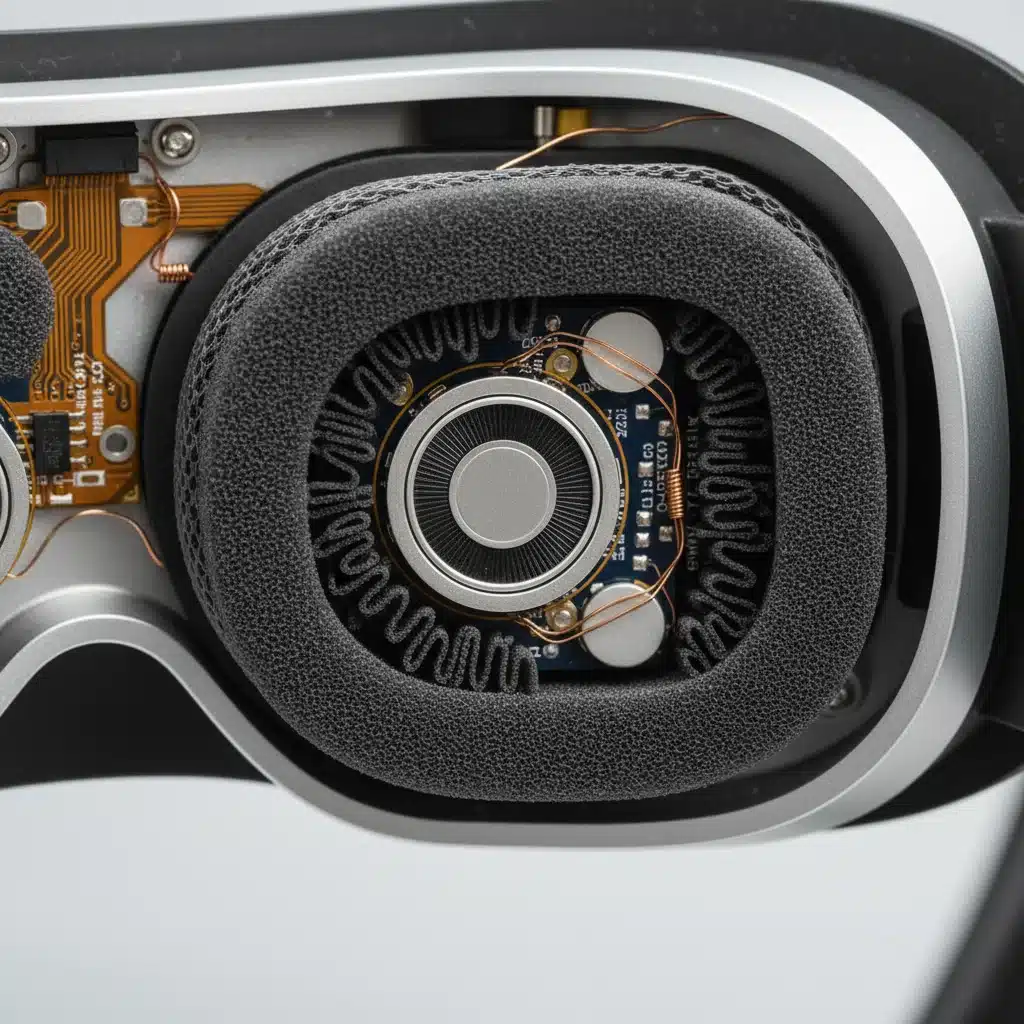
While software algorithms are crucial, the physical design of VR headsets plays an equally vital role in delivering pristine VR acoustic immersion. By 2026, headset hardware will feature significant advancements targeted specifically at optimizing audio delivery.
Integrated High-Fidelity Audio Systems
The days of relying on external headphones or basic built-in speakers are rapidly fading. Modern enterprise VR headsets are integrating high-fidelity audio systems directly into their design. This includes:
- Custom-Tuned Drivers: Manufacturers are developing bespoke audio drivers (speakers) specifically optimized for the unique acoustic properties of VR headsets. These drivers deliver a wider frequency response, clearer mids, and deeper, more impactful bass, crucial for conveying the full spectrum of virtual sounds.
- Open-Ear vs. Closed-Ear Designs: While closed-ear designs offer superior noise isolation, open-ear or ‘near-ear’ solutions are gaining traction for enterprise use. These designs allow users to maintain some awareness of their physical surroundings while still delivering high-quality spatial audio, which is vital for safety in certain industrial training scenarios or for easy communication with physical colleagues. The challenge here is delivering rich audio without disturbing others, a problem being solved by highly directional sound delivery.
- Active Noise Cancellation (ANC): For environments where external distractions are a concern, advanced ANC technology is becoming standard. This allows enterprise users to fully immerse themselves in the virtual environment without being disturbed by office chatter, machinery noise, or other real-world sounds, thereby enhancing focus and concentration during critical tasks.
Haptic Feedback Integration in Audio
Beyond traditional sound, haptic feedback is increasingly being integrated with audio to create a multi-sensory VR acoustic immersion. Imagine feeling the rumble of a virtual earthquake or the subtle vibration of a distant explosion through your headset. By 2026, haptic actuators embedded within the headset, or even in accompanying haptic vests, will synchronize with auditory cues to provide a more visceral and believable experience. This is particularly impactful for training scenarios involving machinery, impact forces, or environmental hazards, where feeling the sound adds a critical layer of realism.
The Enterprise Advantage: Real-World Applications by 2026
The enhanced VR acoustic immersion isn’t just a technical marvel; it translates directly into tangible benefits for US enterprises across various sectors.
Enhanced Training and Simulation
For industries like manufacturing, healthcare, and defense, VR training is already a powerful tool. By 2026, superior acoustic design will elevate these simulations to unprecedented levels:
- Realistic Scenarios: Trainees can experience the authentic soundscape of a factory floor, a surgical operating room, or a combat zone. The precise spatial audio allows them to identify the source of critical alarms, the direction of an approaching vehicle, or the subtle sounds indicating equipment malfunction. This realism builds muscle memory and critical decision-making skills more effectively than purely visual training.
- Improved Retention: When multiple senses are engaged, information retention increases significantly. The combination of realistic visuals, spatial audio, and haptic feedback creates a more memorable and impactful learning experience, ensuring that crucial procedures and safety protocols are deeply ingrained.
- Soft Skills Training: Beyond technical skills, VR acoustic immersion aids in soft skills training. Imagine practicing difficult conversations with virtual avatars where the tone of voice, inflections, and even background office noise contribute to a realistic interaction, preparing employees for real-world interpersonal challenges.
Revolutionizing Virtual Collaboration and Meetings
The shift towards remote and hybrid work models has accelerated the need for effective virtual collaboration tools. By 2026, VR headsets with advanced acoustic design will transform virtual meetings:
- Natural Communication: Spatial audio allows participants to discern who is speaking and from where in the virtual meeting room, replicating the natural flow of in-person conversations. This eliminates the ‘everyone talking over each other’ problem often experienced in traditional video conferencing.
- Reduced Cognitive Load: When audio cues are natural and intuitive, the brain expends less effort trying to interpret sound, freeing up cognitive resources for the actual content of the meeting. This leads to more productive discussions and less fatigue.
- Enhanced Social Presence: The ability to accurately locate voices and hear subtle environmental cues fosters a stronger sense of social presence, making participants feel more connected and engaged with their virtual colleagues. This significantly improves team cohesion in distributed workforces.
Product Design and Prototyping
For product designers and engineers, VR acoustic immersion offers new avenues for innovation:
- Acoustic Prototyping: Companies can simulate the acoustic properties of new product designs in a virtual environment. Imagine designing a car interior and being able to virtually ‘sit’ inside it to assess road noise, engine sounds, or the audio quality of the infotainment system before a physical prototype is ever built.
- Architectural Acoustics: Architects can walk through virtual buildings and experience their acoustic characteristics, identifying potential issues with reverberation, sound leakage, or noise pollution before construction begins, saving significant time and resources.
Challenges and Future Directions in VR Acoustic Design
While the progress in VR acoustic immersion is remarkable, several challenges remain, and ongoing research is paving the way for even more sophisticated experiences by 2026 and beyond.
Computational Demands
Rendering highly realistic spatial audio, especially with ray tracing and personalized HRTFs, is computationally intensive. As VR hardware becomes more powerful and cloud-based rendering solutions mature, this challenge will diminish, allowing for even more complex and dynamic soundscapes.
Personalization and Calibration
Achieving truly personalized HRTFs for every user is complex. While some systems use generic HRTF sets or allow for basic adjustments, the future will likely see more sophisticated calibration methods, perhaps even involving quick 3D scans of a user’s ears and head to generate highly accurate, individualized HRTFs. This level of personalization will unlock the ultimate in VR acoustic immersion.
Integration with Other Sensory Feedback
The ultimate goal of VR is to create a seamless, multi-sensory experience. Future advancements will focus on even tighter integration of acoustic feedback with haptics, olfaction (smell), and even gustation (taste), although the latter two are in much earlier stages of development. The synergy between these senses will lead to unparalleled levels of realism and presence.
Accessibility and Inclusivity
Ensuring that advanced VR acoustic immersion is accessible to users with varying hearing abilities is a critical consideration. Developers are working on adaptive audio technologies that can customize sound delivery based on individual hearing profiles, ensuring that everyone can benefit from these immersive experiences.

The Impact on US Enterprise Adoption
The improvements in VR acoustic immersion are not just about making VR more ‘fun’; they are about making it more effective and indispensable for US businesses. When employees feel truly present and engaged in a virtual environment, the benefits are profound:
- Increased Productivity: Whether in training or collaboration, enhanced immersion reduces distractions and cognitive load, leading to more focused and productive work sessions.
- Faster Learning Curves: Realistic simulations with accurate auditory cues allow for quicker skill acquisition and better retention, reducing the time and cost associated with traditional training methods.
- Better Decision-Making: In high-stakes scenarios, the ability to accurately perceive and react to auditory information in VR can be life-saving, leading to better outcomes in fields like emergency response or complex machinery operation.
- Reduced Travel Costs: High-fidelity virtual collaboration can significantly reduce the need for business travel, saving companies substantial resources while maintaining effective communication and teamwork.
- Competitive Advantage: Enterprises that embrace these advanced VR solutions will gain a significant competitive edge, attracting top talent, innovating faster, and operating more efficiently than their counterparts.
By 2026, the US enterprise sector will increasingly recognize VR acoustic immersion as a critical factor in the success of their VR deployments. It will move from being a desirable feature to a fundamental expectation.
Conclusion: The Sound of Future Immersion
The journey towards perfect VR acoustic immersion is an ongoing one, but by 2026, we are witnessing a pivotal moment. The combination of sophisticated software algorithms, personalized HRTFs, object-based audio, and advanced headset hardware is creating auditory experiences that are indistinguishable from reality for many users. For US enterprise users, this means a paradigm shift in how they train, collaborate, design, and interact with information.
The future of VR is not just seen; it is profoundly heard and felt. Businesses that invest in VR headsets with superior acoustic design will unlock new levels of engagement, efficiency, and innovation, positioning themselves at the forefront of the technological revolution. The sound of silence in VR is being replaced by rich, dynamic, and utterly convincing soundscapes that truly bring virtual worlds to life. Get ready to listen carefully, because the future of enterprise VR immersion sounds incredible.