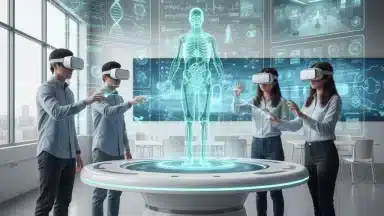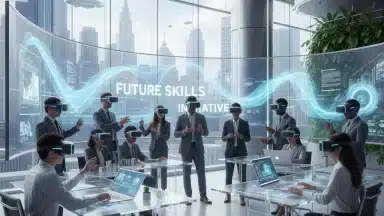
The landscape of work is undergoing a profound transformation, driven by technological innovation and the increasing demand for flexible, distributed teams. As we approach Q1 2026, one technology stands out as a pivotal force in reshaping how we connect, create, and collaborate: Virtual Reality (VR). VR Collaboration Platforms are no longer a niche concept; they are rapidly evolving into sophisticated tools that promise to redefine remote work, training, design, and education. This deep dive aims to explore the current state, essential features, user experience considerations, and future trends of VR collaboration platforms, offering a comprehensive look at what to expect in the coming year.
The promise of VR is to transcend geographical barriers, offering an immersive sense of presence that traditional video conferencing simply cannot replicate. Imagine conducting a product design review where everyone can physically manipulate a 3D model, or a training session where participants can practice complex procedures in a risk-free virtual environment. These are just glimpses of the potential offered by advanced VR collaboration platforms. As hardware becomes more accessible and software more refined, the adoption curve for these tools is set to steepen dramatically.
What Exactly Are VR Collaboration Platforms?
At their core, VR Collaboration Platforms are software applications that allow multiple users, each equipped with a VR headset, to meet and interact within a shared virtual space. Unlike traditional online meetings, these platforms provide a sense of ‘presence’ – the feeling that you are genuinely in the same room as your colleagues. This is achieved through realistic avatars, spatial audio, and interactive 3D environments. These virtual spaces can range from simple meeting rooms to complex digital twins of real-world factories, design studios, or even historical sites.
The evolution of these platforms has been rapid. Early iterations often suffered from latency, limited interactivity, and clunky user interfaces. However, advancements in VR hardware, such as higher-resolution displays, wider fields of view, and improved tracking systems, combined with more powerful computing and optimized network protocols, have paved the way for truly compelling experiences. For Q1 2026, we are seeing a maturation of these technologies, moving beyond novelty to practical, productivity-enhancing tools.
The distinction between VR and AR (Augmented Reality) is also becoming increasingly blurred in the collaborative space. While VR fully immerses users in a digital world, AR overlays digital information onto the real world. Hybrid solutions, often referred to as Mixed Reality (MR), are emerging, offering the best of both worlds. For the purpose of this article, we will primarily focus on fully immersive VR environments, though many of the principles and features discussed are applicable across the immersive spectrum.
Core Features of Effective VR Collaboration Platforms in Q1 2026
For a VR Collaboration Platform to be truly effective in Q1 2026, it must offer a robust suite of features designed to enhance productivity, foster engagement, and provide a seamless user experience. Here are some of the most critical:
Realistic and Customizable Avatars
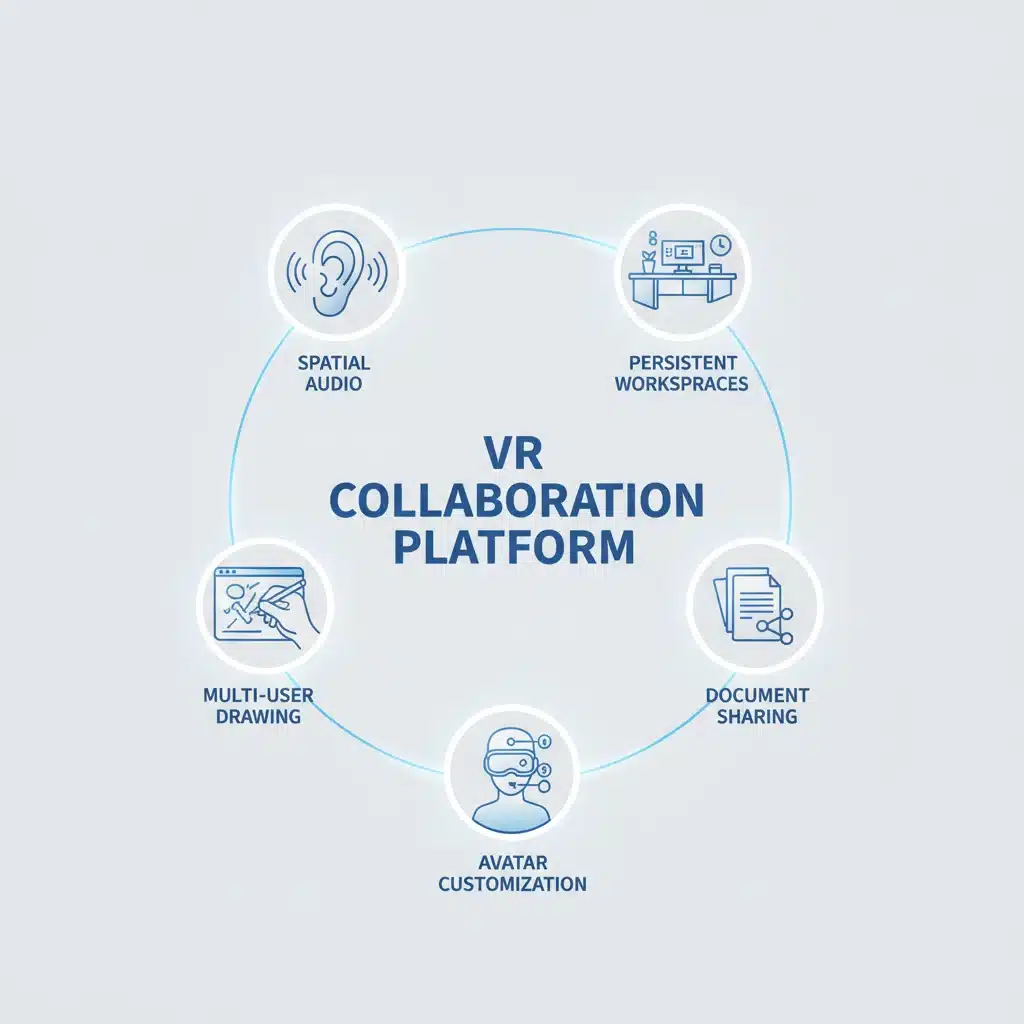
The quality of avatars directly impacts the sense of presence and social connection. Modern VR collaboration platforms offer highly customizable avatars, allowing users to create digital representations that reflect their personality or professional identity. Beyond aesthetics, advanced avatars incorporate realistic facial expressions (driven by eye and mouth tracking in some high-end headsets) and natural body language, making interactions feel more authentic. This level of detail helps to reduce cognitive load and enhance non-verbal communication, which is crucial for effective teamwork.
Spatial Audio and Haptics
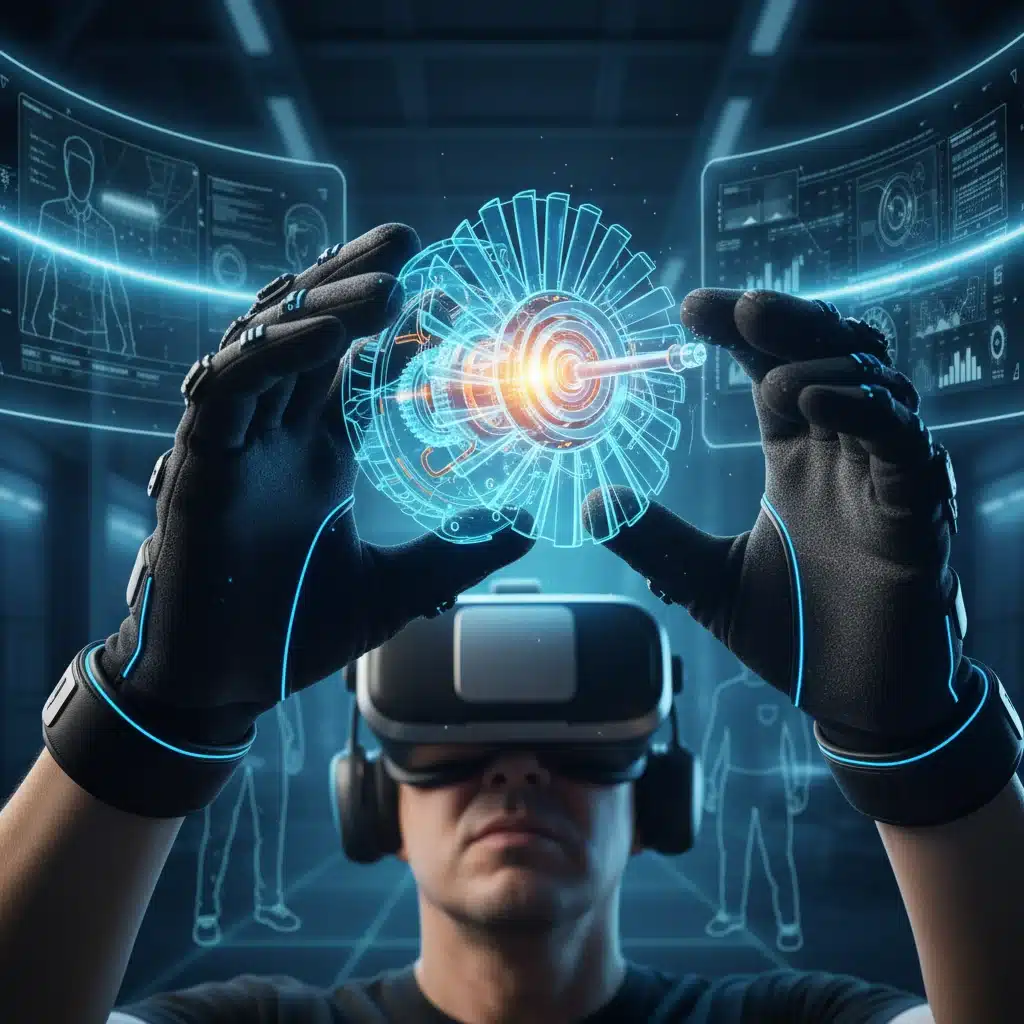
Spatial audio is a game-changer. It simulates how sound behaves in the real world, allowing users to discern the direction and distance of a speaker’s voice. This natural auditory experience makes it easier to follow conversations in a group setting and adds significantly to the immersion. Complementing spatial audio, haptic feedback (through controllers or specialized gloves) provides tactile sensations, allowing users to ‘feel’ virtual objects or receive notifications, further bridging the gap between the digital and physical worlds. The integration of advanced haptics is becoming a defining characteristic of premium VR collaboration platforms.
Interactive 3D Environments and Persistent Workspaces
Gone are the days of static virtual rooms. Today’s VR Collaboration Platforms offer dynamic, interactive 3D environments that can be tailored to specific needs. Whether it’s a boardroom, a factory floor, a classroom, or an abstract creative space, these environments provide context and tools. Even more critical are persistent workspaces, where projects, whiteboards, and 3D models remain exactly as they were left, allowing teams to pick up where they left off across sessions. This continuity is vital for complex, long-term projects.
Whiteboarding and Annotation Tools
Digital whiteboards are a staple of any collaboration tool, and in VR, they are taken to the next level. Users can draw, write, and annotate in 3D space, making brainstorming sessions far more engaging and intuitive. Features like infinite canvas, sticky notes, and the ability to import and export content are standard. Advanced platforms allow for real-time collaborative drawing on 3D models, enabling precise feedback and iterative design in fields like architecture, engineering, and product development.
Document and Media Sharing
Seamless sharing of documents, images, videos, and presentations is fundamental. VR platforms allow users to project these assets onto virtual screens, share them directly into the environment, or even interact with them as 3D objects. Imagine reviewing a CAD file where everyone can rotate, scale, and dissect the model collaboratively, or watching a training video together in a virtual theater setting.
Security and Access Controls
With sensitive company data being discussed and shared, robust security is paramount. Enterprise-grade VR Collaboration Platforms in Q1 2026 incorporate end-to-end encryption, secure authentication methods (including biometric options in some headsets), and granular access controls. These features ensure that virtual meetings are as secure, if not more so, than their physical counterparts, protecting intellectual property and confidential discussions.
Integration with Existing Workflows
No platform exists in a vacuum. The best VR collaboration tools offer seamless integration with existing enterprise software, such as project management systems (Jira, Asana), communication tools (Slack, Microsoft Teams), and CAD/design software. This interoperability minimizes disruption and allows teams to leverage their existing digital infrastructure within the VR environment.
User Experience (UX) in VR Collaboration: A Critical Lens
While features are important, the User Experience (UX) in VR Collaboration Platforms is arguably the most critical factor for adoption and sustained use. A clunky, disorienting, or uncomfortable experience will quickly deter even the most enthusiastic early adopters. For Q1 2026, UX design in VR collaboration is focusing on several key areas:
Intuitive Navigation and Interaction
Users should be able to move around the virtual space and interact with objects naturally, without a steep learning curve. This involves well-designed locomotion systems (teleportation, smooth locomotion), intuitive hand tracking or controller-based interactions, and clear visual cues. The goal is to make the technology disappear, allowing users to focus on the collaboration itself.
Minimizing VR Sickness
Motion sickness, or ‘VR sickness,’ remains a concern for some users. Advanced platforms employ techniques like vignetting, comfort modes, and careful control over acceleration and deceleration to mitigate these effects. As hardware improves with higher refresh rates and lower latency, the prevalence of VR sickness is decreasing, but thoughtful UX design is still essential.
Onboarding and Training
For new users, a clear and guided onboarding process is vital. This includes tutorials on how to move, interact, and use the platform’s core features. Effective training ensures that everyone, regardless of their prior VR experience, can quickly become proficient and contribute meaningfully to collaborative sessions.
Accessibility
Accessibility in VR is gaining increasing attention. This includes options for users with different physical abilities, such as adjustable height settings for avatars, customizable input methods, and captioning for spatial audio. Ensuring that VR collaboration is inclusive is crucial for its widespread adoption.
Performance and Stability
Lag, glitches, and crashes are antithetical to a good UX. VR Collaboration Platforms must be highly optimized to run smoothly on a range of hardware, offering consistent frame rates and stable connections. This requires robust backend infrastructure and efficient rendering techniques, especially when multiple users are interacting in complex environments.
Challenges and Considerations for VR Collaboration Adoption
Despite the immense potential, several challenges need to be addressed for widespread adoption of VR Collaboration Platforms:
Hardware Accessibility and Cost
While VR headsets have become more affordable, the initial investment for a team can still be significant. Additionally, not all users have access to high-end PCs required for certain VR experiences. The rise of standalone headsets (like Meta Quest) is helping to democratize access, but the balance between cost, performance, and accessibility remains a key consideration.
Network Infrastructure
VR collaboration, especially with high-fidelity environments and multiple users, demands significant bandwidth and low latency. Reliable, high-speed internet access is a prerequisite, and network stability can still be a bottleneck in certain regions or for remote teams.
Integration with Legacy Systems
Many organizations have deeply entrenched legacy systems and workflows. Integrating VR platforms seamlessly into these existing structures can be complex and requires significant development effort and strategic planning.
Security and Privacy Concerns
As with any emerging technology dealing with sensitive data, security and privacy are paramount. Companies need to ensure that VR platforms meet stringent compliance standards and protect user data from breaches and misuse. This includes data transmitted within the virtual space, avatar data, and any shared digital assets.
Digital Divide and Training
Not everyone is equally comfortable with new technologies. A digital divide can emerge where some employees quickly adapt to VR, while others struggle. Comprehensive training programs and ongoing support are essential to ensure that all team members can effectively utilize VR collaboration tools.
Future Trends in VR Collaboration Platforms for Q1 2026 and Beyond
The trajectory of VR Collaboration Platforms is dynamic and exciting. For Q1 2026, we can anticipate several key trends shaping their evolution:
Hyper-Realistic Avatars and AI Integration
Expect to see even more realistic avatars, potentially generated from 3D scans of users, offering an uncanny valley experience that further blurs the line between the virtual and real. AI will play a crucial role, not just in animating avatars but also in providing AI assistants within VR meetings, transcribing conversations, summarizing discussions, and even offering real-time language translation. This will significantly enhance productivity and inclusivity in global teams.
Deeper Integration with AI and Machine Learning
AI will move beyond just avatars. Machine learning algorithms will analyze collaboration patterns, identify bottlenecks, and suggest optimal virtual environments or tools for specific tasks. Imagine an AI suggesting a particular brainstorming layout based on the project’s complexity or automatically organizing shared documents within a persistent workspace. This intelligent layer will make VR collaboration platforms more proactive and adaptive.
Cross-Platform and Open Standards
The current landscape is somewhat fragmented, with various platforms and hardware ecosystems. The trend is towards greater interoperability, with platforms supporting a wider range of headsets and potentially adopting open standards for content creation and data exchange. This will foster a more connected and less siloed collaborative metaverse, enhancing the utility of VR Collaboration Platforms.
Advanced Haptics and Biometric Feedback
Haptic technology will become more sophisticated, offering a wider range of sensations, from subtle textures to force feedback. Biometric sensors in headsets will monitor user engagement, stress levels, and even emotional states, allowing platforms to adapt experiences or provide insights into team dynamics (with appropriate privacy safeguards, of course). This could lead to more empathetic and effective virtual interactions.
Edge Computing and 5G Integration
To overcome latency issues and enable more complex, real-time interactions, edge computing and 5G networks will become increasingly vital. Processing power will move closer to the user, reducing the need for constant communication with distant servers and enabling smoother, more responsive VR experiences, especially in enterprise settings with high demands.
Specialized Industry Applications
While general-purpose VR collaboration platforms will continue to evolve, we will see a proliferation of highly specialized platforms tailored to specific industries. This includes VR platforms for medical training (virtual surgeries), architectural design (collaborative building information modeling), manufacturing (digital twins for factory optimization), and education (immersive classrooms and field trips). These niche applications will drive innovation in features and UX, demonstrating the versatility of VR Collaboration Platforms.
Sustainability in VR Collaboration
As companies become more environmentally conscious, the sustainability benefits of VR collaboration will gain prominence. By reducing the need for business travel and physical commutes, VR platforms can significantly lower carbon footprints. Future platforms may even incorporate features that highlight these environmental savings, appealing to eco-conscious organizations.
Implementing VR Collaboration in Your Organization
For organizations considering adopting VR Collaboration Platforms, a strategic approach is essential. Here are some steps to consider:
- Pilot Programs: Start with small, focused pilot programs involving a specific team or project. This allows for testing the technology, gathering feedback, and identifying pain points before a wider rollout.
- Hardware Assessment: Evaluate different VR headsets based on budget, performance requirements, and ease of deployment. Consider standalone vs. PC-tethered options.
- Platform Selection: Research and select a VR collaboration platform that aligns with your organization’s specific needs, security requirements, and existing IT infrastructure. Prioritize features relevant to your workflows.
- Training and Support: Invest in comprehensive training for all users. Provide ongoing technical support to address any issues and ensure a smooth user experience.
- Define Use Cases: Clearly define the specific use cases where VR collaboration can provide the most value. This could be product design, remote training, virtual events, or brainstorming sessions.
- Measure ROI: Establish metrics to measure the return on investment (ROI) of VR collaboration, such as reduced travel costs, increased productivity, faster project cycles, or improved employee engagement.
- Iterate and Adapt: The VR landscape is constantly evolving. Be prepared to iterate on your implementation, gather feedback, and adapt your strategy as new technologies and best practices emerge.
The successful integration of VR Collaboration Platforms is not just about acquiring technology; it’s about fostering a culture of innovation and adaptability within your organization. It requires a willingness to experiment, learn, and empower employees with new tools that can unlock unprecedented levels of creativity and efficiency.
Conclusion: The Immersive Future of Work is Here
As we look towards Q1 2026, it’s clear that VR Collaboration Platforms are poised to move from the periphery to the mainstream of enterprise tools. The convergence of advanced hardware, sophisticated software features, and a growing understanding of immersive UX design is creating powerful solutions that address the evolving demands of modern work. From enhancing remote team cohesion to revolutionizing design processes and training methodologies, VR offers a compelling vision for the future of collaboration.
Organizations that embrace these technologies now will be at the forefront of this transformation, gaining a significant competitive advantage. While challenges remain, the rapid pace of innovation suggests that many of these hurdles will be overcome in the near future. The immersive future of work is not a distant dream; it is rapidly becoming a tangible reality, and VR Collaboration Platforms are leading the charge.
The ability to connect, interact, and create in shared virtual spaces offers a richness of experience that traditional tools simply cannot match. As businesses continue to navigate a globalized and increasingly remote work environment, the value proposition of VR collaboration will only grow. Prepare to step into a new dimension of teamwork – the virtual realm awaits.