VR Platforms for Corporate Training: A 2026 U.S. Enterprise Guide
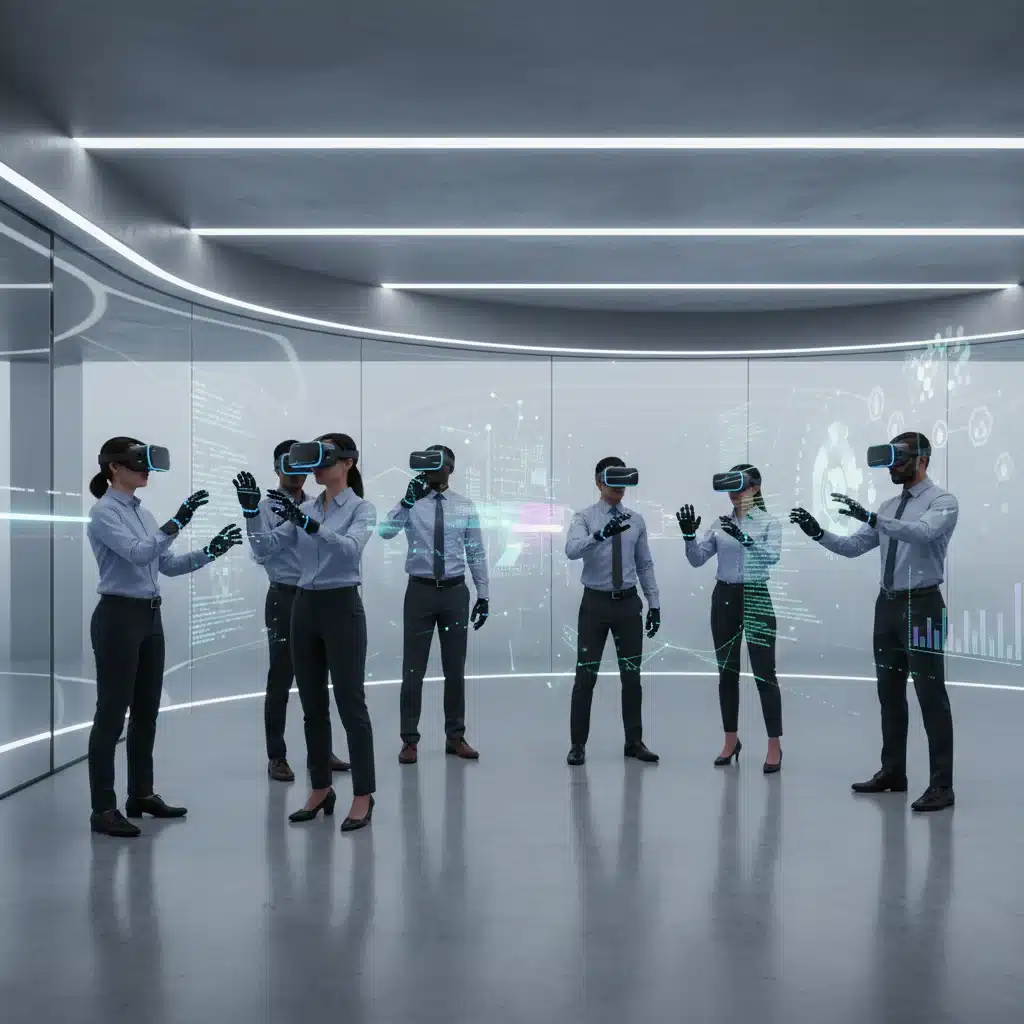
The landscape of corporate training is undergoing a profound transformation, driven by technological advancements that promise unparalleled immersive experiences and efficiency. As we navigate towards 2026, Virtual Reality (VR) has emerged as a frontrunner, offering U.S. enterprises a powerful tool to revolutionize their workforce development strategies. This comprehensive guide delves into the leading VR corporate training platforms, providing a detailed comparison and analysis to help businesses make informed decisions.
Gone are the days of passive learning and generic presentations. Modern enterprises demand dynamic, engaging, and effective training solutions that cater to the complexities of today’s fast-paced work environments. VR platforms deliver precisely this, offering realistic simulations, hands-on practice, and immediate feedback in a safe, controlled virtual space. From enhancing soft skills to mastering complex technical procedures, VR corporate training is proving to be a game-changer across various industries.
The U.S. market, in particular, is witnessing a rapid adoption of VR technologies in corporate settings. Companies are recognizing the tangible benefits: reduced training costs, improved retention rates, accelerated skill acquisition, and a more engaged workforce. However, with a growing number of VR platforms available, selecting the right one can be a daunting task. This article aims to simplify that process by examining the key players, their unique offerings, and how they align with diverse enterprise needs.
The Rise of VR in Corporate Learning: Why Now?
The acceleration of VR adoption in corporate training isn’t accidental. Several factors contribute to its growing prominence:
- Technological Maturity: VR hardware has become more accessible, powerful, and user-friendly. Headsets are lighter, resolutions are higher, and tracking is more precise, leading to a truly immersive experience.
- Cost-Effectiveness: While initial investment might seem significant, VR training often leads to substantial long-term savings. It eliminates travel expenses for instructors and trainees, reduces the need for physical equipment or facilities, and minimizes risks associated with on-the-job training in hazardous environments.
- Enhanced Engagement and Retention: VR’s immersive nature captures learners’ attention more effectively than traditional methods. The active participation and experiential learning foster deeper understanding and significantly improve knowledge retention. Studies consistently show higher engagement levels in VR-based training compared to conventional approaches.
- Scalability and Consistency: VR training modules can be easily replicated and distributed across multiple locations, ensuring a consistent learning experience for all employees, regardless of their geographical location. This is particularly beneficial for large enterprises with a global footprint.
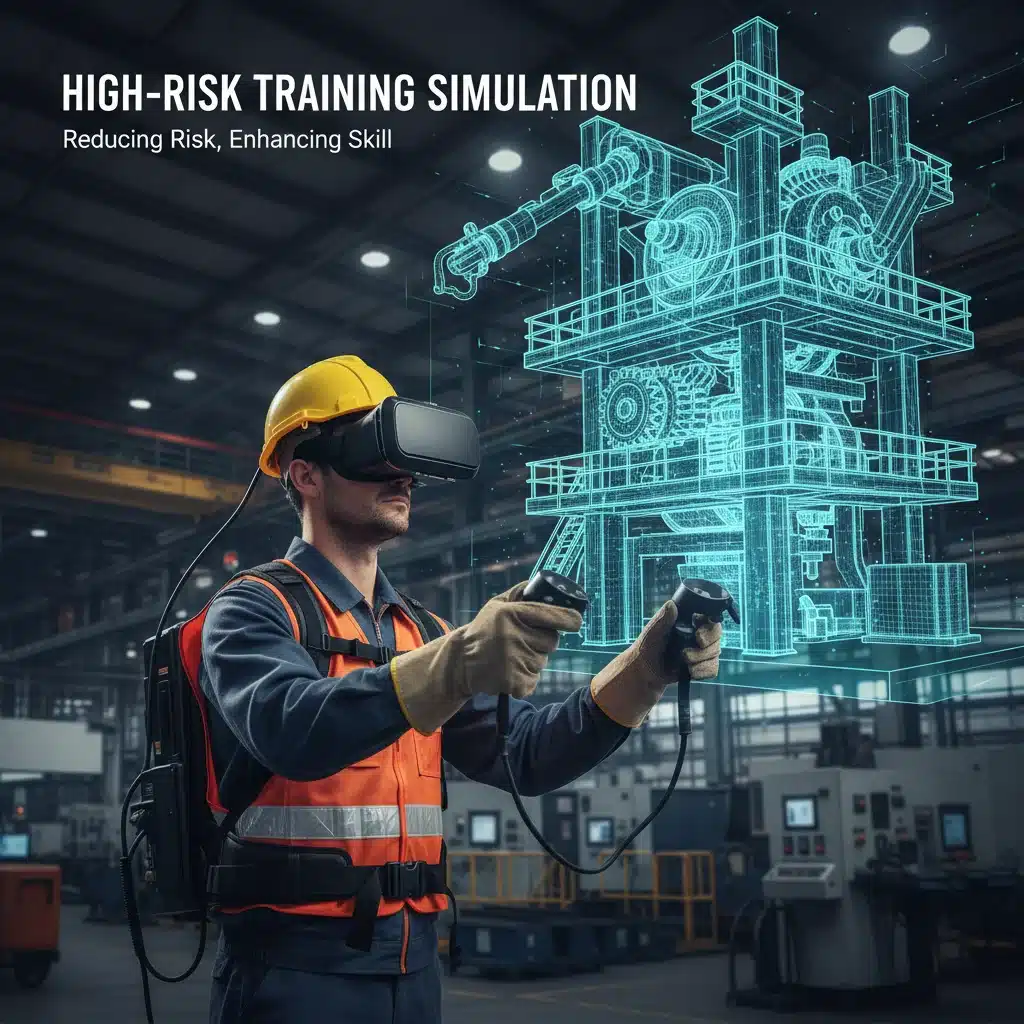
- Safe Practice Environment: For roles requiring interaction with dangerous machinery, high-stakes scenarios, or sensitive customer interactions, VR provides a safe space to practice without real-world consequences. This allows employees to make mistakes, learn from them, and build confidence before facing actual situations.
- Data-Driven Insights: Many VR platforms offer robust analytics, providing valuable data on learner performance, areas of struggle, and progress. This enables organizations to tailor training programs more effectively and identify areas for improvement.
Understanding these drivers is crucial for U.S. enterprises considering a foray into VR corporate training. The benefits are clear, but the challenge lies in choosing the platform that best fits an organization’s specific goals, budget, and existing infrastructure.
Key Considerations When Choosing a VR Corporate Training Platform
Before diving into specific platforms, it’s essential for U.S. enterprises to define their needs and criteria. A thoughtful evaluation process will ensure the chosen VR corporate training solution delivers maximum ROI. Here are critical factors to consider:
1. Content Creation and Customization
- Pre-built Libraries vs. Custom Content: Does the platform offer a library of ready-to-use training modules relevant to your industry? Or do you need the flexibility to create highly customized content? Some platforms excel in one area, others offer a hybrid approach.
- Ease of Authoring Tools: How intuitive are the content creation tools? Can your internal teams develop VR experiences without extensive coding knowledge, or will you rely on external developers?
- Integration with Existing Content: Can the platform integrate with your current Learning Management System (LMS) or existing training materials?
2. Hardware Compatibility and Scalability
- Headset Support: What VR headsets does the platform support (e.g., Meta Quest, Pico, HTC Vive, custom PC VR setups)? Consider the cost, availability, and ease of deployment for your chosen hardware.
- Scalability: Can the platform grow with your organization? Can it support hundreds or thousands of users simultaneously?
- Deployment Model: Is it cloud-based, on-premise, or a hybrid solution? Consider your IT infrastructure and security requirements.
3. Features and Functionality
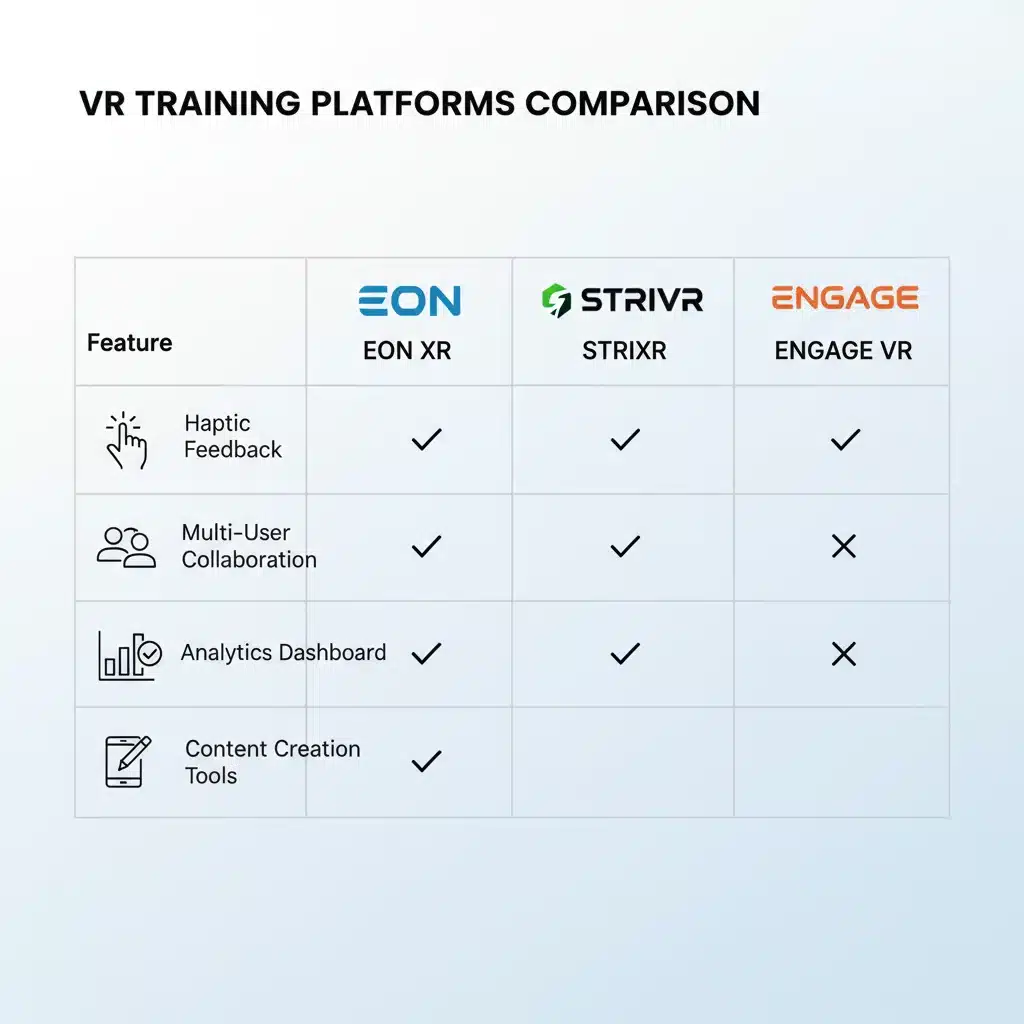
- Multi-user Collaboration: Is collaborative training a priority? Some platforms allow multiple users to interact in the same virtual space.
- Analytics and Reporting: What kind of data does the platform collect on learner performance? Are the reports customizable and actionable?
- Interactivity and Haptic Feedback: How interactive are the simulations? Does the platform support haptic feedback for a more realistic tactile experience?
- Accessibility Features: Does it offer features for users with disabilities?
4. Security and Data Privacy
- Data Encryption: How is user data and training content secured?
- Compliance: Does the platform comply with relevant industry regulations and data privacy laws (e.g., GDPR, CCPA)?
- Access Control: What are the authentication and authorization mechanisms?
5. Support and Integrations
- Customer Support: What level of technical support is offered?
- API and Integrations: Can the platform integrate with other enterprise systems like HRIS, CRM, or existing training platforms?
6. Pricing Model
- Subscription vs. Perpetual License: How is the platform priced? Per user, per module, or a flat fee?
- Total Cost of Ownership (TCO): Consider not just the platform cost, but also hardware, content creation, and ongoing support.
Leading VR Corporate Training Platforms for U.S. Enterprises in 2026
The market for VR corporate training solutions is dynamic, with both established tech giants and innovative startups vying for market share. Here’s a look at some of the prominent platforms U.S. enterprises should consider:
1. Strivr
Overview: Strivr is a pioneer in enterprise VR training, known for its comprehensive end-to-end solution. They focus heavily on data-driven insights and have a strong track record with Fortune 500 companies, particularly in retail, logistics, and manufacturing.
Key Features:
- Immersive Learning Experiences: Specializes in creating realistic simulations for soft skills (e.g., customer service, leadership) and hard skills (e.g., equipment operation, safety protocols).
- Robust Analytics: Offers detailed performance metrics, heatmaps, and progress tracking to identify knowledge gaps and measure ROI.
- Content Creation: Provides a platform for creating custom VR content, often working with clients to develop bespoke modules.
- Hardware Agnostic: Supports various VR headsets, including Meta Quest and Pico.
- Scalability: Designed for large-scale deployments across thousands of employees.
Best For: Large enterprises seeking a proven, full-service VR training partner with strong analytics capabilities and a focus on measurable outcomes.
2. Talespin
Overview: Talespin focuses on developing spatial learning content and platforms, particularly for soft skills and leadership training. Their approach emphasizes realistic human interaction using virtual characters powered by AI.
Key Features:
- AI-Powered Virtual Humans: Offers highly realistic virtual characters for practicing communication, conflict resolution, and leadership skills.
- No-Code Authoring Tools: Provides tools that enable non-technical users to create and customize VR learning content.
- Skill-Building Platform: Their platform is designed to track and develop specific skills over time.
- Learning Content Library: Offers a growing library of pre-built modules for common corporate training needs.
Best For: Organizations prioritizing soft skills development, leadership training, and realistic human interaction simulations, with a desire for easy content creation.
3. Immerse
Overview: Immerse provides an open and scalable VR platform designed for enterprises to create, deploy, and measure immersive training experiences. They emphasize flexibility and integration with existing enterprise systems.
Key Features:
- Open Platform: Allows for integration with various VR content, hardware, and enterprise systems (LMS, LXP).
- Data Insights: Comprehensive data collection and analytics to track learner progress and platform usage.
- Multi-user Functionality: Supports collaborative training scenarios for teams.
- Content Management System: Tools for managing and distributing VR content efficiently.
Best For: Enterprises looking for a flexible, open platform that can integrate with their existing IT infrastructure and support a wide range of custom VR content and hardware.
4. Virti
Overview: Virti offers a VR, AR, and AI-powered training platform, with a strong focus on healthcare, education, and public safety. They aim to reduce human error and improve performance through realistic simulations.
Key Features:
- AI-Powered Feedback: Provides personalized feedback and coaching to learners based on their performance within simulations.
- Performance Data: Captures detailed data on decision-making, reaction times, and skill proficiency.
- Content Library & Customization: Offers a library of medical and technical scenarios, alongside tools for custom content creation.
- Web-based VR Access: Some modules can be accessed via web browsers, expanding accessibility.
Best For: Healthcare organizations, emergency services, and other sectors where high-stakes decision-making and precision are critical, benefiting from AI-driven feedback.
5. Transfr
Overview: Transfr specializes in workforce development and vocational training using VR simulations. Their focus is on bridging the skills gap in industries like manufacturing, automotive, and construction.
Key Features:
- Hands-on Skill Training: Provides highly realistic simulations for technical trades, allowing users to practice complex procedures.
- Guided Instruction: Features integrated guided instructions and feedback within the VR environment.
- Career Pathway Focus: Designed to train individuals for specific job roles and career advancement.
- Turnkey Solutions: Often provides complete solutions including hardware, content, and support.
Best For: Vocational schools, community colleges, and enterprises in skilled trades looking to rapidly upskill or reskill their workforce with practical, hands-on VR experiences.
Implementing VR Corporate Training: Best Practices for U.S. Enterprises
Adopting VR corporate training requires more than just selecting a platform; it demands a strategic approach to implementation to ensure success and maximize ROI. U.S. enterprises should consider these best practices:
1. Define Clear Learning Objectives
Before investing in any VR solution, clearly articulate what you aim to achieve. What specific skills need improvement? What behavioral changes are desired? How will success be measured? Clear objectives will guide platform selection and content development.
2. Start Small, Scale Smart
Don’t try to implement VR training across your entire organization all at once. Begin with a pilot program in a specific department or for a particular training need. Gather feedback, refine your approach, and demonstrate success before scaling up. This iterative process allows for adjustments and builds internal champions.
3. Involve Stakeholders Early
Engage employees, managers, IT, and HR from the outset. Their input is invaluable for identifying training gaps, ensuring technical feasibility, and fostering buy-in. Employees who feel their needs are considered are more likely to embrace new training methods.
4. Choose the Right Content Strategy
Decide whether to leverage existing content libraries, create custom modules, or a hybrid approach. For highly specialized or proprietary training, custom content is often necessary. For generic skills, pre-built modules can be a cost-effective starting point. Ensure the content is engaging, realistic, and directly relevant to the learning objectives.
5. Address Hardware and Infrastructure Needs
Plan for the procurement, deployment, and management of VR headsets. Consider charging stations, storage, and sanitation protocols. Ensure your network infrastructure can support VR streaming if applicable, and that IT staff are prepared to troubleshoot potential issues.
6. Provide Adequate User Support and Onboarding
For many employees, VR will be a new experience. Provide clear instructions, technical support, and introductory sessions to help them get comfortable with the technology. A positive initial experience is crucial for adoption.
7. Integrate with Existing Learning Ecosystems
Ideally, your VR training platform should integrate seamlessly with your existing Learning Management System (LMS) or Learning Experience Platform (LXP). This allows for centralized tracking of progress, consolidated reporting, and a more streamlined learner experience.
8. Measure and Iterate
Continuously monitor the effectiveness of your VR training programs. Utilize the platform’s analytics to track key performance indicators (KPIs) such as completion rates, skill improvement, and impact on business outcomes. Use this data to refine content, optimize delivery, and demonstrate the ROI of your VR corporate training investment.
The Future of VR Corporate Training in the U.S.
Looking ahead to 2026 and beyond, the evolution of VR corporate training in the U.S. is poised for even greater innovation. We can anticipate several key trends:
1. Hyper-Personalized Learning Paths
AI will play an increasingly significant role in tailoring VR training experiences to individual learner needs, adapting scenarios and feedback in real-time. This will create highly personalized learning paths that optimize skill development for each employee.
2. Enhanced Haptics and Sensory Feedback
Advancements in haptic technology will lead to even more realistic tactile sensations within VR, crucial for technical and manual skill training. Olfactory and other sensory feedback systems might also emerge, creating truly multi-sensory immersive experiences.
3. Integration with Augmented Reality (AR) and Mixed Reality (MR)
The lines between VR, AR, and MR will continue to blur. Hybrid training solutions will emerge, allowing for a seamless transition between fully immersive VR simulations and AR overlays in real-world environments. This will be particularly valuable for on-the-job guidance and performance support.
4. Cloud-Based VR Streaming
As network infrastructure improves, cloud-based VR streaming will become more prevalent, reducing the need for powerful local hardware and making high-fidelity VR experiences accessible on a wider range of devices.
5. Focus on Emotional Intelligence and Soft Skills
While VR excels at technical training, its potential for developing emotional intelligence, empathy, and complex soft skills through realistic social simulations will be further explored and refined.
6. Standardized Content and Interoperability
As the market matures, there will likely be a push for more standardized content formats and greater interoperability between platforms and hardware, making it easier for enterprises to mix and match solutions.
Conclusion: Embracing the Future of Learning
The decision to invest in VR corporate training platforms for U.S. enterprises in 2026 is no longer a question of ‘if’, but ‘when’ and ‘how’. The benefits in terms of engagement, retention, cost-efficiency, and scalability are too significant to ignore. By carefully evaluating the available platforms against specific organizational needs and adopting strategic implementation practices, businesses can unlock the full potential of immersive learning.
The platforms highlighted – Strivr, Talespin, Immerse, Virti, and Transfr – represent a diverse range of solutions catering to different industry needs and training objectives. Each offers unique strengths, from robust analytics and AI-powered feedback to intuitive content creation and hands-on skill development. The key for any enterprise is to conduct thorough due diligence, perhaps initiating pilot programs, and aligning the chosen VR solution with their overarching talent development strategy.
As technology continues to advance, VR corporate training will only become more sophisticated, accessible, and integral to building a highly skilled, adaptable, and engaged workforce. U.S. enterprises that embrace this transformative technology now will be well-positioned to lead in the competitive landscape of tomorrow.