

Powering Your VR Setup: A 2026 Analysis of Energy-Efficient Hardware for Sustained Performance
Welcome to 2026, where the immersive worlds of Virtual Reality (VR) are more captivating and accessible than ever before. As the fidelity and complexity of VR experiences continue to soar, so does the demand for robust, yet efficient, hardware. The challenge? Delivering sustained, high-performance VR without draining your wallet or the planet. This comprehensive guide delves into the crucial topic of VR energy efficiency, exploring the latest innovations in hardware, software, and best practices that define the cutting edge of virtual reality in 2026. We’ll uncover how manufacturers are pushing the boundaries to create systems that offer unparalleled immersion while being remarkably power-conscious.
The journey into truly immersive virtual worlds has always been a balancing act between raw processing power and practical considerations like heat, noise, and, critically, power consumption. In 2026, the focus has dramatically shifted towards optimizing every watt, ensuring that your VR adventures are not only breathtaking but also sustainable. This article will equip you with the knowledge to understand the core principles of VR energy efficiency, identify the most impactful hardware choices, and implement strategies to maximize your VR experience while minimizing its ecological footprint.
From the evolution of VR headsets themselves to the intricate components within your PC or standalone device, every aspect plays a role. We’re not just talking about longer battery life for untethered experiences; we’re also discussing the overall operational cost, the environmental impact, and the sheer comfort of a system that runs cooler and quieter. Join us as we explore the landscape of VR energy efficiency in 2026, providing insights that will help you make informed decisions for your ultimate VR setup.
The Evolution of VR Hardware: A Focus on Efficiency
The past few years have witnessed a remarkable transformation in VR hardware. Gone are the days when clunky, power-hungry rigs were the only way to experience high-fidelity VR. Today, the mantra is ‘more with less’. This section will dissect the advancements in various hardware categories that contribute significantly to enhanced VR energy efficiency.
Processors: The Brains of Your VR Operation
At the heart of any VR system lies the processor. In 2026, both CPUs and GPUs have undergone significant architectural overhauls, prioritizing performance per watt. Chip manufacturers like Intel, AMD, and Qualcomm have introduced new fabrication processes (e.g., 2nm and 3nm nodes) that allow for a higher transistor density, leading to more powerful yet cooler-running chips. These advancements are crucial for VR energy efficiency, as they enable complex calculations and graphics rendering with less power draw.
- CPUs: Modern CPUs feature sophisticated power management units and heterogeneous computing architectures. This means tasks are intelligently distributed to different cores or specialized accelerators (like AI inference engines) that are best suited for the job, consuming less power than a general-purpose core might for the same task. Dynamic voltage and frequency scaling (DVFS) algorithms have become incredibly precise, adjusting power delivery in real-time based on workload demands, making a substantial difference in overall VR energy efficiency.
- GPUs: Graphics Processing Units are arguably the most power-hungry components in a VR setup. However, 2026 GPUs boast significant improvements. Ray tracing and rasterization units are now more optimized, and new generations of memory (like GDDR7) offer higher bandwidth at lower power. Furthermore, advancements in rendering techniques such as Foveated Rendering (which renders the area you’re looking at in high detail and the periphery in lower detail) and Variable Rate Shading (VRS) are now deeply integrated at the hardware level, dramatically reducing the computational load and, by extension, the power consumption for a given visual fidelity. These techniques are paramount for achieving superior VR energy efficiency without compromising visual quality.
VR Headsets: Lighter, Brighter, and Longer Lasting
Standalone VR headsets have made incredible strides in VR energy efficiency. The integration of System-on-a-Chip (SoC) designs, specifically optimized for VR, has been a game-changer. These SoCs combine CPU, GPU, and other essential components into a single, highly efficient package. The result is lighter headsets, less heat generation, and significantly extended battery life, allowing for longer, untethered VR sessions.
Display technology has also contributed to this efficiency. Micro-OLED and QLED panels are becoming more prevalent, offering vibrant colors and deep blacks with lower power consumption compared to older LCD or first-generation OLED panels. Eye-tracking technology, once a premium feature, is now standard, enabling advanced rendering techniques like foveated rendering that directly enhance VR energy efficiency by only rendering what the user is actively focusing on in full detail.
Cooling Solutions: The Unsung Heroes of Efficiency
Efficient cooling is intrinsically linked to VR energy efficiency. Components perform optimally at lower temperatures, and excessive heat leads to performance throttling and increased power draw. In 2026, liquid cooling solutions have become more compact and affordable, even appearing in some high-end standalone VR units. Vapor chambers, advanced heat pipe designs, and intelligent fan controls (which only spin up when necessary) are standard in modern VR-ready PCs, ensuring components run cool and stable, thus maintaining peak performance with minimal energy waste. This proactive approach to thermal management is a cornerstone of achieving sustained VR energy efficiency.
Software Optimization: The Smart Side of Power Saving
Hardware innovations are only half the story. Software plays an equally vital role in maximizing VR energy efficiency. Operating systems, VR platforms, and individual applications are all becoming smarter about how they utilize system resources.
Operating System and VR Platform Optimizations
Modern operating systems (like Windows 12 or specialized VR OS versions) incorporate advanced power management profiles specifically tailored for VR workloads. These profiles intelligently manage CPU core usage, GPU clock speeds, and background processes to ensure that maximum power is directed to the VR application when needed, and scaled back during less demanding periods. VR platforms themselves (e.g., SteamVR, Meta Quest Platform) have also implemented sophisticated algorithms for resource allocation, dynamic resolution scaling, and frame rate smoothing, all contributing to a more efficient use of power while maintaining a smooth VR experience. These platform-level optimizations are essential for widespread VR energy efficiency.
Application-Specific Optimizations
VR game and application developers are increasingly aware of the importance of VR energy efficiency. Many titles now feature granular graphics settings that allow users to fine-tune visual fidelity versus performance and power consumption. Techniques like dynamic resolution scaling, where the game automatically adjusts rendering resolution based on available headroom, are becoming standard. Furthermore, intelligent asset streaming and level-of-detail (LOD) systems ensure that only necessary assets are loaded and rendered at appropriate detail levels, reducing the computational burden and thus improving overall VR energy efficiency.
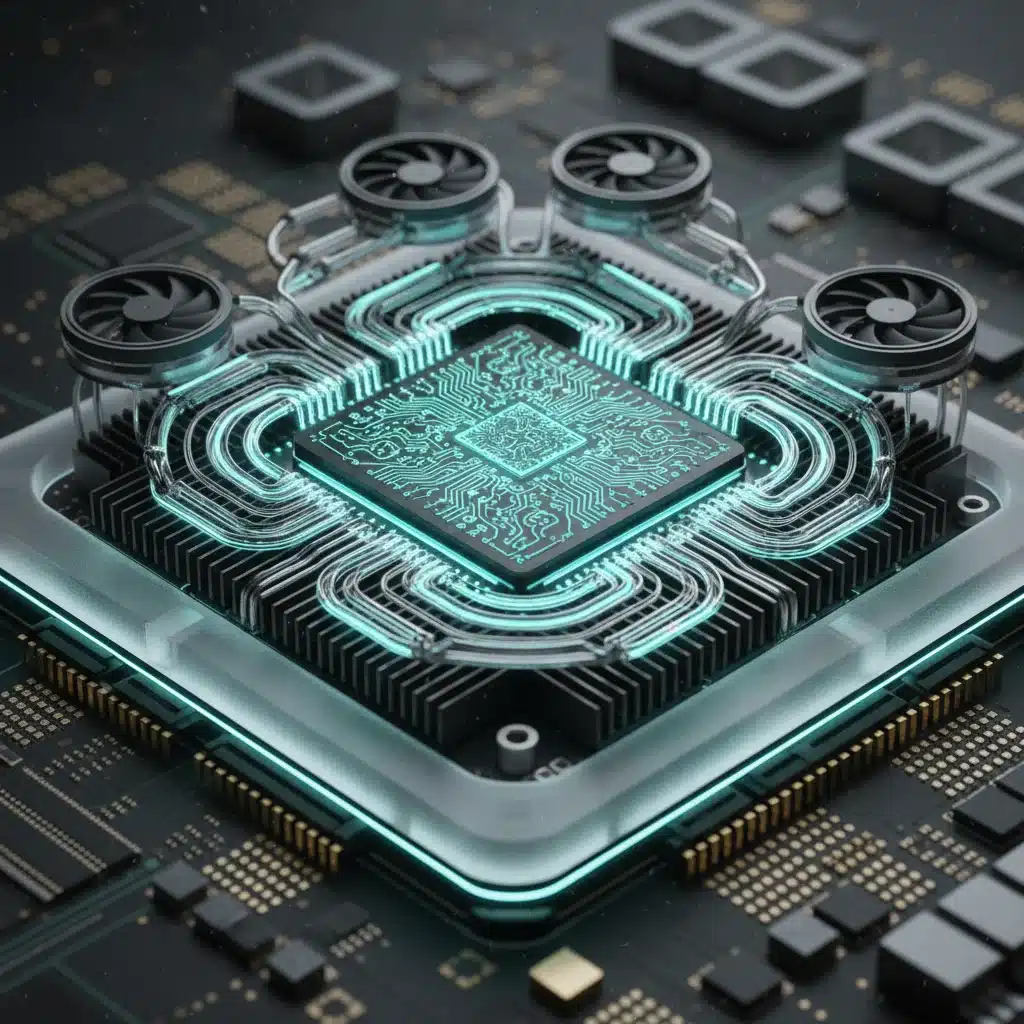
Key Hardware Components for Peak VR Energy Efficiency in 2026
When building or upgrading your VR setup in 2026, choosing the right components is paramount for achieving optimal VR energy efficiency. Here’s a breakdown of what to look for:
Graphics Cards (GPUs)
The GPU remains the most critical component for VR performance. In 2026, look for GPUs featuring:
- Latest Architecture: Prioritize GPUs built on the most recent fabrication processes (e.g., 2nm/3nm) for superior performance per watt. These architectures integrate dedicated hardware for foveated rendering and VRS, key enablers of VR energy efficiency.
- Efficient Memory: GDDR7 memory offers higher bandwidth and improved power efficiency over previous generations.
- Advanced Cooling: Robust cooling solutions (vapor chambers, large heatsinks, efficient fans) ensure the GPU operates at optimal temperatures, preventing throttling and maintaining efficiency.
- Power Connectors: Modern GPUs often utilize newer PCIe 6.0 power connectors, which are designed for more efficient power delivery.
Processors (CPUs)
While the GPU handles most of the heavy lifting in VR, a capable and efficient CPU is still essential:
- High Core Count with Efficiency Cores: Modern CPUs often feature a hybrid architecture with performance cores and efficiency cores. This allows the CPU to handle background tasks and less demanding processes on efficiency cores, saving power.
- Latest Generation: Opt for the newest generation of CPUs from Intel or AMD, as they incorporate the latest power management features and architectural improvements for better VR energy efficiency.
- Integrated Graphics (for some use cases): While not for high-end tethered VR, integrated graphics on some CPUs are becoming powerful enough for basic VR experiences or to offload certain non-VR tasks, contributing to overall system VR energy efficiency.
Motherboards
The motherboard acts as the central nervous system, and its quality impacts power delivery and overall system stability:
- Robust VRMs (Voltage Regulator Modules): High-quality VRMs ensure stable and efficient power delivery to the CPU and GPU, which is crucial for maintaining performance and VR energy efficiency under load.
- Efficient Chipsets: Newer chipsets often include improved power management features and better connectivity options that can indirectly contribute to efficiency.
- PCIe 6.0 Support: The latest PCIe standard offers higher bandwidth and potentially more efficient data transfer between components.
Power Supplies (PSUs)
An often-overlooked component, the PSU is critical for VR energy efficiency:
- 80 PLUS Platinum or Titanium Rating: These certifications indicate very high efficiency (90% or more at typical loads), meaning less power is wasted as heat. While a higher upfront cost, the long-term savings in electricity and reduced heat generation are significant.
- Appropriate Wattage: Don’t overbuy on wattage. Calculate your system’s needs and add a comfortable buffer. An oversized PSU running at low loads is less efficient than a correctly sized one operating within its optimal efficiency curve.
RAM (Random Access Memory)
DDR5 and future DDR6 memory modules offer improvements in speed and VR energy efficiency compared to DDR4:
- Lower Voltage: Newer RAM generations operate at lower voltages, reducing power consumption.
- Higher Speeds: Faster RAM can reduce bottlenecks, allowing the CPU and GPU to work more efficiently.
Storage (SSDs)
NVMe SSDs, especially those utilizing PCIe 5.0, offer incredibly fast load times with relatively low power consumption compared to traditional HDDs. Faster loading means less idle time for components, indirectly contributing to overall VR energy efficiency.
Optimizing Your Existing VR Setup for Energy Efficiency
Even if you’re not planning a complete overhaul, there are several steps you can take to improve your current setup’s VR energy efficiency in 2026:
Software Tweaks and Settings
- Update Drivers: Always keep your GPU and chipset drivers updated. Manufacturers constantly release optimizations that can improve performance per watt.
- VR Platform Settings: Explore the settings within your VR platform (e.g., SteamVR, Oculus/Meta PC app). Options like ‘automatic resolution scaling,’ ‘motion smoothing,’ or ‘frame rate targeting’ can significantly reduce the computational load and power draw.
- In-Game Settings: Lowering anti-aliasing, shadow quality, or texture resolution can have a substantial impact on GPU utilization and power consumption without always drastically affecting the immersive experience. Experiment to find your sweet spot for VR energy efficiency.
- Operating System Power Plans: Ensure your OS is set to a balanced or power-saving plan when not actively playing VR, and a high-performance plan specifically for VR sessions, allowing dynamic scaling.
Hardware Maintenance and Best Practices
- Clean Your System: Dust accumulation can severely impede cooling, leading to higher temperatures and increased power consumption as fans work harder. Regularly clean your PC’s internals and VR headset vents.
- Optimize Airflow: Ensure your PC case has good airflow. Proper fan placement and cable management can significantly improve cooling efficiency, directly impacting VR energy efficiency.
- Monitor Temperatures: Use monitoring software (e.g., HWMonitor, MSI Afterburner) to keep an eye on CPU and GPU temperatures. High temperatures indicate inefficiencies and potential performance throttling.
- Unplug When Not in Use: For standalone headsets, unplug chargers once fully charged. For PC-tethered setups, consider a smart power strip to cut power to peripherals when not in use.
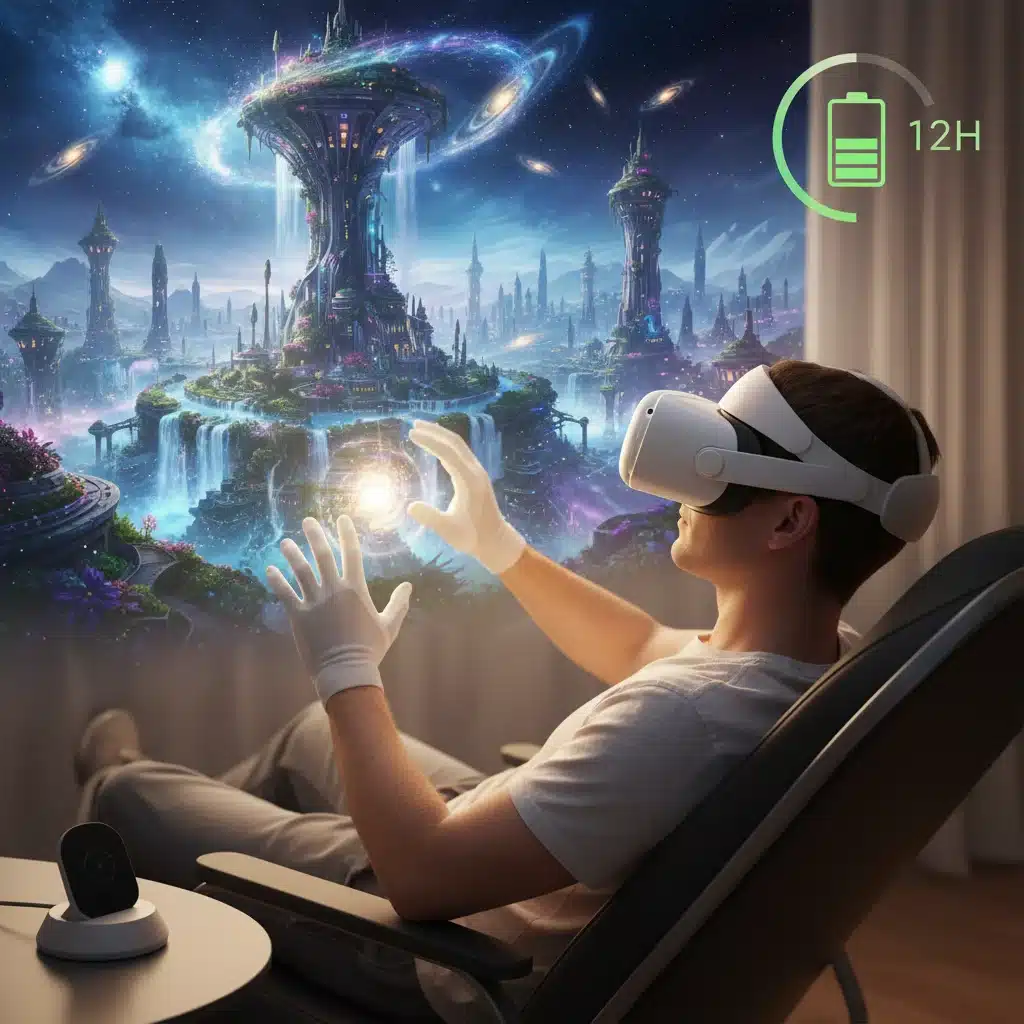
The Future of VR Energy Efficiency: Beyond 2026
The trajectory for VR energy efficiency is only upwards. Looking beyond 2026, we can anticipate several exciting developments:
- Even Smaller Fabrication Nodes: As chip manufacturing continues to advance, we’ll see even smaller and more efficient transistors, leading to further reductions in power consumption for the same or greater performance.
- Advanced AI Integration: AI and machine learning will play an increasingly significant role in optimizing rendering pipelines, predicting user gaze, and dynamically adjusting resources in real-time, pushing the boundaries of VR energy efficiency.
- Modular and Swappable Components: Imagine VR headsets where you can easily upgrade or swap out specific components (like battery packs or display modules) for enhanced efficiency or performance.
- Ubiquitous Wireless Power Transfer: While still in its infancy for high-power applications, advancements in wireless power could eventually eliminate the need for charging cables altogether, offering true untethered freedom and contributing to a seamless power experience.
- Photonics and Optical Computing: Long-term, research into photonics (using light instead of electrons for computation) could revolutionize computing, offering incredibly fast and energy-efficient processing, which would be a game-changer for VR energy efficiency.
These future innovations promise to make VR even more accessible, sustainable, and powerful, solidifying its place as a transformative technology.
Conclusion: Embracing Sustainable Immersion with VR Energy Efficiency
In 2026, the pursuit of immersive virtual realities is inextricably linked with the principle of VR energy efficiency. From the microscopic transistors within our processors to the sophisticated software that orchestrates our virtual experiences, every element is being fine-tuned to deliver more performance with less power. This isn’t just about saving on electricity bills; it’s about extending battery life for untethered freedom, reducing heat and noise for a more comfortable environment, and, critically, contributing to a more sustainable technological future.
By understanding the advancements in energy-efficient hardware, leveraging smart software optimizations, and adopting best practices for your VR setup, you can ensure your virtual adventures are not only breathtaking but also responsible. The commitment to VR energy efficiency is a testament to the industry’s maturity, signaling a future where the boundless potential of virtual reality can be explored without compromise. As we look ahead, the continuous innovation in this space promises an even more efficient, powerful, and sustainable VR experience for everyone.